Choosing matcha powder for a cafe business comes down to picking a barista-friendly grade that dissolves cleanly, calculating your cost per cup, training your team to prepare it consistently, and pricing the menu for the strong margins matcha allows, often 70 to 80 percent. Here’s the opportunity most cafe owners underestimate: matcha is a high-ticket, on-trend menu item that is actually easier and faster to prepare than espresso, yet many get the sourcing and preparation wrong.
That misstep is costly. Pick a gritty, low-grade powder and your lattes clump and taste bitter, so you mask it with sugar and lose both quality and health appeal. Misjudge cost per cup and you underprice a profitable item. Skip barista training and the same drink tastes different every time. Matcha powder for a cafe business is about choosing the right grade and running it well, so each cup is consistent and profitable. This guide covers grade, cost, preparation, and menu strategy, and shows how sourcing barista-ready matcha for latte use supports a profitable program.
The best matcha powder for a cafe business is a barista or latte grade: vivid green, ultra-fine for clean solubility, and bold enough to taste through milk, without paying for ceremonial nuance lost in a latte. A standard 12 oz latte uses about 2 to 3 grams, so a 1 kg bag yields roughly 330 to 500 servings. Matcha supports strong cafe margins, often 70 to 80 percent, because it is a high-ticket, on-trend drink that is faster to prepare than espresso. Calculate cost per cup, train baristas for consistency, and price accordingly.
In short: the right cafe matcha is a barista-grade powder that dissolves cleanly and tastes through milk, yielding around 330 to 500 servings per kilo at strong margins.
Key points:
- Use a barista or latte grade, ultra-fine for solubility and bold enough to taste through milk.
- A 12 oz latte uses about 2 to 3 grams, so 1 kg yields roughly 330 to 500 servings.
- Matcha supports 70 to 80 percent margins and is faster to prepare than espresso.
What grade of matcha powder is best for a cafe business?
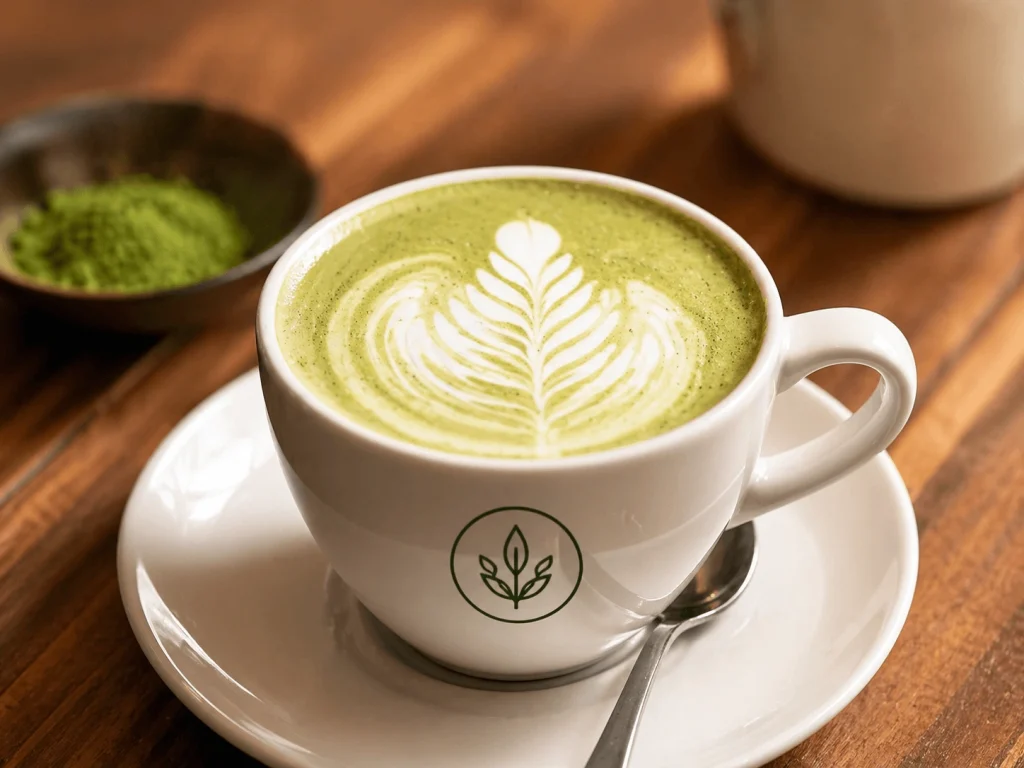
The best matcha powder for a cafe business is a barista or latte grade, not ceremonial or basic culinary. Here’s the distinction that defines a good cafe cup: you need a powder bold enough to taste through milk, vivid enough to stay green, and fine enough to dissolve cleanly, which is exactly what a latte grade is built for.
Grade choice is a balance. Ceremonial grade, meant to be whisked and tasted neat, is wasted in a milk-based latte where its delicate nuance disappears, so paying its premium is lost money. Basic culinary grade can be gritty and bitter, forcing baristas to mask it with sugar. A dedicated barista or latte grade sits in the sweet spot: bold flavor, vibrant color, and smooth solubility. AdoroHu organizes its range into an EU Grade Series (E-1 to E-7), letting a cafe dial in the exact latte-optimized point rather than defaulting to a grade built for a different purpose. A purpose-made culinary grade matcha tuned for beverages beats both extremes.
Key Takeaway: Use a barista or latte grade for a cafe, since ceremonial’s nuance is wasted in milk and basic culinary turns gritty and bitter; the right grade is bold enough to taste through milk, vivid, and fine enough to dissolve cleanly.
How do you calculate cost per cup for cafe matcha?
You calculate cost per cup by dividing your matcha’s cost by the servings it yields, which is the foundation of menu pricing. Here’s the simple math that drives profitability: a standard 12 oz latte uses about 2 to 3 grams of matcha, so a 1 kg bag yields roughly 330 to 500 servings.
This number sets everything downstream. Divide your per-kilogram landed cost by the servings to get cost per cup, then add milk, cup, and labor to reach total drink cost. Because matcha is dosed in small grams per cup, even a higher-quality powder spreads across hundreds of servings, so the per-cup premium for better matcha is small while the quality gain is large. The experienced insight: a slightly more expensive, higher-quality powder often costs only pennies more per cup but lets you skip the sugar and additives a cheap powder needs. Sourcing at a stable cost lets a cafe request a wholesale quote and model real cost per cup before setting menu prices.
Key Takeaway: Calculate cost per cup by dividing landed cost by the roughly 330 to 500 servings per kilo; because matcha is dosed in grams, upgrading to a better powder usually adds only pennies per cup while removing the need for masking sugar.
How profitable is matcha for a cafe business?
Matcha is highly profitable for a cafe business, with beverage margins often reaching 70 to 80 percent. Here’s why it outperforms: matcha carries a premium, health-forward perception that supports higher price points than standard coffee, while costing little per serving.
The margin math is favorable. Because a cup uses only 2 to 3 grams of powder, the ingredient cost is low relative to the menu price customers will pay for an on-trend, wellness-positioned drink. Matcha is also a high-ticket add-on that can justify upcharges on existing menu items like lattes and smoothies. The judgment from experience: protect that margin by sourcing at a stable cost, since the profitability depends on keeping the ingredient cost low while the perceived value stays high. A cafe can extend the same margin logic to matcha baking items like muffins and cookies, adding high-margin food alongside drinks.
Key Takeaway: Matcha delivers strong cafe margins, often 70 to 80 percent, because its low per-cup ingredient cost meets a premium, wellness-driven price point; protect that margin with stable sourcing and extend it to high-margin baked goods.
How do baristas prepare matcha consistently in a cafe?
Baristas prepare matcha consistently by controlling dose, water temperature, and mixing technique. Here’s what makes cafe matcha reliable: unlike espresso, matcha needs no new equipment, but it does need a repeatable method so every cup tastes the same.
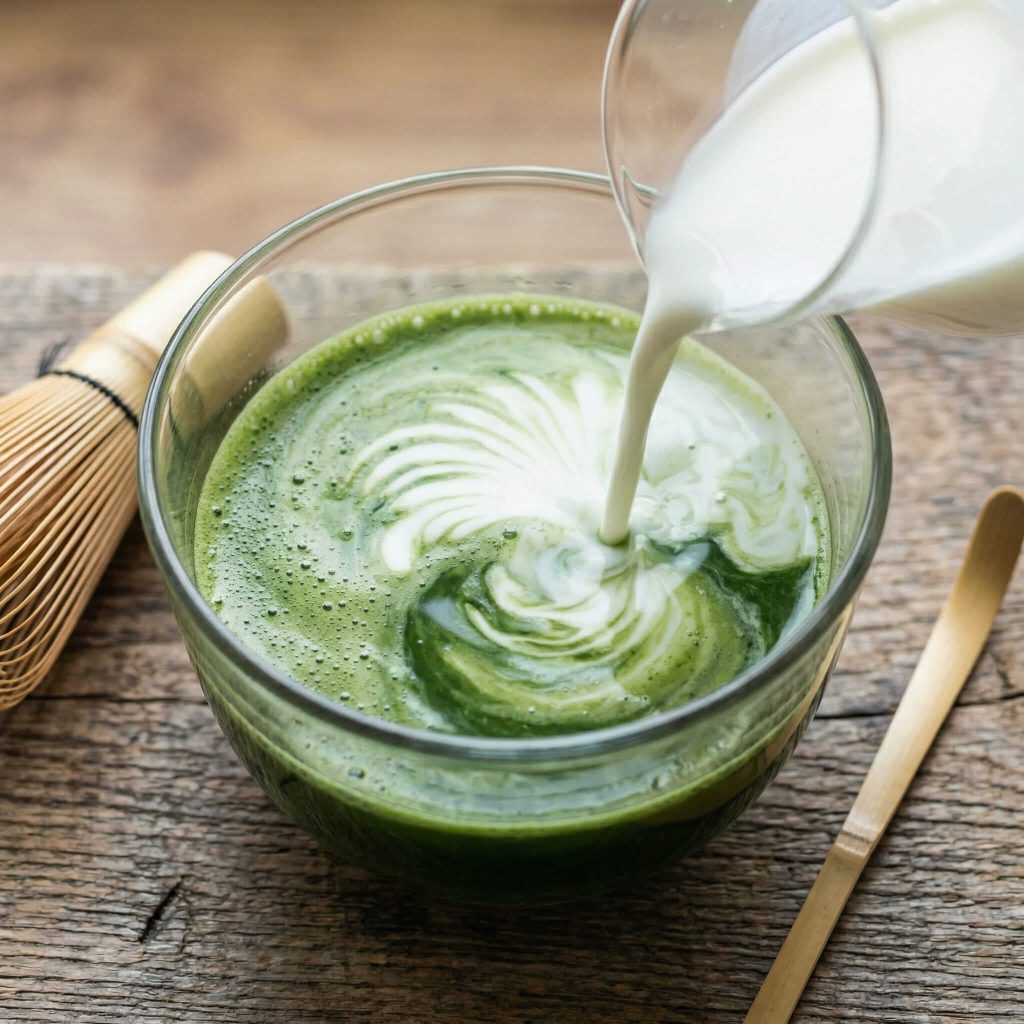
Consistency comes from a few controls. A measured dose (about 2 to 3 grams) ensures every drink is the same strength, while water that is hot but not boiling, around 70 to 80°C, prevents the bitterness that scalding water causes. Proper mixing, whether by whisk, frother, or shaker, eliminates clumps for a smooth texture. The workflow advantage is real: matcha simply replaces the espresso shot in your existing latte process, so baristas use the same milk and equipment they already know. The experienced rule: standardize the dose and temperature with simple tools, because eyeballing it is the main cause of cup-to-cup variation that disappoints repeat customers.
Key Takeaway: Baristas keep matcha consistent by standardizing dose, using water at 70 to 80°C rather than boiling, and mixing out clumps; matcha replaces the espresso shot in your existing workflow, so the main risk is unmeasured, eyeballed preparation.
Why does matcha texture and solubility matter for cafes?
Texture and solubility matter because a gritty, clumping powder slows service and produces an unpleasant cup. Here’s the operational pain point: a poorly milled matcha leaves residue at the bottom of the cup and takes longer to mix, costing both quality and speed behind the bar.
Particle fineness is the driver. Coarsely milled matcha, sometimes around 800-mesh, can feel gritty and chalky and resist dissolving, while an ultra-fine, stone-milled and screened powder mixes cleanly and fast. For a busy cafe, that solubility is a service-speed issue, not just a taste one, since every extra clump is extra seconds per drink across hundreds of cups. AdoroHu uses ultrasonic screening to achieve an ultra-fine, consistent particle size, so the powder suspends smoothly in milk instead of clumping. The judgment: test a sample’s solubility on your actual espresso bar before committing, because what looks fine dry can still clump in cold milk.
Key Takeaway: Texture and solubility are a service-speed issue, not just taste; coarse 800-mesh matcha clumps and slows the bar, while ultra-fine screened powder dissolves cleanly, so test a sample’s solubility in cold milk before committing.
How should a cafe design its matcha menu?
A cafe should design its matcha menu around versatile, high-margin drinks that showcase the powder across hot and cold formats. Here’s the strategy that maximizes return: matcha is endlessly adaptable, so a few well-built menu items capture different customers from one ingredient.
Range drives sales. Core items like a hot matcha latte and an iced matcha latte anchor the menu, while seasonal and signature drinks, matcha lemonade, matcha smoothies, or a flavored matcha, create variety and social-media appeal in this highly visual category. The experienced move is to lead with the iced matcha latte heading into spring and summer, since that is when cafe matcha demand spikes. A cafe can also cross-sell matcha into food and desserts for added margin. Building the menu on a reliable premium matcha base ensures every variation starts from consistent quality.
Key Takeaway: Design the matcha menu around versatile high-margin drinks, anchoring on hot and iced lattes and adding seasonal signatures; lead with iced matcha into spring and summer when demand spikes, and cross-sell into food for extra margin.
How does a cafe manage matcha supply and freshness?
A cafe manages matcha supply by forecasting demand, timing reorders, and storing the powder properly. Here’s the planning that prevents lost sales: matcha demand is seasonal and lead times can stretch, so running out during peak season means turning away high-margin orders.
Two factors need management. First, supply timing: wholesale lead times in 2026 can run two to four weeks, and demand spikes in spring and summer with iced lattes, so placing bulk orders one to two months ahead of peak secures stock. Second, freshness: matcha oxidizes, so store it cool, dark, and airtight, and use opened stock within about 60 to 90 days. The judgment: match order size to real turnover so you neither run out in peak nor over-stock into spoilage. A supplier with stable capacity helps a cafe avoid the stockouts that lose sales. AdoroHu’s 3,000-tonne capacity supports reliable year-round supply for a cafe’s reorder cycle.
Key Takeaway: Manage cafe matcha supply by ordering one to two months ahead of the spring-summer peak, since lead times run two to four weeks, and store cool, dark, and airtight, using opened stock within 60 to 90 days to balance availability against spoilage.
What mistakes do cafes make with matcha powder?
The biggest mistake is choosing matcha by price alone, then masking a poor powder with sugar. Here’s the pattern across underperforming matcha programs: each shortcut maps to a specific loss of quality, margin, or customers.
Watch for these traps, each with a named consequence.
- Buying cheap gritty matcha, then adding sugar that kills the health appeal.
- Using ceremonial grade in lattes, paying a premium for nuance lost in milk.
- Skipping barista training, so every cup tastes different and disappoints regulars.
- Using boiling water, scalding the matcha into bitterness.
- Failing to forecast peak demand, running out of stock in the busy season.
Each is avoidable with the right grade, method, and supplier. A vertically integrated supplier offering barista-ready grades and complementary lines like hojicha powder for a low-caffeine menu option removes most of these risks in one relationship.
Key Takeaway: Stop choosing cafe matcha by price alone; the mistakes that hurt a matcha program, gritty powder, wrong grade, no training, boiling water, and stockouts, each cost quality, margin, or customers, and all are avoidable with the right grade and supplier.
FAQ
- What grade of matcha is best for a cafe?
- A barista or latte grade is best for a cafe, because it is bold enough to taste through milk, vivid green, and ultra-fine for clean solubility. Ceremonial grade is wasted in a milk-based latte where its delicate nuance disappears, while basic culinary grade can be gritty and bitter, forcing baristas to mask it with sugar.
- How many matcha lattes does 1 kg of powder make?
- A standard 12 oz matcha latte uses about 2 to 3 grams of powder, so a 1 kg bag yields roughly 330 to 500 servings. This serving count is the basis for calculating cost per cup, which then informs your menu pricing and profit margins.
- Is matcha profitable for a cafe?
- Yes, matcha is highly profitable, with beverage margins often reaching 70 to 80 percent. Because a cup uses only 2 to 3 grams, the ingredient cost is low relative to the premium, wellness-driven price customers will pay, and matcha is a high-ticket drink that is faster to prepare than espresso.
- How do baristas make matcha consistently?
- By standardizing the dose at about 2 to 3 grams, using water at roughly 70 to 80°C rather than boiling to avoid bitterness, and mixing thoroughly with a whisk, frother, or shaker to eliminate clumps. Matcha replaces the espresso shot in the existing latte workflow, so no new equipment is needed.
- Why does my cafe matcha clump or taste gritty?
- Usually because the powder is too coarsely milled. Coarse matcha, sometimes around 800-mesh, resists dissolving and leaves residue, while an ultra-fine, screened powder mixes cleanly in milk. Test a sample’s solubility in cold milk on your espresso bar before committing, since what looks fine dry can still clump.
Conclusion
Matcha powder for a cafe business is about choosing a barista-ready grade that dissolves cleanly and tastes through milk, calculating cost per cup from the roughly 330 to 500 servings per kilo, training baristas for consistency, and pricing a menu for the 70 to 80 percent margins matcha supports. The decisive takeaway is that quality grade plus consistent preparation is what makes a matcha program both excellent and profitable. To build a profitable matcha menu on a barista-ready, reliably supplied powder, contact AdoroHu Matcha to request samples, barista-grade options, and a wholesale quote matched to your cafe’s volume.