
Pure Matcha Selection — For Brand Owners
Pure Matcha Grade & Specification
Selection
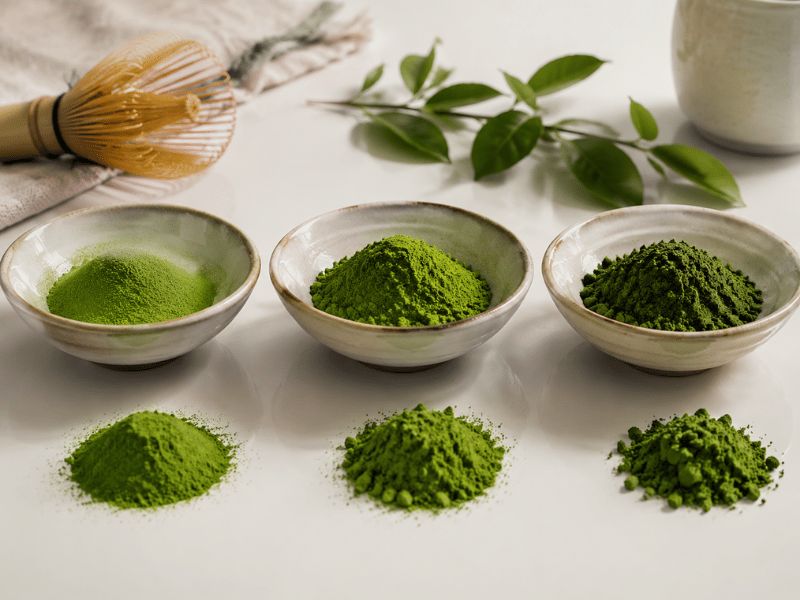
Compare E1–E7 and O1–O6 in your intended application, then document the selected grade, specification and supply requirements.






Who This Is For
Built for Brands That
Need a Clearer Matcha Specification
Use application testing to connect brand positioning with a defensible grade choice.

New Entrants
New Product Brands
Define your first matcha product through its intended use, target market and packaging needs.
Product Brief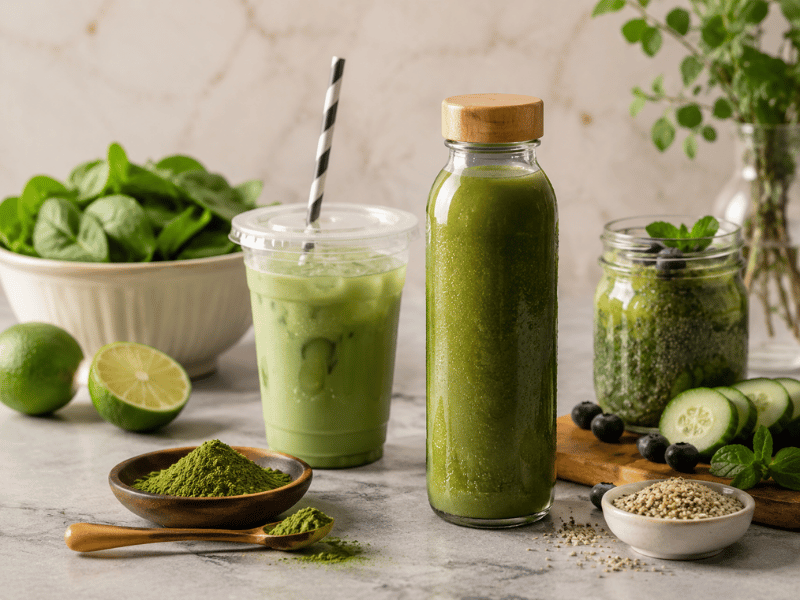
F&B Operators
Beverage & Tea Chains
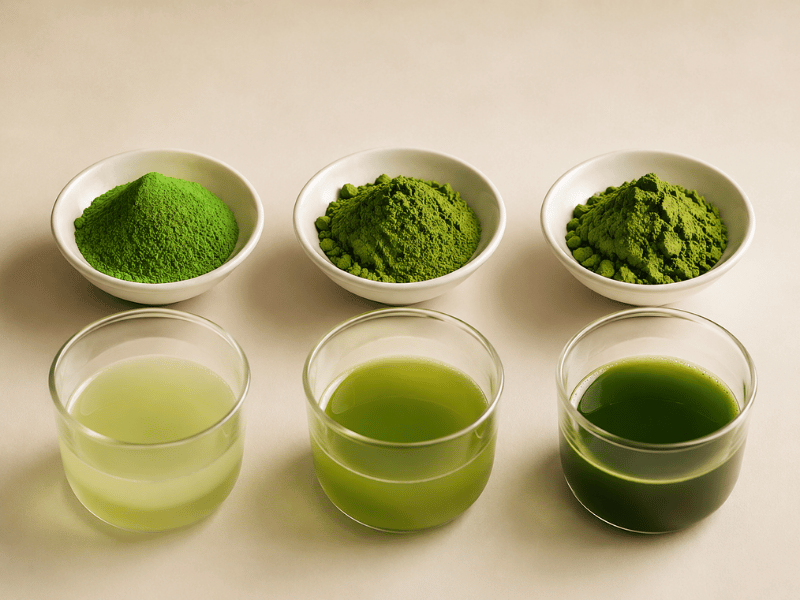
Evaluate color, aroma, umami, bitterness and mouthfeel in the buyer's real application before selecting a pure matcha grade.
Beverage Application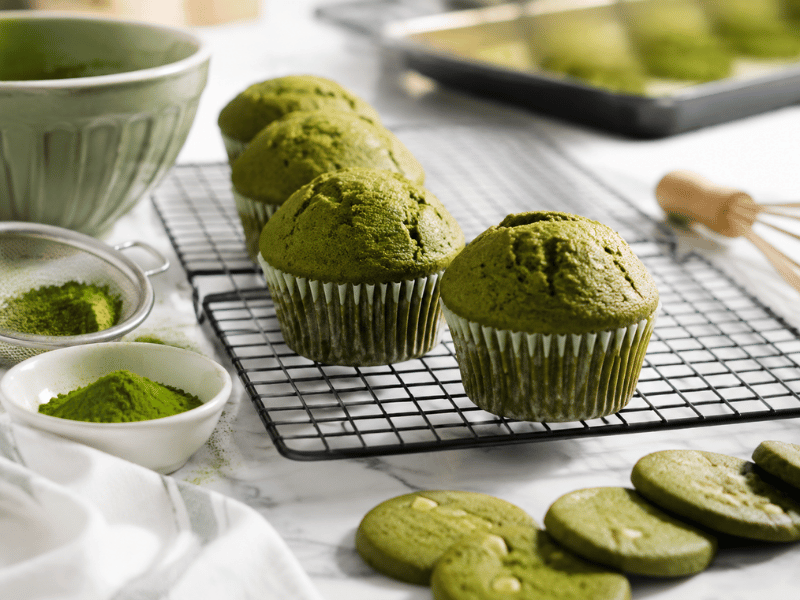
Food Producers
Bakery & Food Brands
Define receiving criteria before moving from sample comparison to supply planning.
Recipe Comparison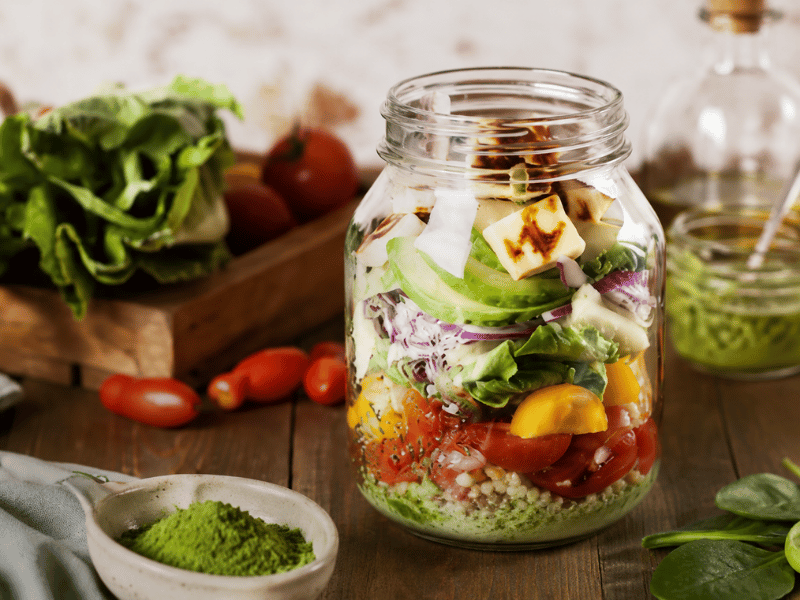
Wellness Sector
Organic Retail Brands
Compare Organic Series grades and review the certification scope for your intended market.
Organic ScopeNot sure which pure matcha grade fits your application? Confirm application, market and document needs before choosing the grade.
Talk to Our Technical TeamChallenges We Solve
Specification Questions
Holding Your Brand Back
Unclear Sensory Target
The Problem
A grade name alone does not tell your team how a sample will taste in the finished drink or food.
Our Solution
Compare Samples in the Real Application
Use the same recipe and preparation method to compare aroma, taste, color and mouthfeel.
Incomplete Receiving CriteriaThe Problem
Without an agreed specification, purchasing and quality teams may use different acceptance criteria.
Our Solution
Define the Selected Grade and Specification
Record sensory expectations and the relevant measurable parameters before commercial approval.
Missing Document ScopeThe Problem
A certificate or test report may cover a different product, operation or period from the proposed supply.
Our Solution
Review Product-Relevant Evidence
Check the available COA, certificate scope and supporting reports against your selected grade and market.
Unresolved Supply RequirementsThe Problem
A sample decision does not settle pack format, artwork, order quantity or shipping requirements.
Our Solution
Connect Selection with Supply Planning
Align pack format, artwork, destination and forecast before quotation.
Supply ReviewCommercial terms are confirmed per project after sample comparison and document review.
Selection Support
Five Selection
Capabilities, One Partner
Build a pure matcha specification from application trials, grade comparisons and project-relevant documents.
Sensory and Application Review
Color · Aroma · Taste · Mouthfeel
Describe the intended preparation method and compare samples under the same conditions. Record why the selected grade fits the product.
Grade and Specification Selection
EU Standard Series E1–E7 · Organic Series O1–O6
Choose culinary, premium or ceremonial options according to the application, then agree the grade-specific specification.
Sample Testing
Recipe Trial · Recorded Observations
Compare samples in the intended drink or food. Keep the dosage and processing conditions with the results.
Supply Planning
Grade · Pack Format · Forecast
Share expected demand and destination requirements. Bulk formats are 10 kg or 20 kg cartons; retail formats are reviewed separately.
Documentation & Support
Specification · COA · Certificate Scope
Request the available documents for the selected grade and confirm how they support your receiving requirements.
Have an application but no selected grade?
The review path moves from application brief to sample comparison, documentation check and project quotation.
Why It Matters
A Clear Matcha Specification
Gives Your Team a Shared Reference
Write down the grade and acceptance criteria agreed during sample review. Keep these with the available supporting documents.
Align procurement and quality decisions
Record the sample conditions
Identify the selected grade
Review applicable document scope
Define receiving checks
Plan supply against the same specification
How We Work
Six Steps from
Application Brief to Supply Review
Use this review sequence to organize the project. Confirm sample availability, documents and commercial requirements with our team.
Phase 01
Concept Brief
Describe the intended product, preparation method, target market and sensory preferences.
Product Brief DocumentPhase 02
Sample Selection
Discuss suitable samples from E1–E7 or O1–O6 based on the brief.
Candidate Grade ListPhase 03
Sensory Comparison
Compare color, taste, aroma and mouthfeel in the same application. Record dosage and process conditions.
Application Trial NotesPhase 04
Specification Review
Record the selected grade and agree the relevant measurable parameters and receiving criteria.
Agreed SpecificationPhase 05
Supply Review
Align the pack format, forecast, destination and artwork requirements before requesting the project quotation.
Supply and Packaging BriefPhase 06
Final Documentation
Review the available COA, certificates and reports relevant to the grade and destination.
Project Document RecordReady to begin your grade selection? Our team reviews your application, destination market and documentation needs before proposing next steps.
Submit Your Product BriefWhat to Evaluate
The Application Checks
That Inform Your Matcha Specification
Evaluate the product as your customers will use it, then define the specification and receiving checks.

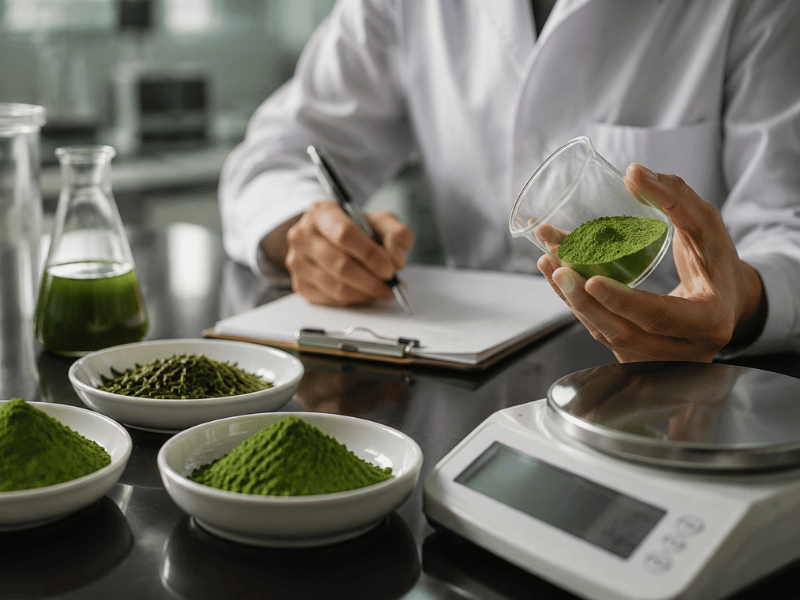
In-House QC Laboratory
In-house microbiology and physical-chemical laboratories support quality review.
Taste Profile
Sensory Balance
Record how the sample tastes in the actual recipe, including other ingredients and serving temperature.
Texture
Mouthfeel
Compare smoothness and visible particles in the finished product at its intended serving temperature.
Dispersion
Mixing Behavior
Observe how the powder incorporates into the chosen liquid or food base and record any settling during the intended service period.
Storage
Stability
Review the storage conditions and available supporting data for the selected grade and packaging.
Need help defining your application checks? We'll walk you through it.
Request a Technical ConsultationSelection Directions
Three Paths to a
Defined Matcha Product
Choose a starting point based on the intended application, market and documentation requirements.
 01
Application Performance
Sensory Comparison · Application Fit
Compare suitable pure matcha grades in the beverage or food recipe before approving the ingredient.
- Premium beverage menus & specialty lattes
- High-street retail matcha products
- Signature dessert and confectionery lines
02
Market and Format Fit
Destination · Channel · Packaging
Match the selected grade and pack format to the destination and sales channel. Check label and document needs during the project review.
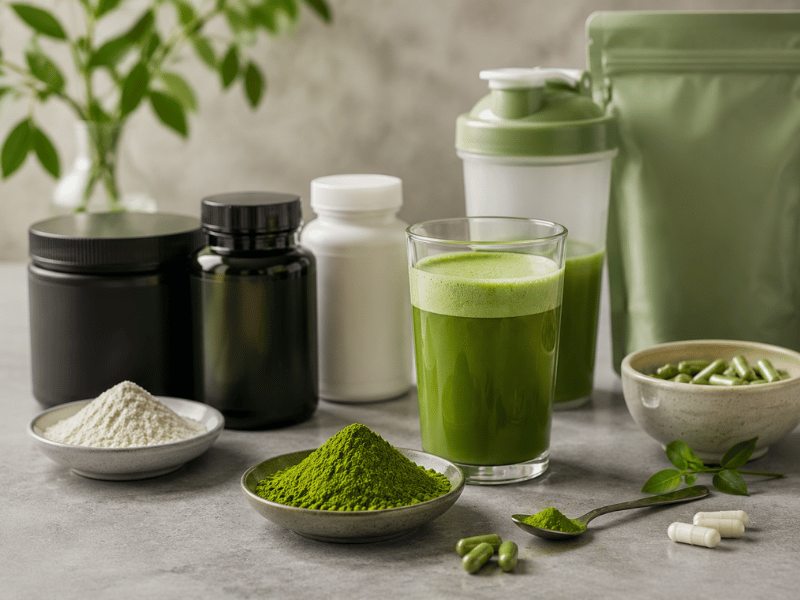
- Pure matcha for commercial beverage preparation
- Retail pouches of 30–500 g or tins of 30–100 g
- Bulk ingredient cartons of 10 kg or 20 kg
 03
Pure Matcha Selection
Grade · Application · Documentation
Use the E or O Series grade structure to compare options, with certification scope reviewed for organic projects.
- Culinary: E1–E2 or O1–O2
- Premium: E3–E4 or O3
- Ceremonial: E5–E7 or O4–O6
Application Review Framework
Specifications That
Support Commercial Decisions
These hypothetical buyer evaluations show how to organize a selection decision. They do not describe customer results or completed projects.
Hypothetical Beverage Evaluation
Compare premium grades in the same latte recipe.
Buyer Scenario · Café Program
Matcha Latte — Sample Comparison
Compare E3, E4 or O3 using the same milk base, dosage and preparation method. Record taste, color and ingredient cost before selection.
 Hypothetical Bakery Evaluation
Compare culinary grades using the intended baking process.
Buyer Scenario · Bakery Product
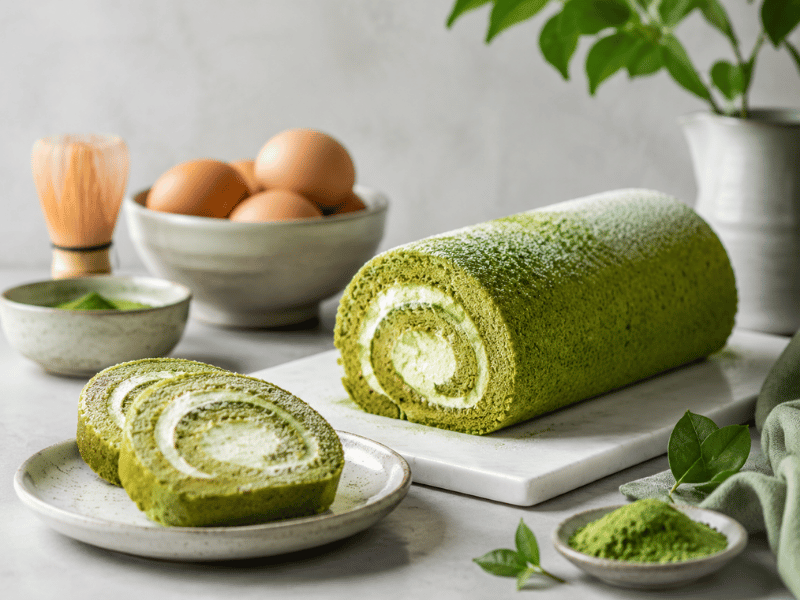
Matcha Cake — Recipe Trial
Compare E1, E2, O1 or O2 in the intended recipe. Review color and flavor after cooling alongside the quoted ingredient cost.
 Hypothetical Organic Retail Evaluation
Organic Scope Review
Buyer Scenario · Organic Retail Product
Organic Matcha — Grade and Pack Selection
Compare Organic Series samples for the intended preparation method. Review organic certification scope, label requirements and the retail pack format.
Use the same review approach for your product. It starts with a brief.
Start Your Matcha SelectionThe Business Case
Compare the Requirements Before
You Make the Decision
The value of sample-based selection is a documented purchasing decision. Evaluate costs and launch dependencies using your own project information.
| What You're Comparing | Selection by Grade Name Alone | Application-Specific Matcha Selection |
|---|---|---|
| Application Evidence | Application result still needs testing | Sample observations recorded in the real recipe |
| Launch Dependencies | Sample, packaging and documentation still need review | Sample, packaging and documentation organized around the brief |
| Cost Inputs | Grade price needs dosage and pack context | Grade, tested dosage and pack requirements reviewed together |
| Repeat Supply | Receiving criteria still need agreement | Receiving criteria recorded for later lot review |
| Team Alignment | Product expectations may remain informal | Procurement and quality share the selected specification |
Project Cost Review
Use the selected grade, dosage and packaging when comparing costs.
Supply Requirements
Confirm volume, destination and artwork before agreeing the schedule.
Project Specification Record
Keep the selected grade, sensory reference and agreed receiving criteria together.
Relevant Documents
Review the available COA, certificates and reports for your project.
Ready to discuss your product requirements? Start with the application and demand forecast.
Request a Commercial ConsultationOur Quality Capability
 In-House Quality Laboratories
 Sensory Evaluation
 Specification Review
The Production Resources Behind
Your Matcha Supply
Our facility in Jingshan, Hangzhou combines milling, screening and in-house quality laboratories. Discuss the evidence needed for your selected grade.
Microbiology and Physical-Chemical Laboratories
Our in-house laboratories support quality review. Ask which available tests and documents apply to your project.
Multi-Process Selection
Production capabilities include steaming and hot-air fixation. Confirm the process and specification relevant to the sampled grade.
Milling and Screening Equipment
Our equipment includes 20 stone mills, 56 ball mills, 8 continuous ball-mills and ultrasonic screening.
Production and Supply Capacity
Matcha capacity is approximately 6 t/day. Confirm the schedule and commercial terms for your selected grade and order.
Matcha Specification
Selected Parameters,
Reviewed and Recorded
Use this checklist to agree the parameters and evidence needed for your project. Grade-specific limits and test methods must be confirmed in the actual specification.
| Parameter | Review Method | Purpose in the Selected Specification |
|---|---|---|
| Sensory Balance | Compare samples in the intended recipe | Record the preferred balance of umami, sweetness and bitterness |
| Mouthfeel | Assess the finished product and request the particle-size specification | Define texture expectations using the intended preparation method |
| Mixing Behavior | Record preparation conditions and observe dispersion | Document incorporation and settling during the intended use period |
| Color Value | Compare samples under consistent conditions | Record powder and finished-product appearance separately |
| Moisture Content | Request the grade-specific limit and available COA result | Define the agreed moisture receiving criterion |
| Stability | Review the intended storage and handling conditions | Identify the supporting data relevant to the selected grade and packaging |
| Shelf Life | Request product-specific guidance and evidence | Use the confirmed shelf life and storage conditions in inventory planning |

Matcha Documentation Package
Selected Grade and Agreed Specification
Relevant Certificate Scope
Need to see the specification format? Ask which example documents are available.
Request a Sample Spec DocumentCompliance & Supply
Your Selected Grade, Supported by
Project-Relevant Documentation
Confirm the scope, dates and relevance of each document before approving the selected product for your destination.
USDA Organic (NOP) & EU Organic
Review the organic certification scope and label requirements for the selected Organic Series product.
Organic Project ReviewISO 22000 & FDA Registered
Review the food safety management certificate and registration status applicable to the supplying operation.
Supplier Document ReviewSafety Test Reports
Ask which reports are available for the selected grade or lot, and check their scope against destination requirements.
Scope and Date ReviewHalal & Kosher
Request applicable certification documents where these are part of your product or customer requirements.
Certification Scope Review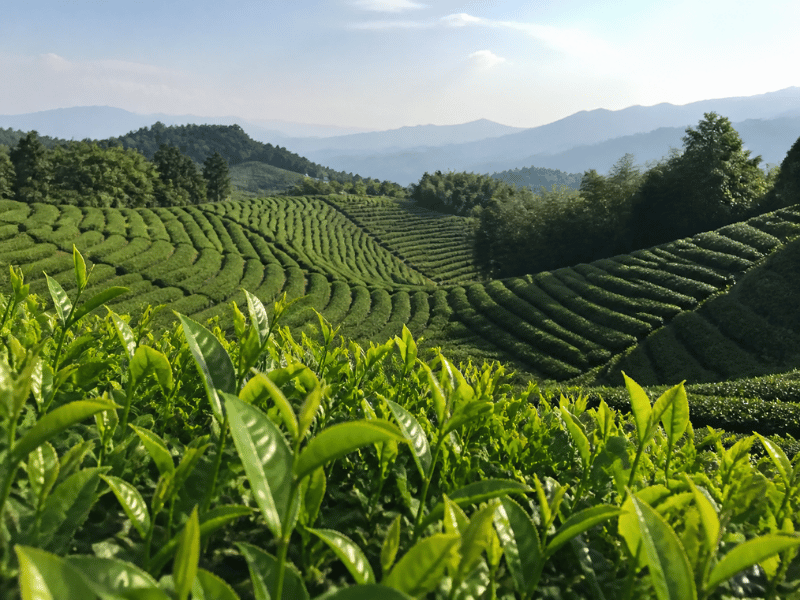
Production Resources
Jingshan, Hangzhou
Estate and partner tea gardens cover over 20,000 mu, including 6,000 mu of organic-certified gardens.
Estate and production heritage dates to 2001.
Integrated Production and Export Coordination
Production and quality control are based in Jingshan, Hangzhou; international business and export coordination are based in Shenzhen.
Approximately 6 t/day matcha capacity supports supply planning.
Bulk: 10 kg or 20 kg cartons with sealed food-grade liners.
Retail: 30–500 g pouches and 30–100 g tins or aluminium boxes.
Single serve: 1–3 g sachets, with brand artwork and project requirements reviewed before quotation.
Need certification documents for your compliance team? Confirm the relevant document set during sample review.
Request Certification DocumentsStart Your Matcha Partnership with a Reliable Source
Share your application so we can discuss suitable pure matcha grades, specifications and supply requirements.
Thank you for your enquiry. Our team will review your project details.