Applications — Matcha for Latte
Matcha for Latte —
Consistent, Scalable,
Ready for Volume
Stable color, smooth taste, and repeatable results for beverage brands that cannot afford a bad cup.





Who This Is For
Built for Every Beverage
Business That Serves Matcha
From single-outlet specialty cafés to multi-country beverage chains — this solution is engineered for anyone whose brand depends on a consistently great matcha latte.
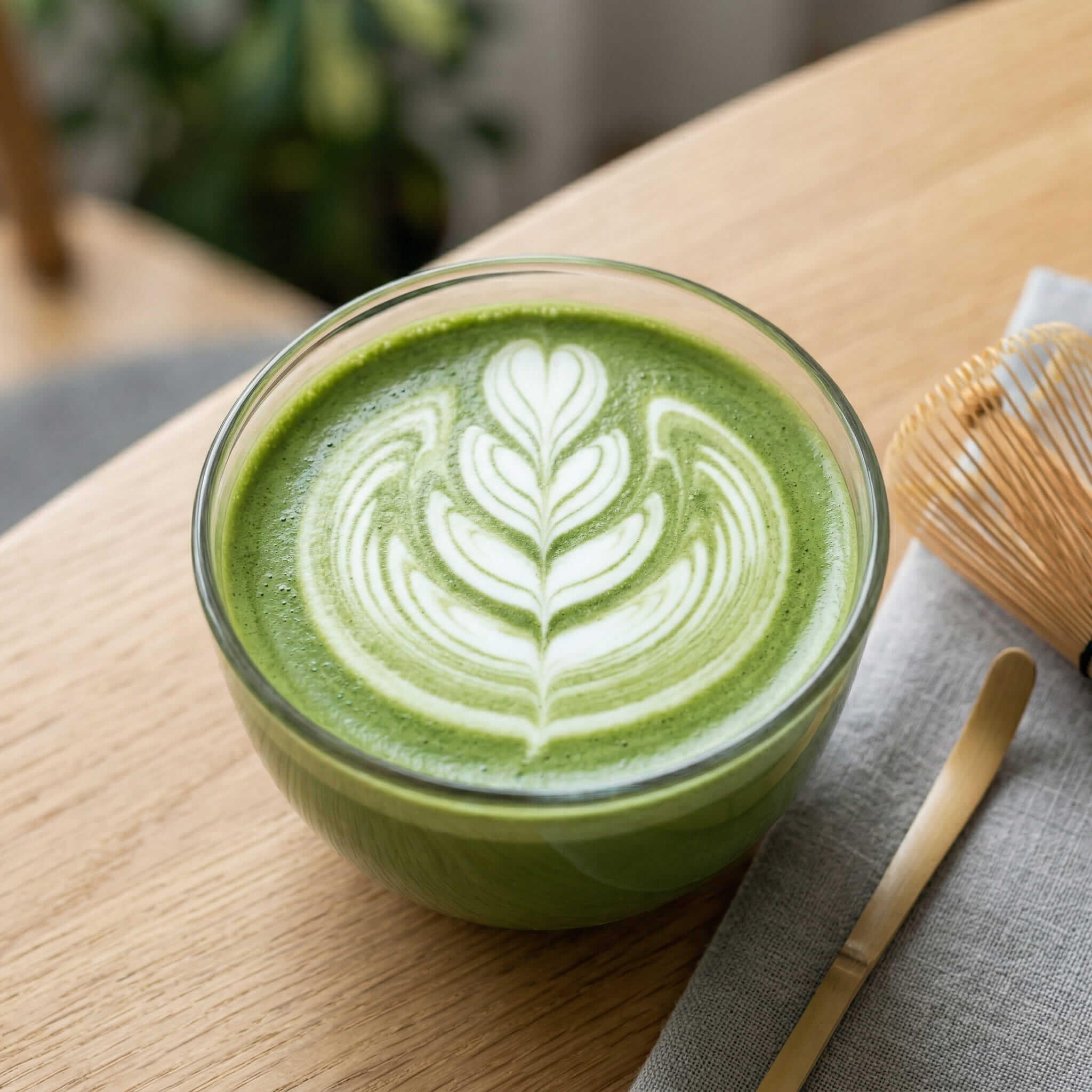
Coffee Shops & Chains
Specialty cafés and multi-outlet coffee chains that need a premium-grade matcha delivering vivid color and smooth umami across every shift, every barista, every location.
Latte · Signature Menu
Beverage Brands
RTD and bottled beverage producers that require shelf-stable jade color, consistent flavor intensity batch-to-batch, and full compliance documentation for retail and distribution buyers.
RTD · Bottled · Retail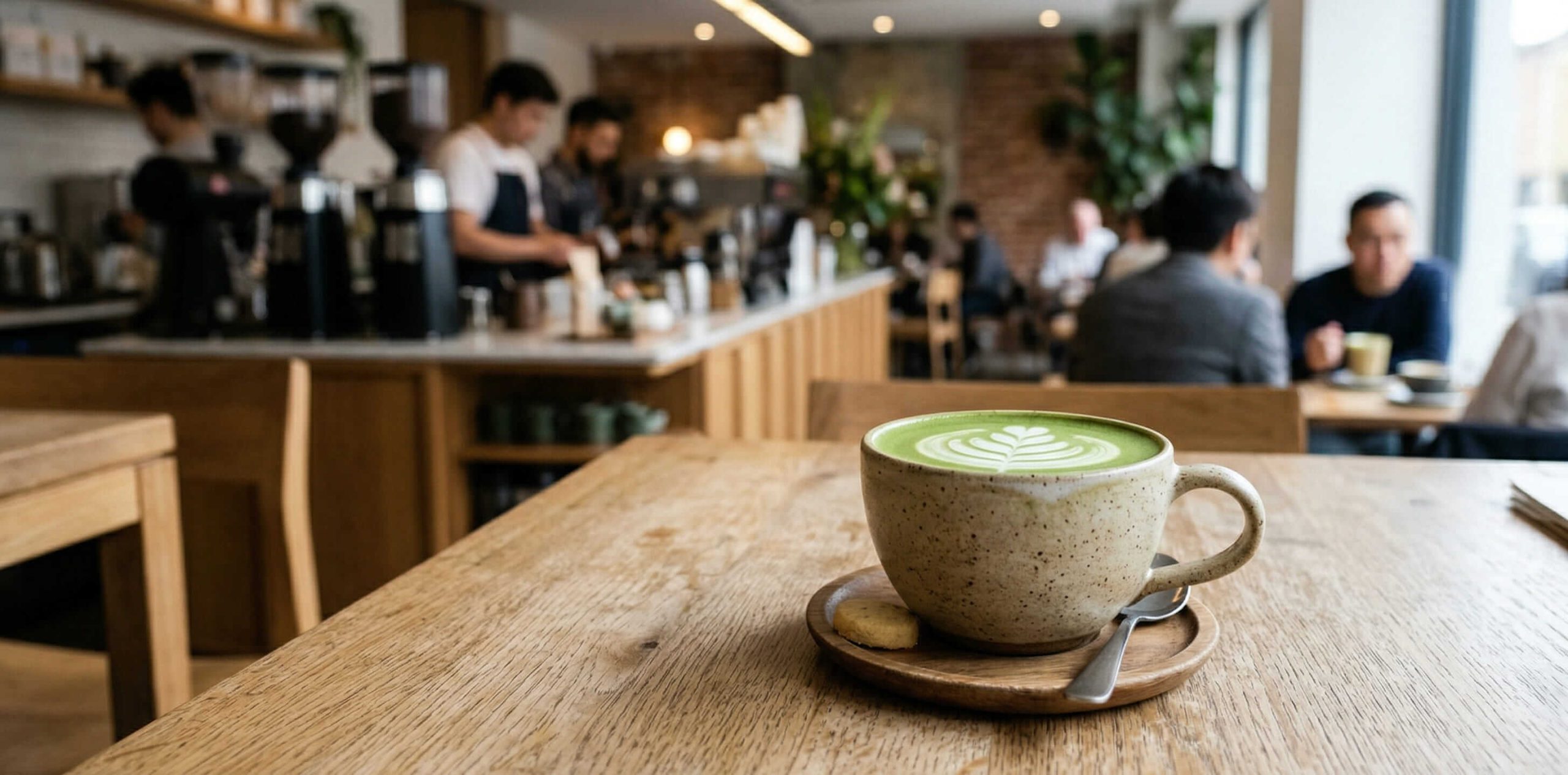
Bubble Tea Stores
Fast-growing bubble tea networks with high daily volumes that demand a matcha grade maintaining color vibrancy and flavor accuracy across every single cup — even in peak hours.
Bubble Tea · High Volume
New Drink Startups
Emerging beverage brands launching their first matcha line who need a supplier offering low MOQ, free samples, OEM flexibility, and documentation that satisfies investor and retail partner requirements from day one.
Startup · OEM · Low MOQSee yourself in one of these? Let's find the right grade for your product.
Talk to Our TeamThe Real Problems
Why Matcha Lattes
Fail at Scale
These are not rare edge cases — they are the four sourcing problems that cause beverage brands to lose customers, reformulate, and switch suppliers. Each has a direct cause in the powder.
Color Turns Yellow or Dull
Your matcha latte opens green, then turns olive or yellow within days. Customers notice. Your brand aesthetic breaks down at the point of sale.
Bitter or Overly Strong Taste
Customers describe the latte as harsh, grassy, or medicinal. Staff increase milk ratios to compensate — increasing cost, reducing matcha character, and destroying recipe standardization.
Inconsistent Batches
One shipment is vibrant and fresh. The next is duller, slightly different in taste. Your team recalibrates every time a new bag opens — and your quality control becomes inconsistent sourcing management.
Hard to Standardize Recipes
Without a powder that behaves identically every batch, writing a scalable recipe is impossible. New locations, new baristas, or new batches all introduce unpredictable variables that undermine your SOP.
Each solution is backed by documented process controls and per-batch COA reports
Our Solution
Four Properties That Make a
Latte-Grade Matcha
Our latte-optimized matcha is engineered around four measurable quality parameters — each one directly addressing a problem that beverage brands face when scaling from single-cup to multi-location production.
Stable Color Matcha
CIE L*a*b* Verified
Steam-Fixed · Nitrogen-Sealed · No Yellowing
Every bag is graded against a defined CIE L*a*b* color standard before it ships. Steam fixation locks chlorophyll at peak concentration, and nitrogen-flushed aluminum foil packaging prevents oxidative color loss — so the jade you see in the sample is the jade you serve six months later.
Smooth Flavor Profile
Low Astringency · High Umami
Shade-Grown · First Flush · Sweet Umami Finish
20+ days of pre-harvest shading drives L-theanine accumulation and suppresses catechin bitterness. The result is a naturally sweet, umami-forward flavor that pairs cleanly with dairy and plant-based milk — no sugar needed to mask a bitter note, no extra milk to balance a harsh finish.
Standardized Quality
Batch-to-Batch Consistency
ISO 22000 · Per-Batch COA · 483-Point Residue Test
Each production run generates a Certificate of Analysis covering particle size distribution, moisture content, color measurement, and heavy metal screening. Your QC team gets numbers, not promises — enabling you to build recipes that work identically across every location and every order placed with us.
Latte-Optimized
Instant Dispersion
1000-Mesh Grind · Fast Dispersion · Custom Blend Available
Ground to 1,000 mesh for complete and instant dispersion in cold and hot milk — no clumping, no sediment, no chalky mouthfeel. Blend ratios can be adjusted for your specific recipe ratios, cup size, and milk type. A matcha that behaves the same way every time your barista prepares it means your recipe finally scales.
Ready to build your signature latte on a foundation that holds? Start with a free sample.
Request Free SampleThe Science Behind It
Three Properties That
Define a Latte-Ready Matcha
Not all matcha behaves the same in milk. A powder that looks vibrant in a bowl may turn dull in an iced latte within minutes. Understanding why starts with three measurable properties — and knowing what the right numbers look like.
Color Stability
Jade Green That Holds — In the Cup and Over Time
Color is the first thing a customer sees. The CIE a* value measures green intensity: a higher positive value means deeper jade. Steam fixation locks chlorophyll at peak concentration. Without it, chlorophyll degrades to pheophytin — and your latte turns olive or yellow before it reaches the table.
Flavor Balance
Natural Sweetness, Low Astringency
Bitterness in matcha comes from catechins — compounds suppressed by pre-harvest shading. Twenty or more days under shade nets drives L-theanine up and catechin content down. The result is a smooth, umami-forward flavor that pairs cleanly with milk without requiring sugar correction.
Grind Fineness
Silky Texture, Complete Dispersion
Particle size determines mouthfeel and suspension. Matcha ground to 1,000 mesh disperses completely in cold and hot milk — no gritty residue, no settling, no chalky film. Coarser grinds create the sandy texture that customers notice after the first sip and won't come back for.
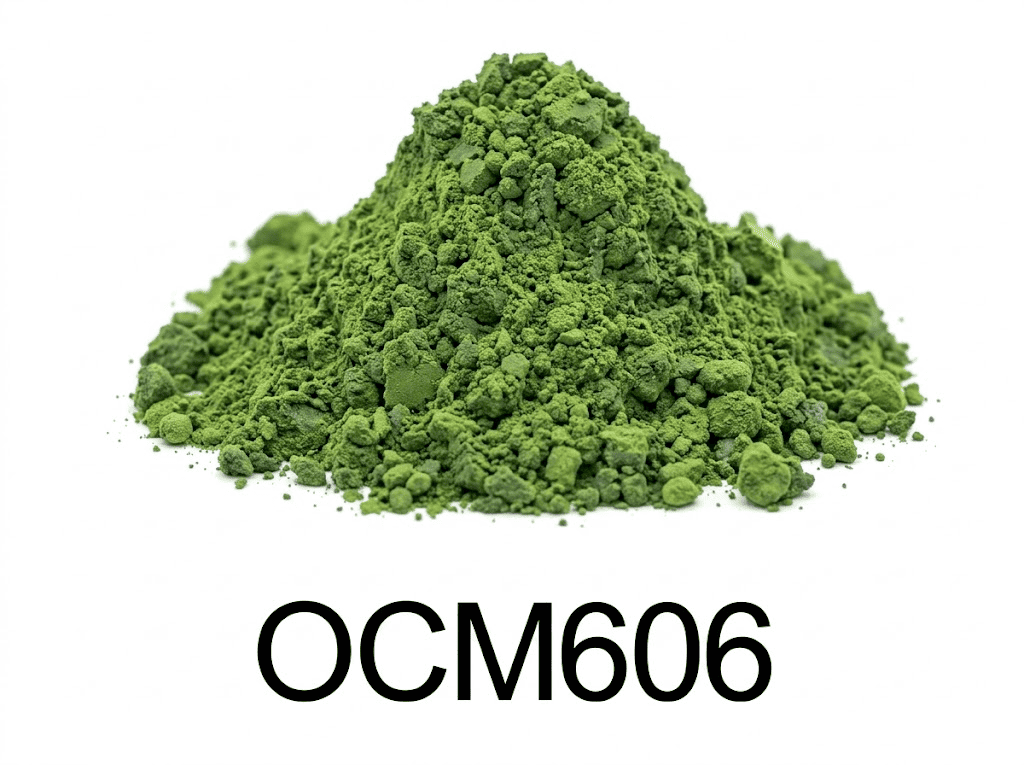 Latte-grade matcha — CIE a* verified jade color
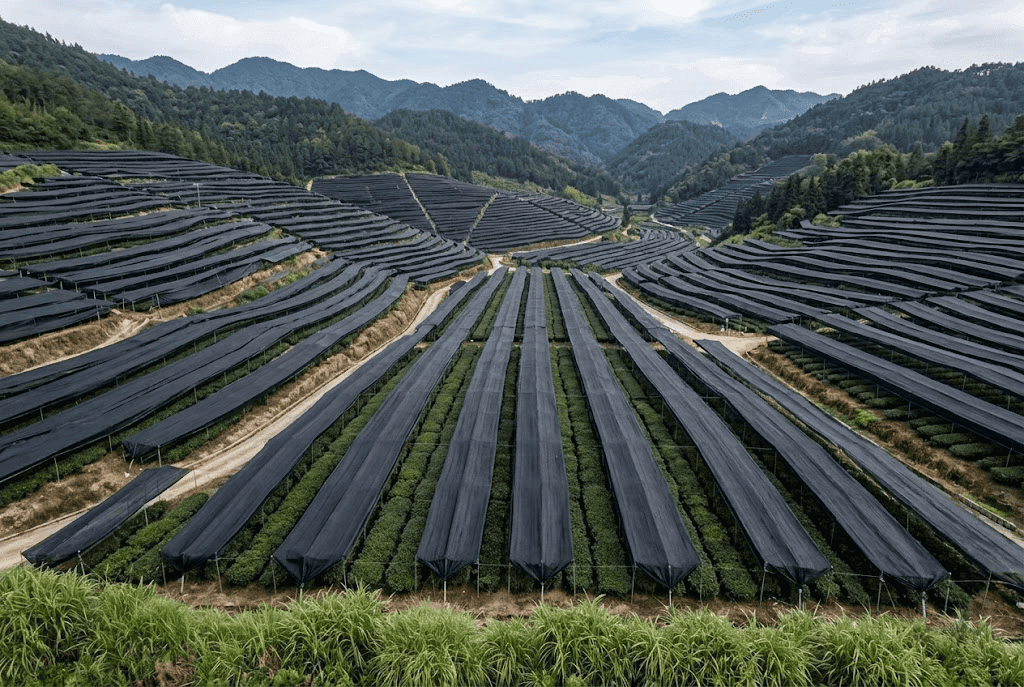 20+ Day Pre-Harvest Shading
1,000-Mesh Ultra-Fine Grind
20+ Day Pre-Harvest Shading
1,000-Mesh Ultra-Fine Grind
Root Cause Analysis
The Real Reason Your
Latte Isn't Working
Every quality complaint in a matcha latte traces back to a specific supply decision. Here are the three most common problems — and the sourcing root cause behind each one.
"It tastes bitter and harsh."
Customers stop ordering. Staff add extra sugar or more milk — hiding the problem instead of solving it. Recipe costs rise. Margin disappears.
Root Cause
Low-Grade Raw Material — Wrong Cultivar or Insufficient Shading
Catechin content — the primary driver of bitterness — is suppressed by shade-growing. Matcha produced from unshaded or low-shade leaves retains high catechin levels that no processing step can remove. The fix is upstream: the right cultivar, shaded for the right duration before harvest.
"The color looks dull or yellow."
A lackluster, olive-toned latte signals low quality to the customer before they take a sip. In a visual-first culture, color is part of the product — and a yellow latte doesn't get photographed or reordered.
Root Cause
Fixation Process Failure or Post-Production Oxidation
Chlorophyll degrades to pheophytin — an olive-brown pigment — when enzyme activity isn't halted immediately after harvest (fixation) or when exposed to oxygen in packaging. Inadequate steam temperature or poor packaging seal are the most common causes. Neither is recoverable once the damage is done.
"There's a gritty, chalky feeling."
Customers describe a sandy texture on the palate or powder floating on the surface of cold milk. It makes the latte feel unrefined and amateurish — regardless of the quality of the milk or preparation technique used.
Root Cause
Insufficient Grind Fineness — Particle Size Too Coarse
A matcha labeled "fine" may still be 300–500 mesh — coarse enough to feel gritty in cold milk and resist full suspension. Latte-grade matcha requires 800–1,000 mesh or finer to achieve complete dispersion in both hot and cold liquid without sedimentation or surface film.
Which of these is your current problem? We'll match you to the right grade — free sample included.
Request Diagnostic SampleProduction Logic
The Standard
Matcha Latte Formula
A repeatable, scalable matcha latte starts with a powder that behaves identically every time. Here is the five-step production logic — with the ratios and parameters that make it replicable across any outlet, any barista.
Measure Powder
3–5 g / servingWeigh precisely — not scoop. Consistent dosing is the foundation of a reproducible recipe across locations.
Mix with Hot Water
30–40 ml · 70–80°CWhisk into a smooth paste first. Lower water temperature preserves umami and prevents bitterness from heat extraction.
Add Milk
150–200 mlWhole milk or oat milk delivers the best texture with our latte grade. Plant-based alternatives work cleanly without flavor interference.
Texture Foam
55–65°C IdealSteam or froth to microfoam. The smooth flavor profile of our latte-grade matcha holds through milk frothing without losing its character.
Serve
Immediate · 340–400 mlConsistent jade color and aroma at the point of service. No stirring required — 1,000-mesh dispersion holds suspension throughout.
Free with every sample request — includes recipe ratios,
recommended grades, and SOP template
Choose Your Solution
Three Matcha Paths —
One Right Fit for Your Brand
Premium cafés, high-volume chains, and brands building a unique identity all need different matcha solutions. Here are the three we've engineered specifically for latte applications — and how to choose.
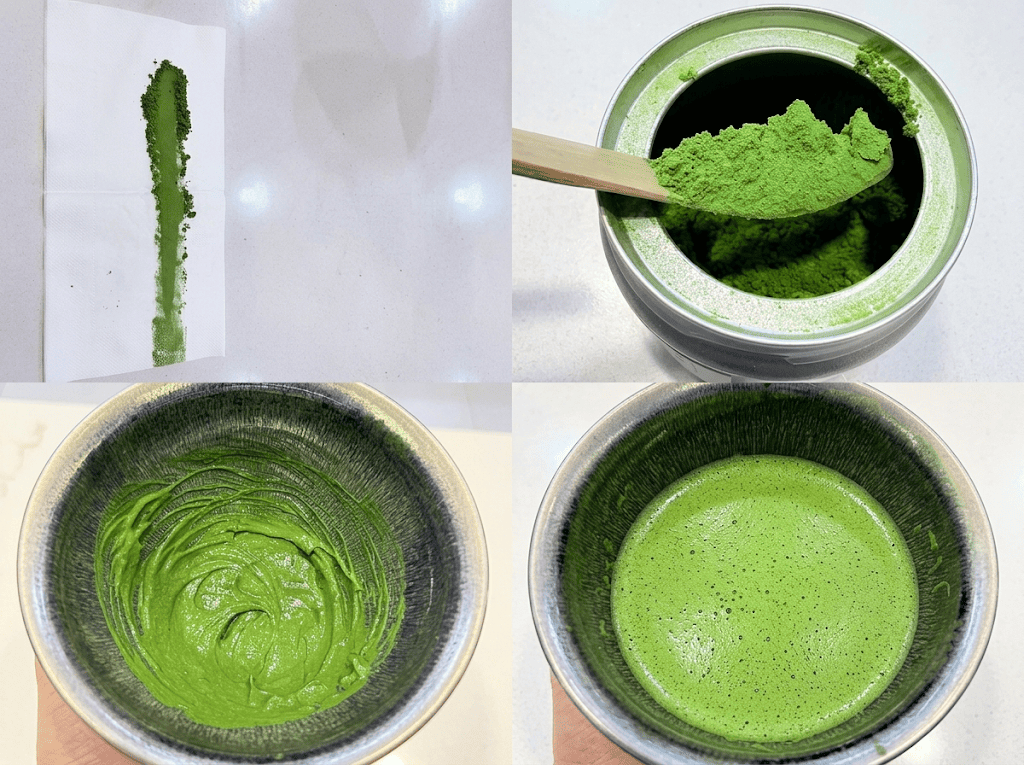
Premium Matcha
→ Best for specialty cafés & premium menus
Steam-fixed, shade-grown, first-flush leaf ground to 1,000 mesh. Delivers the vibrant jade color and sweet umami depth that justifies a premium price point and earns repeat orders from quality-conscious customers.
- Bright jade color: CIE a* value guaranteed
- Sweet umami, zero bitterness — no sugar needed
- Works with dairy, oat, and plant-based milk
- MOQ from 5 kg — ideal for boutique volumes
Instant Matcha
→ Fast, scalable, zero-prep chain deployment
Pre-dissolved matcha powder engineered for speed and consistency in high-volume operations. Disperses instantly in cold and hot milk with no whisking required — cutting prep time and eliminating barista skill variability at scale.
- Instant dispersion — no whisk, no paste step
- Stable across cold and hot milk applications
- Consistent cup output at high daily volumes
- Reduces labor cost per serving by up to 40%
Custom Blend
→ Unique brand flavor, fully yours
A formula developed around your specific flavor brief — grind fineness, color target, sweetness level, and origin — packaged under your brand. The only way to own a matcha latte that no competitor can replicate, because the recipe belongs entirely to you.
- Custom flavor profile: floral, roasted, or blended
- Branded packaging designed to your specifications
- Origin-specific sourcing available on request
- Full OEM documentation for retail and compliance
Not sure which path fits? Tell us your application and we'll recommend the right starting point.
Get a RecommendationBusiness Case
The Real Cost of
Getting Matcha Wrong
The price on the spec sheet is rarely the real cost. Labor overhead, prep complexity, waste from inconsistency, and recipe reformulation all add up — often making a "cheaper" powder the most expensive decision a beverage operation makes.
| Metric | Standard Matcha Unspecified Grade |
Our Premium Latte Grade Steam-Fixed · 1,000 Mesh |
Our Instant Grade Pre-Dispersed · Chain-Ready |
|---|---|---|---|
| Labor Cost per Cup | High — whisking + paste step | Medium — paste step only | Low — add and stir |
| Cups per Shift | Lower — slower prep time | Good — efficient for café pace | High — no prep bottleneck |
| Batch-to-Batch Stability | Inconsistent — no COA | High — CIE color + particle COA | High — standardized formula |
| Recipe Standardization | Difficult — variable powder | Easy — consistent spec | Very easy — instant format |
| Color Consistency | Poor — yellowing common | Excellent — jade verified | Excellent — formula stable |
| Waste from Bad Batches | High — rejection risk | Near zero — COA pre-cleared | Near zero — standardized |
| Training Complexity | High — skill-dependent | Medium — simple SOP | Low — no skill required |
Labor Savings (Instant Grade)
Up to 40%
Reduction in per-cup labor cost by eliminating the paste step and whisking requirement — significant at 200+ daily cups.
Reformulation Cost Avoided
Zero
Side-by-side COA comparison on every order means your recipe parameters never shift — no reformulation triggered by a changed batch.
Sample-to-Bulk Match
100%
Every sample and bulk order share the same batch process — quantitatively verified by COA comparison. No supply surprises on scale-up.
See which grade delivers the best unit economics for your operation.
Get a Cost ComparisonOur Technology
The Process Behind
Every Consistent Cup
Consistency in your latte starts long before the powder reaches your kitchen. Three production technologies — each engineered to eliminate the exact variables that cause color, flavor, and texture failures in the cup.
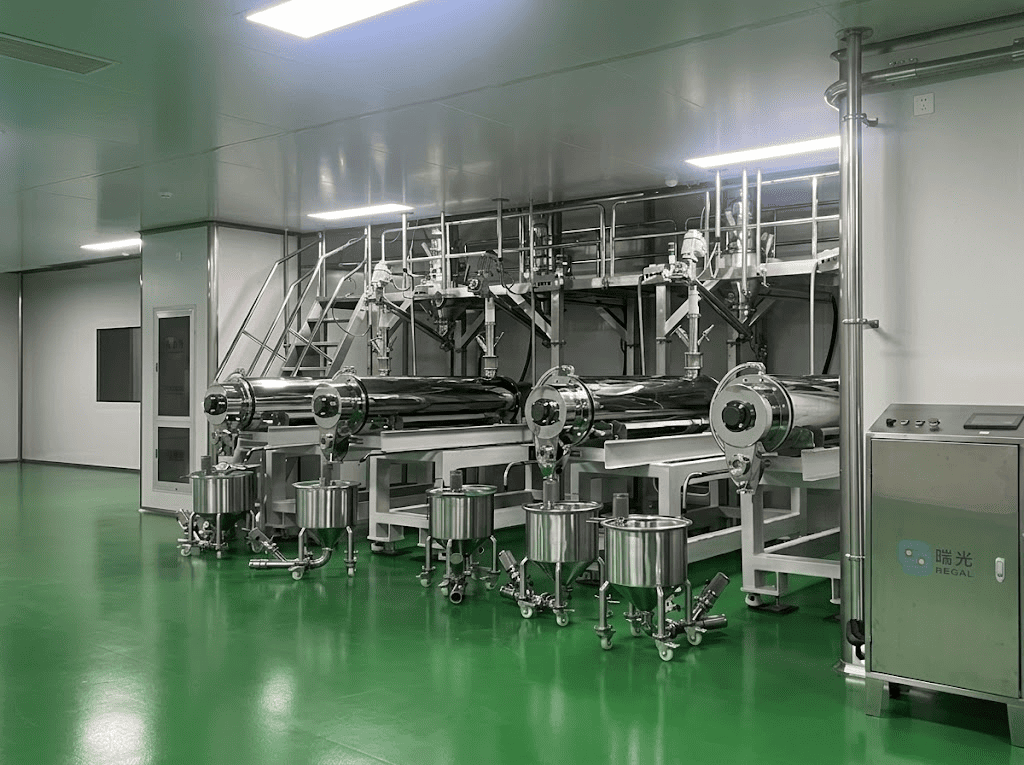
Steam-Fixed for Freshness
Japanese-style steam fixation halts enzymatic activity within seconds of harvest — locking chlorophyll at peak concentration and preserving the full L-theanine content that gives latte-grade matcha its natural sweetness. This is the process that keeps your cup jade-green, batch after batch.
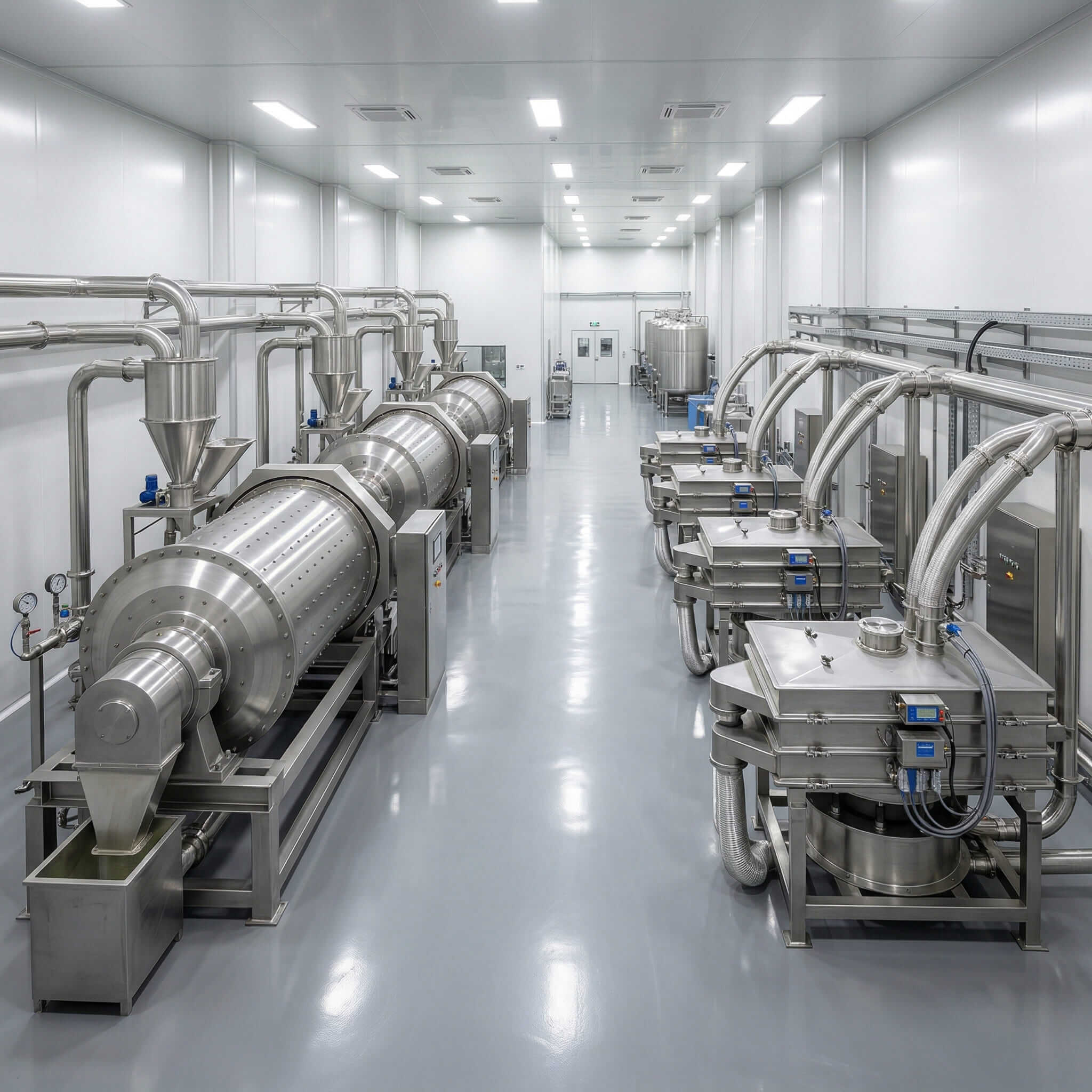
Hot-Air Fixed for Depth
Our Chinese-style ultra-high temperature hot-air process at 380°C removes low-boiling grassy aromatics and develops a deeper, roasted matcha character — ideal for high-volume operations where a bolder, more persistent flavor holds through larger milk ratios and ice dilution.
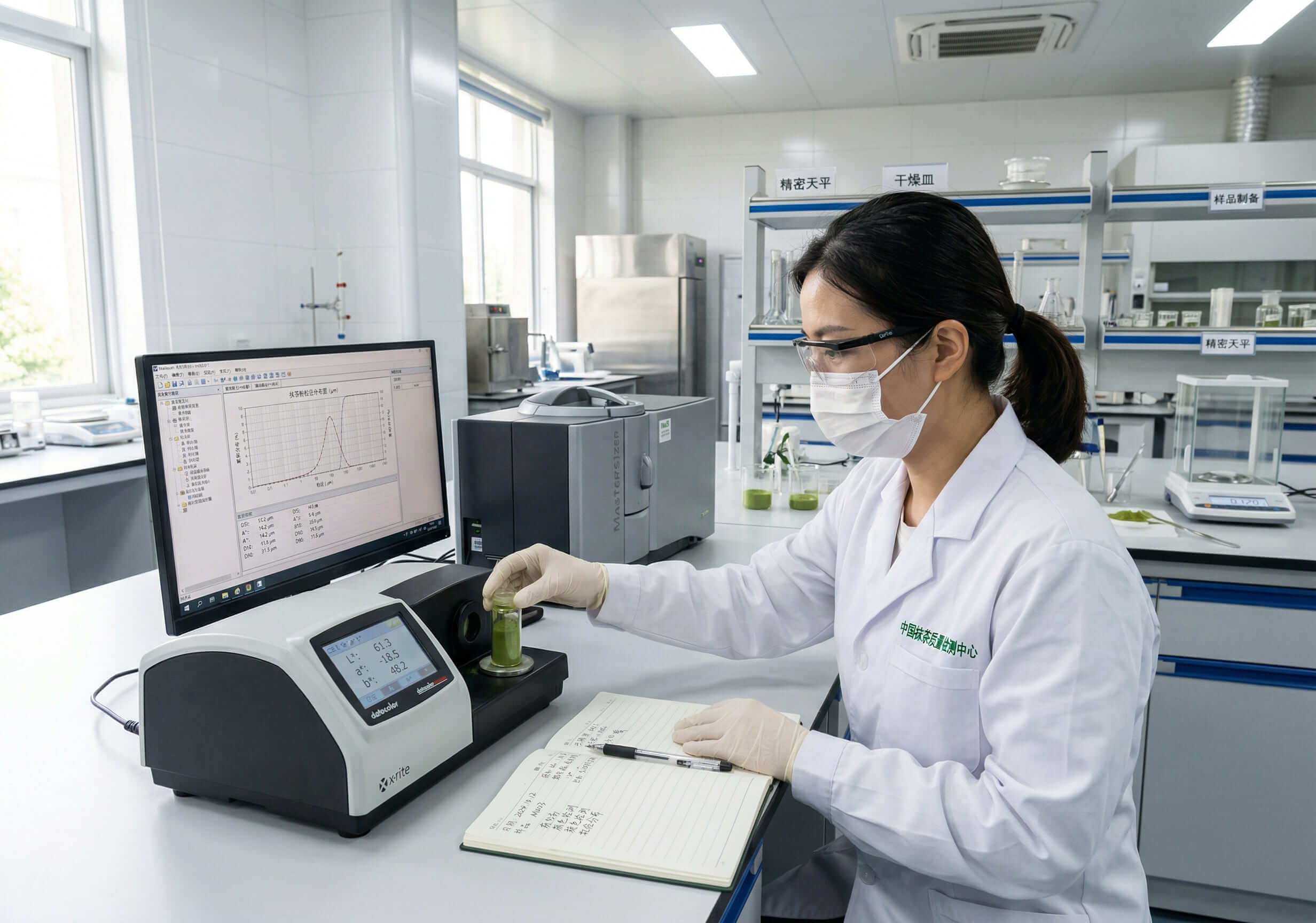
Per-Batch Quality Control
Every production run generates a COA covering CIE L*a*b* color value, particle size distribution (D50/D90), moisture content, and 483-point pesticide residue screening. You receive the document with your shipment — and can cross-check sample versus bulk numerically, not just visually.
380°C
Hot-air fixation temperature
for deep aroma development
1,000+
Mesh grind fineness
for complete milk dispersion
483
Pesticide residue parameters
tested per batch
ISO
22000 clean-room packaging
nitrogen-flushed aluminium foil
Want to see the full production documentation? It ships with every sample request.
Request Sample + COAWhat It Looks Like in Practice
From Powder to
Brand-Level Beverage
The proof is in the cup. These are the outcomes beverage operators achieve when they build on a powder that is engineered — not just sourced — for latte applications.
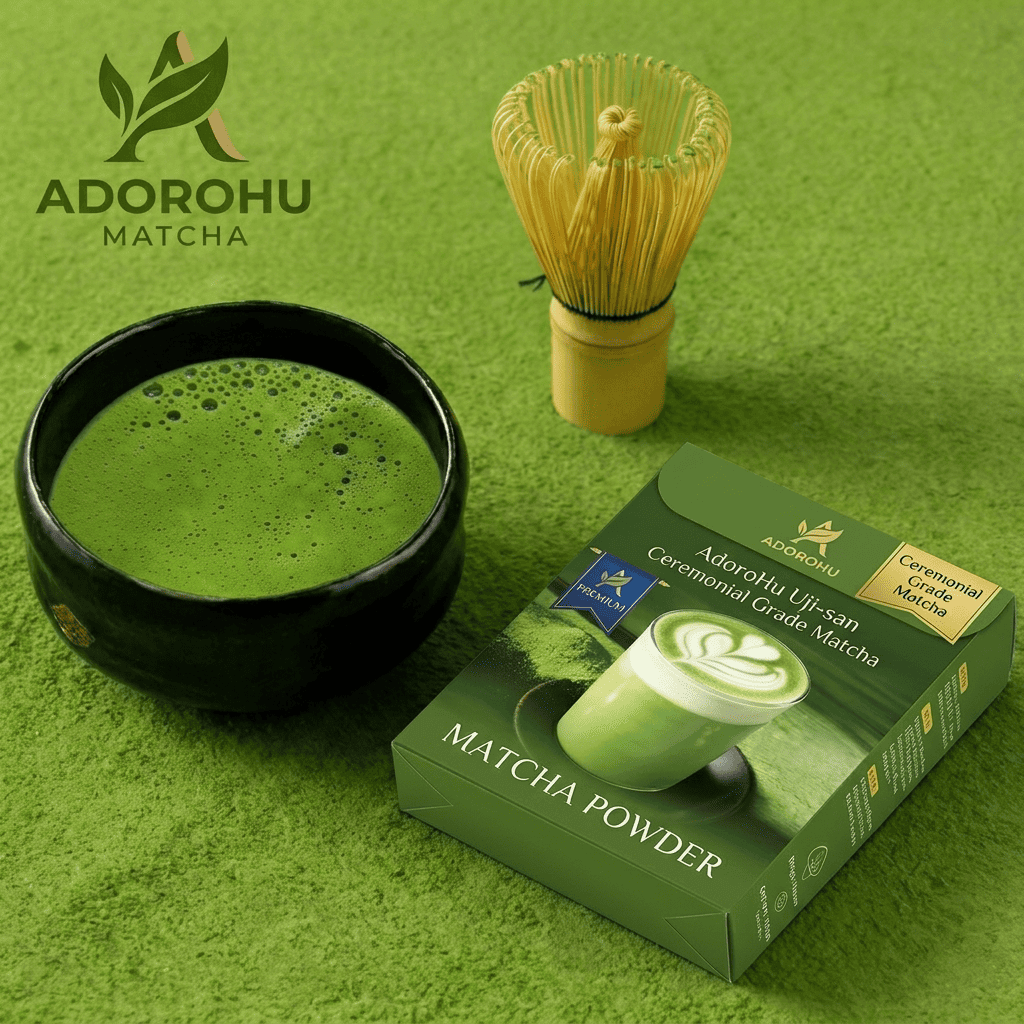
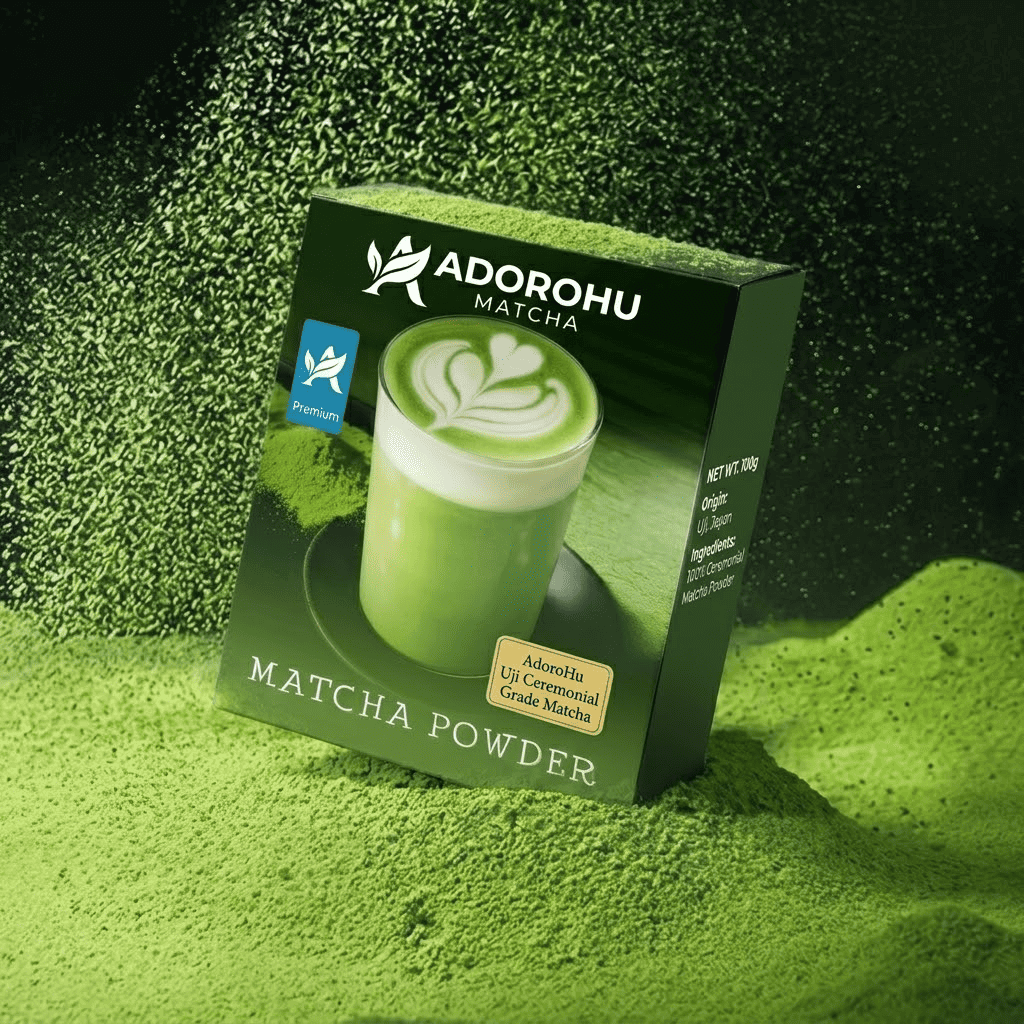
Café-Grade Premium Matcha Latte
Jade-green to the rim — CIE a* verified, no yellowing in service
Iced Latte — Chain Format
Instant grade — no whisking, zero settling
Specialty Beverage
Custom blend — proprietary flavor, branded identity
RTD Retail Bottle
Shelf-stable color with COA compliance docs
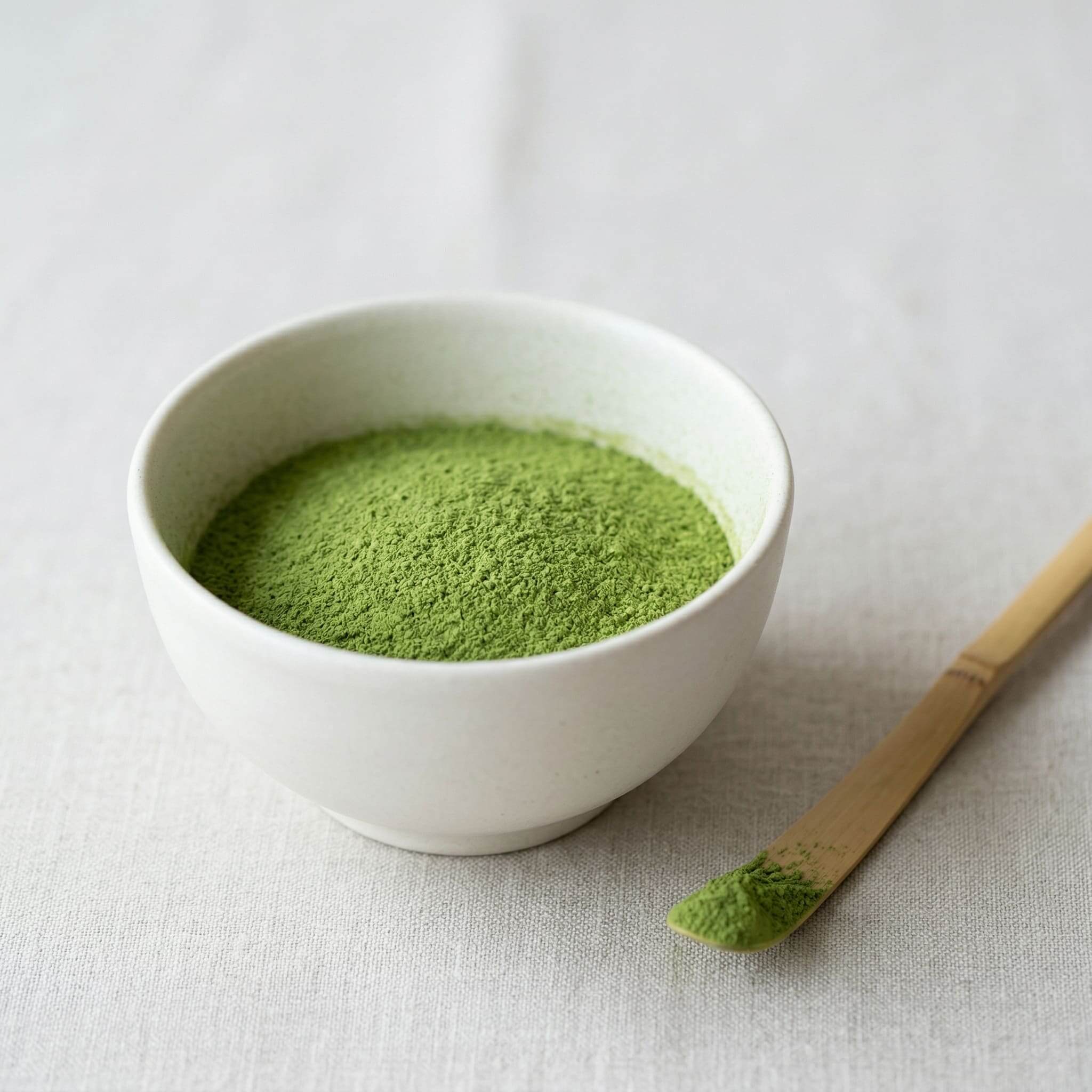
1,000-Mesh Latte Powder
The ingredient behind every result shown here
100%
Sample-to-Bulk Color Match
Operators who switch to our latte grade report zero color variance between their approved sample and their bulk shipments — verified by side-by-side COA comparison on every order.
1 SOP
One Recipe Across All Locations
A consistent powder spec means a consistent recipe. Multi-outlet operators who previously recalibrated per location now run a single SOP — with no barista skill variation affecting the outcome.
48 hrs
From Brief to Sample Confirmation
Every new inquiry receives a grade recommendation within 48 hours. Your sample ships within 7 business days — with a full COA and the recipe guide included, so you can test against your existing formula from day one.
Ready to see these results in your own operation? Start with a free sample today.
Request Free SampleCompliance & Facility
Every Certificate Your
Buyers Will Ask For
Beverage brands selling into retail, foodservice, or regulated markets need supplier documentation that passes procurement review without a second request. Here is everything we provide — and the facility it comes from.
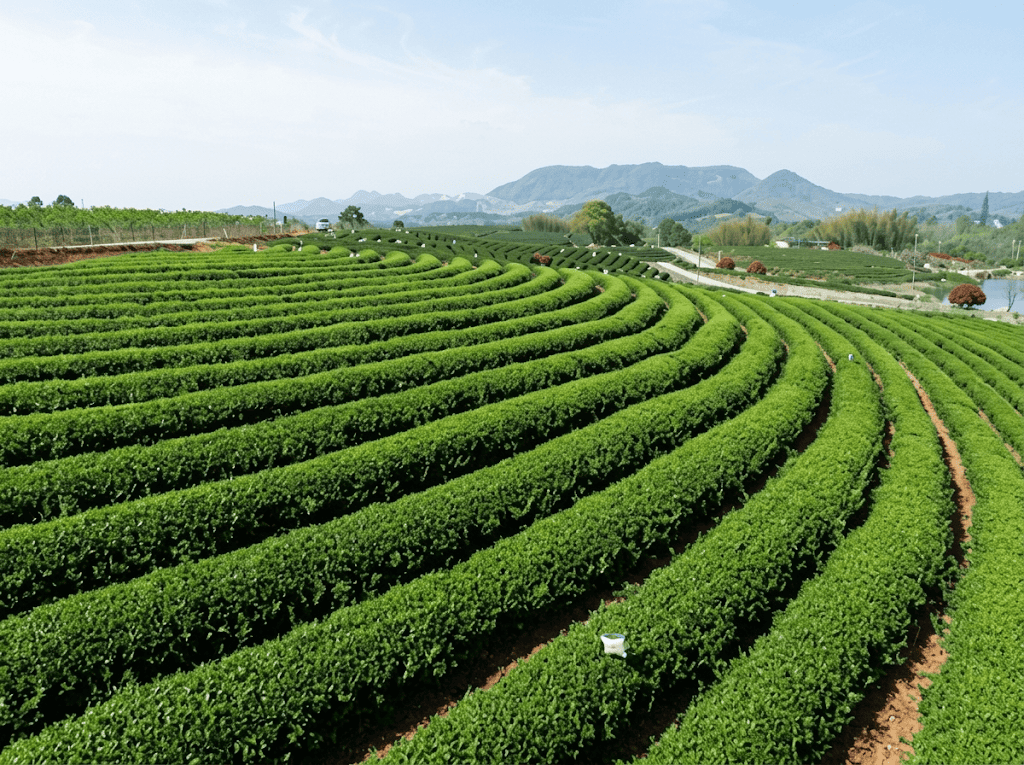
Maoshan Tea Garden — 1,000 Acres, Jingshan, China
China's first dedicated matcha production base · Established 2001 · USDA & EU Organic Certified
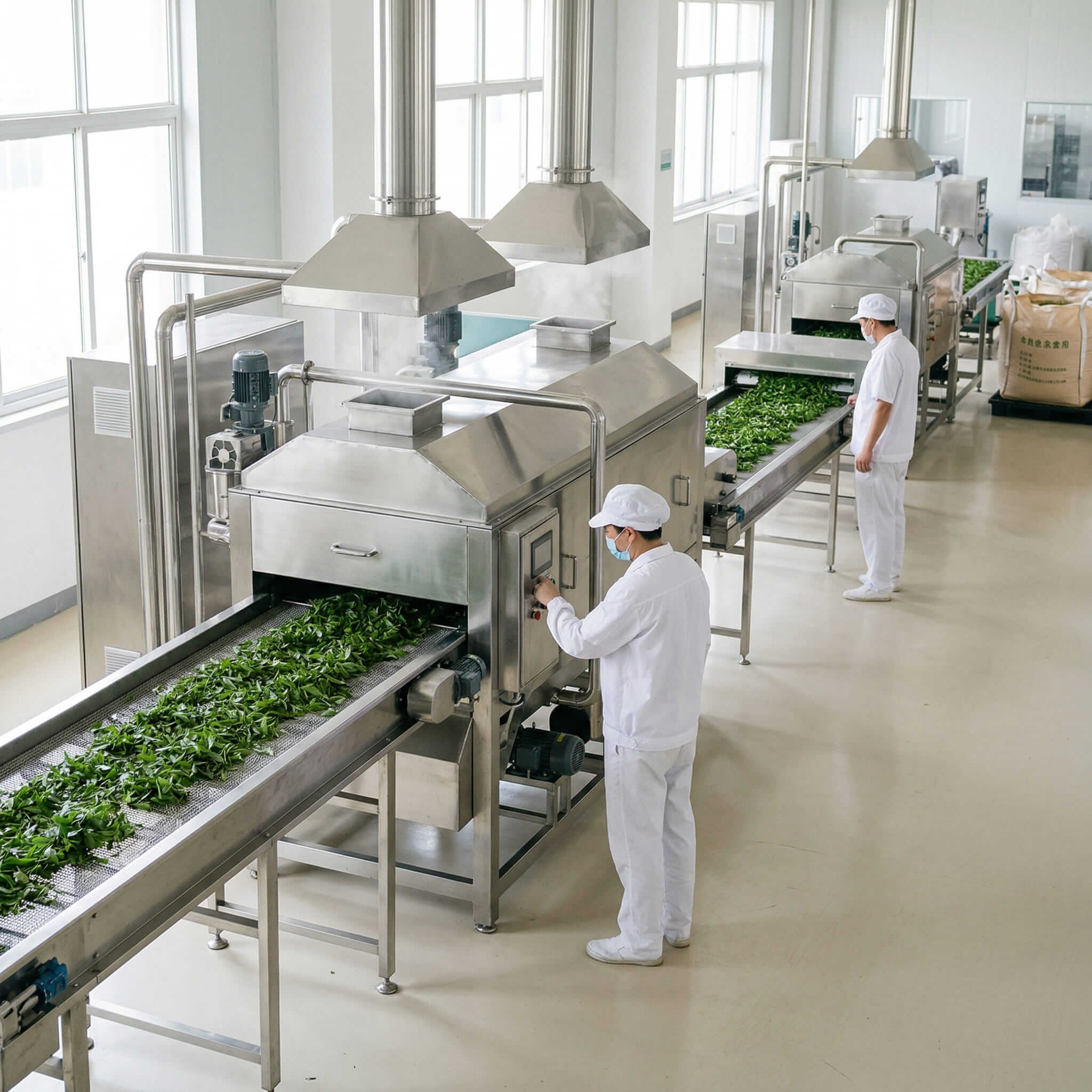
Dual-Process Fixation Lines
Steam & 380°C Hot-Air
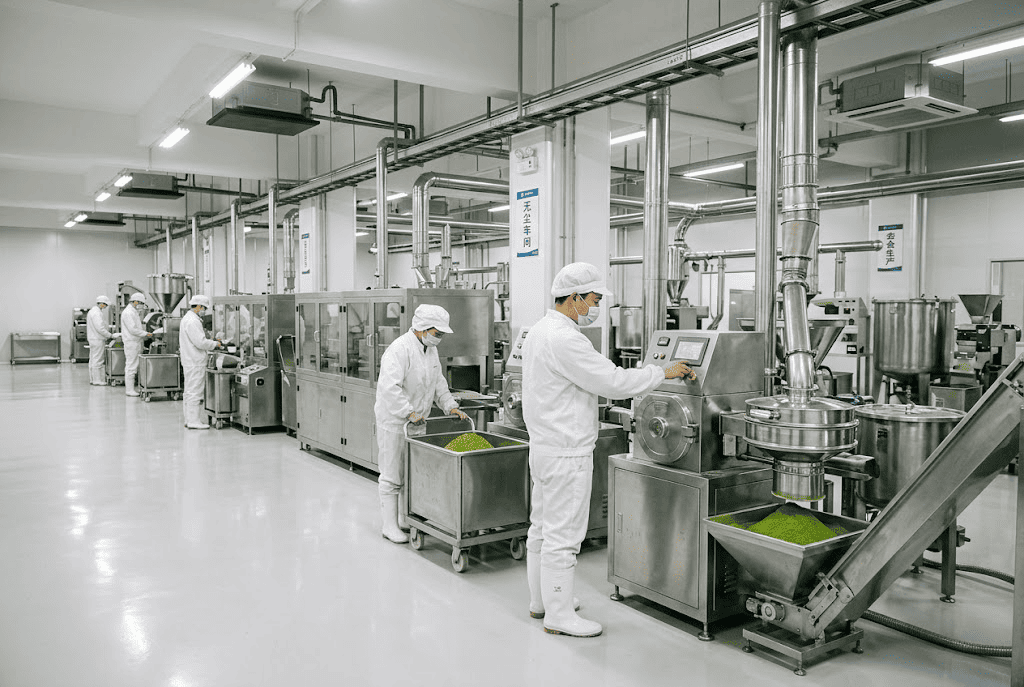
ISO 22000 Clean-Room Packaging
Nitrogen-Flushed Aluminium Foil
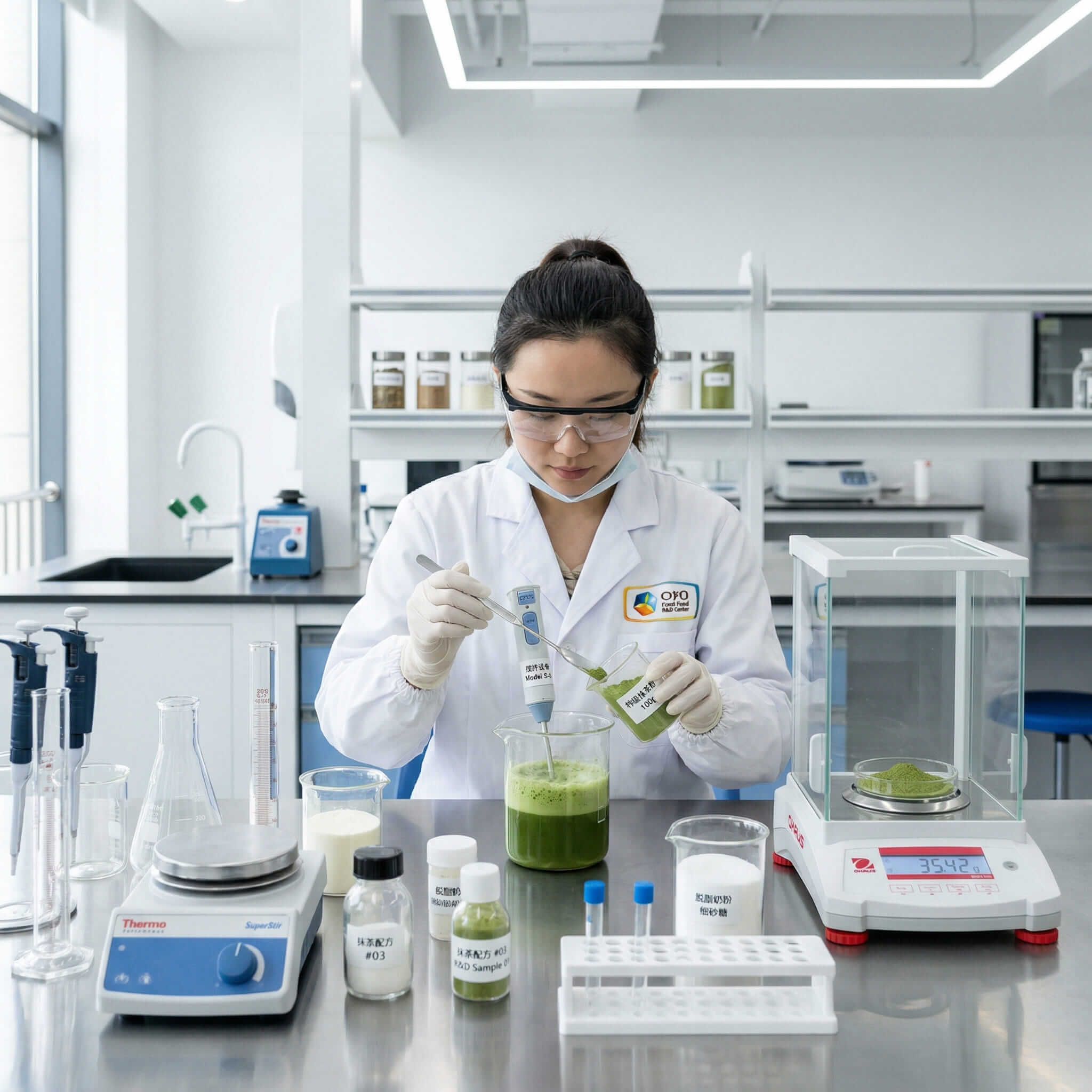
In-House QC Laboratory
COA · 483-Point Residue Test
Certifications We Hold
USDA Organic
Certified under the National Organic Program (NOP). Required for all US retail and foodservice buyers making organic label claims — covers our farm, processing, and handling operations. Organic Trade Certificate (TC) issued per shipment.
US MarketEU Organic
Certified to EC Regulation 834/2007. Grants direct access to European Union organic markets including Germany, France, the UK, and the Netherlands. TC documentation provided per shipment for full import compliance.
EU MarketISO 22000
Food safety management system certification. Provides the structured HACCP and prerequisite program evidence demanded by major retail buyers and branded beverage supply chains globally.
Global RetailJAS
The benchmark food safety standard for beverage ingredient suppliers — required by major café chains and foodservice procurement teams. Signals production facility compliance at the highest industry level for food ingredients.
Foodservice · ChainsHALAL Certified
Certified compliant with Islamic dietary law. A mandatory requirement for distribution across Southeast Asia, the Middle East, and Muslim-majority consumer segments in European and North American markets.
SE Asia · Middle EastKOF-K Kosher
Certified under KOF-K supervision — one of the most widely recognised kosher agencies globally. Enables distribution in the United States, Israel, and European Jewish communities without additional certification steps.
US · IsraelISO 22000
International food safety management system standard covering the full supply chain from farm to finished product. ISO 22000 forms the foundational quality management framework underlying all certifications we hold.
Global StandardCOA & Test Reports
Every shipment includes a full Certificate of Analysis: CIE L*a*b* color value, particle size (D50/D90), moisture content, and heavy metals. Third-party SGS and Eurofins reports available on request per batch.
All ShipmentsNeed certification documents for your compliance team? We'll send them today.
Download Cert DocumentsStart Your Matcha Partnership with a Reliable Source
We grow, process, and export our own matcha. No middlemen — which means better quality, more stable pricing, and a supply chain you can depend on season after season.
Thank you — a member of our team will respond within one business day.