
Applications — Matcha for Baking
Matcha for Commercial Baking
and Desserts
Compare E1, E2, O1 or O2 under the same recipe and process, then approve the finished result and pilot record.






Who We Serve
Built for Brands That
Bake at Scale
Start with culinary grades and compare them in the actual product, process and cost model before selecting commercial supply.

Large-Scale Bakeries
Bakery teams can compare color, flavor and dosage in cakes, breads and laminated products using their normal production process.

Pastry & Dessert Makers
Dessert teams can assess matcha character, texture and finished color in their intended pastry, mousse or confection.

Food & Ingredient Makers
Food manufacturers can review the grade, specification and documents needed for their ingredient and finished-product requirements.
Private Label & OEM
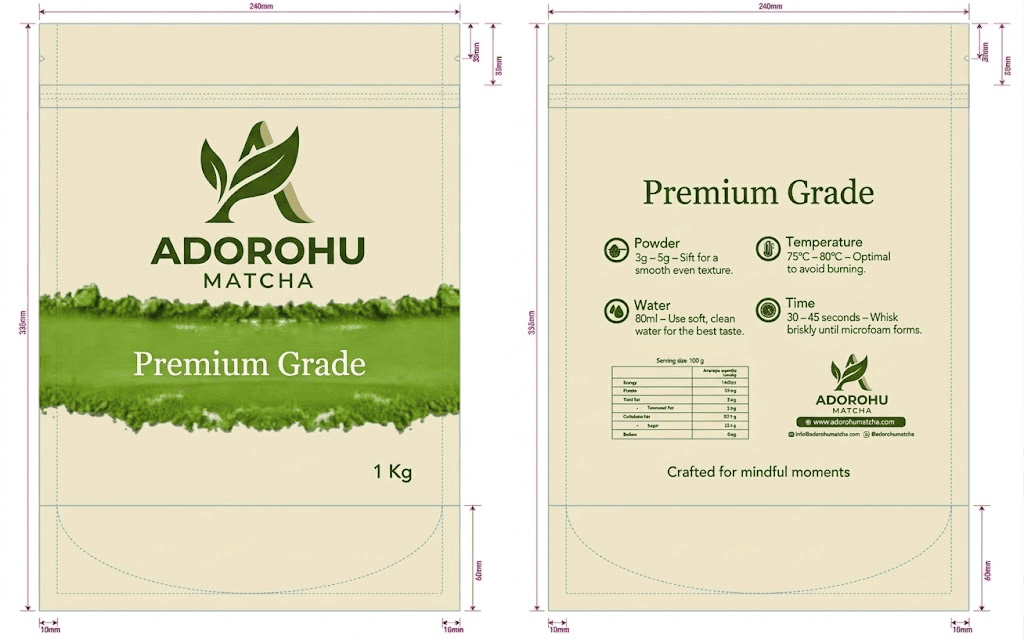
Pure matcha selection and private-label packaging for businesses developing a branded ingredient or retail product.
Not sure which grade fits your product? Let our team match you.
Talk to an ExpertThe Problem
Why Matcha Results Change
During Processing
Heat, pH, fat, sugar, moisture and dosage can all change matcha color and flavor. A controlled application test shows which grade fits the product.
Problem 01
Color Turns Yellow or Gray After Baking
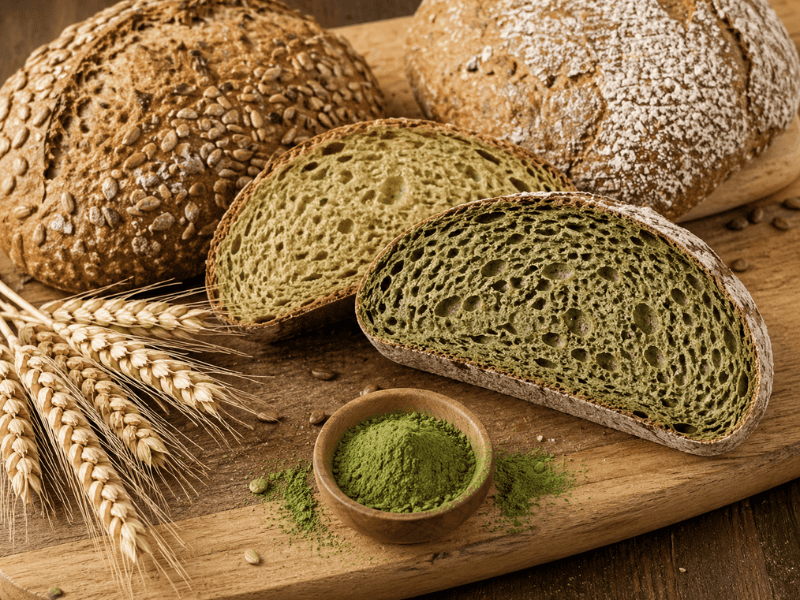
Heat and the full recipe system can shift green color toward olive tones; record the result at the buyer's actual time and temperature.

Problem 02
Flavor Disappears or Turns Bitter
Heat and the surrounding recipe can change aroma and perceived flavor. Assess matcha character after the product has cooled and during normal storage.

Problem 03
Batch-to-Batch Inconsistency
An approved sample, powder specification and finished-product reference give the buyer a consistent basis for reviewing later lots.

Problem 04
Cost Overruns from the Wrong Grade
Compare ingredient cost at the dosage that achieves your finished-product target. A higher grade does not automatically add value in every recipe.
Facing any of these challenges? Use a controlled sample trial.
See Our SolutionsOur Solutions
Four Factors to Review in
Grade Selection
AdoroHu recommends E1 or E2 culinary grades, or O1 or O2 when an organic attribute is required. Final selection follows sample trials in the buyer's formula.
Finished-Product Color
Validate Color in the Actual Bake Profile
Compare color before and after processing in the actual formulation. Ingredient interactions and bake conditions must be assessed by the buyer.
Flavor Retention
Balanced Umami After Baking
Adjust grade and dosage until matcha remains perceptible after processing without creating excessive bitterness or cost.
Batch Consistency
Agreed Reference and Specification
Define the accepted sample, specification and finished-product test so later lots can be reviewed against the same commercial target.
Application-Matched E1 or E2 Culinary Matcha
Right Grade, Right Price
Compare E1/E2 and, where an organic attribute is required, O1/O2. Evaluate the finished result and cost per sellable unit before selection.
Ready to see the difference in your product? Request an application sample.
Request an Application SampleThe Science
Why Can Matcha
Change Color During Processing?
Most bakers have experienced it — vivid green batter goes in, dull olive-brown comes out. The cause is chemistry, and understanding it is the first step to fixing it.
Heat Can Alter Chlorophyll
Heat and recipe conditions can alter the green color of matcha. Compare the finished product rather than relying only on powder appearance.
Oxidation Darkens the Powder
Exposure during preparation and storage can affect color and flavor. Record these conditions as part of the product trial.
Time and Temperature Change the Finished Result
Test the actual time and temperature used in production. Changes in process conditions can change the finished color, aroma and texture.

Heat Stability Test
Buyer trial — compare color in the actual recipeProcess Review
Color Change Depends on the Full Process
Use the complete recipe and intended production conditions to assess color change.
Our Solution
Select E1/E2 or O1/O2, Then Run a Pilot
Compare E1/E2 and, when needed, O1/O2 in the buyer's actual formula and process.
The Result
Set Acceptance Criteria for Finished-Product Color
Agree a finished-product reference, measurement method and acceptable range based on the buyer's trial.
Want to review the available grade specifications? Request our technical spec sheet.
Get Spec SheetCommon Misconception
Why Premium Drinking Grade Matcha
Needs an Application Test
A higher grade does not automatically give a better baking result. Compare the finished product and cost before deciding whether a premium or ceremonial grade adds value.
Flavor Must Be Assessed After Processing
Sensory qualities valued in straight-whisked tea may have a different role in a cake, cookie or dessert. Test the finished food before assigning value to a grade.
E1 and E2 are culinary starting points. Compare their flavor, dosage and finished-product performance in the same recipe.
Price and Application Value
Compare the quoted ingredient price together with the dosage needed to reach your sensory target.
Confirm commercial pricing after selecting the grade, packaging and purchase quantity.
Evaluate the Complete Recipe
Powder appearance and drinking quality do not predict every result in a food recipe. Heat, fat, sugar and other ingredients can change the outcome.
Use a controlled pilot to evaluate color, flavor, texture and cost for the proposed culinary grade.
Ready to use the right grade for your product? Let's find your formula.
Get a RecommendationBuyer's Guide
Three Criteria That Guide
Baking Matcha Quality
Not all culinary matcha is equal. These are the technical indicators that separate a high-performing baking ingredient from a product that will disappoint at scale.
Key Evaluation Criteria
Color Stability
Use one measurement method before and after the buyer's actual process, alongside a visual reference.
Flavor Intensity
Judge finished-product aroma, bitterness and matcha character at the intended dosage and after normal storage.
Heat Resistance
Validate at the buyer's actual time and temperature; powder data alone cannot predict every formula.
What to Ask Your Supplier
Want our full technical data sheet? Ask which grade-specific sheet is available with your sample request.
Request Samples for Testing + Data SheetOur Product Range
Three Selection Paths for
Finished-Product Trials
E1/E2 and O1/O2 are culinary grades in different series. An organic attribute is a certification requirement, not a guarantee of greater heat resistance.
E1 or E2 Culinary Matcha
Standard baking applications
Culinary Grade · Recipe Trial
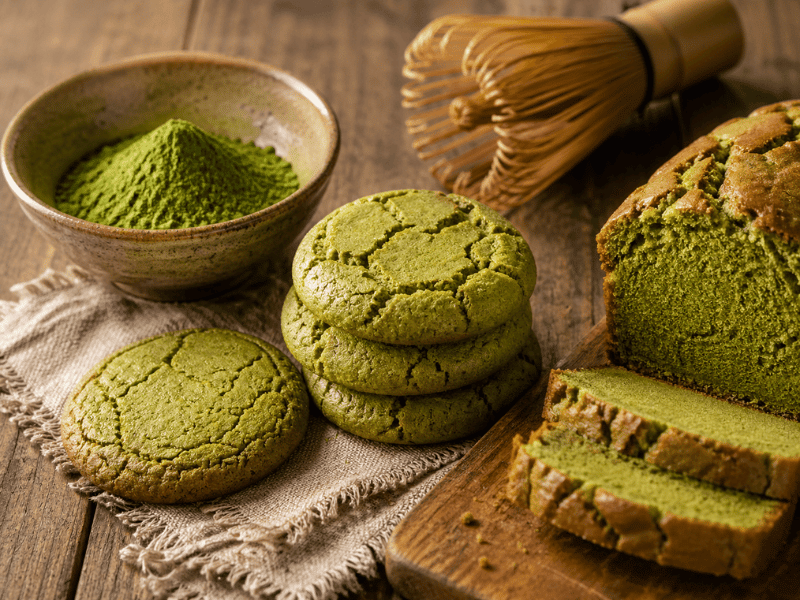
E1 and E2 are culinary starting points for bakery and food products. Compare color, flavor and cost after the product has been processed and cooled.

O1 or O2 Organic Culinary Matcha
For products requiring an organic attribute
Organic Culinary · Confirm Product Scope
O1 and O2 are culinary grades in the Organic Series. Use the same recipe trial as for other candidate grades and review the relevant certification scope.
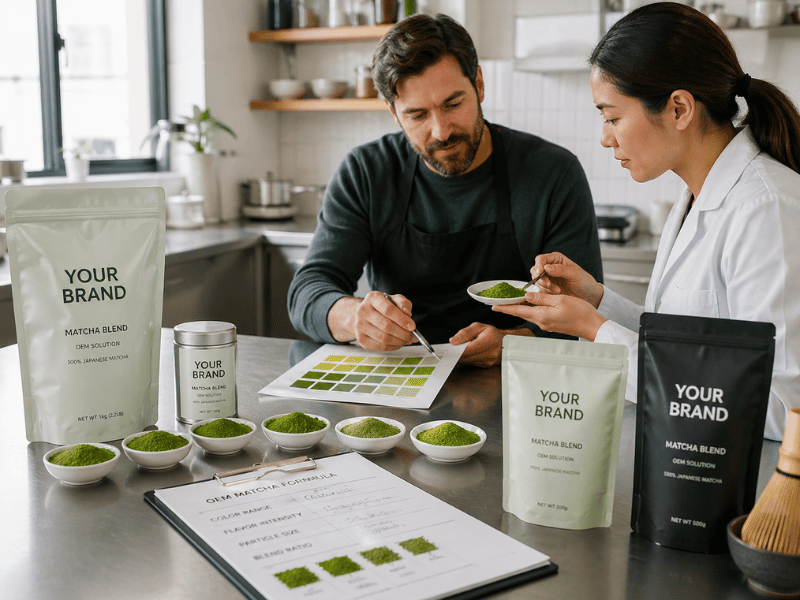
Pure Matcha Private Label
Product brief review
Your Spec · Your Brand
A product brief can define target color, flavor, application, market and packaging. Confirm feasibility, specification and quantity before any custom or private-label plan.
Not sure which tier fits your production? We'll help you decide.
Get a Product MatchReal-World Applications
See What Our Matcha
Looks Like in Your Product
Use the examples below to plan grade comparisons in the buyer's own baked or dessert format.

Layered Matcha Cakes & Premium Patisserie
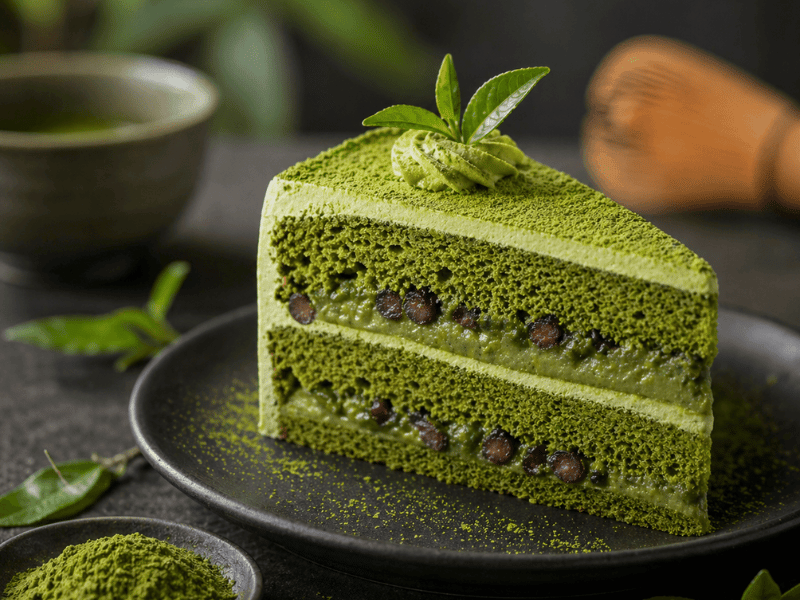
For cakes, compare E1/E2 and, when needed, O1/O2 at the same dosage. Record finished color, flavor, texture and cost after the product has cooled.

Matcha Shortbread & Sandwich Cookies
Compare E1/E2 or applicable O1/O2 samples in the intended sugar and fat system. Assess color, flavor and texture after cooling.

Croissants & Danish Pastries
Trial the actual dough, lamination and bake process. Record finished-layer appearance, flavor and ingredient cost before choosing the grade.
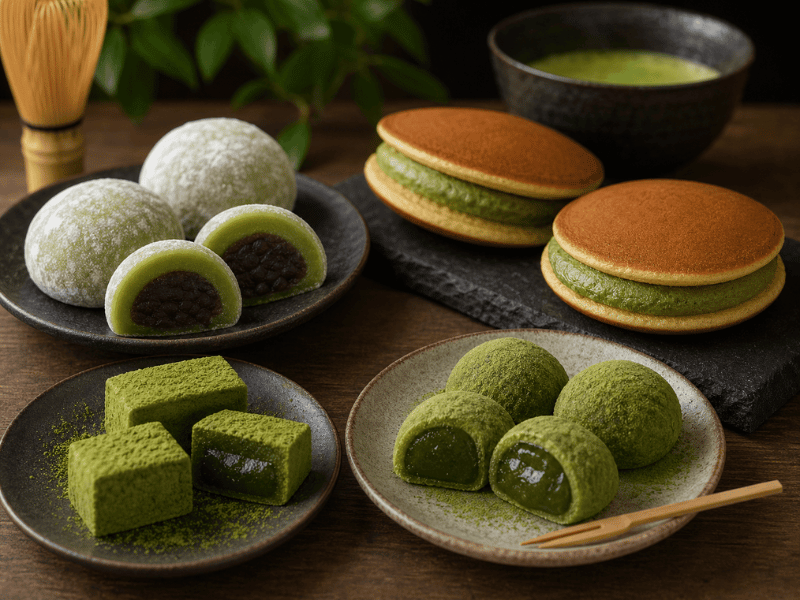
Mochi, Daifuku & Wagashi
Test the intended steamed or ambient confection. Evaluate color, sweetness balance and matcha character in the finished product.

Matcha Milk Bread & Enriched Rolls
Run the actual fermentation and baking process, then assess distribution, color and flavor in the cooled bread.
Want samples tested in your specific application? The team will recommend candidates for the buyer's trial.
Request Application SampleCost Intelligence
The Real Cost of Using
the Wrong Matcha
Use these factors to compare candidate grades in the same production trial. Record actual results and quotations rather than assuming a grade ranking predicts cost or performance.
| Evaluation Factor | Evaluation Step | E1 / E2 Culinary | O1 / O2 Organic Culinary |
|---|---|---|---|
| Color After Baking | Set a finished-product color reference | Record the trial result | Use the same measurement method |
| Flavor Retention | Taste after processing and cooling | Record matcha character and bitterness | Compare at the same dosage |
| Batch Consistency | Define receiving criteria | Review against the approved specification | Review specification and organic scope |
| Cost per kg | Use the actual quotation | Calculate cost at the selected dosage | Compare the finished-product cost |
| Certification Review | Define the intended claim and market | Review applicable certificates and reports | Confirm the relevant organic scope |
| Private-Label Scope | Define pack and label requirements | Review packaging feasibility | Review organic labeling and pack scope |
Recipe Cost Comparison
Compare cost
Compare grade dosage, finished result and cost per sellable unit in the pilot.
Waste Reduction
Measure waste
Measure rejects and raw-material use during the buyer's pilot and production review.
Reformulation Cycles
Review
Review later lots against the agreed sample, specification and finished-product checks.
Lead Time
Confirm timing
Confirm timing after grade, quantity, packaging and destination are agreed.
Want a cost model built around your volumes? We'll run the numbers for you.
Request Cost AnalysisOur Technology
Production Capability Supporting
Commercial Grade Selection
AdoroHu's Jingshan, Hangzhou operation includes sencha, tencha, Longjing and Jingshan lines, steam and hot-air fixation, milling, ultrasonic screening and in-house laboratories.
Leaf Selection
Leaf material is selected from AdoroHu's estate and partner-garden supply in Jingshan, Hangzhou for the target grade.
Dual-Process Fixation
Steam and hot-air fixation capabilities support different product profiles; the grade is selected for the buyer's application.
Controlled Grinding
Stone mills, ball mills and continuous ball mills support different production needs.
Batch QC & Sealing
Available lot documentation is reviewed with the buyer; bulk cartons use sealed food-grade liners.
Dual-Process Fixation
AdoroHu has both steam and hot-air fixation capabilities. The buyer should compare suitable culinary grades in the actual formula and process.
Finished-Product Testing
The buyer should confirm the grade in a pilot because the finished result depends on the complete formulation and process.
Powder Structure Control
Ultrasonic screening supports ultra-fine powder; the buyer should confirm dispersion in the intended batter, dough or fat system.
Full Lot Traceability
Ask which traceability and lot documents are available for the selected grade and target market.
Want to see our process documentation? Ask which process and specification documents are available.
Request Process DataTechnical Specifications
Parameters to Review for
Finished-Product Testing
Use an approved sample and agreed specification. These are practical checks an R&D team should be evaluating.
Heat Resistance
Buyer-set process
Confirm color and flavor in the buyer's actual formula, time and temperature.
Color Stability
Agree color range
Measure color after the buyer's actual process and cooling period. Agree on a measurement method and an acceptable finished-product color range before scale-up.
Moisture Content
Confirm specification
Review the selected grade's specification and confirm mixing behavior in the actual batter or dough.
Particle Size
Test dispersion
Use the application trial to check dispersion in the actual fat- or water-based system.
| Parameter | Buyer evaluation question | Evidence to request | Review approach |
|---|---|---|---|
| Color — L* (lightness) | Record the unprocessed reference | Record the finished-product result | CIE L*a*b* colorimetry |
| Color — a* (green axis) | Record the before-process value | Record the after-process value | Consistent color measurement before and after processing |
| Chlorophyll Content | Request only if relevant to the product brief | Confirm whether the selected specification includes it | Confirm an appropriate test method if required |
| EGCG (catechin) | Assess finished-product bitterness and flavor | Confirm whether this field is supplied | Confirm the available test method and report |
| Ash Content | Request the selected grade's value | Confirm whether this field is supplied | Agree the applicable test method |
| Heavy Metals | Regional limits | Confirm limits for the destination market | Confirm the applicable method and current market rule |
Need the full specification sheet for your QC team? Ask for the available sheet for the selected grade.
Request Full Spec SheetCompliance & Supply
Certification Documents
for Your Market
AdoroHu has an 11-certification portfolio. Buyers should verify the current documents relevant to the destination market and intended claim.
USDA · EU Organic
Dual Organic Certification
USDA Organic (NOP) and EU Organic are part of our portfolio. Confirm product scope for the selected Organic Series grade and intended claim.
ISO 22000
Global Food Safety Standard
ISO 22000 is part of our food-safety certification portfolio. Request the current certificate and review its scope during supplier approval.
Halal · Kosher
Religious Market Compliance
Halal and Kosher are part of our portfolio. Review the current certificate and product scope against your buyer's requirements.
BRCGS Food Safety
Food Safety Certification
BRCGS Food Safety is part of our certification portfolio. Request the current certificate and check the operation and scope covered for your supplier review.
Supply Chain Reliability
Estate and Partner Garden Network
Our estate and partner gardens cover over 20,000 mu, including 6,000 mu of organic-certified gardens. These resources support the Jingshan, Hangzhou operation.
Commercial Supply Planning
Our stated matcha capacity is 6 tonnes per day. Confirm grade availability and scheduling against your purchase forecast.
Exports to International Markets
Our Shenzhen team supports international business and export coordination. Discuss destination requirements and the relevant order documents before shipment planning.
Storage and Shelf-Life Documentation
Bulk cartons use sealed food-grade liners. Request storage guidance and the documented shelf life relevant to the selected grade and packaging format.
Need certificate copies for your supplier audit? Ask which current certificates apply to the selected market and claim.
Request CertificatesQualify Matcha in the Recipe, Then Carry the Record into Supply
Use E1 or E2 as conventional culinary starting points and O1 or O2 when an organic attribute is required. The grade is approved only after the finished product meets the buyer's process, sensory and cost criteria.
1. Record the Protocol
- Matcha dose and mixing order
- pH, fat, sugar and moisture context
- Time, temperature and hold conditions
- Cooling, storage and evaluation point
2. Set Post-Process Acceptance
- Finished colour
- Matcha flavour and bitterness
- Texture and visible dispersion
- Ingredient cost at the approved dose
3. Keep the Pilot Record
Retain the approved sample, formula version, process settings, sensory notes and acceptance result. Align the selected powder specification, pack format and available lot documents before bulk supply.
Start Your Matcha Partnership with a Reliable Source
Our integrated operation combines Jingshan production and partner-garden resources with international business and export support in Shenzhen.
Thank you — a member of our team will review your application brief.