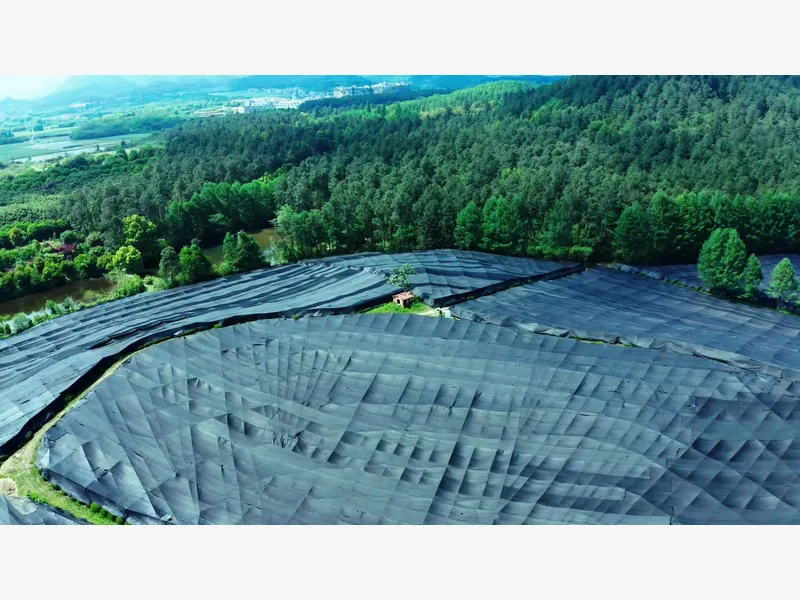
Shading
Reduced light changes leaf development and supports the green colour, umami and flavour profile sought for matcha.

Jingshan origin · Matcha manufacturing · Global supply
We connect Jingshan tea resources with multi-route milling, clean production and in-house laboratory review for matcha that fits real food, beverage and retail products.
Inside production
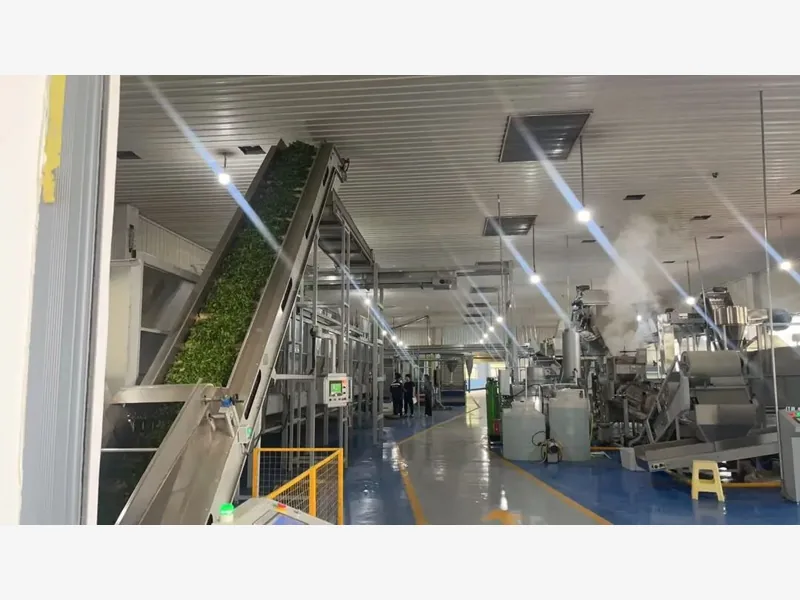
Our facility film introduces the working environment behind tea handling, powder production and packing. It gives procurement, product and quality teams a visual starting point before they compare grades or request project documents.
The footage is presented as a facility overview. Product routes still vary by grade, application and order.
Source and service
Our production base and tea origin are in Jingshan, Hangzhou. Our estate and partner garden network gives the operation a broad raw-material foundation for premium, culinary and organic product paths.
International business, customer service and export logistics are centred in Shenzhen. This connects the work at origin with the decisions an overseas team needs to make: application, grade, samples, documents, packaging and shipment planning.
Start with what you are making. Colour and flavour in milk, heat performance in bakery, mouthfeel for straight drinking and the requirements of a branded retail pack each point to a different grade conversation.
The complete journey
Matcha quality is built before, during and after milling. Each stage supports a visible or practical part of the finished powder.
The route is selected for the grade and application; optional treatments and finishing steps are confirmed with the product specification.
Shading and material selection set the starting point for colour and flavour. Fixation, cooling and the condition of incoming leaf influence the material that reaches tencha preparation. The early route is aligned with the intended grade rather than treating every green tea as interchangeable.
Reduced light changes leaf development and supports the green colour, umami and flavour profile sought for matcha.
Selected leaves enter processing while source identity, condition and timing can still be managed.
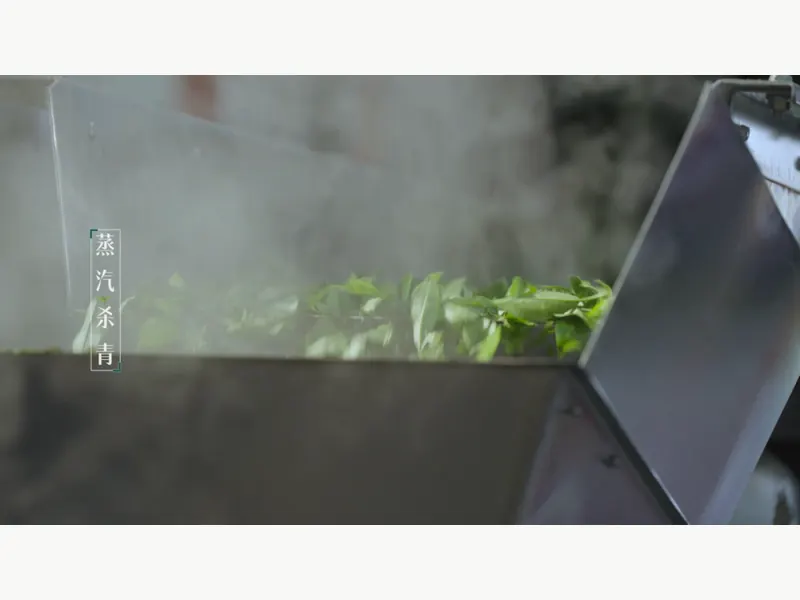
Steam or hot air controls enzymatic change soon after harvest, helping preserve the leaf’s fresh green character.
Prompt cooling removes processing heat so the leaf does not continue cooking and lose freshness.
Leaf preparation and milling work together. Prepared tencha provides the starting material; the milling route shapes the powder, and screening supports its handling. Compare the result in the intended drink or recipe, where colour, mouthfeel and dispersion can be assessed together.
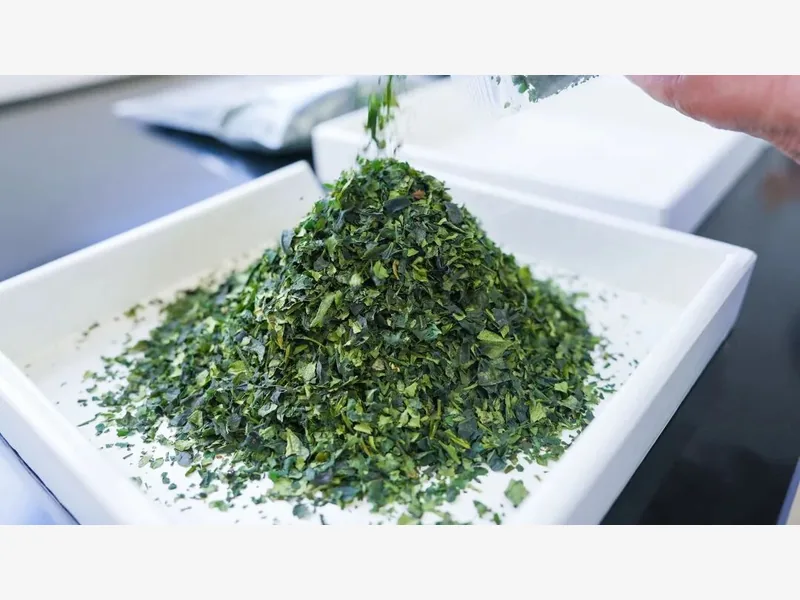
Moisture is reduced to prepare the leaf for stable handling without the rolling used for many leaf teas.
Stems and veins are removed to refine the dried leaf material before it reaches the mills.
Prepared tencha becomes fine matcha through the route chosen for the grade and production need.
Ultrasonic screening manages agglomerates and supports smoother powder handling and dispersion.
A prepared production lot must connect with the agreed product requirements. Finishing options, relevant checks and the pack format are considered together so the approved sample, specification and order describe the same product.
Powder is brought together into a more uniform production lot for commercial use.
Flash high-temperature treatment can be selected when it belongs in the product’s quality plan.
Physical-chemical and microbiological checks connect the product with its relevant specification.
The finished matcha moves into the approved bulk or retail format for storage and shipment.
Leaf to tencha
Shading, fixation, cooling and drying shape the material that reaches the mill. Timely heat treatment helps control browning. Cooling limits unnecessary heat exposure. Drying prepares the leaf for stable tencha handling, and removing stems and veins focuses the milling material on the leaf portion used for matcha.
These stages help explain why powders can behave differently even before the milling route changes. Early processing influences visible colour, aroma, umami, bitterness and the way matcha presents in water, milk or food.
We connect grade selection with the intended use: milk performance for cafés, colour and flavour after heat for bakery, or aroma and mouthfeel for straight drinking.
Milling systems
Three milling resources let us align the production route with the grade, application and scale of the project.
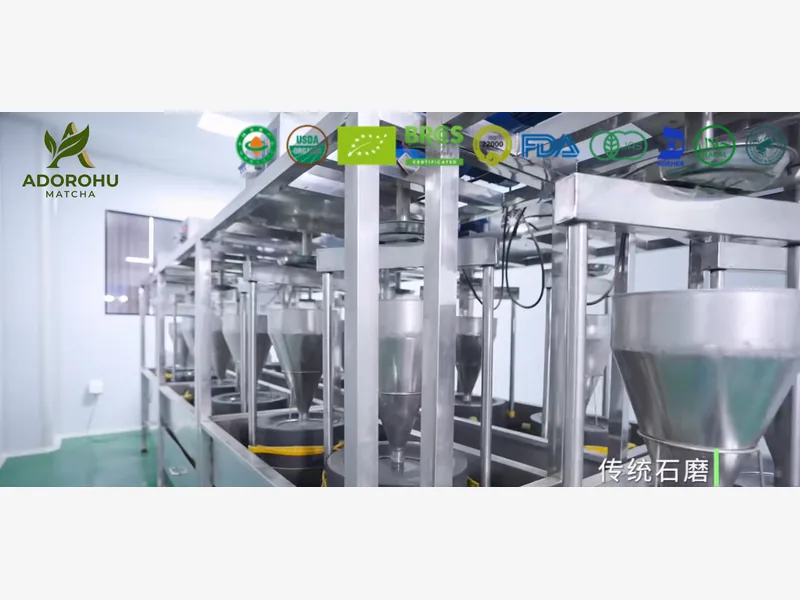
A familiar route for carefully prepared matcha where sensory character and premium positioning matter.
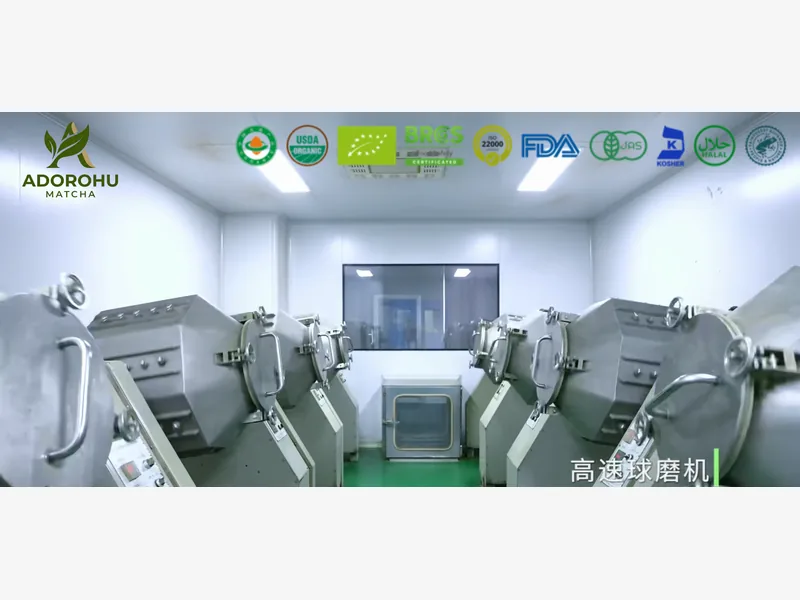
Production resources for efficient fine-powder output across broader commercial demand.
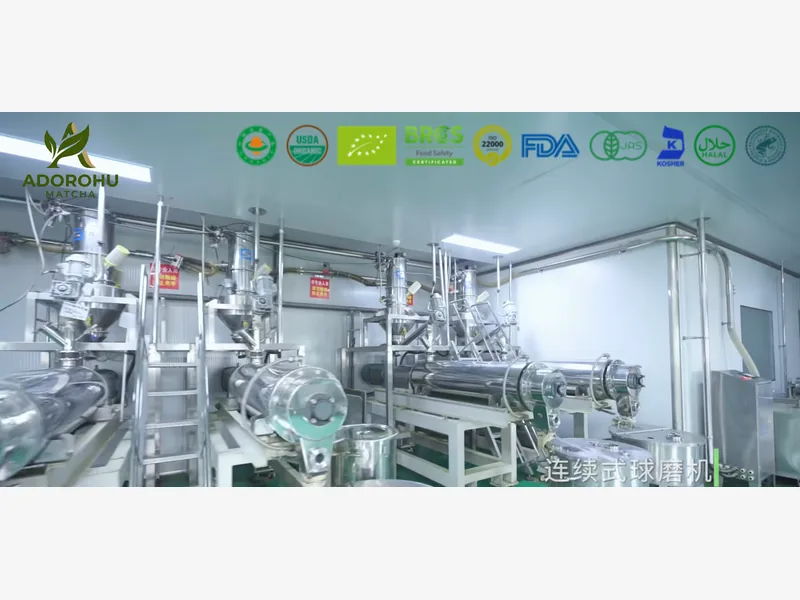
Continuous production resources that support scaled planning for suitable grades and orders.
Powder finishing
Fine powder passes through an enclosed screening stage designed to manage unsuitable agglomerates and support smoother handling.
Powder is combined into a prepared production lot so application and specification review can focus on one commercial unit.
For your project, define the attributes that matter—colour, sensory profile, dispersion, finished appearance or an agreed specification field—and evaluate the selected grade in the actual application.
Quality resources
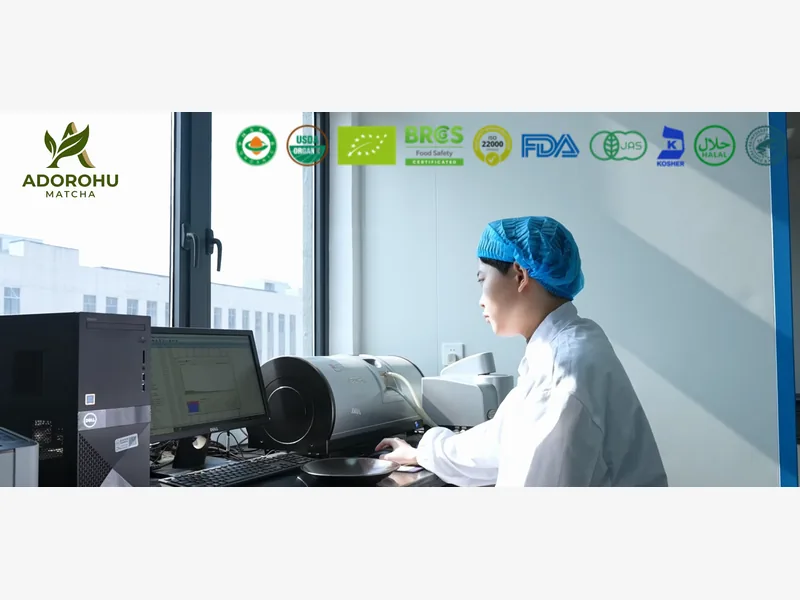
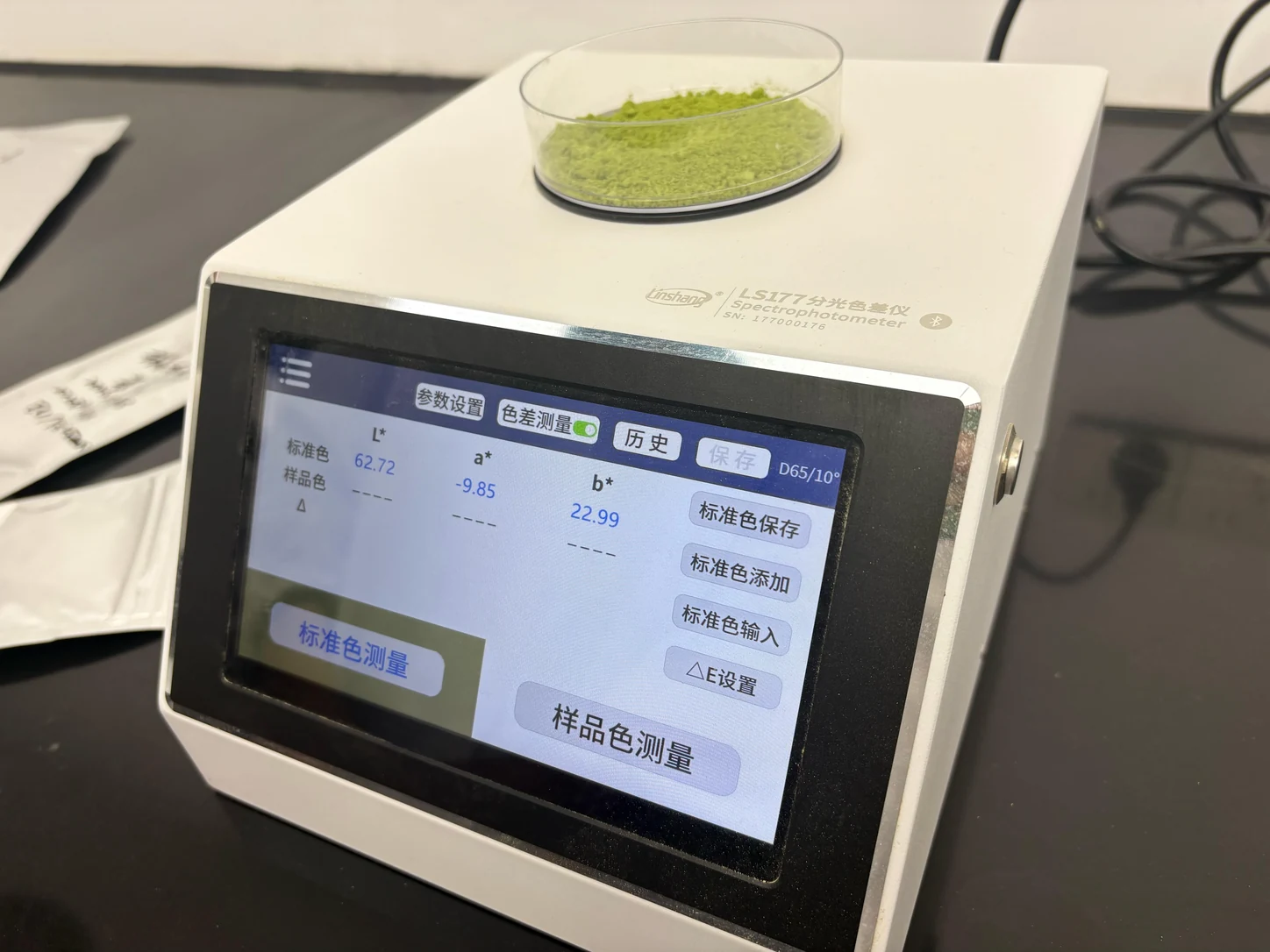
Our operation includes two Class-100,000 clean production workshops and in-house microbiology and physical-chemical laboratories. These resources connect the production environment with evaluation of the relevant product and lot characteristics.
When a project calls for external or market-specific testing, the method, laboratory route and required document can be aligned with the selected grade, destination and use. This allows sample performance, specification requirements and quality information to be considered together before the product moves into a trial or order.
Colour and sensory profile: agree the sample reference and comparison conditions.
Powder performance: compare mouthfeel, dispersion and the attributes that affect your recipe.
Relevant quality checks: identify the physical-chemical, microbiological and market-specific fields your team requires.
Lot and pack information: connect the applicable documents with the grade, packaging and order being approved.
Quality credentials
BRCGS Food Safety is a key credential in our broader portfolio. For every project, confirm the current document, certified holder, site or activity, product scope and validity before relying on it.
| Item | What it supports | How to use it |
|---|---|---|
| Product specification | The agreed attributes and limits for the selected matcha. | Use it as the reference for product and lot acceptance. |
| Certificate of Analysis | Results reported for the lot or scope named on the document. | Read it against the agreed specification. |
| Test report | The sample, method, laboratory and result stated in the report. | Match it to the question and market requirement it is meant to answer. |
| Certification document | The certified holder, site or activity, product scope and validity shown. | Confirm that the scope supports the selected product and intended claim. |
Our credential portfolio includes BRCGS Food Safety, China Organic, Green Food, USDA Organic, EU Organic, JAS Organic, FDA registration, ISO 22000, Rainforest Alliance, Halal and Kosher references. The relevant current document is matched to the product, certified holder and operation, destination market, validity period and claim planned for the project.
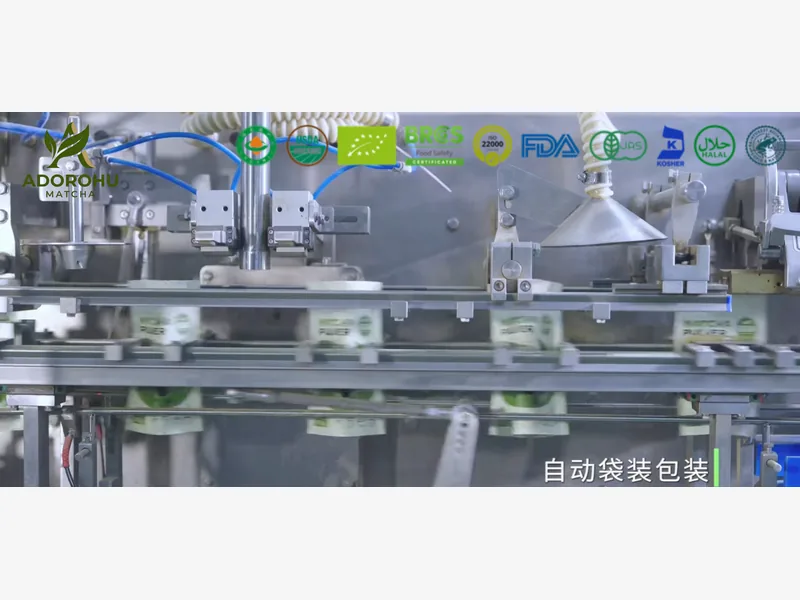
Packing and private label
Bulk cartons for food, beverage, café-chain and distribution requirements.
Flexible retail pouch formats for branded matcha.
Tins or aluminium boxes for premium presentation.
Measured stick packs for single-serve products.
Available combinations are confirmed by project, including grade, quantity, pack material, artwork and schedule. Explore our matcha private-label service for the full packaging workflow.
Frequently asked questions
Our production base and tea origin are in Jingshan, Hangzhou, China. International business, customer service and export logistics are centred in Shenzhen.
Yes. Our EU Standard E-series runs from E1 to E7 and our Organic O-series from O1 to O6, covering food, beverage, straight-drinking, retail and organic product paths.
Our resources include 20 stone mills, 56 ball mills and eight continuous ball mills. The route is aligned with the grade, application and production plan.
We operate two Class-100,000 clean production workshops and maintain in-house microbiology and physical-chemical laboratories. Specifications and applicable checks are aligned with the selected product.
Yes. Share your application and target product, then compare a focused set under the same recipe and process before confirming the grade and specification.
Yes. Project formats include pouches, tins or aluminium boxes and stick packs. Grade, size, quantity, artwork and document needs are confirmed before production.
We connect our Jingshan estate and partner gardens, production facility and Shenzhen export team in one integrated matcha operation.
Thank you — our team will review your requirements and follow up with relevant next steps.