To buy matcha powder in bulk, you have four main channels: direct from a manufacturer, through a distributor or importer, on a B2B marketplace, or from a domestic reseller, and the right one depends on your volume, budget, and need for traceability. Here’s the problem buyers hit fast: every supplier you find online claims to be the best source, so the channel decision gets made by whoever markets hardest, not by what actually fits your business.
That choice carries real money. Pick a marketplace for a large recurring order and you overpay on per-unit cost while gambling on authenticity. Go direct to a manufacturer for a tiny trial and you may not clear their MOQ. Lean on a domestic reseller for scale and you absorb a markup that quietly erodes margin on every kilo. Knowing where to buy matcha powder in bulk, and which channel fits which situation, is the decision that sets your cost and reliability for years. This guide compares every channel neutrally, then shows where a manufacturer-direct source like bulk matcha from AdoroHu fits.
The four main channels to buy matcha powder in bulk are: direct from a manufacturer (lowest cost and full traceability, but higher MOQ), distributors or importers (smaller quantities and local stock, at a markup), B2B marketplaces like Alibaba (wide choice but variable quality and verification risk), and domestic resellers (fast and low-MOQ, at the highest per-unit cost). For recurring commercial volume, manufacturer-direct sourcing usually wins on both price and consistency. Match the channel to your order size, budget, and need for documentation.
In short: bulk matcha comes from manufacturers, distributors, marketplaces, or resellers, and the best channel depends on your volume, budget, and how much traceability you need.
Key points:
- Manufacturer-direct gives the lowest cost and full traceability, but sets a minimum order.
- Distributors and resellers offer speed and small quantities at a markup.
- Marketplaces offer choice but carry real verification and authenticity risk.
Where can you buy matcha powder in bulk?
You can buy matcha powder in bulk through four channels: manufacturers, distributors and importers, B2B marketplaces, and domestic resellers. Here’s the distinction that matters before you compare prices: each channel sits at a different point on the trade-off between cost, minimum order, speed, and traceability.
A manufacturer grows and processes the tea, so buying direct removes every middleman markup. A distributor imports in volume and resells smaller lots locally. A marketplace aggregates many sellers of varying reliability. A reseller stocks domestically for fast, small fulfillment. No single channel is “best” universally, since the right answer flips depending on whether you order 5 kg once or 500 kg a year. A buyer sourcing premium matcha for a recurring product line has very different needs from a startup testing one batch.
| Channel | Cost | Typical MOQ | Speed | Traceability |
|---|---|---|---|---|
| Manufacturer-direct | Lowest | Higher (often 5–25 kg+) | Slower (production + freight) | Highest |
| Distributor / importer | Mid | Moderate | Faster (local stock) | Moderate |
| B2B marketplace | Variable | Low to high | Variable | Low to moderate |
| Domestic reseller | Highest per unit | Lowest | Fastest | Moderate |
Key Takeaway: Bulk matcha comes from four channels, each trading cost against MOQ, speed, and traceability; identify which of those four factors matters most to you before comparing any prices.
Should you buy bulk matcha direct from a manufacturer?
You should buy bulk matcha direct from a manufacturer when you need the lowest cost and full traceability and can meet the minimum order. Here’s the structural advantage: a manufacturer sells at the source price, with no distributor margin stacked on top, often a 25 to 40 percent difference at equivalent grade.
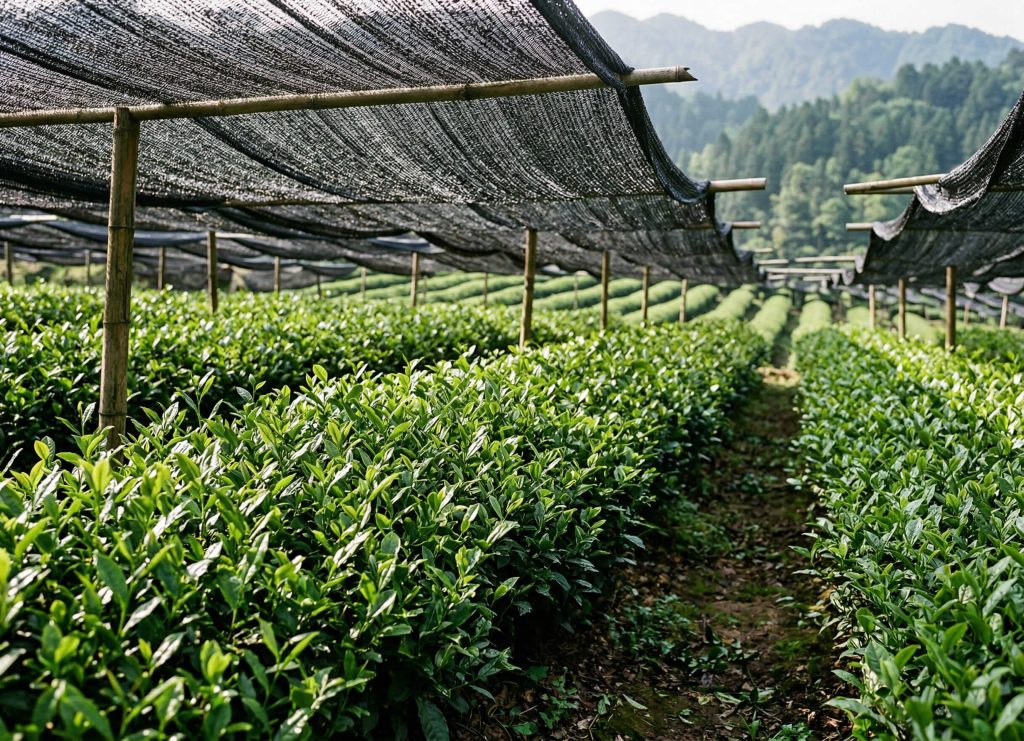
The deeper benefit is traceability, not just price. Because the matcha traces to one estate and one processing chain, every COA and certificate comes from a single accountable source. AdoroHu operates as a manufacturer with a 350-hectare self-owned estate and a 3,000-tonne annual capacity, which is what lets a brand commission private label and OEM production knowing batch 1 and batch 500 will match. The honest trade-off: manufacturers set a minimum order, so this channel rewards committed volume, not a one-time 1 kg trial.
Key Takeaway: Go manufacturer-direct for recurring commercial volume; you capture the source price and single-source traceability, but only if your order clears the MOQ, so this channel suits committed buyers, not one-off trials.
When is a distributor or importer the better place to buy bulk matcha?
A distributor or importer is the better place to buy bulk matcha when you need smaller quantities, local stock, and faster delivery than a manufacturer offers. Here’s the practical case for this channel: a distributor has already imported, cleared customs, and warehoused the product domestically, so you skip the lead time and import paperwork.
That convenience has a cost, literally. The distributor’s markup pays for their import risk, storage, and faster fulfillment. For a mid-size café or a brand not yet ready for container-scale orders, that premium can be worth it. The judgment from experience: use a distributor while your volume is still growing, then switch to manufacturer-direct once your annual consumption justifies the MOQ, because staying on distributor pricing at scale silently caps your margin. A distributor stocking culinary grade matcha locally saves you weeks, but you pay for that speed on every kilo.
Key Takeaway: Choose a distributor for smaller orders, local stock, and speed while your volume grows; the markup buys convenience, but plan to move manufacturer-direct once your annual volume clears a producer’s MOQ.
Is buying bulk matcha on a B2B marketplace safe?
Buying bulk matcha on a B2B marketplace can work, but it carries real verification and authenticity risk that you must actively manage. Here’s the honest assessment: marketplaces like Alibaba offer enormous choice and low entry MOQs, but the quality and legitimacy of sellers vary widely.
The core risk is that anyone can list. Some sellers are genuine manufacturers; others are traders relabeling lower-grade powder, a risk that has grown since the 2024 supply crunch pushed inferior Sencha powder into the market labeled as matcha. Treat marketplace sourcing as guilty until proven innocent: demand a batch-specific Certificate of Analysis, verify certifications independently, and always order a sample before any volume commitment. The experienced approach is to use marketplaces for discovery, finding candidate suppliers, then verify each one as rigorously as you would a direct contract, never skipping due diligence because the platform “feels” official.
Key Takeaway: Marketplaces offer choice and low MOQs but shift verification onto you; use them to discover suppliers, then demand COAs, certificates, and samples before ordering, because relabeled powder is a documented marketplace risk.
Should you buy bulk matcha from Japan or China?
Where you buy bulk matcha by origin comes down to Japan for premium positioning or China for scalable, cost-efficient supply. Here’s the trade-off stated plainly, because most guides dodge it: Japan carries the heritage reputation, while China supplies much of the world’s commercial culinary and beverage-grade matcha at a workable cost.
The 2026 reality sharpens this choice. Japanese matcha, especially first-flush ichibancha, faces a documented supply squeeze, with lead times for new wholesale buyers stretching to 8 to 10 weeks and prices at record highs. Chinese matcha, grown and stone-milled at scale, offers supply security and better landed economics for high-volume use. AdoroHu grows and processes on a 350-hectare estate in Hangzhou, a renowned Chinese tea region, giving buyers premium processing without Japan’s current allocation bottleneck. The judgment: for a matcha latte program or food-manufacturing line at volume, a certified Chinese manufacturer often beats scarce premium Japanese stock on both availability and cost.
Key Takeaway: Choose Japan for premium heritage positioning and China for scalable, cost-efficient supply; with 2026 Japanese lead times stretching to 8 to 10 weeks, a certified Chinese manufacturer often wins on availability and landed cost for commercial volume.
What MOQ should you expect when buying bulk matcha?
The MOQ for bulk matcha varies sharply by channel, from a few kilograms on marketplaces to larger commitments direct from manufacturers. Here’s why this number decides your channel: if your trial order is 2 kg, a manufacturer with a 25 kg minimum is simply the wrong door to knock on.
MOQ scales inversely with how close you are to the source. Manufacturers set higher minimums because a production run has fixed costs, though many offer sample quantities before a full order. Marketplaces and resellers offer low MOQs precisely because they are reselling existing stock. AdoroHu supports sample requests so buyers can evaluate quality before committing to a bulk order, and packs bulk supply in 20 kg or 25 kg cartons with sealed food-grade liners once you scale. The practical move: start with a sample regardless of channel, then match your real recurring volume to a channel whose MOQ fits, rather than over-ordering to clear a minimum you do not need.
Key Takeaway: Let MOQ guide your channel choice; manufacturers set higher minimums but offer samples first, while marketplaces and resellers allow small orders, so match your true recurring volume to a channel whose minimum fits without forcing waste.
How do you verify a bulk matcha source before ordering?
You verify a bulk matcha source by checking documentation, samples, and supply-chain control before any money moves, regardless of channel. Here’s the rule that protects you everywhere: the channel does not exempt you from due diligence, and the lower the trust level, the harder you verify.
The verification steps are the same whether you buy direct or on a marketplace.
- Request a batch-specific COA covering heavy metals, pesticide residue, and microbiology.
- Confirm certifications like USDA Organic (NOP), EU Organic, JAS, and ISO 22000, and check renewal dates.
- Order a representative sample and test color, texture, aroma, and blend performance.
- Confirm whether the seller is a manufacturer or a reseller, and how traceable the supply is.
A genuine producer shares documentation readily; reluctance is a red flag. AdoroHu backs orders with a 1,000 m² purification workshop, metal-detection systems, and certifications spanning certified organic matcha standards, so verification returns real documents rather than vague assurances.
Key Takeaway: Verify every source the same way, COA, certificates, sample, and supply-chain check, before ordering; the channel never exempts you from due diligence, and a seller reluctant to share documents is signaling risk you should avoid.
What mistakes do buyers make choosing where to buy bulk matcha?
The biggest mistake is choosing a channel by convenience or marketing instead of matching it to your actual volume and traceability needs. Here’s the pattern across regretted orders: each channel mismatch maps to a specific, avoidable cost.
Watch for these traps, each with a named consequence.
- Buying recurring volume from a reseller, absorbing a markup that caps margin.
- Going manufacturer-direct for a tiny trial, failing to clear MOQ and wasting time.
- Trusting a marketplace listing without a COA, risking relabeled powder.
- Defaulting to scarce Japanese stock at volume, hitting 8 to 10 week lead times.
- Skipping a sample to save days, then locking into the wrong product at scale.
Each is avoidable with a channel-to-need match. A vertically integrated manufacturer offering complementary lines like hojicha powder and full documentation removes most of these risks in one relationship.
Key Takeaway: Stop choosing a channel by convenience or marketing; match it to your real volume and traceability needs, because each mismatch, reseller markup, missed MOQ, or unverified listing, carries a specific cost that outweighs the shortcut.
FAQ
- Where is the cheapest place to buy matcha powder in bulk?
- Direct from a manufacturer is usually the cheapest, because you pay the source price with no distributor markup, often saving 25 to 40 percent versus a reseller at equivalent grade. The trade-off is a higher minimum order, so this channel suits recurring commercial volume rather than small trials.
- What is the minimum order to buy matcha in bulk?
- It varies by channel. Marketplaces and domestic resellers may allow a few kilograms, while manufacturers set higher minimums because a production run has fixed costs. Many manufacturers, including AdoroHu, offer sample quantities first, then scale to bulk cartons of 20 to 25 kg.
- Is it better to buy bulk matcha from Japan or China?
- Japan suits premium heritage positioning, while China offers scalable, cost-efficient supply. In 2026, Japanese matcha faces a supply squeeze with lead times stretching to 8 to 10 weeks, so a certified Chinese manufacturer often wins on availability and landed cost for high-volume beverage and food applications.
- Is it safe to buy bulk matcha on Alibaba or B2B marketplaces?
- It can be, but you must verify carefully. Marketplaces list both genuine manufacturers and traders relabeling lower-grade powder, a risk that grew after the 2024 supply crunch. Always request a batch-specific Certificate of Analysis, verify certifications independently, and order a sample before committing to volume.
- How do I verify a bulk matcha supplier before ordering?
- Request a batch-specific COA covering heavy metals, pesticides, and microbiology, confirm certifications like USDA, EU, JAS, and ISO 22000 with current renewal dates, and order a sample to test quality. Also confirm whether the seller is a true manufacturer or a reseller, since traceability depends on it.
Conclusion
Where to buy matcha powder in bulk is a channel decision: manufacturers win on cost and traceability, distributors and resellers on speed and small quantities, and marketplaces on choice at the price of verification risk. The practical takeaway is to match the channel to your real volume and documentation needs, and to verify every source with a COA and sample regardless of where you buy. To source manufacturer-direct with full documentation, contact AdoroHu Matcha to request samples, certifications, and a wholesale quote matched to your volume.