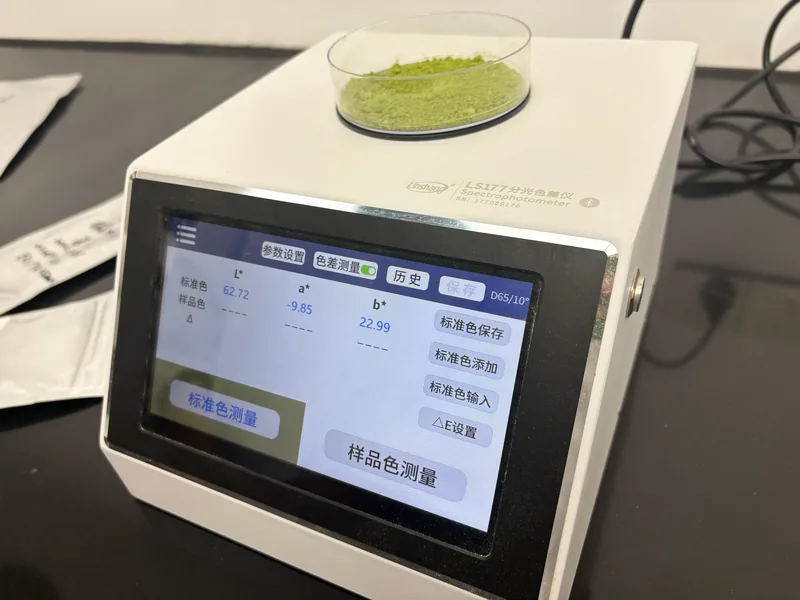
Find the best matcha powder by comparing samples against one application brief for flavor, color, mixing, usable cost, and repeat supply. A café serving iced lattes needs a different powder from a bakery making cookies or a tea brand selling straight-whisked matcha. Choosing by a vague grade label often leads to wasted samples, unstable recipes, and a price that does not match the finished product. A structured trial gives you a defensible answer. Start with your application, set acceptance criteria, and compare samples under the same conditions.
1. What Defines the Best Matcha Powder for a Business?
The best matcha powder produces the intended result in your recipe and remains commercially workable. Buyers should assess the finished drink or food rather than judging dry powder alone. A vivid sample can lose character in milk, while a more assertive profile may hold up well in a sweetened beverage.
Which criteria belong in the product brief?
Write measurable or observable acceptance points before samples arrive. Your brief should cover:
- target application and serving format
- desired color in the finished product
- acceptable bitterness, astringency, and umami
- mixing method and processing conditions
- target cost per serving or production batch
- pack size, storage, and replenishment needs
| Criterion | Question for the trial | Decision signal |
|---|---|---|
| Flavor | Does it remain balanced in the full recipe? | Pass, adjust, or reject |
| Color | Does the prepared item match the visual brief? | Record under fixed lighting |
| Texture | Does it disperse without persistent grit? | Check after service time |
| Cost | Does the usable dose fit the margin? | Calculate cost per unit |
This brief turns “best” into a repeatable purchasing decision.
Key Takeaway: Define success in the finished application before comparing suppliers.
2. Which Matcha Grade Fits Your Application?
The right grade depends on how strongly other ingredients and processing steps affect the tea. Straight-water service exposes every flavor note, while milk, sugar, fat, heat, and flour can mute delicate qualities. Grade names help with orientation, but your recipe trial should make the final call.
How should you map grade to use?
Build the shortlist around commercial use:
- straight tea: refined aroma, smooth mouthfeel, low harshness
- premium latte: color and flavor that remain clear after milk
- high-volume beverage: consistency, workable dose, stable supply
- bakery or dessert: flavor retention through heat, fat, and sugar
- blended food: functional color and flavor at an economic dose
| Application | Starting direction | Main trial risk |
|---|---|---|
| Straight whisked tea | Ceremonial-style selection | Harshness becomes obvious |
| Signature latte | Premium beverage selection | Milk masks tea character |
| Cookie or cake | Culinary selection | Heat dulls color and aroma |
| Ice cream | Culinary or premium | Fat changes flavor release |
The table is a starting map, not a substitute for testing.
Key Takeaway: Pay for qualities your customer can detect in the final product.
3. How Should You Compare Matcha Samples Fairly?
Compare matcha samples with one written protocol, coded cups, and the same preparation conditions. Changing water temperature, dose, milk, sweetener, or whisking time between samples makes the result unreliable. A small panel from purchasing, product development, and operations can catch different problems.
What belongs in a controlled sample test?
Use a simple worksheet and keep every variable fixed:
- assign blind sample codes
- weigh the same powder dose
- use one water source and temperature
- prepare samples in random order
- score aroma, flavor, color, texture, and finish
- repeat the test in the intended recipe
| Control | Keep constant | Reason |
|---|---|---|
| Dose | Weight, not spoon volume | Powder density varies |
| Water | Source, volume, temperature | Extraction changes quickly |
| Milk | Brand, fat level, temperature | Flavor masking differs |
| Holding time | Same minutes before scoring | Settling affects texture |
Consistent controls make panel notes comparable across rounds.
Key Takeaway: Test blind and repeat the same sample in the final recipe.
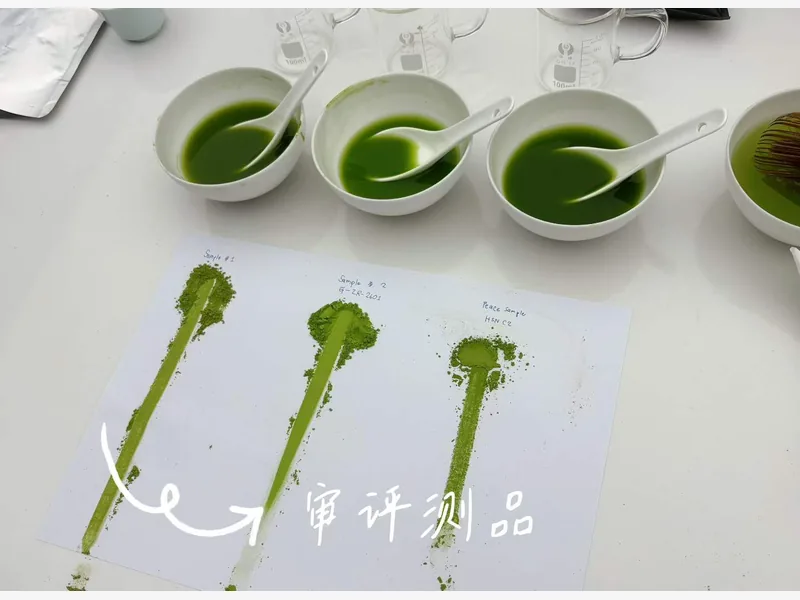
4. What Do Color, Aroma, and Texture Reveal?
Color, aroma, and texture reveal useful quality differences, but none should decide a purchase alone. Buyers often overvalue the brightest dry powder. Finished color under milk or heat, aroma after opening, and mouthfeel after normal preparation provide more relevant evidence.
How can your team inspect sensory quality?
Review samples in a fixed sequence:
- observe dry color under neutral light
- smell the powder immediately after opening
- inspect clumping and sieve behavior
- taste a water preparation before the full recipe
- check the finish for harshness or lingering grit
| Attribute | Useful observation | Common mistake |
|---|---|---|
| Dry color | Hue and uniformity | Treating brightness as proof |
| Aroma | Fresh, vegetal, roasted, or flat notes | Smelling open samples too late |
| Mouthfeel | Smoothness after proper dispersion | Blaming powder for poor mixing |
| Finish | Balance and persistence | Scoring only the opening sip |
A short sensory record supports clearer supplier conversations.
Key Takeaway: Judge connected sensory signals in the prepared product, not one visual cue.
5. How Does Matcha Perform in Milk and Sweeteners?
Matcha performs well in a latte when its flavor stays recognizable, its color supports the menu concept, and its texture remains pleasant at the intended dose. Milk type, fat, protein, sweetness, temperature, and ice dilution can all change the result. Test the recipe customers will receive.
What should a café trial include?
Run hot and iced versions when both appear on the menu:
- dairy and primary plant-based milk
- standard syrup or sugar dose
- expected ice and dilution level
- service holding time
- staff preparation method during a busy period
| Latte factor | What may change | Trial action |
|---|---|---|
| Milk base | Tea intensity and color | Test each menu milk |
| Sweetness | Bitterness perception | Use standard recipe |
| Ice | Strength over time | Score opening and final sip |
| Workflow | Clumps and variation | Test with service equipment |
For a focused evaluation, compare your brief with AdoroHu’s latte application options.
Key Takeaway: Approve latte matcha only after testing the complete menu recipe.
6. How Should Bakers Test Matcha Powder?
Bakers should test matcha in the finished formula because oven heat, pH, fat, sugar, and other flavors can change its color and taste. A powder that tastes elegant in water may disappear in a rich dough. A stronger culinary profile can give better value in production.
Which baking checks matter most?
Prepare a small controlled batch and record:
- matcha dose as a percentage of formula weight
- batter or dough color before baking
- color immediately after baking and the next day
- flavor against sugar, chocolate, dairy, or fruit
- any drying or texture change after adding powder
| Product | Main challenge | Useful comparison |
|---|---|---|
| Cookie | Browning and fat | Two dose levels |
| Sponge cake | Heat and aeration | Crumb color after cooling |
| Chocolate item | Strong competing flavor | Matcha-forward versus balanced |
| Cream filling | Light exposure | Same-day and next-day color |
AdoroHu’s baking matcha page can help frame the sample request.
Key Takeaway: Choose the sample that survives your process at a workable dose.
7. What Documents Should a Matcha Supplier Provide?
A supplier should provide documentation that matches your market, product, and internal approval process. The exact package varies by country and channel. Ask for current, lot-relevant documents and let your quality or regulatory team decide whether they meet your requirements.
Which records belong in due diligence?
Your request may include:
- product specification and ingredient statement
- certificate of analysis for the relevant lot
- allergen and contaminant statements where applicable
- origin and traceability information
- food safety or organic documents required by your market
- packaging and shelf-life information
| Document | Buyer use | Check |
|---|---|---|
| Specification | Define product limits | Revision and approval date |
| COA | Review lot results | Lot number and methods |
| Traceability record | Support supplier control | Link between lot and source |
| Market document | Support channel review | Scope and validity |
Documents support approval; they do not replace your own regulatory review. For U.S. imports, use FDA’s foreign supplier verification guidance to frame your document request.
Approval also needs a change-control path. Ask which product, process, source, specification, packaging, or test-method changes trigger notice, how far ahead notice is normally sent, and which contact receives it. Your internal record should link the approved sample, specification revision, artwork assumptions, and trial lot. When a notice arrives, quality and product teams can decide whether document review, a bench test, or a new commercial trial is required. This prevents a quiet specification update from reaching production before the recipe and label implications have been assessed.
Key Takeaway: Request the records your market needs before commercial commitment.
8. How Do Packaging and Storage Affect Matcha?
Packaging and storage affect matcha because exposure to oxygen, moisture, light, heat, and repeated opening can change sensory performance. The best pack format balances protection with the rate your team consumes powder. A large bag may look economical yet create waste if it stays open too long.
What pack plan reduces avoidable loss?
Match pack size to operational use:
- estimate weekly consumption by site
- choose inner packs that turn over quickly
- keep containers sealed between uses
- use clean, dry scoops
- label opening dates and rotate stock
- follow supplier storage directions
| Risk | Operational response | Evidence to monitor |
|---|---|---|
| Repeated opening | Smaller inner packs | Color and aroma drift |
| Moisture | Dry utensils and tight closure | Clumping |
| Heat or light | Controlled storage area | Faster sensory decline |
| Slow turnover | Lower pack quantity | Open-pack age |
Good storage protects the result your sample trial approved.
Key Takeaway: Select packaging around real consumption, not headline unit price.
9. How Can You Compare Matcha Cost Accurately?
Compare matcha cost by usable serving or finished unit, then add freight, duties, testing, packaging loss, and waste. Price per kilogram hides dose differences. A stronger powder may reach the target at a lower dose, while a cheaper option may need more product or produce more rejected batches.
Which cost model supports a buying decision?
Calculate the landed and usable cost:
- quoted product price
- freight, duty, brokerage, and local handling
- approved dose per serving or batch
- expected preparation or packaging loss
- quality-control and intake testing
- cost of slow stock or recipe failure
| Cost layer | Calculation basis | Why it matters |
|---|---|---|
| Landed powder | Total delivered cost per kilogram | Normalizes quotations |
| Recipe dose | Grams per finished unit | Shows practical usage |
| Waste | Loss rate in handling | Captures real consumption |
| Failure risk | Rework or rejected batch | Exposes false savings |
The useful comparison is cost for an approved outcome.
Key Takeaway: Compare total usable cost after the recipe dose has been fixed.
10. How Do You Approve a Matcha Supplier?
Approve a matcha supplier through staged checks covering samples, documents, communication, packaging, logistics, and repeatability. One strong sample does not prove future fit. A trial order gives purchasing and production teams a chance to test the complete handoff before scaling.
What sequence keeps approval manageable?
Use clear gates:
- issue the product brief and document request
- screen and code samples
- run application and shelf tests
- confirm specification and commercial terms
- place a controlled trial order
- compare delivered lot with approved sample
- review performance before a larger commitment
| Gate | Owner | Output |
|---|---|---|
| Brief | Product and purchasing | Acceptance criteria |
| Sample trial | R&D and operations | Scored shortlist |
| Due diligence | Quality and regulatory | Approval status |
| Trial order | Purchasing and logistics | Delivery review |
If your team wants samples matched to an application, contact AdoroHu with the recipe, market, and expected volume.
Key Takeaway: Scale only after the delivered product matches the approved brief.
Choosing the best matcha powder starts with a precise application brief and ends with a controlled commercial trial. Your team now has a method for matching grade to use, testing samples, reviewing documentation, protecting open stock, and comparing usable cost. AdoroHu supports B2B buyers with multiple matcha categories, application guidance, and sample discussions. Contact us today to describe your product and request a suitable starting set.
FAQ
Q1: Can I choose one matcha powder for every product?
Usually no. Straight tea, lattes, bakery items, and manufactured foods place different demands on flavor, color, dose, and cost. A shared powder can work when the product brief overlaps, but each application still needs a trial.
Q2: What’s the best way to compare two matcha samples?
Use blind codes and one fixed preparation protocol. Compare both samples in water at the outset, then repeat the test in the actual recipe with the same dose, temperature, equipment, and holding time.
Q3: How do I know if a brighter powder is better?
You cannot decide from dry color alone. Review aroma, flavor, mouthfeel, finished-product color, documentation, and batch consistency before approving the sample.
Q4: Can I approve a supplier from a sample shipment?
Not safely. Complete document review and a controlled trial order, then compare the delivered lot with the sample and agreed specification.
Q5: What’s the best information to send with a sample request?
Send your application, recipe format, target dose or cost, market, packaging needs, expected volume, and acceptance criteria. That information helps a supplier propose a relevant shortlist.