
Serving clumpy, thin, or inconsistently textured tea can quickly damage your brand’s reputation in the competitive beverage market. When a customer pays a premium for a latte, they expect a velvet-smooth mouthfeel and a dense micro-foam that lasts until the final sip. If your staff is struggling with inconsistent results or slow preparation times, it’s not just a training issue—it’s a threat to your bottom line. At AdoroHu Matcha, we specialize in providing the high-quality matcha wholesale solutions and technical expertise required to turn every serving into a signature experience.
To froth matcha for a smooth texture, first sift 1-2 grams of powder to remove clumps, then add 2 ounces of hot water (ideally 175°F/80°C). Use a bamboo whisk or electric frother in a rapid “W” or “M” zigzag motion for 20-30 seconds until a thick, uniform micro-foam develops on the surface.
In short:Professional matcha frothing requires a combination of precise water temperature, sifting, and rapid mechanical agitation to create a stable suspension.
Key points:
- Sifting is mandatory to prevent lumpy textures.
- Water temperature must stay below 180°F to avoid bitterness.
- The “W” or “M” motion is superior to circular stirring for aeration.
- Higher grade powders yield denser, longer-lasting foam.
1. Why does the definition of quality matter when learning how to froth matcha?
Quality defines the threshold of solubility and the aesthetic appeal of the final beverage. In a professional setting, “quality” refers to the particle size of the powder and its ability to stay suspended in liquid without settling.
But that is only half the story.
High-quality ceremonial grade matcha is stone-ground to a 5-10 micron level, which is finer than baby powder. This extreme fineness allows the particles to be easily trapped within the water’s surface tension when aerated, creating a “crema” similar to espresso. Without this fine grind, the tea will feel gritty and the froth will dissipate almost instantly.
Key Takeaway: For a professional-grade froth, you must start with a stone-ground powder that possesses the fine particle size necessary for stable suspension and micro-foam creation.
2. How to froth matcha using traditional bamboo whisks versus modern electric tools?
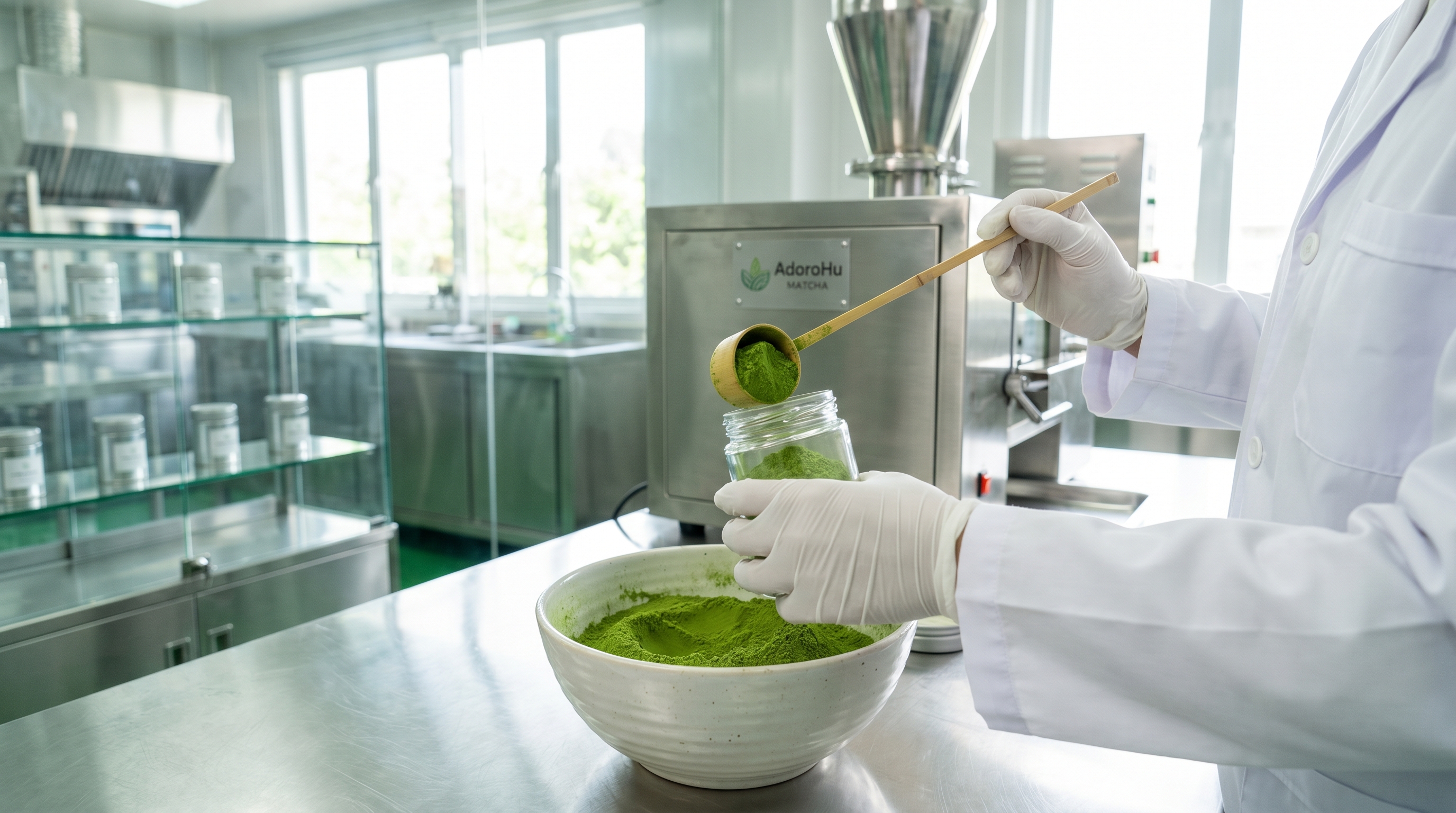
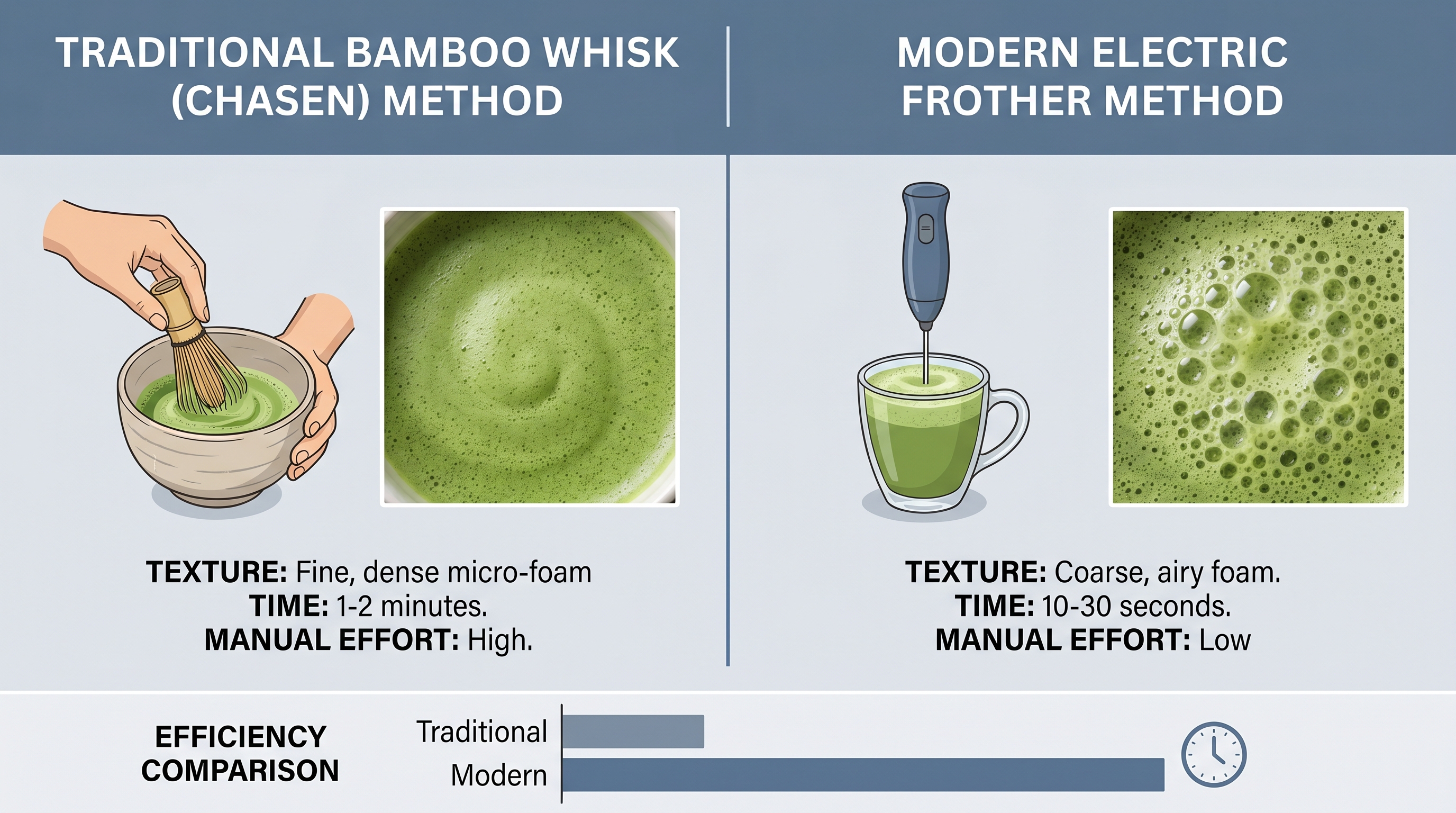
The choice between a bamboo whisk (Chasen) and an electric frother depends entirely on your service volume and the “experience” you want to provide. A traditional Chasen features 80 to 120 delicate tines that break up clumps and incorporate air more gently than high-speed blades.
You might be wondering which is faster.
While an electric handheld frother can achieve foam in 10 seconds, the bubbles are often larger and less stable. In contrast, the traditional zigzag whisking motion with a Chasen creates a much denser micro-foam that holds its shape better when combined with steamed milk. For high-volume cafes, an immersion blender or a specialized commercial frother provides the best balance of speed and foam quality.
Key Takeaway: Use traditional bamboo whisks for premium, made-to-order tea services, but pivot to commercial electric frothers or blenders for high-volume latte production to maintain consistency.
3. Does the grade of the powder change how to froth matcha for a silky finish?
Yes, the grade of the powder is the single most important factor in determining the longevity and “silkiness” of the froth. Higher grades are harvested from younger leaves which contain more L-theanine and chlorophyll, contributing to a smoother texture.
Think about it this way.
When using bulk matcha powder of a culinary grade, you are dealing with slightly larger particles and higher tannin levels. This results in a “thinner” tea that requires more vigorous whisking and often produces larger, soap-like bubbles. To get that iconic, silky micro-foam that customers love, a barista-grade or ceremonial-grade powder is non-negotiable.
Key Takeaway: Higher grade powders produce smaller, more stable bubbles and a creamier mouthfeel, whereas lower grades result in a coarser foam that collapses quickly.
4. How to froth matcha efficiently in high-volume commercial environments?
In a fast-paced cafe, the traditional 2-minute whisking ritual can create a service bottleneck. To maintain speed without sacrificing the “smooth texture” promise, shops must optimize their workflow.
Here is the secret to speed.
Pre-sifting your matcha in bulk at the start of the shift is the most effective way to save time. By storing pre-sifted powder in an airtight, light-shielded container, baristas can skip the most time-consuming step of the preparation. Additionally, many high-volume shops use a “matcha shot” system—pre-whisking a concentrated batch that can be stored for up to 2 hours and shaken before pouring.
Key Takeaway: Commercial efficiency is achieved through bulk pre-sifting and standardized powder-to-water ratios, allowing baristas to froth and serve in under 45 seconds.
5. How to froth matcha effectively when working with bulk wholesale supplies?
Consistency is the biggest challenge when handling large quantities of powder. Wholesale supplies can sometimes settle or compress during shipping, leading to “tight” clumps that are difficult to froth.
The best part?
When you source from a reliable partner, the solubility is tested batch-by-batch. When working with large bags, always fluff the powder before measuring and ensure your storage environment is climate-controlled. If the powder becomes too humid, the natural oils and moisture will cause it to “brick,” making it impossible to achieve a smooth froth regardless of your whisking technique.
Key Takeaway: Maintain wholesale quality by fluffing the powder before use and storing it in a cool, dry place to preserve the electrostatic properties that aid in frothing.
6. Do organic standards influence how to froth matcha for premium consistency?
Organic certification isn’t just about labels; it influences the chemical composition of the leaf. Organic matcha often contains a different balance of natural saponins—the compounds responsible for creating foam.
But wait, there’s more.
While some conventional powders use additives to enhance color or foam, organic ceremonial grade relies on high-quality soil and shading techniques to boost natural nitrogen levels. This results in a cleaner, more stable foam that doesn’t have the chemical “aftertaste” sometimes found in mass-produced, non-organic variants.
Key Takeaway: Organic standards ensure that the foam is produced by natural saponins and amino acids, leading to a more authentic flavor profile and a stable, clean micro-foam.
7. How to froth matcha profitably while balancing equipment and labor costs?
Profitability in a matcha program is often leaked through product waste and slow labor. If a barista has to re-make a clumpy drink, your margin on that sale disappears.
It gets better.
Investing in high-shear mixing equipment or automated frothers can reduce labor time by 60% and eliminate human error in texture. When you calculate the ROI, the reduction in wasted powder—which can be expensive—often pays for the equipment within the first three months of a high-volume program.
Key Takeaway: Focus on reducing “re-makes” by providing staff with the right tools and pre-measured portions to ensure every bowl is frothed perfectly the first time.
8. How to froth matcha that has been custom-formulated for private labels?
For brands utilizing a matcha private label service, the frothing technique may need to be adjusted based on the specific blend profile. Some custom formulations are designed specifically for hard water environments or for use with dairy alternatives.
Let’s dive deeper.
If your private label blend is intended for the “Ready-to-Drink” (RTD) market, the frothing process usually happens at the factory level using homogenization. However, for a retail-facing brand, your “how-to” guide for customers should reflect the specific solubility of your blend. A slightly higher water-to-powder ratio might be recommended for blends with a bolder, more astringent profile.
Key Takeaway: Private label success depends on testing your specific blend with different frothing tools and providing clear, tested instructions to your end consumers.
9. What are the common mistakes buyers make when learning how to froth matcha?
The most common mistake is treating matcha like instant coffee. Many buyers assume that “whisking” is just stirring, which leads to a flat, unappealing liquid.
Want to know a secret?
Most “failed” froths are actually caused by using boiling water. Water above 185°F doesn’t just make the tea bitter; it actually breaks down the proteins and amino acids that hold the air bubbles in place. If your foam is disappearing before the drink reaches the customer, check your kettle temperature first.
Key Takeaway: Avoid the “big three” mistakes: skipping the sifting process, using boiling water, and using a circular stirring motion instead of a vigorous zigzag.
10. How to froth matcha in alignment with the latest global beverage industry trends?
The industry is moving toward “textured” experiences, with nitrogen-infused matcha and “cold foam” toppings becoming standard in urban markets.
Looking ahead.
Mastering how to froth matcha with plant-based milks like oat and macadamia is now a core requirement. These milks have different fat and protein structures, meaning the matcha must be frothed into a very thick “slurry” before the milk is added to prevent separation and ensure a uniform, smooth texture throughout the drink.
Key Takeaway: Stay ahead of trends by mastering “concentrate-first” frothing, which allows you to layer textures and incorporate matcha into nitrogen-charged or plant-based beverages.
FAQ
- Q: Why is my matcha not frothy?
- Answer: This is usually caused by either using water that is too hot (which breaks the bubbles) or not whisking vigorously enough in a “W” motion to incorporate air.
- Q: Can I froth matcha with a spoon?
- Answer: No. A spoon cannot provide the mechanical agitation needed to break up clumps or aerate the liquid; you will end up with a flat, lumpy tea.
- Q: What is the best water temperature for frothing?
- Answer: The industry standard is 175°F (80°C). This temperature is hot enough to extract flavor but cool enough to preserve the amino acids responsible for foam.
- Q: Do I really need to sift the powder every time?
- Answer: Yes. Matcha is highly hygroscopic and naturally forms small clumps. Without sifting, these clumps will remain dry in the center even after whisking.
- Q: Is ceremonial grade better for lattes?
- Answer: While culinary grade is cheaper, ceremonial grade provides a much smoother texture and a more vibrant green color that won’t turn “muddy” when mixed with milk.
Conclusion
Mastering how to froth matcha is the bridge between a mediocre drink and a premium beverage program. By focusing on sifting, temperature control, and the correct mechanical motion, you can ensure a smooth texture that keeps customers coming back. Ready to elevate your business with the finest Japanese tea? contact AdoroHu Matcha today to discuss our wholesale and private label opportunities.