Matcha pricing factors are dominated by one thing: the raw material, which accounts for an estimated 70 to 80 percent of the final cost, followed by grade, origin, harvest timing, processing, certifications, order size, and currency. Here’s the problem that confuses most buyers: they see one matcha quoted at a few dollars and another at ten times the price, and assume it is the same product with a bigger markup.
It is usually not the same product at all. A buyer who treats price as pure markup overpays for marketing or, worse, underpays and receives later-harvest, low-shade powder that fails in their product. A distributor who does not understand the cost stack cannot negotiate or budget, especially after the 2025 climate shock that reset the entire market. Understanding matcha pricing factors is what lets you judge value, negotiate from knowledge, and budget accurately. This guide breaks down every factor, the real 2025-2026 numbers behind them, and how sourcing from a vertically integrated matcha wholesale supplier changes the cost equation.
Matcha pricing factors are led by the raw material, tencha leaf, which makes up an estimated 70 to 80 percent of the final cost. Beyond that, price is driven by grade, growing region, harvest timing (first-flush versus later), shading duration, processing method (stone-milled versus machine), certifications, order volume, packaging, and currency exchange rates. Because raw material dominates, processing savings cannot offset leaf-price inflation, which is why the 2025 climate-driven tencha shortage pushed prices up sharply. Judge matcha by its specifications, not by the “ceremonial” label, which has no legal definition.
In short: matcha pricing is dominated by the raw leaf (70 to 80 percent of cost), then grade, origin, harvest, processing, certifications, volume, and currency.
Key points:
- Raw material (tencha leaf) is an estimated 70 to 80 percent of matcha’s total cost.
- Grade, origin, harvest timing, and shading set the leaf price before processing.
- “Ceremonial grade” has no legal definition, so judge by specs, not the label.
What is the single biggest matcha pricing factor?
The single biggest matcha pricing factor is the raw material, the tencha leaf, which industry analysis estimates at 70 to 80 percent of the finished powder’s cost. Here’s why this one number reframes everything: it means the price is largely set before the leaf ever reaches a stone mill.
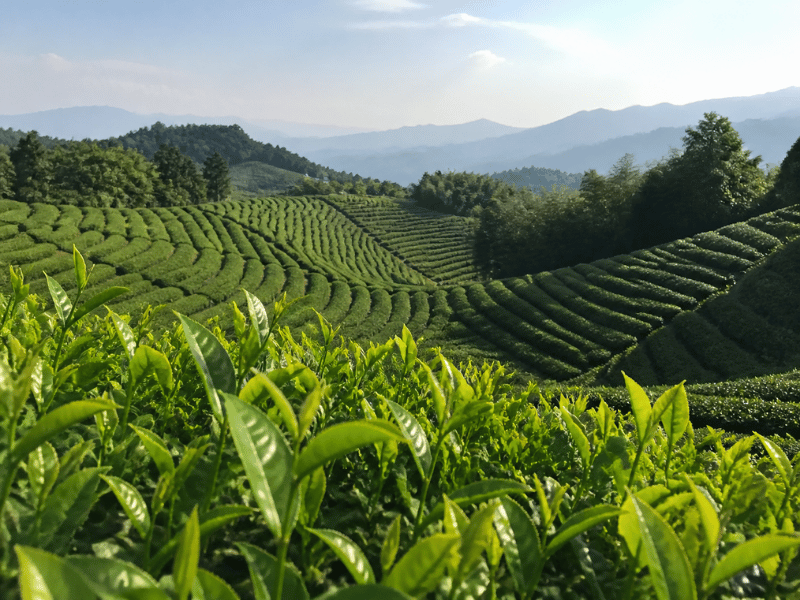
This concentration has a hard consequence for buyers. Because raw material dominates, savings on processing or logistics cannot offset leaf-price inflation, which is why matcha price floors are rigid. When tencha costs rise, the finished price rises with them, no matter how efficient the factory. This is also why a vertically integrated supplier matters: controlling the shade-growing and the leaf supply is controlling 70 to 80 percent of the cost. AdoroHu’s 350-hectare self-owned estate means it owns that dominant cost layer directly, rather than buying leaf at volatile auction prices like a processor with no farm.
Key Takeaway: Raw material is 70 to 80 percent of matcha’s cost, so price is set in the field, not the factory; this is why processing efficiency cannot offset leaf inflation, and why owning the estate controls the dominant cost layer.
How does grade affect matcha pricing factors?
Grade is one of the most visible matcha pricing factors, because it reflects the leaf quality that drives most of the cost. Here’s the distinction that explains the price gap: a cheap tin and an expensive tin are usually two different products, not a budget and premium version of the same one.
Grade tracks harvest and processing. Ceremonial grade uses the youngest first-flush leaves and commands the highest price, while culinary grade uses later, more abundant harvests at a lower cost. Industry pricing illustrates the spread: culinary grade often runs roughly $10 to $30 per 100 grams, premium around $30 to $60, and ceremonial $50 to over $100. For B2B buyers, the documented “ROI sweet spot” sits around $50 to $80 per kilogram for premium culinary grade, quality customers can taste without destroying margin. A brand choosing culinary grade matcha for blended drinks pays for usable flavor, not nuance lost in milk.
Key Takeaway: Grade reflects real leaf-quality differences, not just markup; a cheap and expensive tin are usually different products, and for B2B the premium-culinary sweet spot near $50 to $80 per kilogram balances taste against margin.
Why is “ceremonial grade” a misleading pricing factor?
“Ceremonial grade” is a misleading pricing factor because the term has no legal or regulatory definition. Here’s the trap that costs buyers money: a supplier can label later-harvest, lower-shade powder “ceremonial” and charge a premium the product does not earn.
Because the label is marketing rather than regulation, paying for the word alone is a mistake. The experienced approach is to judge matcha by measurable specifications instead. The specs that actually correlate with quality and justify price are concrete and verifiable.
- L-theanine content, which drives umami and smoothness.
- Particle size in microns, which affects texture and suspension.
- Color values, since vivid green reflects chlorophyll and proper shading.
- Harvest date and shading duration, the inputs a producer cannot fake.
The judgment from experience: ask for these specs, not the grade name, because a supplier who can document them is selling substance, while one leaning on “ceremonial” may be selling a label. A supplier producing ceremonial grade matcha should back the name with the underlying numbers.
Key Takeaway: “Ceremonial grade” has no legal definition and is marketing, not regulation; judge matcha by L-theanine, particle size, color, and harvest date, because a supplier who documents specs sells substance while one leaning on the label may not.
How do origin and region shape matcha pricing factors?
Origin is a powerful matcha pricing factor, shaped by cultivation tradition, land cost, and branding. Here’s the nuance most guides get wrong by treating it as a simple Japan-versus-China verdict: the real driver is the leaf and the growing conditions, not the flag on the label.
In Japan, named regions carry steep price differences, with Uji in Kyoto commanding the highest prices, while Yame, Nishio, and Kagoshima deliver high quality at a lower price per gram. But the honest 2026 picture is that China’s high-grade matcha, especially from Zhejiang and Guizhou, now reaches quality on par with many Japanese ceremonial products at a lower cost. The judgment: do not pay a pure “Japan premium” if a certified Chinese estate delivers the specs you need. AdoroHu grows in Hangzhou, Zhejiang, a renowned tea region, giving buyers high-grade matcha without the Uji price premium or the branding markup.
Key Takeaway: Origin shapes price through cultivation, land cost, and branding, but judge the leaf, not the flag; China’s high-grade matcha now rivals Japanese ceremonial quality at lower cost, so avoid paying a pure Japan premium for specs you can source elsewhere.
How do harvest timing and shading drive matcha pricing factors?
Harvest timing and shading are foundational matcha pricing factors, because they determine the leaf quality before any processing. Here’s the biochemistry that sets the price: longer shading and earlier harvest build the compounds that define premium matcha, but at higher risk and lower yield.
The mechanism is direct. The first-flush spring harvest contains the most amino acids, accumulated through winter dormancy, giving the smoothest, sweetest flavor. Longer shade-growing, often around three weeks, raises L-theanine and chlorophyll, but increases disease risk and cuts yield, so producers add a “risk premium” of thousands of yen per kilogram. Later harvests with minimal shading yield more leaf at lower quality and price. This is why a producer’s choices in the field, not the factory, set most of the cost. The leaf inputs of a $15 tin and a $60 tin are genuinely different.
Key Takeaway: Harvest timing and shading set leaf quality before processing; first-flush, long-shaded leaves carry more umami and color but lower yield and a real risk premium, which is why early-harvest, heavily shaded matcha costs far more.
How does processing method affect matcha pricing factors?
Processing method is a real matcha pricing factor, though smaller than the raw material, with stone-milling costing more than machine milling. Here’s the trade-off behind the cost: slow stone-milling preserves color and produces an ultra-fine powder, but is far slower than industrial alternatives.
The difference is throughput and quality. Traditional granite stone-milling produces only a small amount of powder per hour, which adds labor and time cost, but yields the finest particle size and best color preservation. Faster ball-milling or jet-milling cuts cost but can generate heat that affects color and flavor. Because processing is the smaller slice of the cost stack, cutting corners here saves little while risking quality. AdoroHu runs a 20-unit stone mill plus ball-mill lines and ultrasonic screening, matching the milling method to the grade rather than forcing everything through the cheapest line.
Key Takeaway: Processing affects price but is secondary to raw material; stone-milling costs more for finer particles and better color, so since milling is a small cost slice, cutting corners there saves little while risking the quality buyers pay for.
How do certifications and packaging factor into matcha pricing?
Certifications and packaging are smaller but real matcha pricing factors that add cost for verified quality and protection. Here’s the practical reality: each adds a defined premium, and whether it is worth paying depends on your market.
Organic certification adds an estimated 10 to 30 percent to the price, reflecting the cost of audits, field separation, and lower yield. This premium is non-negotiable if your market requires an organic claim, since selling as organic without valid USDA, EU, or JAS certification risks a customs seizure. Packaging adds cost too, with nitrogen-sealed tins and premium formats raising price versus bulk liners. The judgment: pay the organic premium only when your market rewards or requires it, and match packaging spend to product value. A brand needing certified organic matcha should treat the premium as a market-access cost, not a quality upgrade.
Key Takeaway: Organic certification adds an estimated 10 to 30 percent and packaging adds more; pay the organic premium when your market requires the claim, since selling organic without valid certification risks seizure, and match packaging spend to product value.
How do order size and currency affect matcha pricing factors?
Order size and currency are matcha pricing factors that change your landed cost without changing the product. Here’s what catches importers off guard: the same matcha can cost very differently depending on volume and exchange-rate timing.
Order size works through economies of scale. A small sample order carries the same labor and certification steps as a large one without the volume to spread them, so per-kilogram cost is higher. Larger orders lower the unit price and amortize fixed costs. Currency adds a second variable: sustained JPY movement means landed cost can swing 10 to 15 percent on the same FOB price, a real risk for buyers on yen-denominated Japanese contracts. Sourcing from a Chinese supplier on different currency terms can reduce that exposure. Because AdoroHu prices by grade and quality and sets lead time against order volume, buyers can request a wholesale quote modeling both volume and currency before committing.
Key Takeaway: Order size and currency shift landed cost without changing the product; small orders cost more per kilogram, and JPY swings can move landed cost 10 to 15 percent on the same FOB price, so factor both into budgeting and supplier choice.
Why did matcha pricing factors shift in 2025-2026?
Matcha pricing factors shifted sharply in 2025-2026 because of a climate-driven raw-material shock. Here’s the structural reset buyers must understand: this was not normal inflation but a supply collapse in the dominant cost layer.
The trigger was the leaf. Heat waves during the critical spring growing season cut first-flush tencha production in the Uji region by an estimated 40 percent, and average Kyoto tencha auction prices jumped from around ¥20,024 to ¥43,330 per kilogram, a 116 percent year-on-year rise. Even machine-harvested commodity matcha roughly tripled. Because raw material is 70 to 80 percent of cost, this fed straight through to finished prices, and “cheap matcha from reputable Japanese sources essentially no longer exists.” The judgment: 2023 price benchmarks are obsolete, and buyers should budget on current numbers and consider supply diversification beyond a single climate-exposed region. A Chinese estate offers supply less exposed to the Uji shock.
Key Takeaway: The 2025-2026 shift was a climate-driven supply shock, not normal inflation; a 40 percent Uji production drop and a 116 percent tencha auction rise fed straight through cost, so discard 2023 benchmarks and consider diversifying beyond one climate-exposed region.
What mistakes do buyers make reading matcha pricing factors?
The biggest mistake is judging matcha price by the label or the headline number instead of the cost factors underneath. Here’s the pattern across overpayments and bad buys: each misreading maps to a specific, avoidable loss.
Watch for these traps, each with a named consequence.
- Treating a high price as pure markup, overpaying for marketing not leaf quality.
- Buying the cheapest quote, receiving later-harvest, low-shade powder that fails in product.
- Paying a “ceremonial” premium for a label with no legal definition.
- Ignoring currency exposure, then seeing landed cost swing 10 to 15 percent.
- Budgeting on pre-2025 benchmarks, now obsolete after the supply shock.
Each is avoidable by reading the cost stack. A vertically integrated supplier that owns its leaf and offers complementary lines like hojicha powder can show you exactly where the cost sits rather than hiding it in a single number.
Key Takeaway: Stop reading matcha price as a single number; judge it against the cost stack, raw material, grade, harvest, origin, and currency, because each factor you ignore becomes a specific overpayment or a quality shortfall.
FAQ
- What is the biggest factor in matcha pricing?
- The raw material, the tencha leaf, is the biggest factor, accounting for an estimated 70 to 80 percent of matcha’s total cost. This is set in the field through harvest timing and shading, before processing. Because raw material dominates, processing or logistics savings cannot offset leaf-price inflation.
- Why is some matcha so much more expensive than others?
- Because a cheap tin and an expensive tin are usually different products, not the same product at different markups. The expensive one is typically first-harvest, shade-grown leaf from a named region with a recent pack date, while the cheap one is later-harvest, minimally shaded leaf, sometimes with stems and veins.
- Is “ceremonial grade” worth the higher price?
- Only if the specs justify it. “Ceremonial grade” has no legal definition and is a marketing term, so judge matcha by L-theanine content, particle size, color values, and harvest date rather than the label. A supplier who documents these specs is selling verifiable quality, not just a premium word.
- Why did matcha prices rise so much in 2025 and 2026?
- A climate-driven supply shock. Heat waves cut first-flush tencha production in Uji by an estimated 40 percent, and average Kyoto tencha auction prices rose about 116 percent year-on-year. Because raw material is 70 to 80 percent of cost, this fed directly into finished prices, making pre-2025 benchmarks obsolete.
- Does buying from China lower matcha pricing?
- It can, on both leaf cost and currency exposure. China’s high-grade matcha from regions like Zhejiang now rivals Japanese ceremonial quality at lower cost, and sourcing outside yen-denominated contracts reduces the 10 to 15 percent landed-cost swings JPY volatility can cause. Judge the specs, not just the origin.
Conclusion
Matcha pricing factors are led overwhelmingly by the raw leaf, an estimated 70 to 80 percent of cost, then grade, origin, harvest timing, processing, certifications, volume, and currency, which is why price reflects real product differences far more than markup. The practical takeaway is to judge matcha by documented specifications and the cost stack, not by the “ceremonial” label or a single headline number, especially after the 2025 supply reset. To see exactly where your cost sits and source leaf-controlled supply, contact AdoroHu Matcha to request samples, specifications, and a wholesale quote matched to your grade and volume.