The best ceremonial matcha powder for a business delivers the desired straight-tea experience, fits the service model, and can be purchased with consistent specifications and clear documentation. The phrase “ceremonial grade” has no single universal commercial definition, so buyers should not treat it as a complete quality standard. A premium tea bar, retail brand, and café may each need a different flavor, pack size, and price point. Define what customers will drink, then test candidates under one protocol.
1. What Does Ceremonial Matcha Powder Mean?
Ceremonial matcha powder generally signals a product intended for whisking with water, but the term does not create a shared international specification. Suppliers can use different grading systems. Buyers need concrete sensory, physical, documentary, and commercial criteria behind the label.
Japan's agriculture ministry describes traditional matcha as tencha ground into fine powder, which gives buyers a useful process question to ask alongside grade language.
Which details should replace a vague grade claim?
Request information that supports comparison:
- intended preparation and use
- origin and traceability description
- harvest or raw-material information offered by the supplier
- sensory profile and preparation guidance
- product specification and lot documentation
- packaging, shelf life, and storage directions
| Label claim | Better buyer question | Decision use |
|---|---|---|
| Ceremonial | What application was this grade designed for? | Fit for straight tea |
| Premium | Which sensory traits distinguish it? | Sample shortlist |
| Smooth | Under what dose and water conditions? | Trial protocol |
| Fresh | What are pack and storage controls? | Inventory plan |
Specific questions make grade language useful in procurement.
Key Takeaway: Treat ceremonial as a starting category, then define the product you require.
2. Which Sensory Traits Matter in Straight Matcha?
Straight matcha exposes aroma, taste, mouthfeel, and finish without milk or sugar to cover defects. The preferred balance depends on your menu and customers. Some buyers want deep umami and body, while others prefer a lighter vegetal or nutty profile.
How should a panel describe each cup?
Use agreed sensory language:
- aroma intensity and character
- sweetness and savory depth
- bitterness and drying astringency
- body, smoothness, and visible grit
- finish length and character
- color in the prepared bowl
| Attribute | Record | Business question |
|---|---|---|
| Aroma | Freshness and note family | Does it support the menu promise? |
| Balance | Sweet, savory, bitter | Will target customers accept it? |
| Mouthfeel | Fine, creamy, drying, gritty | Does service feel premium? |
| Finish | Clean, short, persistent, harsh | Does the cup invite another sip? |
The panel should describe the cup before discussing price or package design.
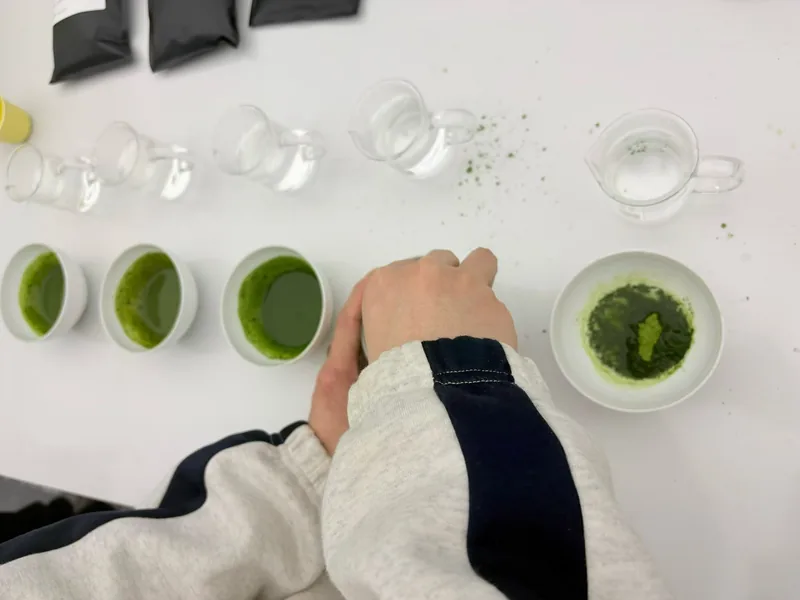
Serve samples at comparable temperatures and allow panelists water and time between cups. Too many samples in one sitting can dull perception and create order effects. If the shortlist is long, use an initial screening round and bring only the strongest candidates into a smaller confirmation session. Keep rejected-sample notes because they help a supplier understand what to change.
Key Takeaway: Approve the sensory balance your customers will recognize and value.
3. How Should You Test Ceremonial Matcha Samples?
Test ceremonial matcha samples blind with identical powder weight, water, temperature, bowl, sifting, whisking, and scoring time. Preparation variation can overwhelm subtle product differences. Repeat the leading samples on another day before making a decision.
What protocol supports a fair comparison?
Write each step so another team member can reproduce it:
- assign random sample codes
- weigh powder on the same scale
- use one water source and temperature range
- sift through the same mesh
- whisk for the same time and motion
- score promptly in randomized order
| Control | Fixed element | Why it matters |
|---|---|---|
| Water | Mineral profile and temperature | Changes extraction and bitterness |
| Dose | Powder and water weights | Changes intensity and body |
| Tool | Bowl, sieve, whisk | Changes foam and dispersion |
| Timing | Preparation-to-score interval | Changes aroma and settling |
Repeatability helps distinguish product character from preparation noise.
Calibrate the panel with one retained reference batch before evaluating new samples, using the same preparation sheet and neutral sensory terms. The beverage lead should own sample coding and protocol control, while each panelist records scores independently before discussion. When a supplier reports a specification, process, source, or packaging change, quality should decide whether the reference comparison must be repeated. Keep both score sheets and preparation records so purchasing can confirm that a later commercial lot was checked against the approved reference rather than against memory.
Key Takeaway: Use one written protocol and confirm the result in another session.
4. What Can Color and Foam Tell a Buyer?
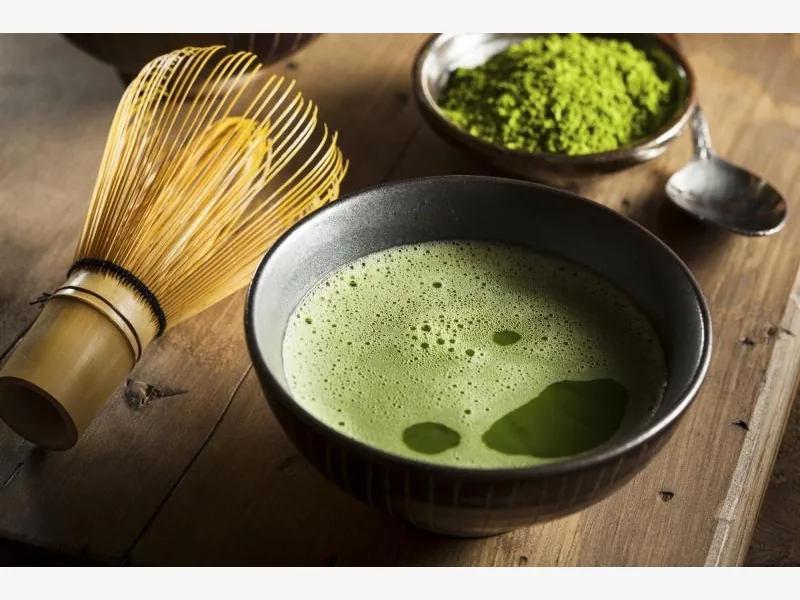
Color and foam provide useful observations, but neither proves product quality by itself. Lighting, water, dose, bowl color, camera settings, sifting, and whisk technique can alter what a buyer sees. Evaluate appearance beside aroma, flavor, texture, documentation, and cost.
How can teams record appearance accurately?
Create consistent viewing conditions:
- use neutral light and a plain background
- photograph every dry sample with one camera setup
- use the same bowl color and fill depth
- note foam fineness and persistence
- inspect settling after a fixed interval
- avoid filters or automatic color enhancement
| Observation | Possible cause | Next check |
|---|---|---|
| Dull prepared color | Product, heat, water, or lighting | Repeat under controls |
| Coarse foam | Whisking or dispersion | Standardize technique |
| Rapid settling | Particle behavior or poor mixing | Repeat after sifting |
| Bright dry powder | One positive signal | Confirm by tasting |
A controlled photo record supports later lot comparisons.
Key Takeaway: Use appearance as one linked data point, never the whole verdict.
5. Should Ceremonial Matcha Be Used in Lattes?
Ceremonial matcha can be used in lattes when its sensory value survives milk and the serving economics make sense. Some nuanced powders lose distinction in a sweetened drink. A beverage-oriented premium grade may offer clearer flavor at a lower cost.
How can a café decide?
Compare candidates in water and the menu recipe:
- score straight cups before milk trials
- prepare the standard milk and sweetener formula
- test hot and iced service
- calculate dose cost per cup
- ask whether customers can perceive the upgrade
- reserve higher-value powder for straight service if needed
| Service | Desired result | Buying implication |
|---|---|---|
| Straight bowl | Nuance and clean finish | Favor sensory refinement |
| Unsweetened latte | Clear flavor through milk | Test body and intensity |
| Sweetened latte | Presence after syrup | Avoid paying for hidden nuance |
| Tasting flight | Distinct profiles | Offer coded or origin-led choices |
AdoroHu’s premium matcha page can support comparison with beverage-focused alternatives.
Key Takeaway: Use ceremonial matcha in milk only when customers can detect its value.
6. How Do Water and Tools Affect Ceremonial Matcha?
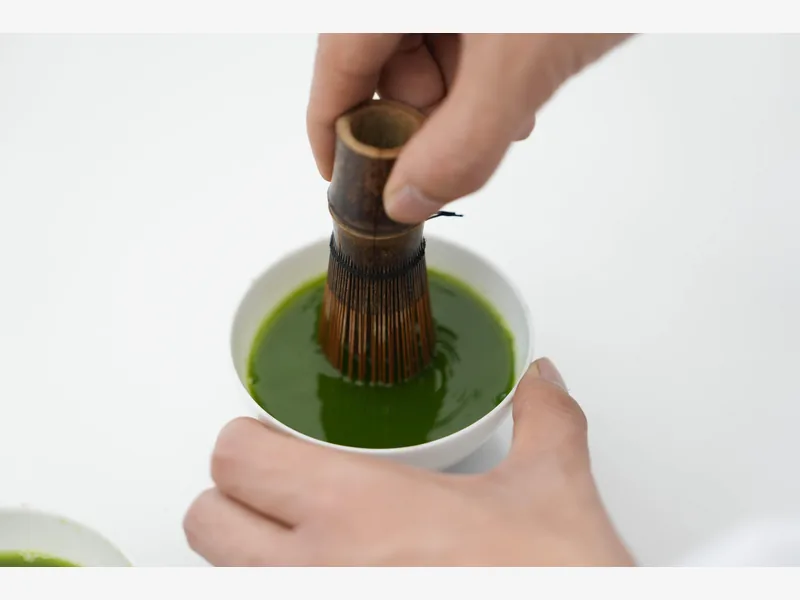
Water and tools affect ceremonial matcha by changing extraction, dispersion, foam, temperature, and perceived texture. A supplier sample should be tested with the equipment your staff will use. An ideal laboratory cup may fail in a fast café workflow.
Which preparation variables need validation?
Check both quality and service speed:
- water source and controlled temperature
- accurate scale or dosing method
- sieve suited to the workflow
- bamboo whisk, electric tool, or production mixer
- bowl or vessel geometry
- cleaning and tool-replacement routine
| Variable | Customer effect | Operating check |
|---|---|---|
| Water temperature | Bitterness and aroma | Train with a defined range |
| Sifting | Clumps and foam | Time the service step |
| Whisk condition | Texture and consistency | Set replacement trigger |
| Dose control | Cup variation and cost | Audit staff portions |
Preparation standards protect both experience and gross margin.
Key Takeaway: Approve the powder with the tools and pace used in real service.
7. How Should Ceremonial Matcha Be Packaged?
Ceremonial matcha should be packaged in portions that limit repeated exposure to air, moisture, heat, light, and odors. The correct size depends on consumption speed. A large pack can reduce purchase price yet weaken the open-pack experience before it is finished.
What should a packaging brief cover?
Match protection to channel and turnover:
- inner pack material and closure
- quantity used per day or week
- resealing method after opening
- lot and date coding
- retail label and market requirements
- secondary pack for shipping protection
| Channel | Pack concern | Practical response |
|---|---|---|
| Tea bar | Frequent opening | Small working tin from sealed stock |
| Multi-site café | Uneven turnover | Site-sized inner packs |
| Retail | Consumer opening pattern | Clear storage directions |
| Sampling | Identity and freshness | Individually coded packs |
AdoroHu’s private-label options can frame retail packaging questions.
Key Takeaway: Size each inner pack for rapid use after opening.
8. How Can You Compare Ceremonial Matcha Cost?
Compare ceremonial matcha cost by approved serving and customer proposition, not only by kilogram. Include landed cost, portion size, preparation loss, open-pack waste, packaging, testing, and service labor. Premium pricing needs a customer-facing reason.
Which calculation supports menu planning?
Build a simple model:
- delivered powder cost
- grams in the approved recipe
- expected cups from each pack
- powder lost in handling or expired open stock
- labor and service time
- menu or retail price and target margin
| Cost layer | Formula | Management use |
|---|---|---|
| Powder per cup | Landed price × dose | Compare samples |
| Open-pack loss | Unused powder per pack | Choose pack size |
| Service labor | Time × labor rate | Compare workflows |
| Gross contribution | Selling price minus variable cost | Set menu position |
Cost should be reviewed beside blind sensory preference and customer fit.
Price architecture can preserve choice without forcing one powder into every menu item. A tea bar might offer a core straight matcha and a limited premium selection, while using a beverage-focused powder for milk drinks. This scenario gives customers a visible reason for different prices and helps the operator control stock turnover across expensive small packs.
Key Takeaway: Pay for sensory differences that support a clear commercial proposition.
9. What Documents Support Ceremonial Matcha Approval?
Product approval should include lot-relevant specifications, test documentation, traceability information, ingredient details, and market records required by your business. Sensory quality does not replace food-safety, regulatory, or supplier due diligence.
Set the document deadline before the tasting decision becomes emotionally fixed. Teams can become attached to a sensory favorite, then treat missing records as an administrative nuisance. A documented approval gate keeps the launch schedule honest. It also tells the supplier which records must accompany future lots and who should receive change notifications.
Which records should your team review?
The exact list depends on market and channel:
- product specification
- ingredient and allergen statement
- certificate of analysis for the relevant lot
- origin and traceability information
- shelf-life and storage guidance
- food-safety or market documents requested by your reviewer
| Record | Purpose | Verification point |
|---|---|---|
| Specification | Defines agreed product | Current revision |
| COA | Reports lot results | Lot match and methods |
| Traceability | Links supply records | Identifier continuity |
| Storage guidance | Protects approved quality | Operational feasibility |
Ask the supplier for current details about quality and production controls.
Key Takeaway: Complete documentary review before treating a sensory winner as approved.
10. How Do You Qualify a Ceremonial Matcha Supplier?
Qualify a ceremonial matcha supplier through a product brief, blind tasting, document review, commercial check, and trial order. The delivered lot should match the agreed specification and perform close to the approved sample under the same preparation protocol.
Which gates should precede scale?
Assign each gate to a named owner:
- define customer and service use
- request documents and coded samples
- repeat the sensory trial
- validate staff preparation
- agree specification, pack, and terms
- receive and inspect a trial order
- record any difference from the approved sample
| Gate | Owner | Evidence |
|---|---|---|
| Sensory | Tea or product panel | Signed scorecard |
| Quality | QA or regulatory | Document approval |
| Service | Operations | Repeatable preparation |
| Commercial | Purchasing | Landed-cost and supply plan |
For sample selection, contact AdoroHu with the intended service, flavor brief, market, and volume.
Key Takeaway: Approve the relationship only after a commercial lot repeats the intended cup.
The best ceremonial matcha powder supports a defined drinking experience and a sound operating model. Your team can now translate grade language into sensory criteria, test samples fairly, validate preparation, choose protective packaging, review documents, and calculate cost per cup. AdoroHu supplies ceremonial and premium matcha categories for B2B discussion. Contact us today with your straight-tea or café brief to request a targeted sample set.
FAQ
Q1: Can I rely on the term ceremonial grade alone?
No. The term does not provide a universal specification. Request concrete sensory, product, origin, documentation, packaging, and storage details, then test the sample yourself.
Q2: What’s the best way to taste ceremonial matcha?
Use blind codes and a fixed water protocol, then score aroma, balance, mouthfeel, finish, and appearance. Repeat leading samples on another day.
Q3: How do I know whether ceremonial matcha suits my café?
Test it with your water, tools, staff, service time, and menu recipe. Calculate cost per approved serving and ask whether customers can perceive the difference.
Q4: Can ceremonial matcha be used for baking?
It can, but it is often an expensive choice for a process that masks delicate traits. Compare it against a culinary grade in the finished recipe before deciding.
Q5: What should I send when requesting samples?
Send the serving format, desired flavor, water or milk recipe, target dose and cost, market, pack need, volume forecast, and required documents.