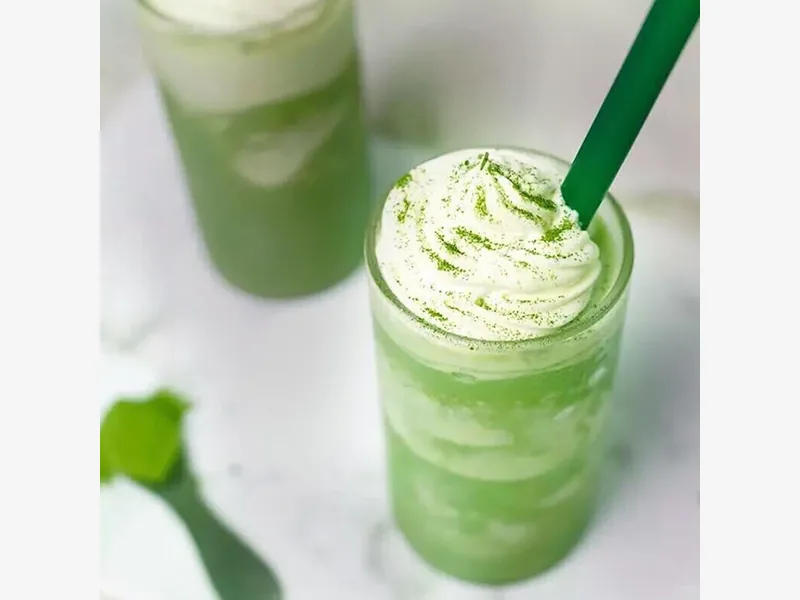
The best matcha powder for lattes keeps its color and tea character after milk, ice, sweetener, and service time enter the recipe. For a café or beverage brand, that means buying against a finished-drink specification rather than choosing the greenest sample or the most expensive grade.
Premium matcha designed for beverage use can be a practical starting point, but the label on the bag cannot replace trials in your own base. Compare candidates at the same dose, temperature, milk ratio, and holding time. Then review cost per finished serving and batch documentation.
1. What makes matcha work well in a latte?
Latte matcha needs enough aroma, umami, and green color to remain clear after dilution. It also needs a fine, even particle profile so staff can disperse it without gritty sediment or long preparation steps.
- Test color in dairy and each plant-based milk on your menu.
- Score bitterness before and after the standard sweetener dose.
- Check sediment after the drink sits for the real service period.
- Record the matcha dose required for an acceptable cup.
| Buying factor | What to observe in the latte | Why it affects the business |
|---|---|---|
| Color | Green remains attractive after mixing | Supports menu and photo consistency |
| Flavor | Tea remains distinct without harshness | Reduces dependence on sugar |
| Texture | No obvious grit or persistent clumps | Improves drinking and preparation |
| Aroma | Tea aroma survives milk and ice | Gives the drink a recognizable profile |
These four results let the tasting team reject samples that lose color, taste harsh, settle too quickly, or require too much powder in the approved recipe.
Set the finished-drink target first
Write the target as a recipe and sensory range. Include matcha dose, liquid volume, milk, sweetener, water temperature, mixing method, and acceptable hold time. A supplier can recommend more accurately when those conditions are known.
Key Takeaway: Select latte matcha by its performance in the finished recipe.
2. Which matcha grade is best for lattes?
Premium or beverage-grade matcha often gives the best balance of color, smoothness, and cost for a latte. Ceremonial-style products may be excellent in water yet offer little commercial advantage once milk and syrup soften their finer notes. Low culinary grades can bring stronger bitterness or duller color.
- Start with premium or latte-oriented samples.
- Include one higher and one lower tier as controls.
- Keep every recipe variable fixed during comparison.
- Reject grade names that arrive without a usable specification.
| Grade position | Typical strength | Common latte tradeoff |
|---|---|---|
| Ceremonial | Delicate, refined drinking profile | Cost may disappear into milk |
| Premium/beverage | Color and flavor balanced for drinks | Must still be tested by recipe |
| Culinary | Stronger flavor at lower ingredient cost | Can be rougher or more astringent |
| Sweetened mix | Fast preparation | Less control over sugar and formula |
The middle tier is often the first commercial trial, not an automatic winner.
Treat grade as a supplier shorthand
There is no universal grading system that makes one company’s “premium” identical to another’s. Ask for measurable product data, a representative sample, and a clear description of intended use.
Key Takeaway: Use grade to shortlist products, then let recipe trials decide.
3. How should you compare color and flavor?
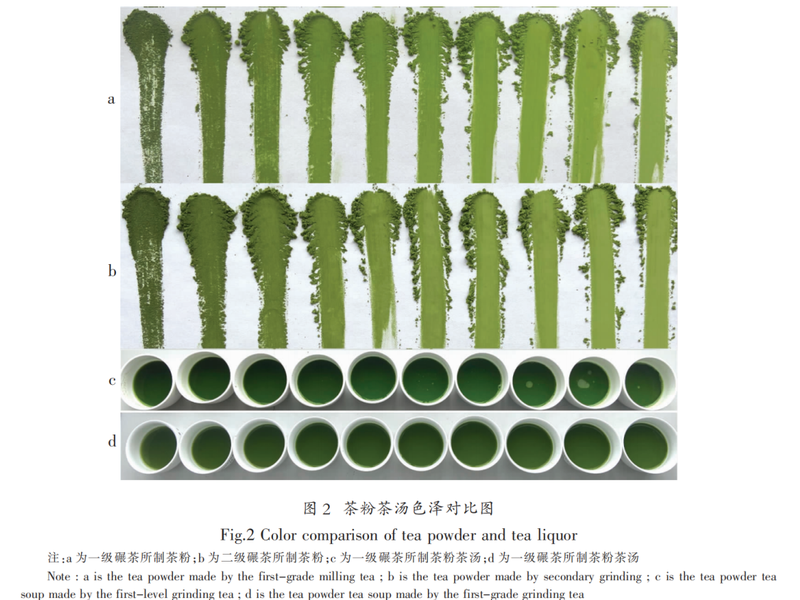
Compare powders under controlled light and compare drinks in the cup customers receive. Powder color alone can mislead because milk type, sweetener, acidity, temperature, and dose all change the finished appearance and taste.
- Use identical clear cups for visual review.
- Taste samples blind and in a changing order.
- Score green color, tea aroma, umami, bitterness, and aftertaste.
- Repeat the test with hot and iced versions if both are sold.
| Trial stage | Control | Record |
|---|---|---|
| Dry powder | Same light and sample depth | Hue, aroma, visible agglomerates |
| Water slurry | Same dose and temperature | Wetting, foam, bitterness |
| Finished latte | Same milk and sweetener | Color, aroma, balance, texture |
| Held drink | Same time and vessel | Separation, sediment, flavor drift |
The sequence shows whether a weakness begins in the powder or appears only in the recipe.
Build a short sensory scorecard
Use a five-point scale with anchors, such as “tea is lost” at one and “tea is too dominant” at five. The preferred result may sit in the middle. Written anchors make feedback from procurement, R&D, and bar staff easier to reconcile.
Key Takeaway: Compare matcha in controlled drinks, not in an open bag.
4. How does milk change matcha performance?
Milk changes sweetness, fat perception, opacity, and aroma release. Oat milk can emphasize sweetness and cereal notes; coconut may cover tea aroma; some nut milks add a strong flavor of their own. Dairy and low-fat bases can produce different levels of body from the same matcha.
- Test every approved milk rather than one “representative” base.
- Use the same milk lot when screening powders.
- Check whether stabilizers affect foam or sediment.
- Run a separate unsweetened trial to expose bitterness.
| Milk variable | Possible effect | Trial response |
|---|---|---|
| Fat and solids | More body, muted sharpness | Check whether tea still reads clearly |
| Natural sweetness | Lower perceived bitterness | Recheck added sugar requirement |
| Base color | Changes visible green | Photograph under fixed light |
| Added flavors | Competes with tea aroma | Taste before adding syrup |
Milk can rescue a rough sample in one recipe and erase a subtle sample in another.
Approve by menu system
If customers can choose several milks, define either one matcha that works across all of them or separate recipe doses. The second approach adds training and inventory complexity, so calculate that cost before adopting it.
Key Takeaway: A latte matcha is only approved after every core milk test.
5. Why do dispersibility and particle size matter?
Matcha is a suspension, not a fully dissolved ingredient. Fine particles can disperse smoothly, but the complete result also depends on agglomeration, static, storage, water temperature, shear, and the order of addition.
- Observe wetting time before whisking or blending.
- Count visible clumps after the standard mixing cycle.
- Check sediment at the end of the drinking period.
- Repeat after the package has been open during service.
| Symptom | Possible cause | Useful next check |
|---|---|---|
| Floating islands | Poor initial wetting | Sift or pre-mix with a small water volume |
| Grainy sip | Coarse fraction or weak mixing | Compare sieve result and mixing method |
| Fast settling | Suspension is unstable | Review particle profile and service time |
| Slow preparation | Process does not fit the powder | Test higher-shear or batch preparation |
These observations connect supplier data to the work bar staff must perform.
Test the real equipment
A laboratory mixer can hide problems that appear with a bamboo whisk, handheld frother, shaker, or automated dispenser. Run the final trial on the least powerful approved tool at peak service pace.
Key Takeaway: Approve powder and preparation method as one operating system.
6. Should you buy pure matcha or a latte mix?
Pure matcha gives the brand control over sweetness, milk, claims, and seasonal recipes. A prepared mix can shorten training and improve dosing consistency, but it fixes more of the formula at the supplier level.
- Compare complete ingredient lists and allergen implications.
- Calculate cost at the finished-cup dose.
- Check whether the mix works across hot and cold drinks.
- Confirm who controls changes to sweetness or flavor.
| Format | Main advantage | Main constraint |
|---|---|---|
| Pure matcha | Maximum formula control | More preparation discipline |
| Sweetened mix | Fast, repeatable dosing | Fixed sugar ratio |
| Custom blend | Recipe designed for the brand | Development and change control needed |
| Single-serve sachet | Portion control | More packaging and unit cost |
The cheapest bag may produce the more expensive cup if its dose or labor requirement is higher.
Compare total preparation cost
Include powder, sweetener, waste, mixing time, remake rate, packaging, and inventory. For a proprietary drink, custom formula development may be relevant when an off-the-shelf powder cannot meet the target.
Key Takeaway: Choose the format by cup economics and formula control.
7. How should a café run a sample trial?
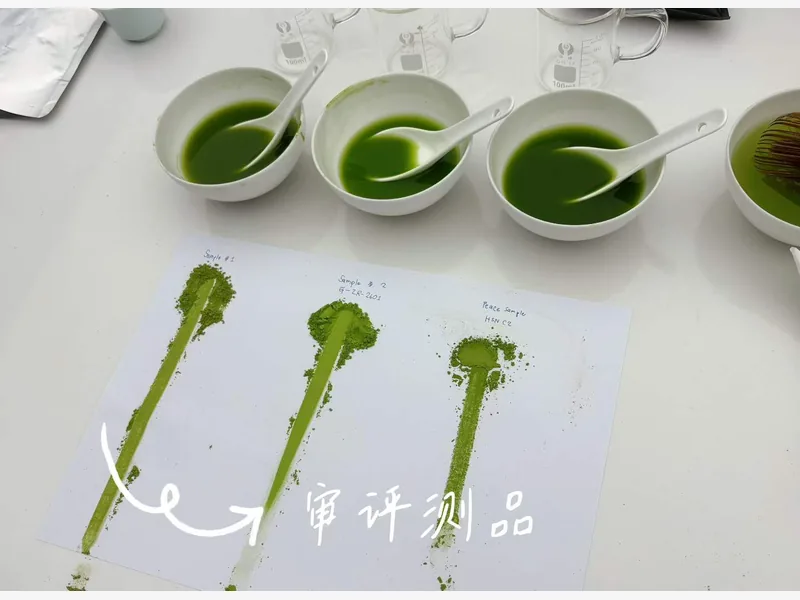
Use a staged trial that removes weak samples early and saves operational testing for the strongest few. The matcha for latte application page describes the supplier’s intended use, while your protocol establishes whether it fits your menu.
- Screen documents before opening samples.
- Run dry, slurry, hot latte, and iced latte checks.
- Blind-code candidates for the tasting team.
- Repeat the finalists on a second day.
| Trial round | Purpose | Exit rule |
|---|---|---|
| Document review | Remove unsuitable specifications | Required documents are complete |
| Bench screening | Compare basic sensory behavior | Meets minimum color and flavor |
| Recipe test | Fit the actual menu | Passes target score range |
| Service simulation | Check speed and holding | Staff can reproduce the result |
A repeated trial helps separate a real product difference from preparation noise.
Keep a retained comparison sample
Seal and label enough of the approved sample for comparison with the first commercial lot. Record lot code, receipt date, storage conditions, and recipe version so the later check has a defensible reference.
Key Takeaway: Use staged, blind, repeatable trials before commercial approval.
8. What documents should a supplier provide?
Request the specification sheet, certificate of analysis format, ingredient and allergen statement, country of origin, storage guidance, shelf-life basis, packaging details, and applicable compliance documents. Organic products require current evidence for the intended destination market.
For U.S. retail food service, the FDA Food Code is a model for jurisdictions, so confirm the rules adopted where each café operates.
- Match every document to the product and lot where applicable.
- Check legal entity names and validity dates.
- Ask how specification changes are communicated.
- Confirm which tests are routine and which require a request.
| Document | Procurement question it answers | Review owner |
|---|---|---|
| Product specification | What limits define the powder? | R&D or quality |
| Certificate of analysis | Did this lot meet tested limits? | Quality |
| Allergen statement | What labeling controls apply? | Regulatory |
| Organic documentation | Can the intended claim be supported? | Regulatory/procurement |
Documents should support the product you will buy, not a broad claim about the supplier.
Resolve claims before packaging work
If organic positioning matters, review the relevant organic matcha offering and request current supporting documents. Do not finalize labels from website badges alone.
Key Takeaway: Tie every commercial claim to current product-level evidence.
9. How do you compare price without losing quality?
Normalize quotations to landed cost per kilogram, then convert that figure to cost per approved drink. Add freight, duty, testing, waste, financing, and packaging. A powder with a higher kilogram price can win if it works at a lower dose or cuts remakes.
- Quote the same Incoterm and delivery point.
- Use the approved dose, not a supplier’s suggested range.
- Include realistic yield loss from open packages.
- Model a rejected or delayed lot as a sourcing risk.
| Cost layer | Calculation input | Decision use |
|---|---|---|
| Ingredient | Landed cost and grams per cup | Base cup cost |
| Labor | Preparation seconds and wage rate | Service cost |
| Waste | Spillage, expiry, remakes | Effective yield |
| Risk | Lead time and replacement route | Buffer and dual-source plan |
The normalized view keeps a low quote from hiding a high serving cost.
Set a value floor
Define the minimum sensory and operational scores first. Only compare price among candidates that pass. Otherwise, procurement may optimize a formula the customer would not reorder.
Key Takeaway: Buy on landed cost per acceptable cup.
10. How do you keep latte quality consistent?
Lock the approved powder, lot controls, recipe, equipment, and training method. Then monitor incoming lots against the retained sample and finished-drink target. Color or aroma drift deserves investigation before rollout, even when paperwork passes.
- Assign one controlled recipe version.
- Calibrate scales and standardize water temperature.
- Train staff with visual and sensory references.
- Review each new lot before broad distribution.
| Control point | Routine check | Action on failure |
|---|---|---|
| Incoming powder | Documents and retained-sample comparison | Hold the lot |
| Preparation | Dose, temperature, mixing time | Retrain or adjust equipment |
| Finished drink | Color, flavor, texture | Investigate ingredient or process |
| Supplier change | Written change notification | Revalidate the recipe |
Consistency comes from a closed loop between purchasing, quality, product development, and operations.
Move from sample to supply
Ask the supplier to confirm the exact product code, packaging, documentation, and change-control process in writing. To compare grades and request materials, start with AdoroHu Matcha and send the finished-drink brief through the contact page.
Key Takeaway: Control the recipe and verify every incoming lot against it.
FAQ
Q1. Is ceremonial matcha always better for lattes?
No. Its delicate qualities and higher price may not add value after milk and sweetener. Compare it with premium beverage grades in the same recipe.
Q2. Can culinary matcha be used in a latte?
Yes, if it passes your color, flavor, texture, and dose targets. Some culinary products are too bitter or coarse for a menu-leading drink.
Q3. What color should latte matcha be?
Look for an attractive green in the finished latte, not an isolated powder hue. The right target depends on the milk, dose, lighting, and brand presentation.
Q4. How many matcha samples should a buyer test?
Test enough to cover meaningful grade and price options without exhausting the tasting team. A small, well-controlled shortlist gives better data than a large uncontrolled tasting.
Q5. Should matcha be tested in oat milk?
Yes, when oat milk is part of the menu. Test every core milk because sweetness, opacity, fat, and flavor change matcha performance.