The best matcha powder is not a single brand; it is the grade and specification that fits your application, judged by color, particle size, flavor strength, and verified purity. Here’s the problem buyers run into: consumer “best matcha” lists rank brands by personal taste, which tells a beverage brand or food manufacturer almost nothing about what to source at scale.
That gap is costly. A café that picks a “best overall” retail tin pays consumer markup and still gets inconsistent batches. A manufacturer that buys on a taste-test headline ends up with the wrong particle size for its production line. A private-label brand that never defines specs launches a product that drifts in color and flavor. For a B2B buyer, choosing the best matcha powder is a specification decision, not a popularity contest. This guide reframes the “top picks” question around what actually matters for sourcing, then shows how to evaluate a supplier like AdoroHu Matcha so the matcha you order performs every time.
The best matcha powder depends on its intended use, not a single brand ranking. For drinking neat, choose ceremonial grade with vivid color and smooth umami. For lattes, smoothies, and baking, choose culinary or premium grade with bold flavor that survives mixing. Across all uses, the best matcha shows vivid jade-green color, ultra-fine stone-milled texture, fresh aroma, and a clean Certificate of Analysis. For B2B buyers, batch consistency and certifications matter more than any taste-test headline.
In short: the best matcha powder is the one matched to your application and verified by specs, not the brand that wins a consumer taste test.
Key points:
- “Best” depends on use: ceremonial for neat, culinary or premium for mixing and baking.
- Color, particle size, aroma, and a clean COA define quality across every grade.
- For B2B, batch consistency, certifications, and cost-per-serving outrank brand prestige.
What makes the best matcha powder for your application?
The best matcha powder is the one matched to how you will use it, because application drives every other spec. Here’s the thing consumer roundups miss: a “best overall” tin built for neat drinking can be the wrong choice for a latte line or a bakery. Use decides grade, and grade decides color, flavor, and cost.
For whisking neat, the best matcha is ceremonial grade: first-flush, shade-grown leaves with smooth umami. For lattes, smoothies, and baking, the best matcha is culinary or premium grade, with higher catechins and bolder flavor that survives milk, sugar, and heat. AdoroHu organizes its range into an EU Grade Series (E-1 to E-7) and an Organic Grade Series (O-1 to O-6), so a buyer can match an exact color-and-flavor point. For neat-drink products you would source ceremonial grade matcha, while mixed applications call for culinary grade matcha.
Key Takeaway: Define the application first; the best matcha powder for neat drinking, lattes, or baking differs by grade, so match the grade to the end product rather than chasing a single “best” label.
How do you judge the best matcha powder by color and texture?
You judge the best matcha powder by looking for vivid jade-green color and an ultra-fine, talc-like texture. These two signals are visible instantly and reveal a lot. Bright green comes from chlorophyll, which proper shade-growing maximizes, while a dull yellow or brown tint signals older leaves or oxidation.
Texture matters just as much. The best matcha is stone-milled to roughly 10 microns, fine enough to suspend evenly and feel silky. Coarse, gritty powder clumps and sinks, which is a real problem on a production line. Here’s a field test buyers use: drag a matcha-streaked finger across white paper, and the finer the powder, the longer the smooth line. AdoroHu finishes through a 20-unit stone mill plus 56 ball mills and an ultrasonic screening system built for ultra-fine particle size.
Key Takeaway: Use color and texture as instant filters; vivid jade-green and ultra-fine, talc-like powder signal quality, while dull tones and grittiness reveal age or coarse milling.
Why does the best matcha powder need lab verification?
The best matcha powder must be backed by lab verification, because you consume the whole leaf and ingest anything in it. Here’s what separates a hobby purchase from a sourcing decision: a home cook buys on taste, but a manufacturer needs documented safety. Only a Certificate of Analysis (COA) confirms a batch is safe and compliant.
A complete COA should cover the categories that determine whether a shipment is legal and safe in your market.
- Heavy metals: lead, cadmium, mercury, and arsenic levels.
- Pesticide residue: a broad panel matched to your market’s limits.
- Microbiology: total plate count, E. coli, and mold or yeast.
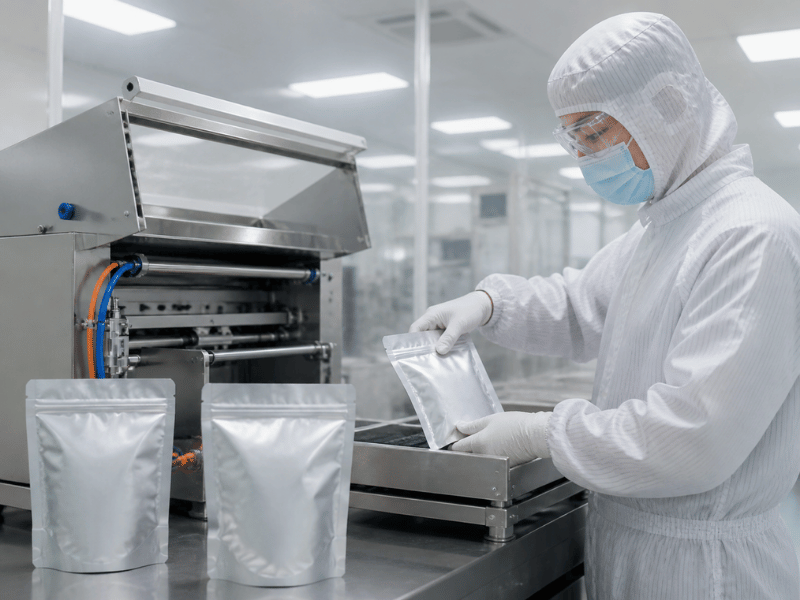
AdoroHu backs purity with a 1,000 m² purification workshop, two German metal-detection systems, and a Japanese sterilization line, alongside ISO 22000 and FDA registration. That documentation is what protects a buyer from rejected or unsafe stock.
Key Takeaway: Never judge the best matcha powder by taste alone; require a batch-specific COA covering heavy metals, pesticides, and microbiology to protect against contaminated or non-compliant shipments.
Which certifications signal the best matcha powder for global markets?
For global markets, the best matcha powder carries the certifications your target market requires, because they prove third-party verification. Here’s why this matters more than a brand name: an organic claim without matching certification can get a shipment held at customs.
Certifications act as a passport for your finished product across regions.
- USDA Organic (NOP) for the U.S. market and EU Organic for Europe.
- JAS Organic, Japan’s foundational standard, with equivalence to USDA and EU.
- ISO 22000 and FDA registration for food-safety assurance.
- Halal and Rainforest Alliance for wider market and ethical claims.
AdoroHu holds China Organic, USDA (NOP), EU Organic, JAS, Halal, Rainforest Alliance, ISO 22000, and FDA registration, with organic certification across 150 hectares of its estate. A buyer building a certified organic matcha line should confirm both the certificate type and its renewal date.
Key Takeaway: The best matcha powder for export carries the right certifications for your market; match the certificate to your destination and verify renewal dates to avoid customs and labeling problems.
What are the best matcha powder picks for lattes and beverages?
For lattes and beverages, the best matcha powder is a premium or culinary grade with bold flavor and vivid color that carries through milk. Here’s the logic: a matcha latte sells on its green color and clean taste, and a delicate ceremonial powder loses both once milk and ice enter.
Premium grade gives a clean, balanced flavor for signature drinks, while culinary grade delivers bold, cost-efficient flavor for high-volume menus. Particle fineness keeps the drink smooth, not gritty. For a matcha latte program, the best pick balances color retention against cost-per-serving. At roughly 1.5 grams per drink, a 1-kilogram bag yields about 660 servings, which is the number that actually drives a beverage line’s economics.
Key Takeaway: For lattes, the best matcha powder is premium or culinary grade chosen for color retention and cost-per-serving; reserve ceremonial grade for neat drinks where its nuance is tasted.
What are the best matcha powder picks for baking and food manufacturing?
For baking and food manufacturing, the best matcha powder is a robust culinary grade that holds color and flavor through heat and sugar. Think about it: a delicate powder fades in the oven, turning pastries grey, while a bold culinary grade keeps a true green.
Matching the best pick to the product
Use this logic to select the right matcha for each product type.
- Premium bakery and confectionery: culinary matcha for vivid, heat-stable color.
- Ice cream and dessert: culinary or premium grade for true jade tone.
- High-volume RTD and functional products: culinary grade for cost-efficient flavor.
- Clean-label or certified lines: organic matcha matched to market certification.
For a matcha baking line, a robust culinary grade keeps real green color after baking, where a cheaper or more delicate powder would dull.
Key Takeaway: For baking, the best matcha powder is a bold culinary grade engineered to survive heat and sugar; match the grade to whether true green color is central to the finished product.
How does the best matcha powder hold its color and freshness?
The best matcha powder holds color and freshness through shade-growing, fine milling, and airtight packaging. Here’s what protects it: vivid green starts with chlorophyll-rich shaded leaves, but oxidation from air, light, and heat fades it fast.
Three controls preserve quality. Shade-grown leaves carry the most chlorophyll. Ultra-fine stone-milling disperses pigment evenly. Airtight, light-blocking packaging slows oxidation. AdoroHu packs bulk supply in 20 kg or 25 kg cartons with sealed food-grade liners, plus retail formats from zip-lock pouches (30 g–500 g) to single-serve 1–3 g sachets. Most quality guidance recommends using opened matcha within 60 to 90 days, so packaging matched to your turnover protects the color and flavor you paid for.
Key Takeaway: The best matcha powder stays vivid through shade-growing, fine milling, and airtight packaging; match the format to your turnover so oxidation does not erode color before use.
Why is batch consistency the mark of the best matcha powder at scale?
At scale, the best matcha powder is defined by batch consistency, because a commercial buyer needs identical color and flavor in batch one and batch five hundred. Here’s the distinction consumer reviews ignore: a home cook judges one tin, but a manufacturer judges repeatability across every order.
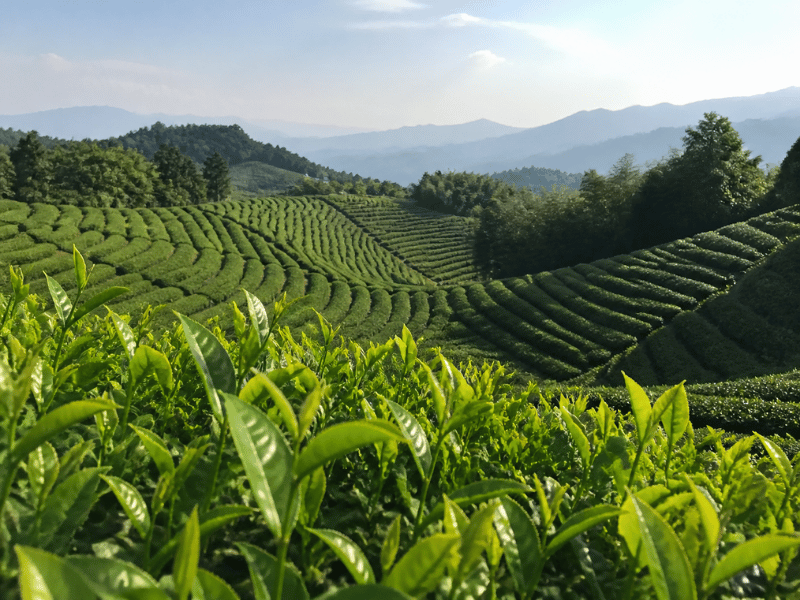
Consistency is engineered upstream, not sorted at the end. It demands a supplier that controls cultivation, milling, and screening under one roof. AdoroHu’s vertical integration, from its own 350-hectare estate through stone-milling and ultrasonic screening, with a 3,000-tonne annual capacity, exists to deliver that repeatability. A trader buying from scattered farms cannot guarantee the same green or taste twice, which is exactly the risk that damages a growing brand. To lock specs and consistency, you can request a quote tied to your grade and volume.
Key Takeaway: At scale, the best matcha powder comes from a vertically integrated supplier that guarantees batch consistency; uniform color and flavor across orders protect a brand more than any single excellent sample.
Can you private label the best matcha powder for your brand?
Yes, the best matcha powder for most brands is a private-label product matched to their grade and packaging needs. Here’s why that beats reselling: instead of stocking a rival’s tin, you launch your own product at a margin a generic resell can never match.
AdoroHu supports full private label and OEM production, from grade selection and custom formula development to retail-ready packaging. Practical formats span single-serve 1–3 g sachets, zip-lock pouches (30 g–500 g), tins and aluminium boxes (30 g–100 g), and bulk cartons. A brand can even commission a custom blend, pairing a chosen matcha grade with complementary tea powders for a signature product no competitor can copy.
Key Takeaway: For brand owners, the best matcha powder is a private-label product matched to grade and packaging; it turns a commodity ingredient into a branded line with formats from sachets to bulk cartons.
What mistakes do buyers make choosing the best matcha powder?
The most common mistake is choosing the best matcha powder by a consumer taste-test ranking instead of by sourcing specs. Buyers fall into the same traps, and each carries a cost. Let’s name them.
First, buying a “best overall” retail tin and paying consumer markup for a product not built for production. Second, ignoring particle size, so the powder clumps on the line. Third, skipping the COA and risking a non-compliant shipment. Fourth, sourcing from a trader with no estate control, so color and flavor drift between batches. A supplier that owns its premium matcha supply chain end-to-end removes that last and most damaging risk.
Key Takeaway: Stop choosing the best matcha powder by taste-test headlines; evaluate grade, particle size, COA, and batch consistency against your actual application to avoid costly sourcing errors.
FAQ
- What is the best matcha powder grade for daily drinking?
- For drinking neat, the best grade is ceremonial, made from first-flush shade-grown leaves with smooth umami and low bitterness. For lattes or mixed drinks, premium or culinary grade performs better because its bolder flavor holds up against milk and sweetener at a lower cost.
- Is the most expensive matcha powder always the best?
- No. The best matcha powder is the one matched to your use, not the highest price. Paying ceremonial prices for a latte or baking line wastes money on nuance that mixing erases. Cost-per-serving and batch consistency matter more than a premium tin price.
- How can I tell if a matcha powder is high quality?
- Look for vivid jade-green color, an ultra-fine talc-like texture, a fresh grassy aroma, and a smooth low-bitterness taste. For commercial sourcing, also require a batch-specific Certificate of Analysis covering heavy metals, pesticides, and microbiology.
- What is the best matcha powder for a beverage or food brand to source?
- The best choice is a grade matched to your application, verified by a COA and the right certifications, and produced by a vertically integrated supplier for batch consistency. AdoroHu offers ceremonial, premium, culinary, and organic grades across its EU and Organic grade series.
- Can I get samples of the best matcha powder before ordering?
- Yes. AdoroHu supports sample requests so you can evaluate color, texture, aroma, and performance before committing. Pricing is quoted by grade and quality, and lead time is set against order volume.
Conclusion
The best matcha powder is not a single brand on a taste-test list; it is the grade and specification matched to your application, verified by color, particle size, a clean COA, and the right certifications. The practical takeaway is to define your use first, then source from a vertically integrated supplier that guarantees batch consistency. To match the best matcha grade to your product and get pricing tied to your volume, contact AdoroHu Matcha to request a sample or a wholesale quote.