
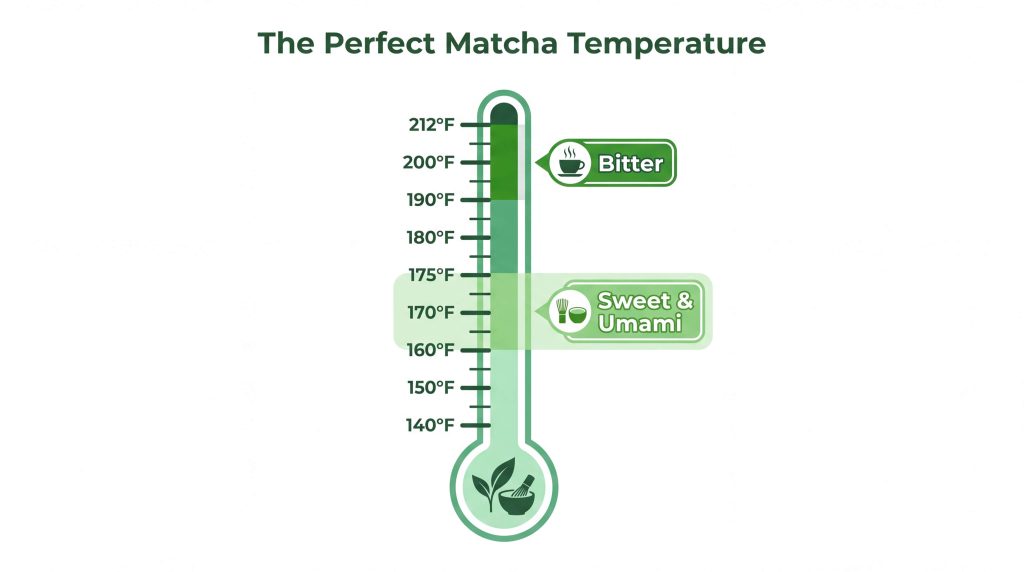
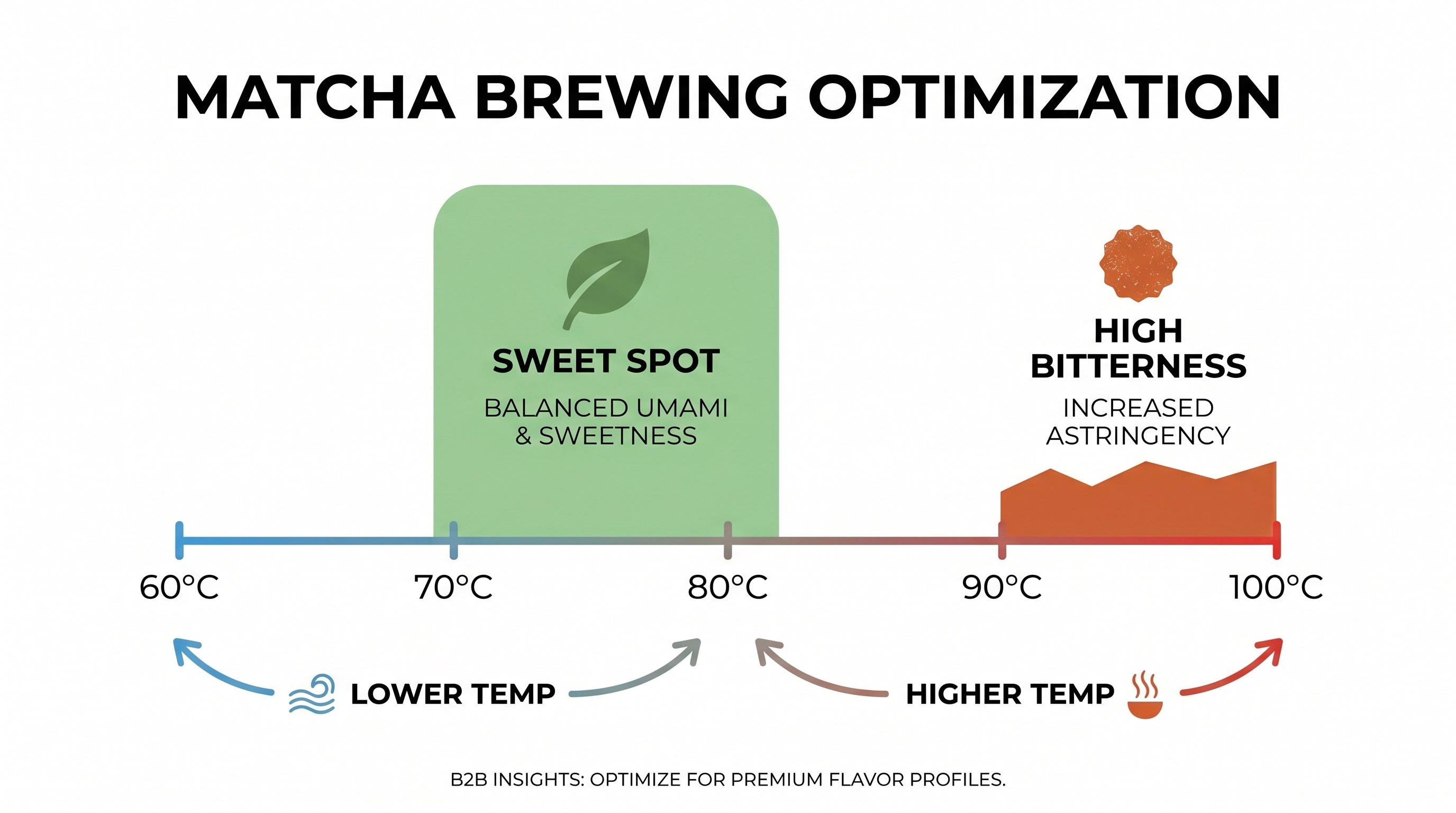
The optimal water temperature for brewing matcha is 70-80°C (158-176°F) to ensure a balanced profile of sweetness and umami without inducing bitterness. For businesses sourcing matcha wholesale , serving a bitter or scorched product can lead to customer dissatisfaction and wasted inventory. Most commercial operations fail at the preparation stage by treating matcha like standard black tea, utilizing boiling water that destroys the delicate chemical structure of the powder. By implementing precise temperature controls, your business can elevate the sensory experience of every cup, protecting your investment in high-quality tea.
<div> The optimal water temperature for matcha is between 70°C and 80°C (158°F to 176°F).Using water in this range prevents the over-extraction of catechins, which cause bitterness, while preserving L-theanine for sweetness.For premium applications, 75°C (167°F) is considered the industry “sweet spot” for flavor and froth. </div>
In short: Key points:
- Water temperature must remain below 80°C (176°F) to prevent scorching.
- Correct temperature ensures the preservation of chlorophyll and L-theanine.
- Precision in brewing directly impacts the ROI of your wholesale ceremonial matcha by reducing product waste.
Why is matcha water temperature critical for beverage quality?
Let’s be honest. In a commercial setting, consistency is the foundation of brand loyalty. Matcha is not a “steeped” tea but a suspension of ground Tencha leaves, meaning the water temperature dictates the immediate release of chemical compounds. If the water is too hot, the delicate cell walls of the powder break down too rapidly, releasing an overwhelming amount of tannins.
The Science of Solvent Temperature
- Extraction Rate: High temperatures accelerate the extraction of caffeine and catechins, leading to a sharp, astringent taste.
- Molecular Stability: L-theanine, the amino acid responsible for the “calm-alert” feeling, is heat-sensitive and degrades at boiling points.
- Suspension Quality: Water between 70-80°C allows the powder to emulsify correctly with a chasen (whisk), creating a stable micro-foam.
Key Takeaway: Temperature acts as the “volume knob” for flavor; keeping it within the 70-80°C range ensures the umami notes are loud while the bitterness remains a whisper.
What is the ideal water temperature for brewing ceremonial matcha?
Think about this: ceremonial matcha is prized for its lack of bitterness and high amino acid content. Because these leaves are shade-grown and stone-ground, they are incredibly delicate. Using water that is too hot for a high-grade certified organic product is effectively throwing money away, as the premium nuances are destroyed instantly.
Tiered Temperature Guidelines
- Premium Ceremonial: 70-73°C (158-163°F) to highlight delicate floral and sweet notes.
- Standard Ceremonial: 75-78°C (167-172°F) for a bolder, more balanced profile.
- Single Cultivar: Often requires lower temperatures (65-70°C) to prevent overwhelming the palate with grassy notes.
Key Takeaway: For ceremonial grades, staying on the lower end of the spectrum (70-75°C) maximizes the “sweetness” and vibrant green color that customers expect from a premium service.
How does boiling water affect the flavor of wholesale matcha?
Here’s the deal: boiling water (100°C / 212°F) is the enemy of quality matcha. When boiling water hits the powder, it “cooks” the tea. This results in a chemical reaction where the chlorophyll oxidizes almost instantly, turning the vibrant emerald liquid into a dull, brownish-yellow hue that is visually unappealing to B2B clients and end-consumers alike.
Sensory Defects of Overheating
- Astringency: A dry, puckering sensation on the tongue caused by scorched polyphenols.
- Sulfuric Notes: Over-extracted leaves can emit an aroma reminiscent of overcooked vegetables.
- Foam Collapse: Boiling water prevents the formation of a creamy “crema,” resulting in large, unstable bubbles that dissipate quickly.
Key Takeaway: Boiling water irreversibly damages the flavor profile and visual appeal, making even the most expensive bulk matcha powder taste like a low-grade industrial byproduct.
Are there specific temperature requirements for culinary matcha in food manufacturing?
You might be wondering if temperature matters when matcha is just an ingredient. In food manufacturing and large-scale bakeries, the hydration temperature of the matcha slurry determines the final color and shelf-life of the product. Whether making ice cream, chocolate, or baked goods, the initial “bloom” of the matcha should still follow strict guidelines.
Manufacturing Hydration Steps
- Pre-mixing: Whisk matcha with water at 80°C before adding to cold bases (like dairy or plant milks) to ensure no clumping.
- Color Preservation: Using water above 85°C in large batches can lead to rapid browning during the pasteurization or baking process.
- Flavor Carry-over: A controlled hydration temperature ensures the matcha flavor survives the secondary heating processes of manufacturing.
Key Takeaway: Even in culinary applications, a maximum hydration temperature of 80°C is essential to maintain the structural integrity and “green” flavor of the ingredient.
Can water temperature influence the nutritional profile of organic matcha powder?
But wait, there’s more. Beyond flavor, your B2B customers likely value the health benefits of matcha, such as its high antioxidant (EGCG) and vitamin content. Excessive heat is a known catalyst for the degradation of water-soluble vitamins and delicate antioxidants, significantly reducing the “functional” value of the beverage.
Nutritional Degradation Metrics
- Vitamin C: This heat-sensitive vitamin begins to break down rapidly above 85°C.
- Antioxidant Retention: While catechins are extracted at higher temperatures, the delicate balance of total polyphenols is best maintained at 75°C.
- Chlorophyll Density: Higher temperatures break down chlorophyll into pheophytin, which lacks the same nutritional and aesthetic value.
Key Takeaway: Maintaining a temperature of 70-80°C protects the functional “superfood” claims associated with matcha private label products.
How should B2B buyers guide their staff on consistent matcha water temperature?
The bottom line is this: your staff or manufacturing operators are the gatekeepers of quality. Without a Standard Operating Procedure (SOP) for water temperature, your product quality will fluctuate wildly. Implementing a “Temperature First” culture in the kitchen or factory is the most cost-effective way to improve beverage output.
Staff Training Protocols
- Visual Cues: Teach staff that “fish eye” bubbles (small bubbles at the bottom of a kettle) indicate roughly 70-75°C.
- The Transfer Method: Pouring boiling water into a cold ceramic bowl drops the temperature by approximately 10°C per transfer.
- Thermometer Usage: Mandate the use of digital probes for every batch to ensure a strict ±2°C variance.
Key Takeaway: Standardizing brewing temperatures through staff training eliminates the #1 cause of customer complaints: “The matcha tastes bitter today.”
What equipment do commercial kitchens need to maintain the best matcha water temperature?
It gets better. You don’t need a laboratory-grade setup to achieve perfect results, but specialized equipment can automate consistency. For high-volume cafes or restaurants, relying on manual cooling is inefficient and prone to human error.
Commercial Equipment Recommendations
- Variable Temperature Kettles: Allow for precise digital settings at 75°C or 80°C with “hold” functions.
- Instant-Read Digital Thermometers: Essential for spot-checking during peak hours.
- Temperature-Controlled Water Dispensers: Direct-plumbed units that can be calibrated to a specific output temperature for matcha stations.
Key Takeaway: Investing in a variable-temperature kettle is the single most important equipment upgrade for any business serving matcha.
How does water temperature vary between hot and cold-brew matcha applications?
Look at it this way: cold-brew matcha is rising in popularity, but the “extraction” physics change entirely. While hot water is a solvent that pulls flavor out quickly, cold water relies on time and mechanical agitation. However, many pros still use a “hot start” method for cold drinks.
Extraction Strategies
- The “Hot Start” Method: Whisk matcha in 1oz of 80°C water to dissolve, then top with ice and cold water/milk.
- Full Cold Brew: Uses ambient or refrigerated water; requires 2-3 minutes of vigorous shaking to emulsify.
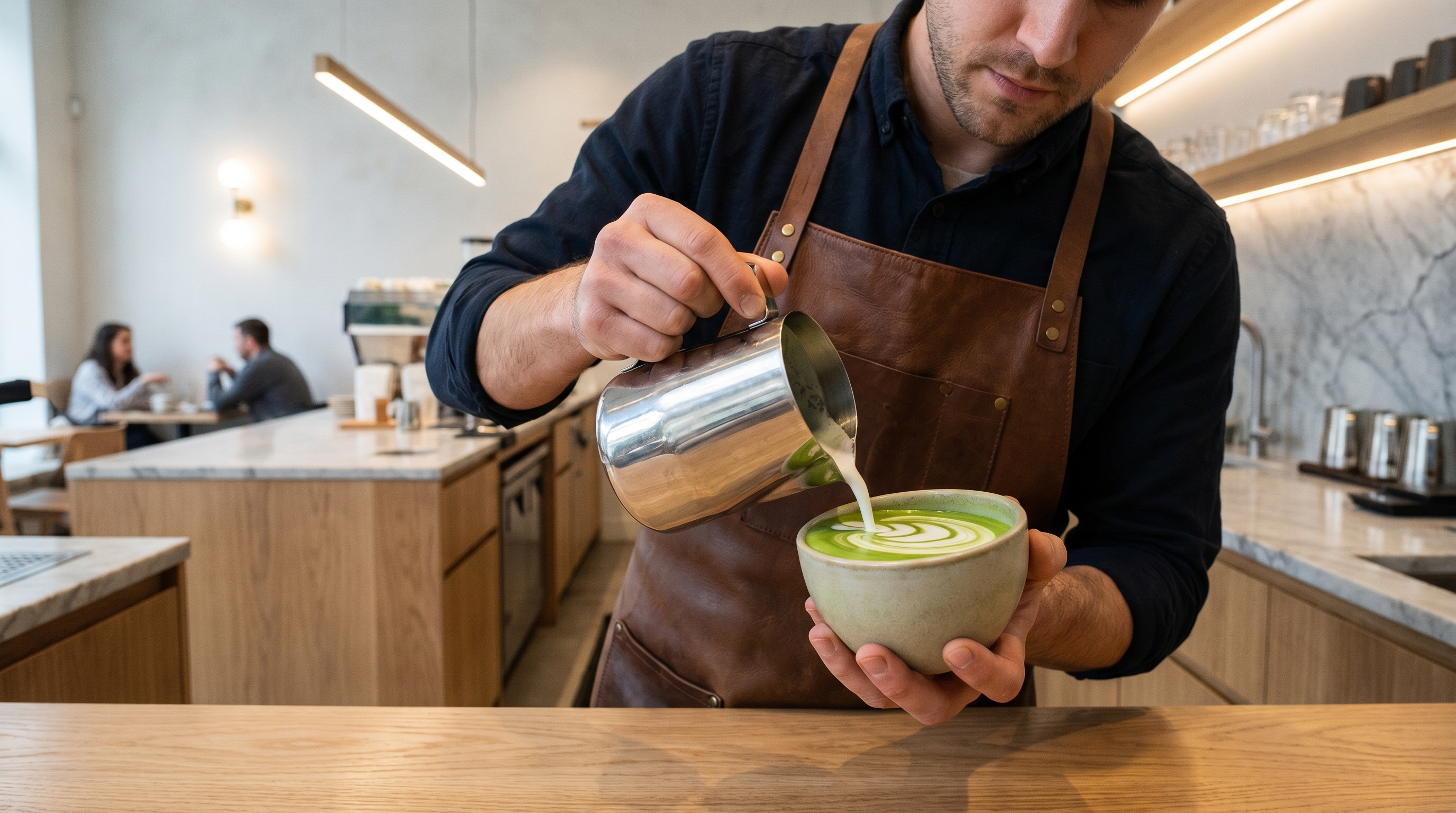
- Latte Temperature: For hot lattes, steam milk to 60-65°C to avoid clashing with the 75°C matcha base.
Key Takeaway: Even for iced drinks, a small amount of 80°C water is often the best way to ensure a smooth, clump-free texture.
Why do different matcha origins require adjustments in water temperature?
Case in point: a matcha from Uji, Kyoto, may behave differently than a blend from Shizuoka or Kagoshima. Soil composition and regional steaming methods (Asamushi vs. Fukamushi) affect how easily the leaf powder gives up its flavor to the water.
Origin-Specific Adjustments
- Uji Matcha: Typically very delicate; thrives at 70°C.
- Kagoshima Matcha: Often bolder and “grassier”; can handle 78°C to bring out more robust body.
- Shaded Tencha: High-theanine teas from premium regions require lower heat to avoid masking sweetness with bitterness.
Key Takeaway: Always perform a “cupping” at different temperatures when switching suppliers to find the specific sweet spot for that harvest.
What are the most common buyer questions regarding matcha water temperature?
Specifically, B2B buyers are concerned with efficiency and waste. They want to know if they can “pre-boil” or if they can use a coffee espresso wand for matcha. The answers to these questions dictate the operational flow of a commercial kitchen.
Frequently Asked Commercial Questions
- Can I use the espresso steam wand?: Yes, but only for milk; steaming the matcha directly can easily exceed 85°C and ruin the flavor.
- Is 85°C okay for lattes?: Yes, because the fats and sugars in milk (dairy or oat) buffer the bitterness of the higher temperature.
- Does altitude affect brewing?: Yes, in high-altitude cities, water boils at a lower temperature, but the 75°C target for matcha remains constant.
Key Takeaway: Most buyer questions revolve around balancing speed with quality; the 75-80°C range remains the safest universal standard for all commercial applications.
Frequently Asked Questions (FAQ)
- What is the absolute maximum temperature for matcha?You should never exceed 80°C (176°F) for ceremonial use or 85°C (185°F) for culinary use to prevent irreversible bitterness.
- How long should I let boiling water sit to reach 80°C?In a standard room-temperature kettle, it typically takes 2 to 3 minutes for water to drop from boiling to the ideal brewing range.
- Can I use a coffee machine’s hot water spout for matcha?Most coffee machines dispense water at 90-95°C, which is too hot. We recommend using a dedicated variable-temperature kettle.
- Does water temperature affect the “color” of the matcha drink?Absolutely. Water above 80°C causes rapid oxidation, turning the bright green into a dull olive or brown color.
- Should I pre-heat the matcha bowl?Yes. Pre-heating the bowl ensures the water temperature doesn’t drop too rapidly when it hits the ceramic, maintaining a consistent 75°C during whisking.
Mastering water temperature is the simplest way to ensure your business provides a world-class matcha experience. If you are looking to upgrade your supply or need assistance with staff training protocols, consider contacting us for samples and expert consultation.