
For many cafe owners and beverage distributors, the traditional bamboo whisk (chasen) is a significant hurdle to operational efficiency. While it is iconic in Kyoto, Japan, the chasen is fragile, difficult to sanitize, and slow to use during a morning rush. If your baristas are struggling to maintain quality while speed is a priority, you are likely facing inconsistent drink textures and wasted inventory. To scale your business, you need to transition to modern, reliable methods of preparation that don’t sacrifice the “soul” of the tea. AdoroHu Matcha provides the wholesale solutions you need to implement these high-speed techniques across multiple locations without losing the premium experience your customers expect.
To make matcha without a whisk, professional kitchens use an electric milk frother, a shaker bottle, or a high-speed blender. These tools utilize mechanical force to break up clumps and create a stable microfoam, which is often more consistent and hygienic for high-volume B2B environments than traditional bamboo tools.
In short: Transitioning from a bamboo whisk to mechanical alternatives improves consistency, speed, and hygiene in commercial settings. Key points:
- Electric frothers offer the best balance of speed and foam quality.
- Sifting remains mandatory regardless of the tool used.
- Shaker bottles are ideal for iced applications and high-speed service.
- The “Paste Method” is the best way to prevent clumps when using a spoon or fork.
Is it possible to achieve cafe-quality results when you make matcha without a whisk?
Achieving cafe-quality results when you how to make matcha without whisk is not only possible but often easier with modern tools. In a professional environment in New York or London, consistency is the hallmark of a luxury brand. Hand-whisking is highly dependent on the skill of the individual barista, leading to variance between shifts. By using mechanical alternatives, you ensure that every latte served has the same silky texture and vibrant green appearance, regardless of who is behind the counter.
Key Takeaway: Modern mechanical tools provide a level of repeatability that is nearly impossible to maintain with manual whisking in high-volume settings.
What are the most efficient tools to make matcha without a whisk for a busy cafe?
The most efficient tools to how to make matcha without whisk in a busy cafe are the handheld electric frother and the shaker bottle. The electric frother is the industry standard for hot beverages because it creates a dense microfoam in under 15 seconds. For iced drinks, the shaker bottle allows baristas to prep multiple servings at once. In Tokyo franchise models, these tools have replaced bamboo entirely to meet the demands of rapid customer turnover.
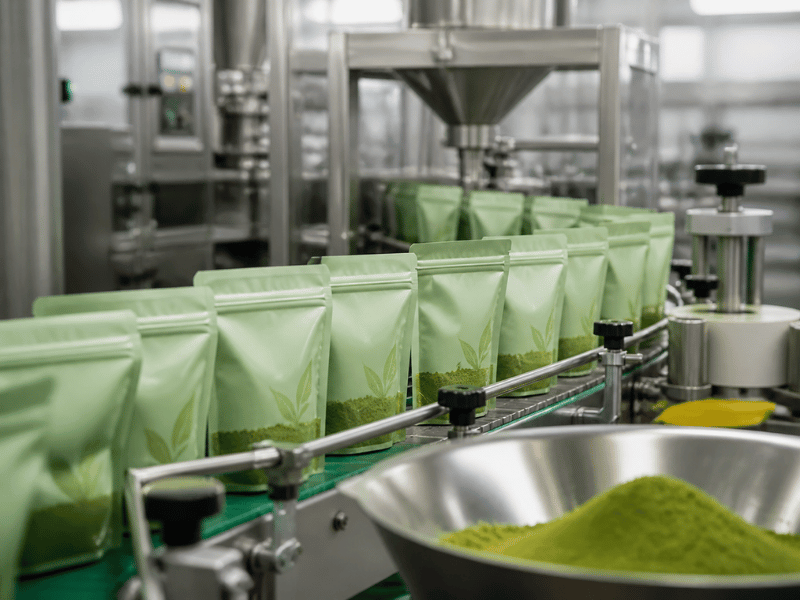
Key Takeaway: Select your tool based on the temperature of the drink—frothers for hot and shakers for iced—to maximize speed and efficiency.
How can I achieve a stable foam when I make matcha without a whisk?
Creating a stable, thick foam when you how to make matcha without whisk requires high-shear force. The goal is to suspend the fine tea particles in a network of tiny air bubbles. While a bamboo whisk does this through a “W” motion, an electric frother does it through high-speed rotation. To get the best results, use a narrow vessel that allows the frother to create a deep vortex, which pulls the powder into the liquid and eliminates “dry” pockets of air.
Key Takeaway: A narrow, deep mixing vessel is essential for creating the professional-grade microfoam customers expect from a premium beverage brand.
Why is sifting essential for businesses learning how to make matcha without a whisk?
Sifting is the most critical step when learning how to make matcha without whisk. Because ceremonial grade powder is so fine, it naturally forms electrostatic clumps during storage and shipping from Uji, Japan. If these clumps are not broken before liquid is added, even a powerful blender may struggle to dissolve them completely, resulting in a gritty mouthfeel and bitter bursts of flavor for the customer.
Key Takeaway: Never skip the sifting step; it is the only way to ensure the powder is “pre-activated” for seamless blending with alternative tools.
Does the grade of the powder change how you make matcha without a whisk?
The grade of the tea significantly impacts the difficulty of mixing when you how to make matcha without whisk. Higher-grade powders, like those used for private label products, are milled to a smaller particle size and contain more natural sugars, making them more “hydrophilic” (water-loving). Culinary grades are often coarser and may require more aggressive mechanical action, such as a high-speed blender, to reach a smooth consistency.
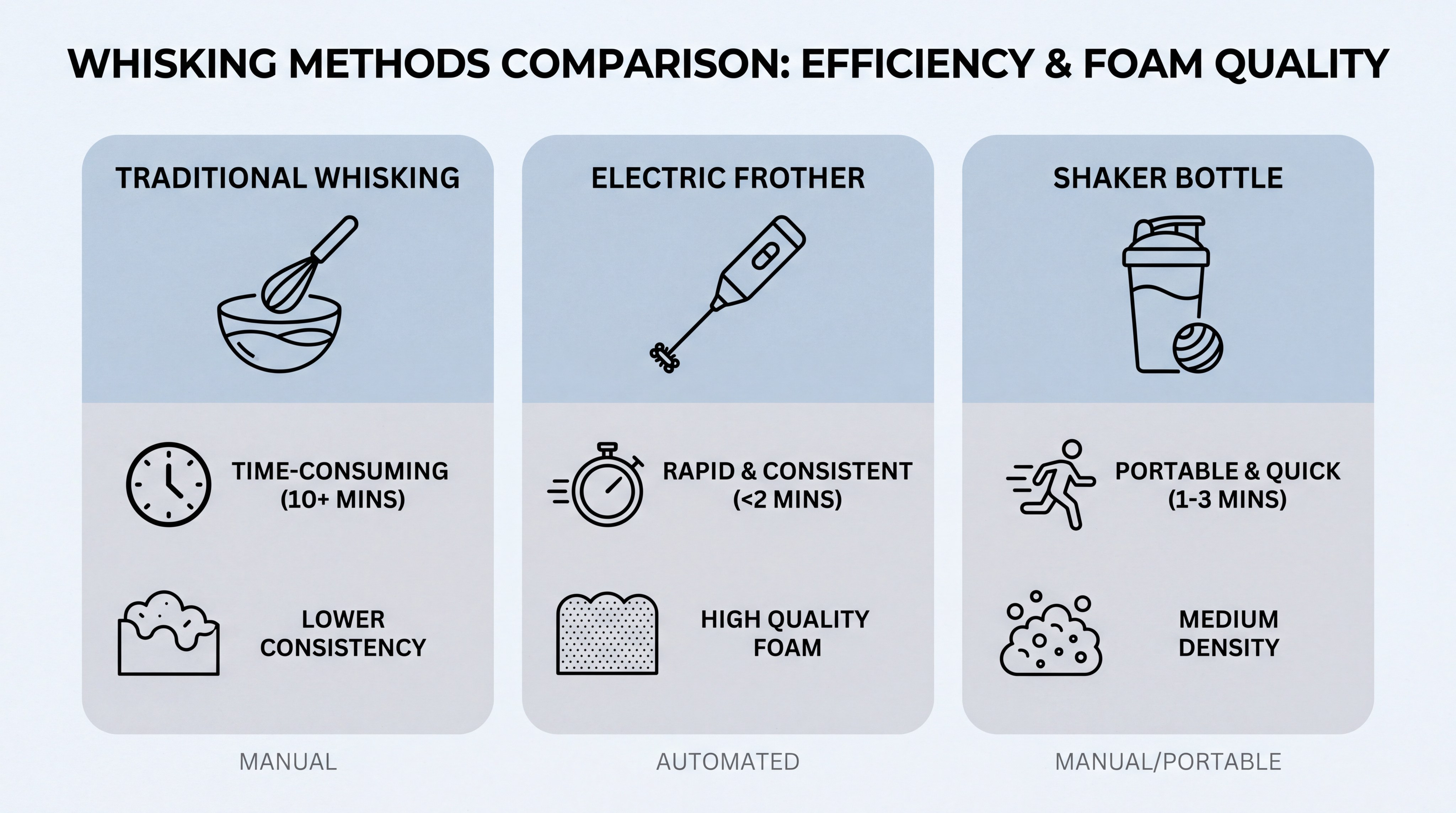
Key Takeaway: Use higher-grade powder for shaker and frother methods to ensure quick dissolution without the need for heavy industrial equipment.
Can a shaker bottle provide a consistent texture when you make matcha without a whisk?
The shaker bottle is a secret weapon for those who need to how to make matcha without whisk for iced menus. By adding a small amount of water to the powder and shaking vigorously with a “blender ball,” you create a concentrated shot that can be poured over ice and milk. In Los Angeles, this method is widely used for “grab-and-go” concepts. It is hygienic, portable, and allows for precise portion control in every serving.
Key Takeaway: Shaker bottles are the most scalable solution for iced tea programs where baristas need to prep drinks in under 60 seconds.
What are the cost benefits for brands that make matcha without a whisk?
For a commercial brand, the decision to how to make matcha without whisk is often driven by the bottom line. Bamboo whisks must be replaced every 2-3 months at a cost of 20−30 per unit. In contrast, a high-quality electric frother costs a similar amount but can last for a year or more. Furthermore, the reduced preparation time lowers labor costs per drink, significantly improving the ROI of your tea program in cities like Chicago.
Key Takeaway: Switching to electric tools reduces equipment replacement costs and increases the number of drinks your staff can produce per hour.
How can I prevent clumps when I make matcha without a whisk using only a spoon?
If you are in a situation where you must how to make matcha without whisk using only a spoon, the “Paste Method” is your only defense against clumps. Start by adding just a few drops of 175°F water to the powder. Use the back of the spoon to “smush” the powder into a smooth, thick paste against the side of the bowl. Only once every clump is gone should you slowly whisk in the remaining liquid. This is the standard technique used by food manufacturers for small-batch baking tests.
Key Takeaway: The Paste Method is the most reliable way to achieve smoothness when mechanical tools are unavailable.
Is a blender the best option for high-volume production when you make matcha without a whisk?
For industrial applications or “batch-making” in large cafes, a blender is the superior choice to how to make matcha without whisk. Blenders can process up to 2 liters of liquid at once, making them ideal for pre-mixing the base for a busy afternoon. This method ensures total homogenization, meaning the tea won’t separate as quickly as it would with manual methods. It is the preferred method for RTD (Ready-to-Drink) beverage manufacturers in Tokyo.
Key Takeaway: Use high-speed blenders for batching and prep work to ensure a stable, homogeneous mixture that stays vibrant for hours.
How should distributors train their clients on how to make matcha without a whisk?
Distributors must provide clear Standard Operating Procedures (SOPs) when teaching clients how to make matcha without whisk. The training should focus on three variables: water temperature (never boiling), sifting, and mixing time. By providing clients with a “No-Whisk Toolkit” that includes a frother and a sifter, you ensure they can replicate your brand’s quality in their own environments, whether they are in Sydney or Berlin.
Key Takeaway: Providing physical tools and clear SOPs is the best way to ensure your wholesale customers maintain the integrity of your product.
FAQ
- What is the best water temperature for non-whisk methods?Always use water around 175°F (80°C). Boiling water will scorch the powder and create a bitter taste, regardless of the tool you use.
- Can I use a protein shaker for matcha?Yes, protein shakers with an internal whisk ball are excellent for making iced matcha or lattes on the go.
- Do I still need to sift if I use a high-speed blender?While a blender is powerful, sifting is still recommended to ensure the finest possible texture and to avoid “micro-clumps” that can affect the color.
- How long does it take to froth matcha with an electric frother?It typically takes between 10 to 20 seconds to achieve a dense, stable microfoam.
- Why does my matcha look dull when I don’t use a whisk?Dull color is usually a result of poor-quality powder or using water that is too hot. High-quality ceremonial tea should remain vibrant regardless of the mixing tool.
Conclusion
Transitioning away from traditional tools is a strategic move for any growing beverage brand. By mastering how to prepare your tea using modern alternatives, you increase efficiency without sacrificing the premium experience. Ready to upgrade your tea program? Contact us today for a quote on bulk supplies and professional-grade equipment.