Bakery owners and food manufacturers often struggle to scale a matcha cookies recipe, finding that what works in a small test kitchen results in dull, brown, or bitter cookies on the production floor. This color oxidation and flavor loss directly hurts sales and brand perception, turning a premium menu item into a liability. Fortunately, by sourcing the correct grade of industrial green tea powder and adjusting baking parameters, AdoroHu Matcha provides the exact blueprint to produce vibrant, highly profitable baked goods at scale.
In short:
Key points:
- Sourcing heat-stable culinary grade powder is mandatory to maintain green color during baking.
- Controlling oven temperatures below 160°C (320°F) prevents oxidation and flavor degradation.
- Buying bulk ingredients directly from manufacturers maximizes profit margins for commercial bakeries.
What defines a successful commercial matcha cookies recipe?
A successful commercial recipe must balance striking visual aesthetics with a scalable, cost-effective production process. In the B2B baking sector, consumer purchasing decisions are heavily driven by visual appeal, making vibrant color retention the primary metric of success for green tea baked goods.
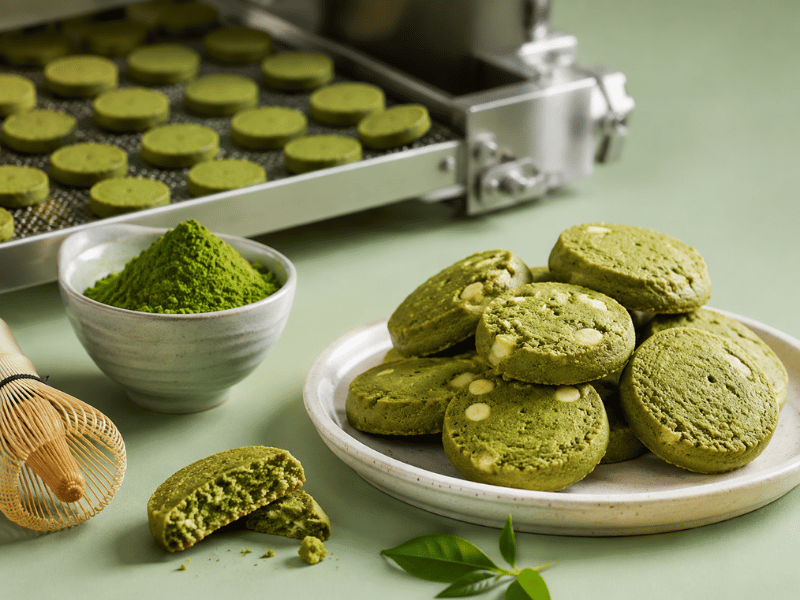
The core challenge is oxidation. When exposed to the high heat of commercial ovens, the delicate chlorophyll in powdered tea naturally degrades, turning the dough an unappetizing yellowish-brown. A truly scalable recipe mitigates this through specific ingredient selection and precise thermal management. Furthermore, the recipe must utilize a robust tea grade that ensures the distinct umami flavor pierces through high volumes of butter, sugar, and flour.
Key Takeaway: Prioritize visual color retention and robust flavor penetration by selecting ingredients specifically designed for high-heat commercial baking environments.
Which matcha grade is best for baking cookies?
Choosing the wrong tea grade is the most common reason commercial bakeries fail when launching green tea pastries. Many mistakenly believe that higher price equals better baking performance, but this is functionally incorrect in a high-heat environment.
The optimal choice for any bakery is premium bulk matcha specifically classified as culinary grade. This grade is milled from tea leaves that are harvested slightly later in the season. These leaves contain a stronger, more astringent flavor profile and a thicker tea body. This robust nature is exactly what is needed to compete with the heavy dairy and sugar in cookie dough. Conversely, expensive ceremonial grades are too delicate; their subtle notes vanish during baking, and their delicate chlorophyll oxidizes rapidly.
Key Takeaway: Always specify premium culinary grade when sourcing ingredients for baked goods to guarantee flavor survival and optimal color retention.
How do you prevent matcha cookies from turning brown?
Maintaining a vibrant emerald green color is the most difficult technical challenge when scaling a matcha cookies recipe. The browning effect is a chemical reaction caused by heat and prolonged exposure to oxygen during the baking cycle.
The most effective countermeasure is strict temperature control. Commercial bakers should lower the standard oven temperature by 10% to 15% (aiming for 150°C to 160°C, or 300°F to 320°F) and slightly extend the baking time. This gentle baking approach prevents the surface chlorophyll from burning. Additionally, chilling the cookie dough thoroughly before baking helps maintain the structure and slows the internal temperature rise, further protecting the color.
Key Takeaway: Lower your commercial oven temperatures and chill your dough to protect the delicate chlorophyll and maintain a bright green finish.
What is the standard B2B formulation ratio?
Standardizing your recipe by weight is critical for maintaining consistency across multiple bakery locations or production runs. Volume measurements (like cups or spoons) are too inaccurate for high-value ingredients.
For a standard commercial shortbread or sugar cookie dough base, the recommended incorporation rate is 10 to 15 grams of premium culinary powder per 1 kilogram of raw dough. This ratio, equivalent to roughly 1% to 1.5% of total dough weight, provides a distinct visual impact and a balanced earthy flavor without becoming overly bitter. B2B formulators must test this baseline against their specific sugar levels, as higher sweetness requires a slightly higher tea ratio to maintain balance.
Table 1: Standard Commercial Dough Ratios
| Ingredient | Standard Recipe (10kg Batch) | High-Intensity Recipe (10kg Batch) |
|---|---|---|
| Flour/Base Dough | 10 kg | 10 kg |
| Culinary Matcha | 100 grams | 150 grams |
| White Chocolate Chips | 1.5 kg (Optional) | 2 kg (Optional) |
Key Takeaway: Standardize your formulations using 10 to 15 grams of powder per kilogram of dough to ensure consistent flavor and color across large production batches.
Where should bakeries source bulk matcha ingredients?
The origin of your raw materials directly impacts your supply chain stability and the final cost of goods sold (COGS). For high-volume baking operations, direct sourcing is the most strategic approach.
While Japanese regions are famous for ceremonial teas, modern Chinese tea estates are the leading suppliers of robust, heat-stable culinary grades utilized in matcha baking. These advanced factories utilize Japanese-style shading and ultra-fine milling technology to produce exceptionally vibrant powders. Sourcing directly from these manufacturers bypasses domestic brokers, ensuring consistent high-volume supply and significantly reducing the cost per kilogram.
Key Takeaway: Source directly from advanced manufacturing estates to secure heat-stable culinary grades and improve your operational profit margins.
What are the key cost factors for wholesale baking matcha?
Protecting bakery margins requires a clear understanding of B2B pricing structures for powdered tea. The cost is influenced by the harvest season, the milling process, and the minimum order quantity (MOQ).
For commercial baking applications, buyers should expect to budget between $30 and $60 per kilogram for high-quality culinary grades. Powders priced significantly below $20/kg are often unshaded ground green tea, which will invariably result in a bitter, brown cookie. Purchasing in larger volumes (typically 20kg cartons) from a direct matcha wholesale supplier yields the best freight efficiency and lowest per-gram ingredient cost.
Key Takeaway: Budget between $30 and $60 per kilogram and leverage 20kg bulk orders to secure true culinary grade quality at a competitive wholesale price.
Which certifications are required for food manufacturers?
Food safety and transparency are non-negotiable in commercial food manufacturing. B2B buyers must rigorously vet their suppliers’ documentation before incorporating any new ingredient into their production lines.
The baseline requirement is an internationally recognized food safety certification, such as FSSC 22000 or ISO 22000. These guarantee that the milling facility operates under strict hygiene and hazard controls. Furthermore, buyers must request a Certificate of Analysis (COA) for every batch, ensuring the powder is tested for heavy metals, pesticides, and microbiological safety. If targeting the premium health-food market, sourcing certified organic matcha powder (USDA or EU) is necessary.
Key Takeaway: Demand FSSC 22000 factory certifications and comprehensive COAs to ensure the safety and compliance of your baked goods.
How can bakeries leverage private label retail products?
Successful bakeries often seek ways to increase the average transaction value beyond fresh pastry sales. Selling the raw ingredients used in your popular recipes is a highly effective retail strategy.
By utilizing a matcha private label service, bakeries can package premium powder into custom-branded tins or pouches. You can position this retail product as the “secret ingredient” behind your famous cookies. This OEM approach requires zero capital investment in packaging machinery, allowing you to instantly launch a high-margin retail line that strengthens your overall brand equity.
Key Takeaway: Implement a private label retail program to monetize your ingredient sourcing and offer customers a premium take-home product.
What are common sourcing mistakes when scaling recipes?
Scaling a recipe from a small kitchen to a massive production facility often exposes sourcing flaws. Avoiding these common B2B purchasing errors prevents costly product recalls and wasted inventory.
The most frequent mistake is failing to test the powder under actual production conditions. A sample that looks great mixed with water might oxidize terribly in a 160°C commercial oven. Always request a 1kg sample and run it through your standard baking cycle before signing a bulk contract. Another critical error is poor storage; bulk powder must be kept in airtight, refrigerated environments to prevent the color from degrading before it ever reaches the dough mixer.
Key Takeaway: Always conduct thermal stress tests with supplier samples in your actual commercial ovens before committing to large bulk orders.
How do you adjust recipes for different tea powders?
A versatile bakery must be able to adapt its core dough recipe to accommodate various functional flavorings. Understanding how different powders behave allows formulators to expand their product lines efficiently.
When swapping matcha for hojicha powder (roasted green tea), bakers must account for the different flavor intensities. Hojicha has a deep, nutty profile that requires slightly less sugar to balance, but it does not face the same color oxidation issues as unroasted green tea. Understanding these nuances allows production managers to utilize a single base dough and efficiently produce multiple distinct SKUs.
Key Takeaway: Adjust your baseline sugar and temperature parameters when formulating new recipes with alternative tea powders like hojicha.
FAQ
- Q: Why are my matcha cookies turning out bitter?
- Bitter cookies usually result from either using too high a ratio of powder (exceeding 1.5% of dough weight) or sourcing a low-quality, non-shaded green tea powder instead of true culinary matcha.
- Q: Can I use ceremonial grade matcha for baking?
- It is highly discouraged. Ceremonial grade is too delicate; its subtle flavor and vibrant color will be destroyed by the high heat of commercial ovens, resulting in wasted money and a poor final product.
- Q: How long does bulk culinary matcha stay fresh?
- Unopened bulk bags stored in commercial refrigeration (below 5°C) will maintain optimal color and flavor for up to 12 months. Once opened, it should be kept airtight and used within 60 days.
- Q: What is the ideal oven temperature to prevent browning?
- To protect the chlorophyll, commercial bakers should aim for lower temperatures, ideally between 150°C to 160°C (300°F to 320°F), and slightly extend the baking duration.
- Q: Does the sugar content affect the green tea flavor?
- Yes, high sugar content can mask the earthy, umami notes. When formulating sweet doughs, you may need to increase the powder ratio slightly (closer to 15 grams per kilo) to ensure the tea flavor remains prominent.
Conclusion
Successfully scaling a commercial matcha cookies recipe requires precise ingredient selection and strict thermal management. By sourcing robust, heat-stable premium culinary grades and standardizing your production ratios, bakeries can consistently deliver the vibrant color and flavor that drives consumer sales. Ready to optimize your bakery formulations? Reach out via our contact page today to request wholesale samples and discuss bulk sourcing solutions tailored for food manufacturers.