Many commercial bakeries struggle with a matcha cake recipe that yields dry or olive-brown results. Producing consistent, vibrant cakes at scale requires more than basic kitchen skills. Inconsistent batches lead to wasted ingredients and diminished brand reputation in a competitive market.
You can solve these issues by mastering the science of tea chemistry and ingredient interaction. By using professional-grade matcha wholesale solutions, your business can ensure every unit maintains a tender crumb and a brilliant green hue. Our guide provides the technical framework needed for industrial-level success.
Achieving a soft and moist matcha cake requires using high-quality culinary matcha mixed directly into fats to protect chlorophyll pigments. To ensure moisture, add 1.5–2.0% extra liquid to counteract the high absorption rates of tea polyphenols. Bake at temperatures below 177°C (350°F) to prevent the Maillard reaction from browning the delicate green interior.
In short:Key points:
- Matcha absorbs 2.3x its weight in water, requiring recipe hydration adjustments.
- Heat stability above 180°C is the primary cause of color degradation.
- Premium culinary grades offer the best ROI for large-scale bakery production.
Which grade is best for a moist matcha cake recipe?
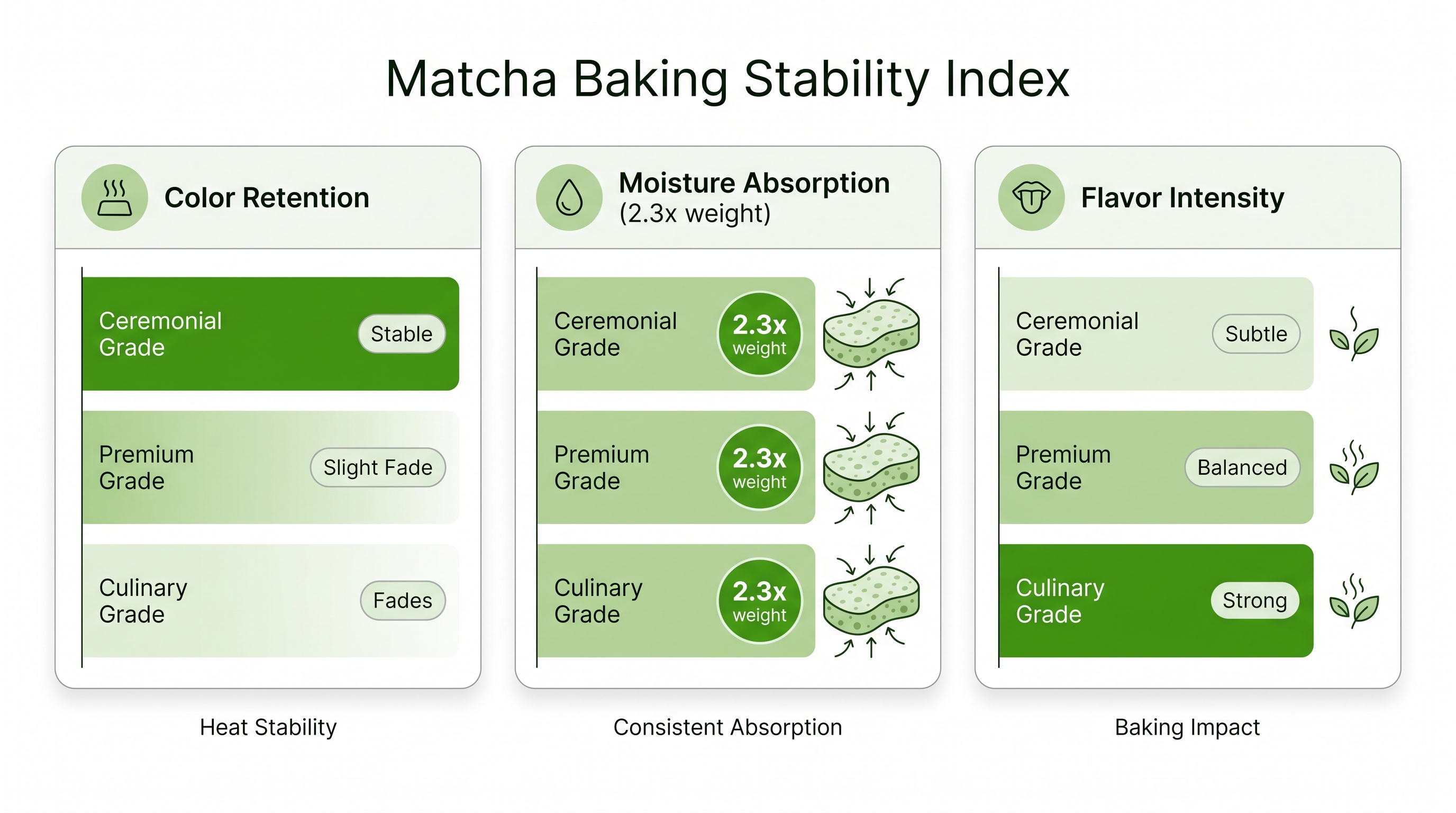
Selecting the right grade is the foundation of any professional matcha cake recipe. While ceremonial grades are vibrant, their delicate amino acids often brown too quickly under high oven heat.
You should look for a premium culinary tier specifically labeled for baking applications . These grades are stone-milled to maintain a robust flavor that cuts through butter and sugar. Because matcha is highly absorbent, it takes up roughly 2.3 times its weight in moisture. Without adjusting your liquid ratios, the final cake will be crumbly.
Key Takeaway: Use premium culinary matcha to balance vibrant color with the high moisture needs of a professional matcha cake recipe.
How do you source wholesale ingredients for a matcha cake recipe?
Reliable sourcing is critical for maintaining a consistent wholesale matcha supply chain. Professional bakers must find partners who understand the technical nuances of industrial tea production.
Think of it this way: freshness directly impacts how the powder integrates into your batter. Sourcing directly from tea regions like Uji ensures the tencha retains its natural moisture content. A stable supplier provides fixed-contract pricing to protect your profit margins against climate-related price spikes. This ensures your matcha cake recipe remains profitable year-round.
Key Takeaway: Partner with direct-from-factory suppliers to ensure batch-to-batch consistency for your matcha cake recipe.
What are the pricing factors for a commercial matcha cake recipe?
Understanding the cost structure of culinary matcha helps manage your production budget effectively. Pricing is usually determined by raw material quality rather than just brand names.
For industrial baking, the “ROI sweet spot” falls between USD 50 and 80 per kilogram. This price range guarantees high chlorophyll levels and heat stability. As of Q1 2026, culinary matcha priced below USD $35/kg often indicates adulteration with yellowing leaves or fillers. Such low-quality ingredients will ruin the texture and color of your matcha cake recipe.
Key Takeaway: Target the 50− 80/kg price range to ensure quality pigments and moisture-friendly texture in your matcha cake recipe.
Which quality certifications matter for a matcha cake recipe?
Global food safety standards are non-negotiable for professional B2B buyers. Certifications provide the transparency needed for international retail distribution and consumer trust.
Many modern consumers demand organic matcha in their baked goods. USDA and EU Organic labels prove the tea was grown without synthetic chemicals for “clean label” marketing. Additionally, look for suppliers with FSSC 22000 certifications to ensure microbial control. This is vital for products with a short shelf life in your matcha cake recipe lineup.
Key Takeaway: Prioritize FSSC 22000 and Organic certifications to ensure the safety and marketability of your matcha cake recipe.
How do B2B applications differ in a matcha cake recipe?
Scaling a matcha cake recipe from a small kitchen to a factory line requires significant technical adjustments. Ingredient interactions change drastically at high volumes.
In large-scale production, we recommend mixing matcha with oil or butter first. This “fat coating” technique creates a hydrophobic barrier around the tea particles. This barrier slows down the acid hydrolysis of pigments during the baking cycle. Using baking powder instead of baking soda also helps maintain a neutral pH to prevent browning.
Key Takeaway: Use fat-coating and pH control to preserve the visual appeal of a high-volume matcha cake recipe.
Can you use private label options for a matcha cake recipe?
Many bakeries are now expanding into retail-ready cake mixes for home consumers. Using a private label matcha service allows you to control the entire brand experience.
A private label partner can create custom formulations specifically for your matcha cake recipe. This includes specific particle sizes for better dispersion in dry mixes. Nitrogen-flushed foil bags are the gold standard for packaging. They keep the matcha fresh and the L-theanine levels stable until the consumer bakes the cake.
Key Takeaway: Private labeling provides a turnkey solution for scaling your unique matcha cake recipe into retail channels.
What are the MOQ and logistics for a matcha cake recipe?
Managing inventory is critical for maintaining the freshness of your matcha cake recipe. Tea powder degrades quickly when exposed to heat, light, and oxygen.
Most B2B suppliers require a Minimum Order Quantity (MOQ) of 10kg to 50kg. Direct imports from Japan typically have a 4–8 week lead time. Large bakeries should forecast their production cycles carefully to avoid shortages. We recommend keeping a rolling 3-month safety stock in a cool, dark, and dry environment.
Key Takeaway: Optimize logistics with 3-month forecasting to ensure the freshest ingredients for your matcha cake recipe.
What are common mistakes in a bulk matcha cake recipe?
Even experienced pastry chefs face challenges when scaling a matcha cake recipe. Identifying these pitfalls early saves significant time and expensive resources.
Baking above 175°C (350°F) is the most frequent error we see in commercial kitchens. High heat triggers the Maillard reaction, which masks the natural green color. Another mistake is neglecting sifting, which leads to bitter “pockets” of powder. Always use industrial sifters before mixing your matcha cake recipe batter.
Key Takeaway: Avoid high temperatures and clumping to ensure the quality of your bulk matcha cake recipe.
What are the current industry trends for a matcha cake recipe?
The B2B market for matcha is evolving as consumer tastes become more sophisticated. You can stay ahead by incorporating modern trends into your product development.
Consumers now prioritize a matcha cake recipe with fewer synthetic additives. High-grade matcha allows you to remove artificial food colorings while keeping a vibrant green. We also see a rise in botanical pairings like yuzu or jasmine. These combinations enhance the natural umami profile of the tencha leaves.
Key Takeaway: Focus on clean-label and botanical pairings to modernize your commercial matcha cake recipe.
What are the top buyer concerns for a matcha cake recipe?
Professional buyers have specific concerns regarding safety and rigorous quality control. Addressing these is vital for building long-term B2B partnerships.
AdoroHu conducts rigorous testing for heavy metals like lead and arsenic in every batch. We also provide multi-level radiation screening for all Japanese tea imports. For industrial baking, our matcha undergoes steam sterilization to meet strict microbial limits. This prevents spoilage and extends the shelf life of your matcha cake recipe.
Key Takeaway: AdoroHu’s multi-step quality control addresses all safety concerns for your matcha cake recipe.
FAQ
- How much matcha should I use in a commercial cake?Typically, 15g to 30g per kg of batter provides a balanced flavor and color.
- Does matcha affect the rise of the cake?Yes, excessive matcha can weigh down the batter. Adjust leavening agents by 5-10% to compensate.
- Can I use milk instead of water for more moisture?Milk adds protein and fat, which helps retain moisture and stabilizes the crumb texture.
- How do I prevent the top of the cake from browning?Cover the cake with foil during the last 10 minutes of baking to protect the green color.
- Is Chinese matcha suitable for high-end baking?High-grade Chinese matcha offers excellent heat stability and is a cost-effective alternative for many B2B applications.
Conclusion
Creating a successful matcha cake recipe at scale requires a deep understanding of tea chemistry and supply chain management. By selecting heat-stable grades and managing pH levels, you can produce world-class baked goods. Contact our B2B team today for custom wholesale quotes and technical support.