
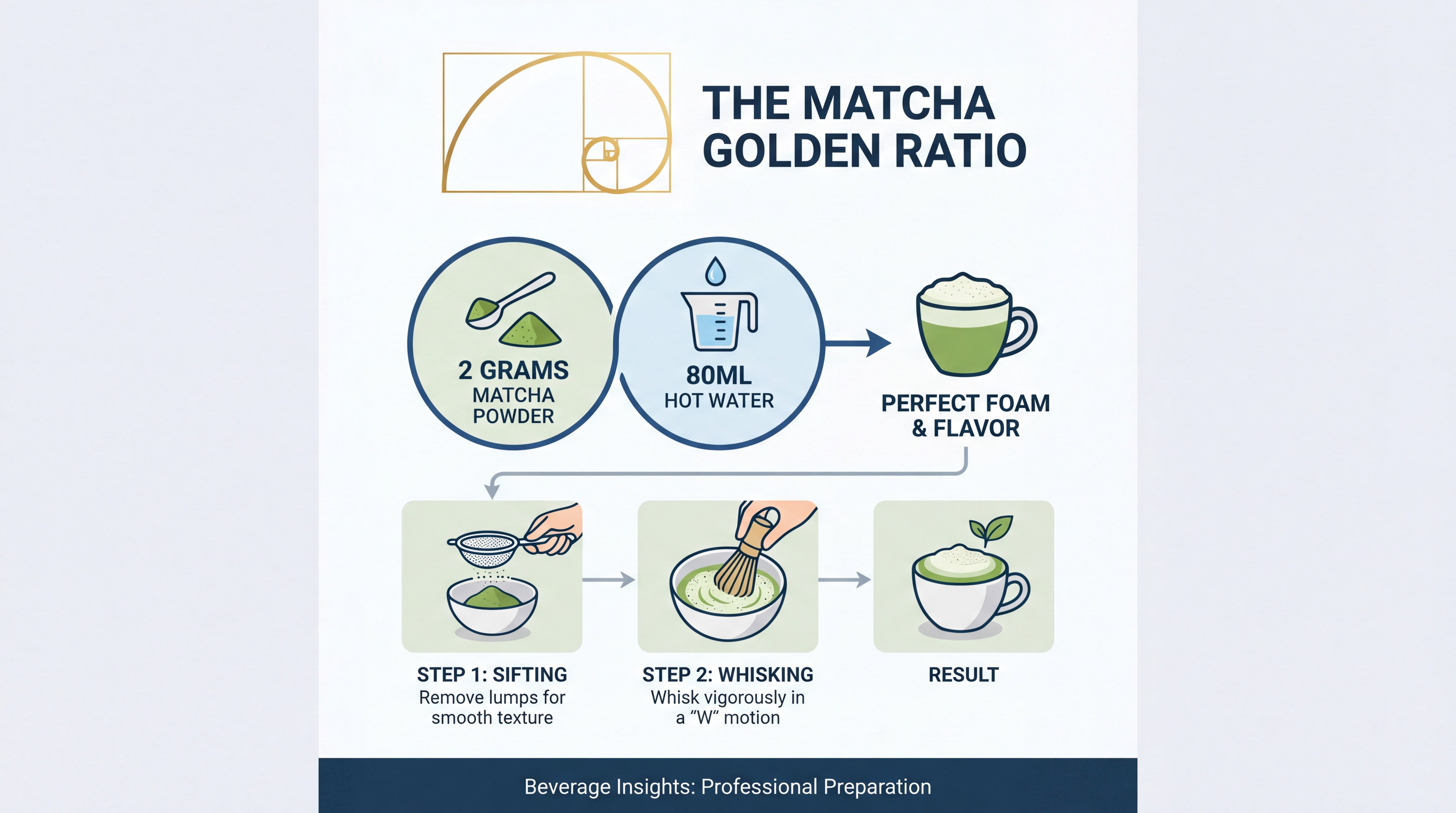
Determining how much matcha per cup is the foundation of a successful beverage program, as the standard commercial ratio is 2 grams (approx. 1 teaspoon) of matcha powder to 2-3 oz of hot water before adding milk or diluting. Inconsistent measurements in a café or industrial setting lead to fluctuating flavor profiles, wasted inventory, and diluted margins. By standardizing your preparation with AdoroHu Ceremonial Matcha , you ensure that every serving delivers the vibrant green hue and umami punch that premium B2B clients expect.
For a standard 8 oz serving, the ideal ratio is 2 grams of matcha powder to 2-3 oz of water (70-80°C).For high-volume lattes, increasing to 2.5–3 grams ensures the flavor profile cuts through milk alternatives.A 1kg bulk bag yields approximately 500 servings, optimizing your cost per cup and commercial profitability.
In short: Calculating exactly how much matcha per cup is required for your specific application—whether it is a traditional tea or a large-batch latte—is essential for balancing quality and COGS (Cost of Goods Sold).
Key points:
- Standard ratio: 2g powder per cup.
- Yield: 1kg bulk matcha = 500 servings.
- Foam Quality: Higher amino acid content in premium grades improves microfoam stability.
- Precision: Sifting and weighing are non-negotiable for commercial consistency.
1. What is the standard ratio for how much matcha per cup in commercial settings?
The industry standard for how much matcha per cup is 2 grams of powder mixed with 60-80ml of hot water for a traditional preparation. This “Golden Ratio” ensures the L-theanine and caffeine are perfectly balanced without resulting in excessive bitterness.
Think about it: in a high-traffic café, even a 0.5g variance per serving can lead to a 25% increase in ingredient costs over time. For matcha for lattes , baristas often scale this up to 3 grams to maintain a robust flavor profile against the fats in dairy or oat milk.
Key Takeaway: Standardizing a 2g dosage for tea and a 3g dosage for lattes allows businesses to predict inventory turnover and maintain a consistent customer experience.
2. How does the grade influence how much matcha powder per cup is required for lattes vs. tea?
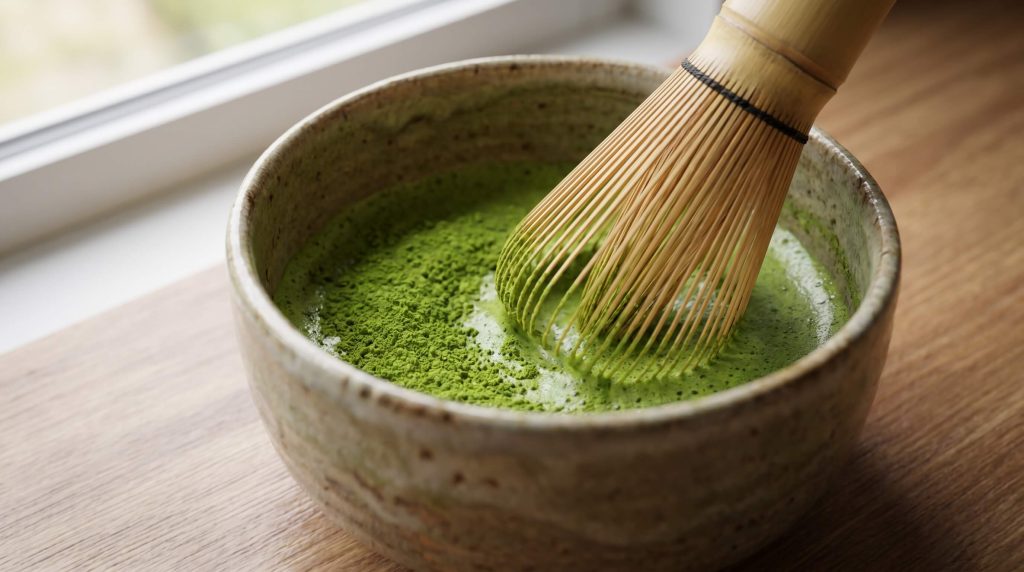
The grade of your powder directly dictates how much matcha per cup you need to achieve the desired color and taste, as Ceremonial grade requires less volume than lower-tier options. High-quality ceremonial matcha is stone-milled to a finer particle size, meaning its flavor is more concentrated and its color more vivid.
But wait, there’s more. When using culinary matcha for baking or bulk beverages, the astringency is higher, often requiring a larger dosage (up to 4-6g) to stand out against heavy sugars and flours.
Key Takeaway: Investing in premium matcha reduces the total powder weight required per serving, often resulting in a lower net cost per cup despite a higher wholesale price.
3. Why does the quality of your powder dictate how much matcha per cup results in the perfect foam?
The secret to How to Make Perfect Matcha Foam Every Time lies in the amino acid content and particle fineness of the powder. High-quality matcha contains higher levels of surfactants that stabilize the air bubbles during the whisking process.
The best part? If the quality is high, you only need 2g of powder to create a dense, long-lasting microfoam. If the powder is old or coarsely ground, even using 5g per cup will result in large, unstable bubbles that dissipate almost instantly.
Key Takeaway: Achieving perfect matcha foam is a combination of using exactly 2g of high-grade powder and ensuring the water temperature stays between 70°C and 80°C.
4. How do you calculate the cost per serving based on how much matcha per cup your recipe uses?
To calculate your cost per serving, divide the price of your 1kg wholesale matcha bag by the number of servings—for a 2g ratio, that is 500 servings. Precision in knowing how much matcha per cup is being dispensed is the only way to protect your margins.
Let’s dive in. If a 1kg bag costs
100,youringredientcostper2gservingis
0.20. If your staff “eyeballs” the portion and uses 3g instead, your cost jumps to $0.30, a 50% increase that can erode thousands of dollars in annual profit.
Key Takeaway: Implementing digital scales or calibrated scoops to measure how much matcha per cup is the most effective way to stabilize your beverage program’s profitability.
5. How can businesses optimize their supply chain by knowing exactly how much matcha per cup they need for bulk orders?
Supply chain efficiency depends on accurate forecasting, which starts with the “how much matcha per cup” calculation applied to your monthly sales volume. Knowing your exact yield per kg allows you to maintain lean inventory and ensure product freshness.
The reality is, matcha oxidizes quickly once the bulk seal is broken. By knowing that you use 10kg per month (based on 5,000 servings of 2g each), you can schedule bulk shipments from Japan that arrive exactly when you need them.
Key Takeaway: Precise dosage tracking allows B2B buyers to negotiate better tiered pricing and reduce the risk of stocking oxidized powder.
6. What specifications for how much matcha per cup should be included in private label packaging instructions?
When developing a private label matcha brand, the instructions must clearly define how much matcha per cup the consumer should use to ensure satisfaction. Most successful brands recommend a range (e.g., 1.5g to 2g) to accommodate different palate preferences.
You might be wondering, why provide a range? It’s because consumer tools, like standard kitchen spoons, vary wildly; providing a gram-based weight instruction alongside a “teaspoon” equivalent helps the user replicate that perfect matcha foam at home.
Key Takeaway: Clear preparation guidelines on OEM packaging reduce customer complaints and increase the perceived value of your premium product.
7. Which commercial equipment helps standardize how much matcha per cup is used for consistent microfoam?
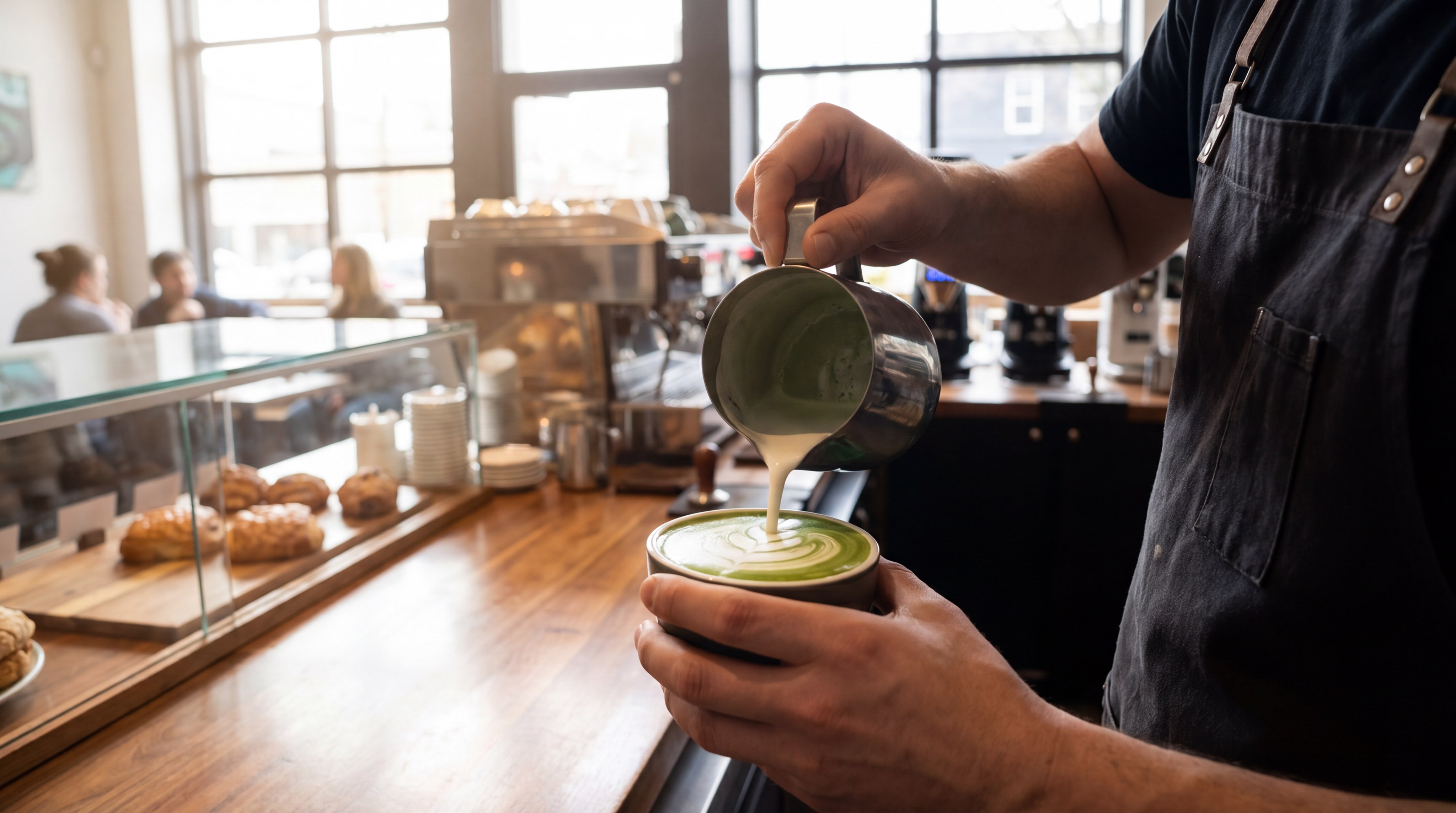
In a high-volume environment, achieving the “how much matcha per cup” standard requires specialized tools like automated powder dispensers and electric frothers. While a traditional bamboo whisk (chasen) is ideal for single servings, it is often impractical for 50+ lattes an hour.
Here’s the deal: commercial sifting machines and gram-specific dispensers ensure that the 2g dosage is clump-free and ready for rapid aeration. This consistency is vital for maintaining the visual identity of your brand across multiple locations.
Key Takeaway: Investing in calibrated dispensing equipment ensures that the question of how much matcha per cup is answered with 100% accuracy by every staff member on every shift.
8. How does industrial manufacturing ensure consistency in how much matcha per cup is dispensed in RTD products?
For Ready-To-Drink (RTD) manufacturers, the calculation of how much matcha per cup is handled by high-precision industrial mixing tanks. The challenge here is ensuring the powder remains in suspension and does not settle at the bottom of the bottle.
Wait, there’s more. Industrial recipes often use a 1.5% to 2% concentration of matcha by weight. This requires high-shear mixers to fully integrate the powder, ensuring the caffeine and antioxidant levels are uniform in every unit produced.
Key Takeaway: Large-scale matcha sourcing for manufacturing requires certificates of analysis (COA) to guarantee that the potency per serving remains within strict regulatory limits.
9. How are current beverage trends shifting the standard for how much matcha per cup in premium cafes?
The rise of the “Double Shot” matcha latte is changing the conversation regarding how much matcha per cup consumers expect. Much like the third-wave coffee movement, “matcha purists” are now requesting 4g to 5g of Ceremonial grade powder per serving for a more intense experience.
Check this out: “Matcha Cold Foam” has also become a high-margin add-on. This involves whisking approximately 1g of organic matcha into cold milk or cream, creating a vibrant topping that uses less powder but adds significant retail value.
Key Takeaway: Staying ahead of trends like matcha cold foam allows businesses to maximize their bulk inventory while catering to modern consumer demands for intensity and aesthetics.
10. What are the most common mistakes businesses make when measuring how much matcha per cup for high-volume service?
The most frequent error in determining how much matcha per cup is neglecting the sifting step. Without sifting, clumps of powder remain unintegrated, meaning that even if you use the correct 2g weight, the resulting drink will be weak and the foam will be non-existent.
Long story short: using boiling water is the second most common mistake. Water above 80°C (176°F) will scorch the powder, destroying the delicate theanine and turning a 2g serving of premium tea into a bitter, unpalatable mess.
Key Takeaway: Correct measurement is only half the battle; proper sifting and temperature control are the final steps to ensuring the perfect serving every time.
FAQ
What is the standard amount of matcha powder per cup?The industry standard for a traditional 8 oz cup is 2 grams, which is approximately one level teaspoon.
How much matcha should I use for a 12 oz latte?For a larger 12 oz latte, we recommend using 3 grams of culinary or barista-grade powder to ensure the flavor isn’t masked by the milk.
How many servings are in a 1kg bag of bulk matcha?Using the standard 2g ratio, a 1kg (1,000g) bag provides 500 individual servings.
What is the best water temperature for making matcha foam?To achieve perfect matcha foam, use filtered water heated to 70-80°C (158-176°F). Never use boiling water.
Do I need to sift the matcha powder for every cup?Yes, sifting is essential to remove lumps, ensuring the powder dissolves completely and produces a smooth, velvety microfoam.
Conclusion
Mastering the ratio of how much matcha per cup is the first step toward beverage excellence and commercial scalability. Whether you are launching a private label brand or optimizing a café menu, using a precise 2g-to-3g measurement ensures consistent quality and protects your profit margins. Ready to elevate your beverage program with premium, stone-milled Japanese matcha? Contact AdoroHu today for a wholesale quote and samples tailored to your business needs.