
In high-volume commercial environments, inconsistent matcha preparation is a silent profit killer. Many cafés struggle with “flat” beverages that lack the signature velvety microfoam customers expect, leading to a lackluster presentation that fails to justify premium pricing.
When your matcha foam is inconsistent, you risk more than just a bad review; you lose customer trust and the visual appeal required for social-media-driven marketing. A thin, clumpy tea suggests a lack of expertise and poor ingredient quality, driving customers back to competitors who have mastered the craft.
AdoroHu Matcha provides the solution through our high-saponin matcha wholesale powders and standardized frothing protocols. By combining the right sourcing with professional-grade techniques, your business can deliver a perfect, resilient foam in every cup, ensuring brand loyalty and operational excellence.
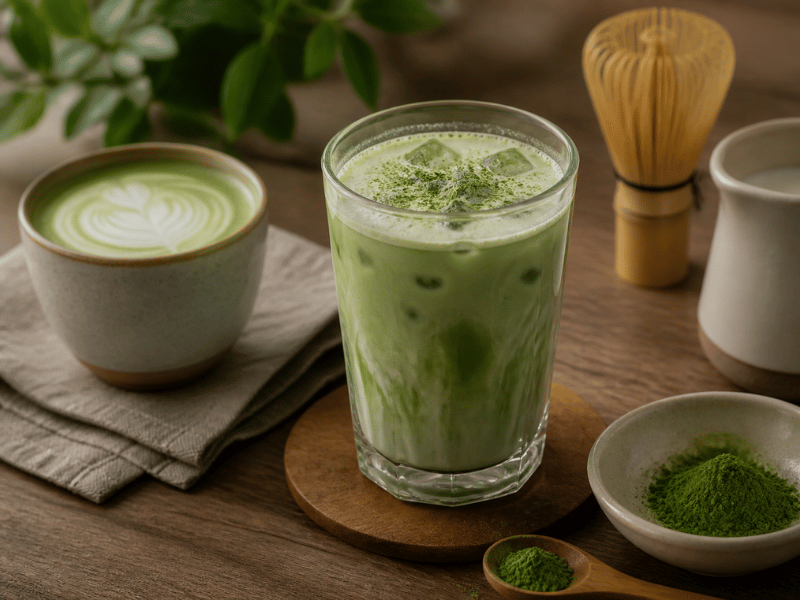
To make perfect matcha foam, sift 1.5–2g of premium ceremonial matcha into a bowl, add 2oz (60ml) of hot water at exactly 175°F (80°C), and whisk vigorously in a zigzag “W” or “M” motion for 20–30 seconds. For commercial settings, an electric handheld frother or a high-speed blender can achieve a similar microfoam consistency by aerating the liquid until a dense layer of tiny, uniform bubbles covers the surface.
What is the science behind perfect matcha foam?
The “foam” on matcha is actually a collection of micro-bubbles stabilized by natural compounds called saponins. These are plant-based surfactants that lower the surface tension of the water, allowing air to be trapped within the liquid.
The quality of this aeration depends on two factors: the concentration of tea solids and the temperature of the solvent. When whisked, the mechanical energy breaks the water’s surface tension while the saponins create a flexible film around the air pockets. High-quality matcha contains a higher concentration of these compounds and a finer particle size (often 5–10 microns), which results in a denser, more stable “crema” compared to lower-grade powders that produce large, unstable bubbles that dissipate quickly.
Which matcha grade produces the best foam for commercial use?
For B2B applications, the choice of grade is a balance between cost-efficiency and foam stability. While many assume culinary grade is sufficient for lattes, it often lacks the amino acid profile and saponin density required for a long-lasting head of foam.
| Grade | Best Use Case | Foam Characteristics | |
|---|---|---|---|
| Ceremonial | Traditional Tea / High-end Lattes | Dense microfoam, very stable, vibrant green. | |
| Premium Cafe | Signature Lattes / Smoothies | Moderate foam, balanced bitterness, good color. | |
| Culinary | Baking / Food Manufacturing | Large bubbles, dissipates fast, brownish-green. |
For businesses prioritizing the “Instagrammable” foam layer, we recommend using matcha powder bulk in a premium or “A” grade to ensure the texture remains intact from the bar to the customer’s table.
How to make matcha foam using traditional Japanese techniques?
The traditional method relies on the Chasen (bamboo whisk). This tool, carved from a single piece of bamboo, features 80 to 120 fine tines designed specifically to aerate the tea without scratching the Chawan (bowl).
- Sifting: Always sift the powder to remove electrostatic clumps.
- Pre-heating: Rinse the bowl and whisk with hot water to soften the tines and maintain the tea’s temperature.
- The Motion: Use the wrist, not the arm. Move the whisk in a rapid “W” or “M” shape, keeping the tines just above the bottom of the bowl.
- Finishing: Once large bubbles form, gently “stroke” the surface with the whisk to break them into micro-bubbles.
What equipment do cafes need to make matcha foam at scale?
In a busy café, the traditional 2-minute whisking process is often unsustainable. To maintain speed of service without sacrificing quality, businesses should invest in commercial-grade alternatives.
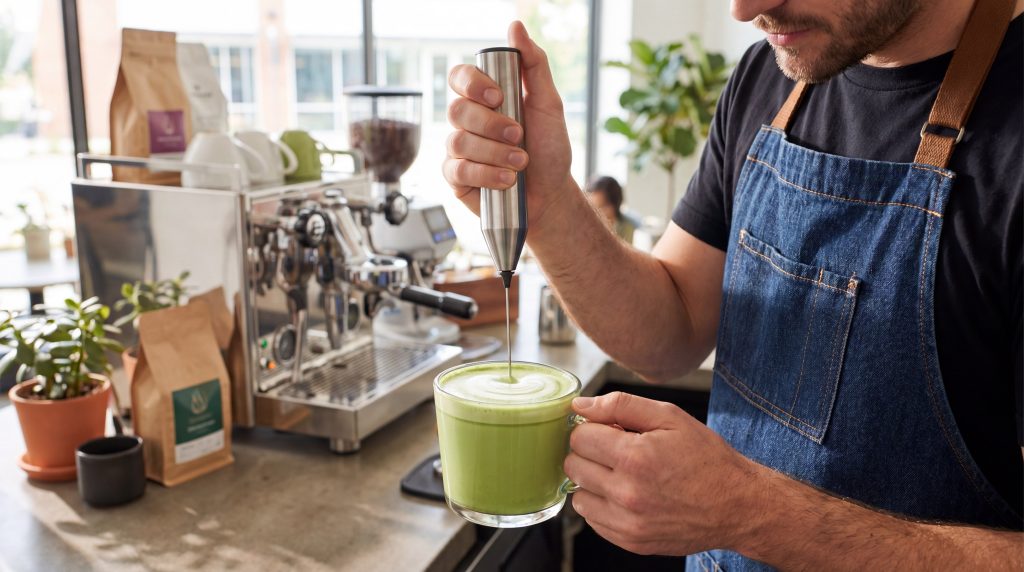
- Electric Handheld Frothers: High-torque, battery-operated or rechargeable wands can produce foam in under 15 seconds.
- Immersion Blenders: Best for preparing “matcha shots” in batches of 5–10 servings.
- Automated Matcha Makers: Machines like the Cuzen Matcha system grind and whisk automatically, ensuring total consistency across different baristas.
- Milk Steamers: Using a standard espresso machine steam wand can create an “aerated tea” texture, though it requires precise temperature control to avoid scorching the tea.
How do sourcing and freshness affect foam quality?
The ability to foam is directly tied to the freshness of the matcha. As matcha oxidizes, its chemical structure changes; the chlorophyll breaks down, and the lipids can become rancid, significantly reducing the efficacy of the saponins.
When you source bulk matcha powder , ensure it is packaged in nitrogen-flushed, light-proof bags. Matcha that has been sitting in a clear container on a shelf will lose its “frothability” within weeks. At AdoroHu, our B2B clients receive tea that is stone-ground shortly before shipping to ensure maximum surface activity and foam potential.
How to make matcha foam for cold brew and iced beverages?
Standard whisking techniques often fail with cold water because the saponins are less soluble at low temperatures. To achieve foam for iced drinks, most professionals use Matcha Cold Foam.
This involves blending matcha powder with a “cloud” base (typically heavy cream, 2% milk, or an oat-milk alternative) and a stabilizer like simple syrup. Using a cold-foam blender setting or a specialized aerating carafe creates a thick, meringue-like topping that sits on top of iced tea or coffee. For health-conscious menus, using organic matcha wholesale ensures the cold foam remains free from synthetic pesticides, appealing to the premium segment.
What are the common mistakes when frothing matcha in a B2B setting?
- Boiling Water: Using water above 185°F (85°C) denatures the proteins and “cooks” the tea, resulting in a bitter taste and thin foam.
- Incorrect Ratio: Using too much water (dilution) prevents the saponins from reaching the concentration needed to stabilize bubbles.
- Skipping the Sieve: Clumps of matcha act as “anchors” that pop bubbles, leading to a gritty texture and flat appearance.
- Poor Storage: Leaving tins open between orders allows moisture to enter, which causes the powder to clump and lose its foaming power.
How does matcha foam stability impact private label beverage development?
For brands looking at matcha private label opportunities, especially in the Ready-to-Drink (RTD) or dry-mix sector, foam stability is a key quality metric. If a consumer shakes a bottled matcha latte, the foam should be fine and persistent.
In product development, we often look at “foam half-life”—the time it takes for half the foam to collapse. High-quality ceremonial grades naturally have a longer half-life, but for industrial applications, natural stabilizers like soy lecithin or citrus fiber may be integrated into the private label formulation to mimic the “fresh-whisked” experience.
How to achieve consistent matcha foam in high-volume food manufacturing?
In food manufacturing (such as bottled drinks or matcha-flavored dairy), foam is often undesirable during the mixing phase but required for the consumer phase.
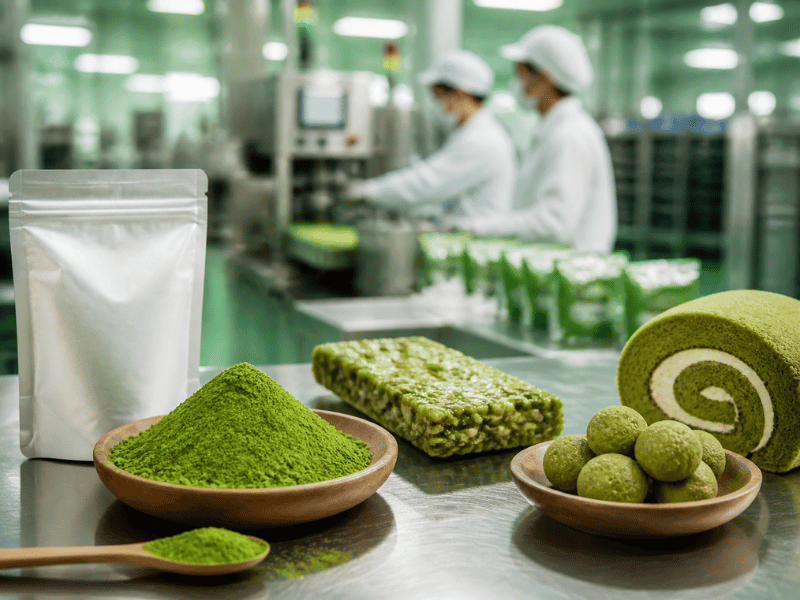
Manufacturers use high-shear mixers to ensure the matcha is fully hydrated. To achieve a “frothy” mouthfeel in the final product without manual whisking, nitrogen dosing is often used. This injects tiny bubbles into the liquid just before sealing, creating a “nitro-matcha” effect that produces a thick head of foam when the can or bottle is opened.
What are the key quality standards for foamy matcha sourcing?
When evaluating a wholesale partner for matcha, use this checklist to ensure the product will perform well in foam-centric beverages:
| Metric | Standard for High Foam | |
|---|---|---|
| Particle Size | 5–10 microns (feels like cornstarch) | |
| Color | Electric green (indicates high chlorophyll/saponins) | |
| Origin | Uji or Kagoshima, Japan (best processing standards) | |
| Harvest | First Flush (highest nutrient density) |
In short:Matcha foam is the result of mechanical aeration interacting with natural saponins. To succeed in a B2B environment, you must combine high-quality, fresh-ground powder with standardized equipment and temperature controls.
Key points:
- Temperature Matters: 175°F is the “goldilocks” zone for foam.
- Tooling: Use electric frothers for speed, bamboo for authenticity.
- Sifting is Mandatory: Never skip the sieve in a commercial workflow.
- Sourcing: Freshness is the primary driver of foam stability.
Frequently Asked Questions
- Can I make matcha foam with a regular milk frother?Yes, electric milk frothers are excellent for commercial settings as they provide consistent RPMs and high aeration in seconds.
- Why is my matcha foam disappearing so quickly?This usually happens if the water is too hot, the matcha is old/oxidized, or the ratio of water to tea is too high.
- Does the type of bowl affect the foam?Yes, a wide, flat-bottomed bowl (Chawan) allows for more vigorous whisking and better air incorporation than a narrow cup.
- Is it possible to make foam with cold water?It is difficult; for cold drinks, it is better to whisk with a small amount of hot water first or use a high-speed blender.
- How long should it take to whisk matcha by hand?A skilled barista can achieve a full microfoam in approximately 20–30 seconds of vigorous “W” motion whisking.