
Mixing matcha powder without clumps requires a combination of sifting, temperature control, and high-shear agitation to break down the electrostatic bonds of the finely ground tea leaves. For a high-volume business, serving a gritty or lumpy beverage is a quick way to lose customer trust and increase waste. Whether you are developing a product for a matcha latte application or scaling production for a bottled drink, understanding the physics of matcha suspension is critical for a smooth, premium mouthfeel. At AdoroHu Matcha, we provide the technical support and high-quality powders necessary to ensure your brand delivers a consistent experience every time.
To mix matcha powder without clumps, you must first sift the powder through a fine-mesh strainer to break up static-induced lumps. Use water heated between 70-80°C (160-175°F) and whisk or blend the powder with a small amount of liquid to create a smooth concentrate before adding the remaining volume.
In short:
Key points:
- Sifting is non-negotiable for breaking electrostatic charges.
- Water temperature must stay below 80°C to prevent protein seizing.
- Creating a concentrated “slurry” or paste ensures even dispersion.
What Causes Matcha Powder to Clump During Mixing?
Matcha clumps primarily due to electrostatic charges and the inherent fineness of the powder, which typically ranges from 5 to 10 microns. Believe it or not, these tiny particles naturally attract one another, forming small “balls” that become hydrophobic once they hit the surface of a liquid.
Environmental Factors and Storage
- Moisture Exposure: High humidity during storage can cause particles to bind before they even reach the mixing bowl.
- Temperature Fluctuations: Heat can cause the natural oils in the tea to become sticky, leading to persistent lumps.
- Static Electricity: The friction from plastic scoops or containers can increase the charge between particles.
Key Takeaway: Clumping is a natural physical property of high-quality, fine-milled tea, and understanding these triggers is the first step toward prevention.
How Do Different Matcha Grades Affect B2B Mixability?
Higher grades of tea, such as ceremonial matcha , are milled more finely and are more prone to static clumping than coarser culinary varieties. The truth is, while finer powders offer a better mouthfeel, they require more rigorous sifting and whisking techniques to achieve full suspension.
| Matcha Grade | Particle Size | Mixability Profile | Best Use Case | |
|---|---|---|---|---|
| Ceremonial | 5-7 Microns | Highly sensitive; requires sifting | Traditional tea, premium lattes | |
| Premium | 8-10 Microns | Moderate sensitivity | Standard cafe beverages | |
| Culinary | 12+ Microns | Less prone to clumping | Baking, industrial food production |
Key Takeaway: Selecting the right grade depends on your equipment; if your staff lacks time for manual sifting, a slightly coarser culinary matcha might be more efficient for bulk applications.
What Are the Best Commercial Tools for Clump-Free Matcha Mixing?
Commercial-grade tools range from traditional bamboo whisks (chasen) for artisanal service to high-shear immersion blenders for rapid cafe environments. Here’s the deal: a standard spoon will never provide the agitation necessary to break through the surface tension of a matcha particle.
Essential B2B Equipment
- Fine-Mesh Sifter: A stainless steel sifter is the most important tool for breaking initial bonds.
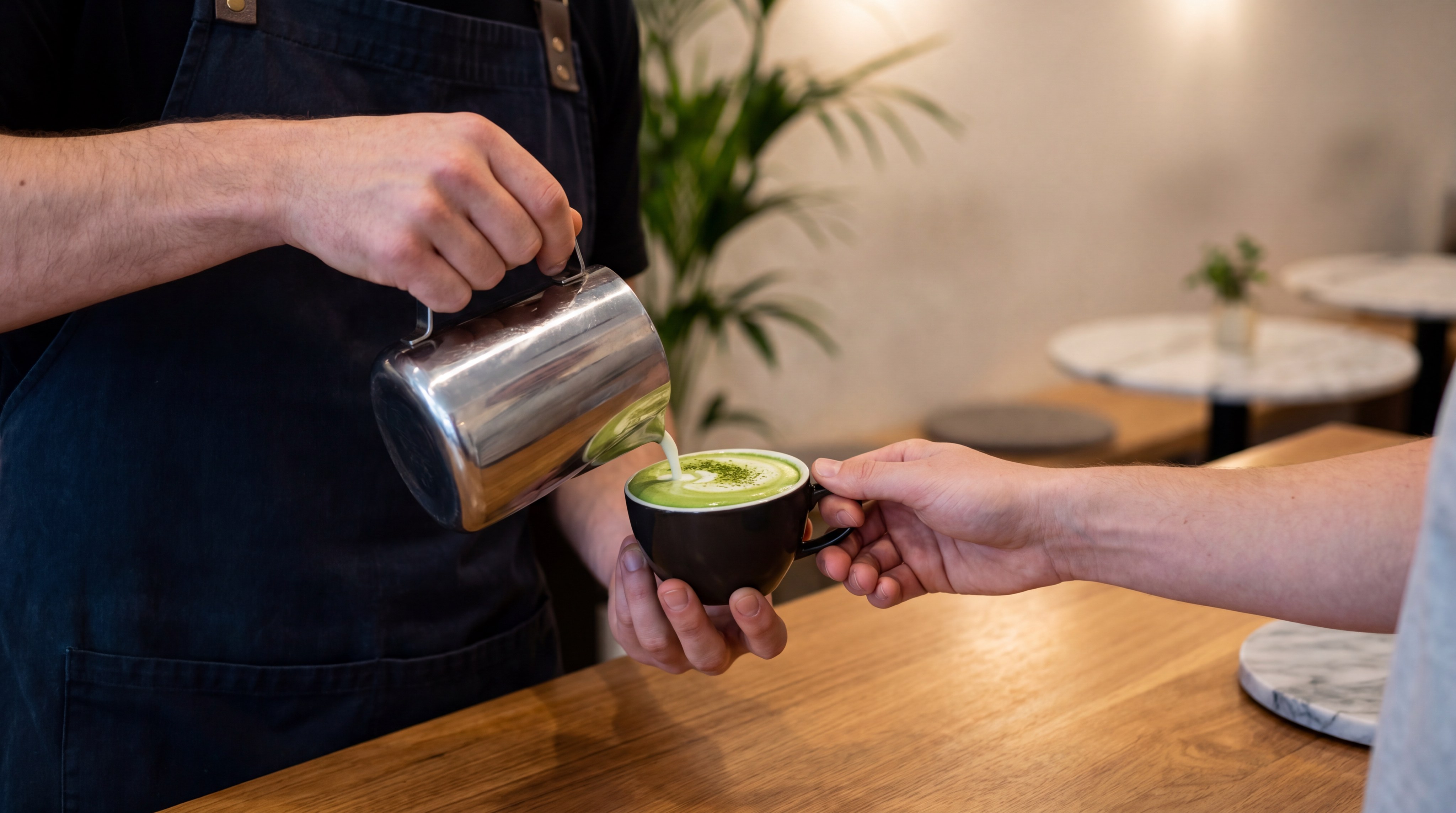
- Electric Milk Frother: A high-speed handheld frother is the industry standard for quick-service lattes.
- High-Shear Blender: For large batches, a blender ensures the powder is fully emulsified into the liquid base.
Key Takeaway: Investing in the right tools reduces prep time and guarantees a uniform product across multiple locations or shifts.
How Does Water Temperature Impact Matcha Suspension and Flavor?
Water temperature acts as a catalyst for dispersion, but exceeding 80°C (175°F) will cause the proteins in the tea to “seize,” effectively locking in any existing clumps. It gets better: using the correct temperature also prevents the extraction of harsh tannins, preserving the umami profile of organic matcha .
| Temperature Range | Effect on Solubility | Effect on Flavor | |
|---|---|---|---|
| < 60°C | Poor; powder remains gritty | Weak, lacks depth | |
| 70-80°C | Optimal; facilitates smooth foam | Balanced umami and sweetness | |
| > 85°C | Seizes particles; permanent clumps | Bitter, scorched taste |
Key Takeaway: Precise temperature control is the “secret sauce” for both texture and taste consistency in professional beverage programs.
What is the Step-by-Step B2B Mixing Process for Matcha?
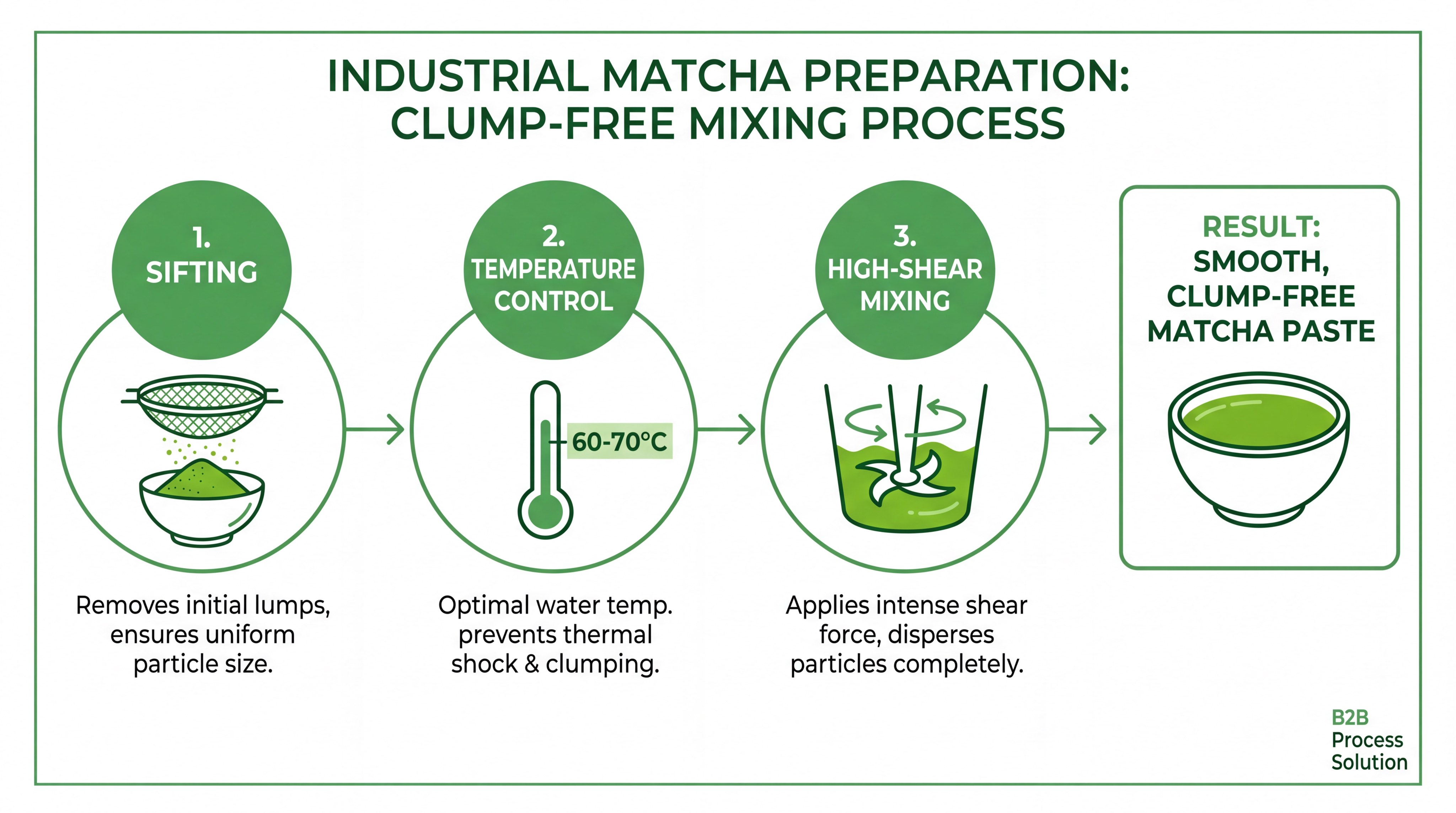
The professional mixing process begins with mechanical de-clumping before any liquid is introduced to the powder. In other words, you cannot fix a lumpy tea once the water has already been added without excessive effort.
The 4-Step Professional Method
- Sift: Measure the required amount of powder and pass it through a sifter into a dry vessel.
- Paste Formation: Add a small amount of 75°C water (about 1 part powder to 2 parts water) to create a thick paste.
- Agitation: Use a whisk or frother to stir the paste until all visible “dots” of powder disappear.
- Dilution: Slowly pour in the remaining hot water or steamed milk while continuing to stir.
Key Takeaway: Creating a “concentrate” or paste is the only reliable way to ensure 100% dispersion in a commercial setting.
How Do Beverage Manufacturers Scale Matcha Liquid Mixing?
Scaling requires industrial-sized equipment such as high-shear mixing tanks and inline emulsifiers that can process hundreds of liters at once. Think about it: if a single cup is hard to mix, a 1,000-liter tank requires specialized mechanical intervention to prevent sediment.
Scaling Strategies
- Premix Concentrates: Many manufacturers create a high-density matcha slurry that is then metered into the main production line.
- Vacuum Mixing: This removes air bubbles and ensures the powder is pulled into the liquid more effectively.
- Stabilizers: When scaling for RTD (Ready-to-Drink) bottles, natural gums may be added to keep the tea in suspension.
Key Takeaway: Industrial scaling moves away from manual whisking toward high-energy mechanical dispersion to maintain product shelf-stability.
What Are the Common Sourcing Mistakes Leading to Clumpy Matcha?
Many businesses struggle with clumping because they source powder that has been poorly stored or improperly milled. Look, if your supplier isn’t using refrigerated shipping and oxygen-barrier packaging, the powder will inevitably degrade and clump before it reaches your door.
Red Flags in Wholesale Sourcing
- Transparent Packaging: Light and heat exposure damage the powder’s structural integrity.
- Low Mesh Count: Coarsely milled tea often feels “sandy” rather than smooth.
- Lack of Freshness Dates: Old matcha loses its ability to froth and tends to bind into hard pellets.
Key Takeaway: Quality control at the sourcing level is just as important as the mixing technique used in your kitchen.
How Can Private Label Brands Ensure Consistent Matcha Quality in Production?
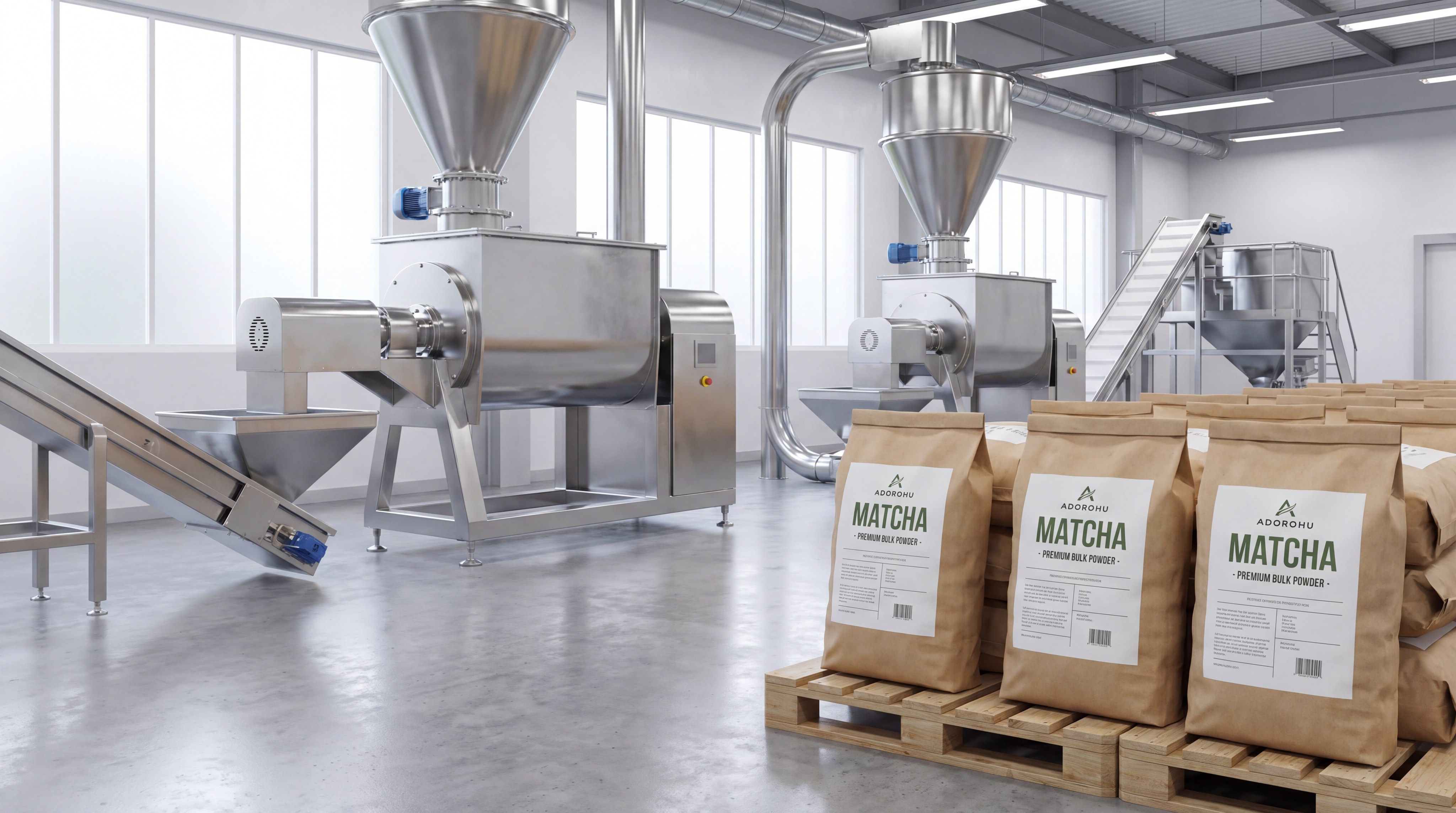
Private label brands must establish strict specifications for particle size (mesh) and moisture content during the private label contract phase. Best of all, working with a specialized supplier allows you to customize these parameters to fit your specific mixing equipment.
Quality Control Parameters
- Micron Size Testing: Ensure every batch meets a specific fineness standard.
- Moisture Analysis: Keeping moisture below 5% prevents premature clumping in the bag.
- Color Spectrometry: Consistent color often correlates with consistent particle size and mixability.
Key Takeaway: Documentation and standardized testing are the only ways for B2B brands to maintain a uniform customer experience.
How to Troubleshoot Common B2B Matcha Mixing Issues?
When a batch fails to emulsify, the issue is usually found in either the tool speed or the water-to-powder ratio. That’s not all; even the mineral content of your water can play a role in how well the powder stays in suspension.
| Issue | Likely Cause | Solution | |
|---|---|---|---|
| Visible green “dots” | Skipped sifting step | Use a fine-mesh strainer before adding liquid | |
| Rapid settling | Insufficient agitation | Increase frother speed or mixing time | |
| No froth/foam | Water is too cold | Adjust temperature to 75-80°C |
Advanced Troubleshooting
- Check Water Hardness: Extremely hard water can interfere with the formation of a stable foam.
- Inspect Storage: If the powder feels “damp” to the touch, it has likely absorbed ambient moisture and will be nearly impossible to mix without a high-speed blender.
Key Takeaway: Systematic troubleshooting allows managers to identify whether the fault lies in the training, the equipment, or the raw ingredient.
Why Choose a Specialized Wholesale Supplier for Better Matcha Mixing?
Expert suppliers like AdoroHu Matcha utilize advanced stone-grinding and air-jet milling technologies that produce a more “flowable” powder. Now, instead of struggling with inconsistent bulk batches, you can rely on a product engineered for high solubility and vibrant color.
The AdoroHu Advantage
- Cold-Chain Logistics: We maintain the freshness of our powder from the farm to your warehouse.
- Application Expertise: We help you choose between ceremonial, culinary, or even hojicha powder based on your specific mixing needs.
- Technical Support: Our team provides mixing protocols and staff training guides to our B2B partners.
Key Takeaway: A specialized supplier provides more than just a product; they provide the technical foundation for your brand’s success.
FAQ
- Q: Can I mix matcha in a standard cocktail shaker for iced drinks?
- Yes, using a shaker with an “agitator” (like a blender ball or ice) can effectively break up sifted matcha for cold applications.
- Q: Is a bamboo whisk better than an electric frother for cafes?
- A bamboo whisk is better for traditional flavor and “showmanship,” but an electric frother is faster and more consistent for high-volume cafe service.
- Q: Why does my matcha still clump even after sifting?
- This usually happens if the water is too hot (seizing the particles) or if the powder was added to a large volume of water too quickly without making a paste first.
- Q: Does organic matcha clump more than conventional matcha?
- Clumping is related to milling fineness and storage, not the organic status; however, high-quality organic grades are often very finely milled.
- Q: How long can I keep mixed matcha liquid before it settles?
- Matcha is a suspension, not a solution, so it will begin to settle within 15-30 minutes; it must be stirred or shaken again before serving.
Conclusion
Mastering clump-free matcha mixing is a vital skill for any professional beverage operation looking to maintain premium standards. By implementing sifting, controlling water temperature, and using high-shear tools, you can ensure a smooth, delicious product that scales with your business. For bulk orders or custom formulations, contact AdoroHu Matcha today to elevate your product line.