To learn how to sweeten matcha without ruining flavor, professionals must utilize high-quality wholesale/B2B matcha and pair it with sweeteners that enhance rather than mask its complex umami profile. Many beverage programs struggle with “muddy” flavors or excessive bitterness that drives customers away from green tea offerings. This occurs when inferior ingredients or heavy syrups overpower the delicate L-theanine and vegetal notes inherent in premium Japanese tea. By mastering the synergy between natural sweeteners and tea chemistry, businesses can develop sophisticated, market-leading products that maintain the health-conscious integrity of the matcha brand while providing a satisfying consumer experience.
To sweeten matcha without ruining its flavor, use small amounts of neutral natural sweeteners like agave or light maple syrup, or introduce creaminess through plant-based milks that neutralize bitterness. Prioritizing ceremonial grade matcha reduces the need for sugar by providing an inherent, natural sweetness.
In short:Key points:
- Use neutral agents like agave or honey to avoid overpowering the tea.
- High-grade sourcing reduces the required quantity of added sugar.
- Dairy and alternative milks provide natural lactose/sweetness.
- Avoid artificial syrups that leave a chemical aftertaste.
- Balance umami and sweetness through precise B2B formulation.
What are the most effective types of natural sweeteners for B2B matcha?
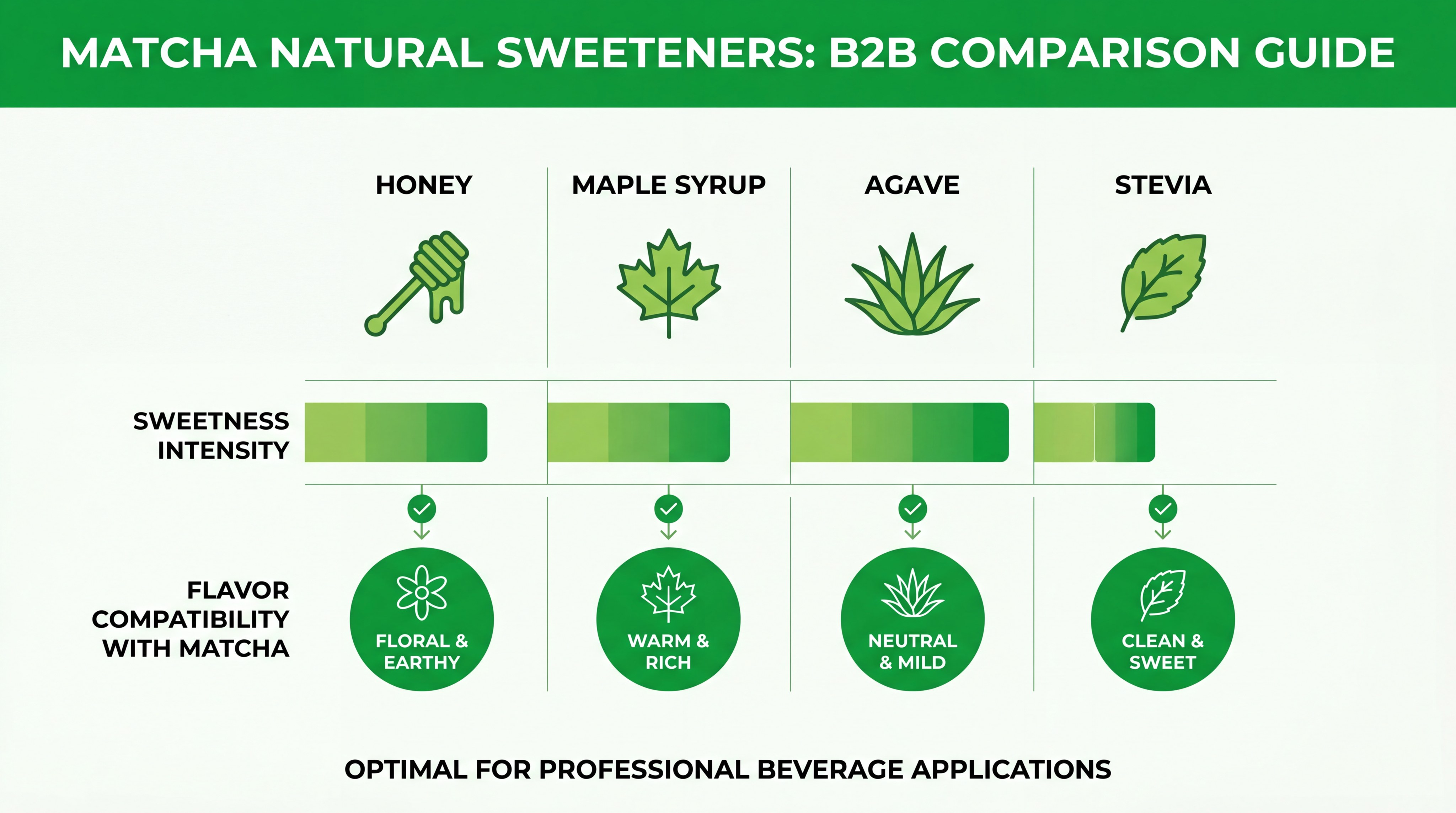
The most effective natural sweeteners for commercial matcha applications are those with a clean finish, such as agave nectar, light honey, or maple syrup. These agents possess unique chemical properties that interact with matcha’s polyphenols to soften astringency without introducing clashing aromas. In a high-volume environment, liquid sweeteners are preferred over granulated sugars because they dissolve instantly in both hot and cold preparations, ensuring consistency across every serving.
| Sweetener Type | Flavor Contribution | Best B2B Application | Solubility | |
|---|---|---|---|---|
| Agave Nectar | Neutral, clean sweetness | Ready-to-Drink (RTD) beverages | Excellent | |
| Light Honey | Floral, earthy undertones | matcha latte/cafe use | Moderate (requires heat) | |
| Maple Syrup | Warm, caramel notes | Seasonal artisanal drinks | High | |
| Stevia | High intensity, zero calorie | Wellness/Keto-focused products | High |
Key Takeaway:Choosing a sweetener with a low flavor-interference profile allows the premium characteristics of the matcha to remain the focal point of the beverage.
How does strategic sourcing reduce the need for excessive sweeteners?
Strategic sourcing reduces sweetening requirements by prioritizing ceremonial grade/premium matcha , which naturally contains higher levels of L-theanine and less bitter catechins. When a business invests in tea harvested from the first flush (spring), the resulting powder has an inherent sweetness that requires significantly less masking. Conversely, lower-quality late-season harvests are highly astringent, forcing manufacturers to add more sugar to make the product palatable, which ultimately ruins the authentic flavor profile.
Key Takeaway:Sourcing higher-grade tea at the procurement level is the most effective way to maintain flavor integrity while appealing to health-conscious consumers.
What is the pricing impact of different sweeteners on beverage profit margins?
The pricing impact of sweeteners on B2B profit margins is determined by the “sweetness-to-volume” ratio and the cost per serving of the agent used. While granulated white sugar is the cheapest option, the labor cost of dissolving it and the negative impact on premium brand perception often lead to lower long-term ROI compared to high-efficiency natural agents like agave. Businesses must balance the cost of the sweetener against the grade of the matcha; using a slightly more expensive sweetener can sometimes allow a brand to use a mid-tier culinary grade/bulk matcha while still achieving a balanced taste.
Key Takeaway:Analyze the total cost of the sweetened formula, including preparation time and consumer price elasticity, rather than looking at raw ingredient costs in isolation.
How do B2B applications vary between cafes and food manufacturing?
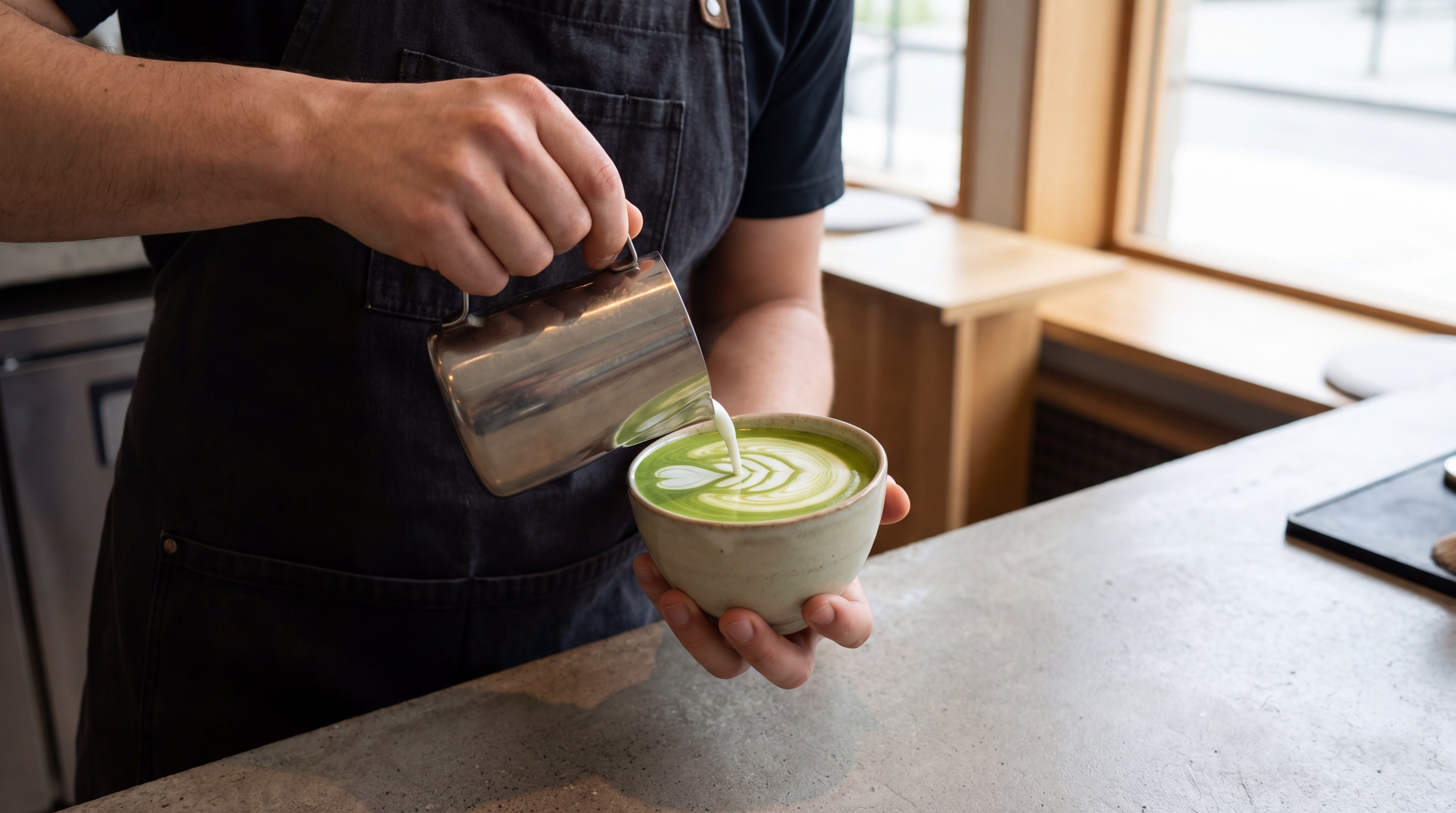
B2B applications for sweetening matcha vary between cafes, where immediate dissolution is key, and food manufacturing, where heat stability and shelf-life are the primary concerns. In a cafe setting, baristas often rely on simple syrups or honey to customize drinks on the fly for matcha latte/cafe use . In contrast, large-scale food manufacturing for baking/pastry requires sweeteners like maltodextrin or specialized corn syrups that provide bulk and texture without causing the matcha to oxidize or lose its vibrant green color during processing.
Key Takeaway:Tailor your sweetening strategy to your specific production environment to ensure both flavor stability and operational efficiency.
How can private label partners optimize sweetness for consumer packaged goods?
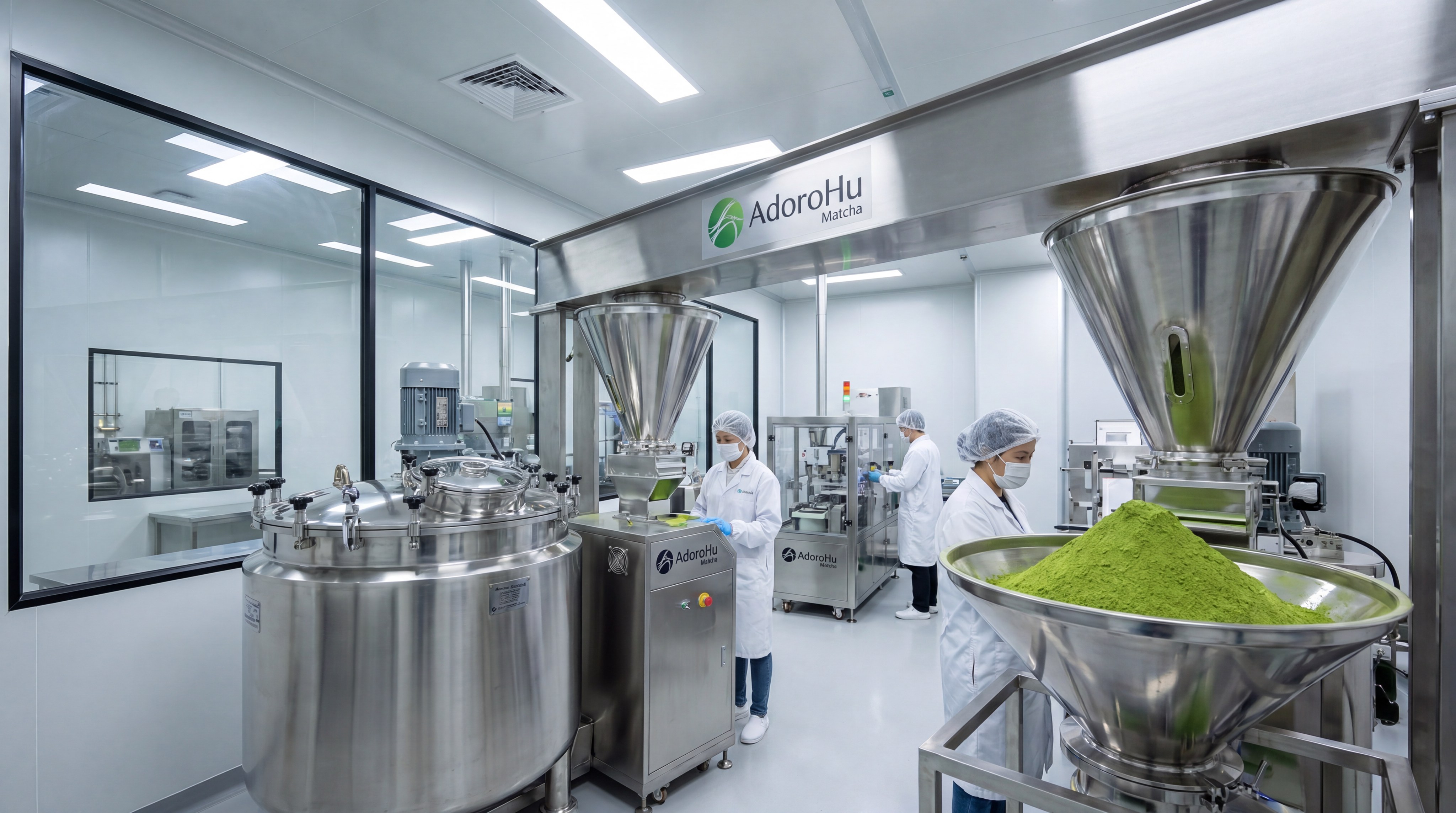
Private label partners optimize sweetness by conducting sensory analysis to find the “Goldilocks zone” where sweetness enhances the tea’s umami without hitting the sensory threshold of being “sugary.” When developing a private label/OEM product, manufacturers can create pre-mixed powders that combine organic matcha with plant-based sweeteners like monk fruit to cater to the growing “clean label” market. This ensures that the end consumer experiences a consistent, professional-grade flavor every time they prepare the product at home.
Key Takeaway:Collaborate with an experienced OEM partner to develop proprietary blends that meet specific dietary trends without sacrificing the delicate matcha profile.
What are the most common mistakes when sweetening matcha for mass production?
The most common mistake in mass production is using high-fructose corn syrup or artificial sweeteners that leave a lingering metallic aftertaste, which clashes violently with matcha’s natural tannins. Another frequent error is over-heating the sweetener and tea mixture, which causes the matcha to “cook,” resulting in a brown color and a hay-like flavor. Manufacturers often fail to account for the way sweetness levels “mute” over time in refrigerated RTD products, leading to a flat and unappealing flavor profile by the time the product reaches the consumer.
| Formulation Mistake | Impact on Quality | Better B2B Alternative | |
|---|---|---|---|
| Artificial Aspartame | Chemical/Metallic finish | Monk Fruit or Erythritol | |
| Over-sweetening | Masks umami and tea notes | Step-down sweetening trials | |
| Poor Sifting | Clumpy, uneven sweetness | High-shear industrial mixing |
Key Takeaway:Avoid high-intensity artificial agents and temperature extremes to preserve the “fresh-whisked” taste in packaged goods.
How do ceremonial and culinary grades compare in flavor profile management?
Ceremonial and culinary grades differ significantly in their bitterness levels, which directly dictates the amount and type of sweetener needed for a balanced profile. Ceremonial grade is designed for pure water applications and has a natural, creamy sweetness that requires almost no additives. Culinary grade, however, is formulated for baking/pastry and lattes; its bolder, more astringent profile is designed to “cut through” fats and sugars, making it a more cost-effective choice for sweetened commercial recipes.
Key Takeaway:Matching the correct grade to your sweetening strategy is essential for achieving a professional flavor profile and maintaining cost-efficiency.
What quality standards ensure sweetening doesn’t mask low-grade defects?
Quality standards like color vibrancy, particle size (under 10 microns), and origin certification ensure that sweetening is used as an enhancement rather than a mask for oxidation or pesticide residue. When a business sources organic matcha , they are guaranteed a clean base that doesn’t have the “fishy” or “dusty” notes often found in low-grade powders. Professional buyers should perform a “water-only” taste test before adding sweeteners to ensure the base tea meets the required standards for umami and color.
Key Takeaway:Never use sweetness to cover up poor quality; start with a premium base to ensure the final product reflects a high-end brand identity.
How do you manage sweetness consistency across multiple franchise locations?
Consistency across franchise locations is managed by utilizing standardized pre-measured sweetener pumps or pre-sweetened private label/OEM powder blends. Relying on individual baristas to measure honey or syrup leads to wide variations in taste, which can damage brand trust. By implementing a strict SOP (Standard Operating Procedure) that dictates the exact grams of matcha to milliliters of sweetener, businesses can ensure that a customer in one city receives the same flavor experience as a customer in another.
Key Takeaway:Standardization is the bedrock of B2B beverage success; remove the “human element” from the sweetening process whenever possible.
Which sugar-free alternatives are trending in the B2B wellness sector?
The wellness sector is currently trending toward monk fruit, allulose, and erythritol as sugar-free alternatives that provide a mouthfeel similar to sucrose without the glycemic impact. These ingredients are particularly popular for brands offering keto-friendly or diabetic-friendly matcha products. For businesses looking for a different flavor profile, hojicha is also being used as a naturally sweeter, low-caffeine alternative that requires less intervention than traditional green matcha.
Key Takeaway:Stay ahead of consumer demand by incorporating “functional” sweeteners that provide health benefits alongside a clean flavor profile.
FAQ
- Q: Can I use regular white sugar in a professional matcha program?
- While possible, it is not recommended for premium programs as it lacks the complexity to complement matcha and can create a “gritty” texture if not dissolved properly.
- Q: Does honey change the color of the matcha latte?
- Darker honeys can dull the vibrant green of the matcha; use “clover” or “light amber” varieties to maintain the visual appeal of the drink.
- Q: Is it better to sweeten the matcha powder or the liquid base?
- For B2B consistency, sweetening the liquid base (syrup pumps) or using a pre-mixed powder is superior to manual additions.
- Q: How can I reduce bitterness without adding calories?
- Use a higher ceremonial grade/premium matcha or incorporate a pinch of sea salt, which suppresses bitter receptors on the tongue.
- Q: What is the shelf life of sweetened matcha RTDs?
- Sweetened matcha is prone to faster color degradation; typically, these products require UV-protected packaging and have a shelf life of 6-9 months.
Conclusion
Finding the perfect balance of sweetness is a critical component of any successful commercial tea program. By choosing the right grade and pairing it with high-quality natural agents, you can create a beverage that delights the palate while preserving the tea’s natural integrity. To discover the perfect base for your next product, please contact/inquiry our team for wholesale samples and formulation advice.