Bitter matcha is primarily caused by improper water temperature, low-quality leaves, or incorrect ratios, but it can be fixed by lowering heat and using premium grades. In the B2B world, serving or manufacturing with bitter matcha leads to immediate customer dissatisfaction and negative reviews. This inconsistent quality doesn’t just ruin a single drink; it actively erodes your brand reputation and slashes profit margins due to product returns and lost repeat business. AdoroHu offers the ultimate solution through our rigorous matcha wholesale sourcing standards and this comprehensive guide to mastering flavor profiles.
Matcha becomes bitter when high temperatures “burn” the delicate leaves or when using lower-grade powder high in catechins. To fix it instantly, ensure your water temperature never exceeds 80°C (176°F) and use a precise 1g to 60ml ratio. Switching to a high-quality, shade-grown ceremonial grade will provide the natural umami and sweetness customers expect.
In short:
Key points:
- Control water temperature (70-80°C) to prevent the release of harsh catechins.
- Utilize premium ceremonial grades for drinking and high-end barista applications.
- Maintain strict airtight storage in cool, dark environments to prevent oxidation.
Why is matcha bitter even when using premium grades?
Even the finest premium grades can result in bitter matcha if the preparation technique ignores delicate temperature thresholds or uses stale water. Here’s the deal. While ceremonial grade contains significantly more L-theanine and less bitterness, it is still a sensitive agricultural product that requires precision to shine. If your water is too hot or your whisking is uneven, you will mask the natural sweetness of the high-quality leaf with a scorched, unpleasant finish.
How does water temperature affect matcha bitterness?
Water temperature is the most critical factor, as boiling water extracts harsh tannins and creates an overwhelmingly bitter matcha profile. The 80°C (176°F) limit is a hard ceiling; exceeding this temperature “burns” the powder, destroying the delicate volatile compounds that provide its signature flavor. For commercial consistency, many cafes use temperature-controlled kettles to ensure the water stays within the safe 70-80°C range.
Can incorrect whisking techniques cause a bitter taste?
Poor whisking techniques often leave undissolved clumps that create a gritty, intensely bitter matcha experience for the consumer. Proper oxygenation and suspension through a vigorous “W” or “M” motion are necessary to aerate the tea properly. This aeration rounds out the flavor and creates a thick, creamy froth that physically softens the impact of the tea on the palate.
What role does the matcha-to-water ratio play in flavor?
An imbalanced ratio is a common culprit for bitter matcha, often occurring when businesses use too much powder to compensate for a lack of flavor intensity. The industry standard of 1g of matcha to 60ml of water (roughly half a teaspoon per 2 ounces) ensures a balanced flavor where the umami notes are not overshadowed by astringency. Scaling this ratio accurately is vital for B2B consistency across high-volume service.
How do different matcha grades compare in bitterness levels?
Different grades exhibit varying levels of bitter matcha based on the concentration of L-theanine (sweetness) versus Catechins (bitterness) found in the leaves. While culinary grade is naturally higher in catechins to help it stand out against other ingredients, it should never be served as a standalone tea. Ceremonial grades use younger leaves harvested early in the spring, which naturally contain more of the sweet amino acids that counteract bitterness.
Is your matcha bitter because of poor storage conditions?
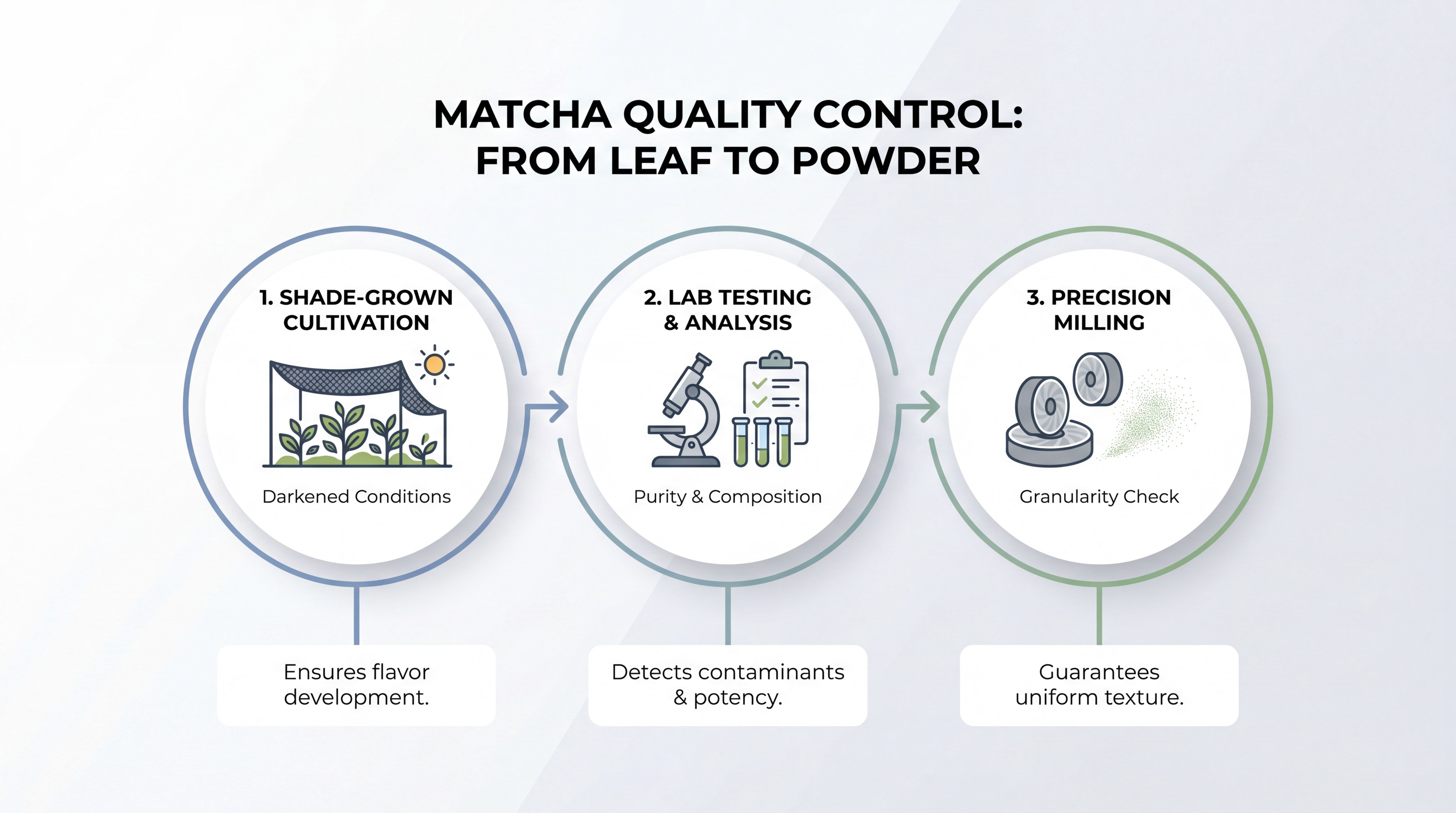
Improper storage leads to rapid oxidation, transforming a vibrant green powder into a brown, stale, and bitter matcha that is unusable for commercial sales. UV exposure, heat, and air are the primary enemies of freshness. B2B operations must ensure that bulk supplies are kept in opaque, airtight containers and stored in climate-controlled environments to prevent the degradation of flavor.
How can B2B buyers identify high-quality, non-bitter matcha suppliers?
Identifying a supplier of high-quality, non-bitter matcha requires looking for a vibrant electric green color and an ultra-fine, talc-like texture. If the powder appears yellowish, brownish, or feels sandy between the fingers, it indicates a late-harvest crop with high tannin content. Reliable suppliers provide Certificates of Analysis (COA) to verify that their product meets the color and purity standards required for premium service.
What are the best applications for bitter culinary matcha in food manufacturing?
The bold profile of bitter matcha found in culinary grades is actually ideal for baking and smoothies where the flavor must cut through fats, dairy, and sugars. Using high-strength matcha for baking ensures the signature green tea taste remains present even after exposure to high oven temperatures. In these applications, the bitterness is a functional trait that provides a necessary “punch” to the finished product.
Does organic certification impact the bitterness of wholesale matcha?
Organic certification can influence the taste, sometimes resulting in a slightly more earthy or bitter matcha due to the specific nitrogen fertilizers used during the shading process. Shade-growing is what boosts L-theanine, and organic farmers must use slower-acting natural fertilizers to achieve this. However, high-end organic matcha powder minimizes this through superior leaf selection and slower stone-grinding speeds to prevent heat friction.
How can businesses fix bitter matcha instantly for commercial use?
Businesses can fix bitter matcha instantly by immediately lowering water temperatures to 70°C and verifying that their whisking ratio is calibrated to the weight of the powder rather than volume. Additionally, sifting the powder before use is a mandatory step that eliminates clumps which contribute to perceived bitterness. For prepared beverages like lattes, adding a tiny pinch of sea salt or a high-fat milk can also chemically dampen the perception of bitter tannins on the tongue.
FAQ
- Q: Can I fix bitter matcha by adding sugar?
- Answer: While sweeteners hide the taste, they don’t fix the chemical bitterness caused by burnt leaves or low quality; adjusting water temperature is the true solution.
- Q: Why does my organic matcha taste more like grass?
- Answer: This is common in organic varieties due to natural soil nutrients, but it can be balanced by using a shorter whisking time and filtered water.
- Q: What is the shelf life of opened wholesale matcha?
- Answer: For peak flavor and zero bitterness, it should ideally be consumed within 1-2 months after opening and kept in the refrigerator.
- Q: Does tap water make matcha bitter?
- Answer: Yes, hard water minerals can react with tea polyphenols to increase bitterness; using filtered or soft water is highly recommended for commercial consistency.
- Q: Is bitterness a sign of fake matcha?
- Answer: Not necessarily, but extreme bitterness often indicates old age or very low-grade green tea powder that lacks the proper shading process of authentic matcha.
Mastering the nuances of matcha preparation is essential for maintaining B2B quality standards and ensuring customer loyalty. By controlling your environment and sourcing from trusted partners, you can eliminate unwanted bitterness and provide a superior sensory experience. Contact AdoroHu today to secure consistent, high-quality matcha for your business operations.