Matcha is exceptionally good for weight loss because it contains high concentrations of EGCG catechins that actively stimulate thermogenesis and fat oxidation. For health and wellness brands, understanding whether is matcha good for weight loss is no longer just a consumer query; it is a critical commercial inquiry into ingredient efficacy. Many companies struggle to source high-potency ingredients that deliver measurable results, but by partnering with a specialized wholesale matcha supplier , formulators can access the raw materials necessary to disrupt the weight management market.
Matcha is highly effective for weight loss due to its unique concentration of Epigallocatechin Gallate (EGCG), which can increase 24-hour energy expenditure and fat oxidation by up to 17% during moderate exercise. Unlike steeped green tea, the powdered whole-leaf format of matcha ensures 100% nutrient ingestion, making it a superior functional ingredient for metabolic health products.
In short:
Key points:
- EGCG and caffeine work synergistically to boost metabolic rate.
- Whole-leaf consumption provides significantly more antioxidants than steeped tea.
- Grade selection and origin impact the chemical potency of the final product.
- B2B brands can leverage private label solutions for rapid market entry.
How do metabolic mechanisms determine if matcha is good for weight loss?
The metabolic effectiveness of matcha is determined by its high bioavailability of catechins, specifically EGCG, which triggers a thermogenic response in the body. When analyzing if is matcha good for weight loss, researchers focus on how these compounds increase the rate at which the body burns calories. Because matcha is a suspension of ground leaves rather than an infusion, the consumer receives the full spectrum of fat-burning polyphenols.
The Role of EGCG and Catechin Concentration
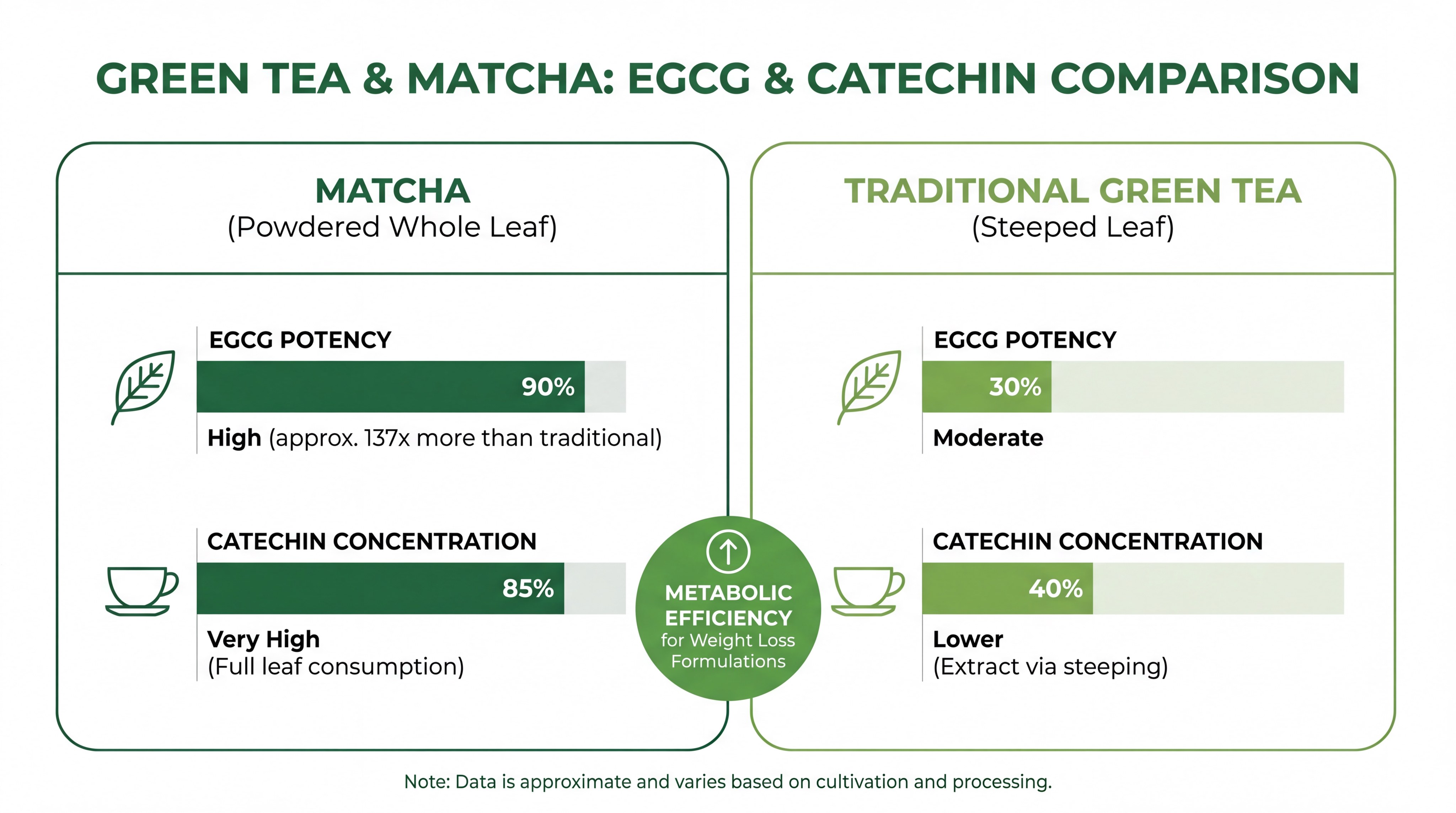
EGCG is the primary antioxidant responsible for the metabolic spike associated with green tea. In matcha, the concentration of EGCG is significantly higher than in traditional tea bags, allowing for more efficient interference with the breakdown of norepinephrine, the hormone that signals fat cells to break down fat.
Thermogenesis and Calorie Expenditure
Thermogenesis is the process of heat production in organisms. Matcha stimulates this process, allowing the body to burn more energy even at rest. This makes it an ideal anchor ingredient for “metabolism-boosting” supplement lines.
Lipolysis and Fat Oxidation during Activity
Clinical studies have shown that consuming matcha before physical activity can increase fat oxidation by 17%. This makes it a powerful pre-workout ingredient for brands targeting the fitness and weight loss demographics.
| Metabolic Compound | Function in Weight Loss | Potency in Matcha | |
|---|---|---|---|
| EGCG (Catechins) | Increases fat oxidation and thermogenesis | Very High | |
| Caffeine | Stimulates central nervous system and energy | Moderate/Steady | |
| L-Theanine | Reduces cortisol-induced weight gain | High | |
| Chlorophyll | Supports detoxification and alkalinity | High |
Key Takeaway: The synergy between EGCG and caffeine in matcha creates a measurable metabolic advantage that traditional steeped teas cannot match.
Why is grade selection critical when evaluating if ceremonial or culinary matcha is good for weight loss?
Grade selection is critical because the harvest timing and leaf age directly influence the nutrient density and catechin levels of the powder. When businesses ask if is matcha good for weight loss, they must distinguish between ceremonial grade matcha , which is high in L-theanine, and culinary grade matcha , which often contains higher levels of bitter catechins.
Ceremonial Grade vs. Culinary Grade Efficacy
Ceremonial grade is made from the youngest leaves of the first harvest, providing a delicate flavor and high chlorophyll content. Culinary grade, sourced from later harvests, is more astringent but often contains higher levels of the specific catechins required for weight loss efficacy in supplement formats.
The L-Theanine to Caffeine Ratio
Higher grades of matcha provide a better balance of L-theanine to caffeine. This prevents the “jittery” spike and subsequent cortisol rise associated with coffee, which can often lead to abdominal fat storage.
Color, Flavor, and Formulation Impact
Choosing the right grade depends on the application. For a weight loss capsule, a high-catechin culinary grade is cost-effective. For a premium wellness tea, a ceremonial grade provides the aesthetic and taste profile consumers expect.
Key Takeaway: While ceremonial grade is superior for drinking, certain culinary grades may offer a higher concentration of the bitter catechins necessary for metabolic weight loss products.
Is matcha good for weight loss in functional beverage and RTD applications?
Matcha is excellent for weight loss in functional beverages because it offers a “clean label” alternative to synthetic thermogenic drinks. Determining if is matcha good for weight loss in a Ready-To-Drink (RTD) format requires addressing technical challenges like suspension and oxidation. Successful brands often use matcha for lattes and bottled beverages to meet the growing demand for convenient health solutions.
Stability and Solubility in RTD Formats
Since matcha does not dissolve but remains in suspension, RTD formulators must use stabilizers or “shake well” instructions to ensure the consumer receives all the metabolic benefits settled at the bottom of the bottle.
Flavor Masking for Low-Sugar Profiles
To maintain the “weight loss” benefit, RTD products must be low in calories. Formulators use monk fruit or stevia to balance the natural earthiness of matcha without adding the sugar that would negate its fat-burning properties.
Synergistic Ingredient Blending
Many B2B brands enhance the weight loss value proposition by blending matcha with other functional ingredients like L-carnitine, ginger, or apple cider vinegar, creating a multi-faceted approach to metabolism.
Key Takeaway: RTD matcha products are a high-growth segment, provided that formulators can maintain the stability of the active catechins during the shelf life.
How does sourcing from Japan or China influence whether matcha is good for weight loss products?
Sourcing origin is a primary factor in the chemical profile and overall safety of the ingredient. When evaluating if is matcha good for weight loss, brands must decide between the prestige and quality control of Japanese terroir or the cost-efficiency of Chinese production. Many premium brands prefer certified organic matcha from Japan to ensure the highest purity and catechin potency.
Japanese Terroir and Shading Techniques
Japanese cultivation, particularly in regions like Uji or Kagoshima, involves specific shading techniques that boost chlorophyll and amino acid levels. This precision results in a more potent and consistent product for weight loss claims.
Chinese Mass-Market Sourcing
Chinese matcha is often more affordable and available in massive quantities, making it suitable for budget-conscious weight loss supplements. However, the processing methods may differ, sometimes leading to lower catechin retention.
Traceability and Supply Chain Transparency
In the B2B sector, being able to trace a batch back to a specific estate adds significant value to a brand’s marketing story, justifying a premium price point for weight management products.
Key Takeaway: Japan remains the gold standard for potency and safety, though China offers a viable alternative for high-volume, price-sensitive product lines.
How can brands leverage private label opportunities to market why is matcha good for weight loss?
Brands can leverage private label partnerships to quickly launch metabolism-focused products without the overhead of manufacturing. The question of is matcha good for weight loss is a powerful marketing hook that can be integrated into custom private label formulas . This allows new players to enter the functional food market with professional-grade inventory.
OEM Custom Blending for Targeted Results
Working with an OEM allows brands to create proprietary blends. For instance, a “Metabolism Boost” blend might combine high-catechin matcha with fiber to increase satiety, providing a comprehensive weight loss solution.
Packaging Innovations for Potency Protection
Catechins are sensitive to light and air. Private label partners can provide nitrogen-flushed tins or multi-layer foil sachets to ensure the fat-burning compounds remain active until the moment of consumption.
Speed-to-Market for New Brands
Utilizing white-label solutions enables brands to bypass the R&D phase by using pre-validated, high-potency Japanese matcha that is already proven to support weight loss claims.
Key Takeaway: Private labeling is the most efficient path for wellness brands to capitalize on the matcha weight loss trend with minimal risk and maximum quality.
What quality certifications are needed to prove is matcha good for weight loss to B2B buyers?
To substantiate the claim that is matcha good for weight loss, B2B buyers require rigorous certification and lab data. Consumers in the weight management space are increasingly “clean label” conscious, making third-party validation a prerequisite for retail success.
- Organic Certifications (USDA, JAS, EU): Essential for products marketed as “natural” weight loss aids.
- Heavy Metal and Radiation Testing: Crucial for ensuring safety in long-term daily use.
- EGCG Lab Analysis: Provides hard data on the exact potency of the active fat-burning compounds.
Key Takeaway: Certifications provide the legal and scientific foundation required to market matcha as a functional weight loss ingredient.
How do wholesale pricing and cost factors influence the business case for is matcha good for weight loss?
The commercial viability of a weight loss product depends on maintaining healthy margins despite fluctuating raw material costs. When assessing if is matcha good for weight loss from a business perspective, one must look at tiered pricing and harvest timing.
Tiered Pricing Structures
Purchasing in bulk (100kg+) significantly reduces the cost-per-kilogram, allowing brands to offer competitive retail pricing while maintaining the high EGCG levels required for efficacy.
The Impact of Harvest Timing on COGS
First-harvest leaves command a premium. For weight loss capsules, brands often opt for second or third harvests, which are more affordable and still provide the necessary catechin profile.
Forecasting and Price Hedging
Currency fluctuations between the USD and JPY can impact costs. Successful B2B brands lock in annual contracts to ensure price stability for their weight loss product lines.
| Sourcing Factor | Impact on Cost | Impact on Weight Loss Efficacy | |
|---|---|---|---|
| First Harvest (Spring) | High | High (Best flavor/amino acids) | |
| Second Harvest (Summer) | Medium | Very High (Maximum catechins) | |
| Japanese Origin | High | Very High (Consistent quality) | |
| Chinese Origin | Low | Variable (Depends on processor) |
Key Takeaway: Strategic sourcing allows brands to balance the high potency of matcha with a sustainable cost of goods sold (COGS).
What are the logistics and MOQ considerations for brands sourcing matcha good for weight loss?
Logistics play a vital role in preserving the chemical integrity of the tea. To ensure the answer to is matcha good for weight loss remains a “yes” for the end consumer, the powder must be transported and stored under strict conditions to prevent the degradation of EGCG.
Minimum Order Quantities (MOQs) for Custom Grinds
While some suppliers require 500kg, boutique B2B partners may offer MOQs as low as 10-20kg, allowing smaller brands to test weight loss formulations without significant capital risk.
Cold Chain Logistics and Shelf-Life Management
Matcha is a “live” product. Keeping it in refrigerated storage during transit and at the warehouse ensures that the metabolic properties don’t diminish over time.
Lead Times and Seasonal Harvesting Constraints
Planning around the May harvest is essential. Brands must forecast their inventory to avoid stockouts during the “New Year, New Me” Q1 peak in weight loss product sales.
Key Takeaway: Proper storage and logistics are non-negotiable for maintaining the active metabolic compounds that define matcha’s weight loss value.

Is matcha good for weight loss compared to traditional green tea extracts?
Matcha is often superior for weight loss compared to extracts because it provides the whole-leaf nutrient matrix. When deciding if is matcha good for weight loss, many formulators find that consumers prefer the “superfood” appeal of whole matcha powder over the clinical feel of isolated green tea extracts.
Bioavailability: Powder vs. Extract
In matcha, you consume the entire leaf, including insoluble fibers and vitamins that work together with EGCG. This holistic profile often results in better metabolic absorption than isolated chemicals.
Consumer Perception and Marketing Appeal
Matcha carries a “halo effect” of health and zen. Marketing a weight loss product with “Premium Japanese Matcha” often yields a higher conversion rate than using “Green Tea Extract.”
Cost-per-Serving Comparison
While matcha powder may have a higher raw cost than extract powder, the ability to market it at a premium retail price often results in better overall ROI for the brand.
| Feature | Matcha Powder | Green Tea Extract | |
|---|---|---|---|
| Nutrient Profile | Whole-leaf (Full spectrum) | Isolated (EGCG only) | |
| Consumer Appeal | High (Superfood/Gourmet) | Moderate (Supplement) | |
| Bioavailability | Synergistic | High (Concentrated) | |
| Versatility | Drinks, food, capsules | Mostly capsules |
Key Takeaway: Matcha provides a more marketable and nutritionally complete solution for weight loss than isolated extracts.
What are the latest industry market trends regarding the claim is matcha good for weight loss?
The market for matcha is evolving toward hyper-specialized health claims. The current trend confirms that is matcha good for weight loss is a foundational belief driving new product developments in the keto, paleo, and clean energy sectors.
The Rise of “Clean Energy” Weight Loss
Consumers are moving away from synthetic stimulants. The synergy of L-theanine and caffeine in matcha provides sustained energy without the crash, making it a preferred choice for daily weight management.
Hyper-Personalization and Keto-Friendly Matcha
As a zero-carb, high-antioxidant ingredient, matcha is perfectly suited for ketogenic diets. Brands are now creating “Matcha MCT” blends specifically for the weight loss market.
Sustainability and Ethical Sourcing Trends
B2B buyers are increasingly prioritizing suppliers with Fair Trade or B-Corp certifications. Ethical sourcing is becoming a competitive advantage in the luxury weight loss supplement niche.
Key Takeaway: The convergence of clean energy, keto-compatibility, and ethical sourcing makes matcha the most versatile ingredient in the modern weight loss industry.
FAQ
- Q: How much matcha should be used in a weight loss formulation?
- Research suggests that 1-2 grams of high-quality matcha per serving provides enough EGCG to contribute to metabolic benefits.
- Q: Is culinary grade effective for weight loss supplements?
- Yes, culinary grade often contains higher levels of bitter catechins (antioxidants) compared to ceremonial grade, making it highly effective for supplements.
- Q: Does matcha contain more caffeine than coffee?
- No, matcha typically contains about 35-70mg of caffeine per serving, which is lower than coffee but provides a more sustained energy release.
- Q: Is Japanese matcha better than Chinese matcha for weight loss?
- Japanese matcha is generally preferred for its stricter quality control and higher EGCG consistency, though high-quality Chinese sources do exist.
- Q: Can matcha be blended with other weight loss ingredients?
- Absolutely. It pairs exceptionally well with L-carnitine, protein powders, and fiber for a multi-pronged approach to weight management.
Conclusion
Matcha is a scientifically backed, highly marketable ingredient that offers genuine results for weight management through thermogenesis and fat oxidation. By selecting the right grade and sourcing from reputable Japanese estates, brands can create high-potency products that resonate with health-conscious consumers. If you are looking to source premium ingredients for your next product line, contact our team for samples and wholesale quotes today.