
Achieving a professional-grade green tea dessert requires more than just mixing powder. Many chefs struggle with a grainy texture or a dull, brownish hue in their final product. This inconsistency often stems from using low-grade tea or improper dispersion techniques. Use this guide to create a premium matcha ice cream recipe that maintains a vibrant chlorophyll green and a silky mouthfeel. For more on sourcing, see our premium-matcha options.
A professional matcha ice cream recipe requires high-quality culinary matcha, heavy cream, and a sweetener. Whisk 3 tablespoons of sifted matcha into a warm milk base before cooling and churning for 20 minutes. For industrial scale, use powder ground to 10-15 microns to ensure uniform dispersion and prevent clumping.
Summary SectionIn short: The secret to a successful commercial recipe is the balance between umami flavor and fat content.
Key points:
- Sift powder to prevent clumps.
- Use stone-milling culinary grades.
- Maintain low-temperature storage.
- Optimize for high-shear mixing.
How do you choose the best matcha ice cream recipe?
The ideal recipe depends on your equipment and target audience. A home-style matcha ice cream recipe often uses condensed milk for a “no-churn” shortcut. However, a commercial-grade matcha ice cream recipe utilizes a custard base with egg yolks. This creates a richer profile that highlights the L-theanine sweetness.
Professional kitchens prioritize consistency across high-volume batches. We recommend using a base that can withstand the addition of high-potency tea powders. This ensures the polyphenols do not overpower the dairy notes.
What ingredients are essential for a professional matcha ice cream recipe?
You must start with tencha-based powders that have been properly shaded. Basic ingredients include heavy cream, whole milk, granulated sugar, and a pinch of sea salt. The salt is crucial as it enhances the natural earthiness of the tea.
| Ingredient | Role | Note | |
|---|---|---|---|
| Heavy Cream | Fat Content | Provides the creamy texture | |
| Matcha Powder | Flavor/Color | Must be stone-milling grade | |
| Egg Yolks | Emulsifier | Prevents ice crystal formation | |
| Sugar | Sweetener | Balances natural bitterness |
Why does the grade of tea affect your matcha ice cream recipe?
The quality of your powder dictates the final color and grit. For industrial food production, we focus on QC microns. A powder ground to 10-15 microns will dissolve seamlessly into the cream. Coarser powders above 20 microns result in a sandy texture that ruins the consumer experience.
AdoroHu provides specialized culinary grades with high chlorophyll retention. This ensures your matcha ice cream recipe looks vibrant even after the pasteurization process. Check our culinary-matcha for detailed technical data.
Can you make a no-churn matcha ice cream recipe?
Yes, a no-churn matcha ice cream recipe is popular for smaller cafes. This method involves folding whipped cream into a mixture of condensed milk and tea powder. It requires no specialized machinery but offers a shorter shelf life than churned versions.
The absence of air incorporated during churning makes this version denser. To improve the result, ensure the tea is pre-dissolved in a small amount of warm water. This prevents “hot spots” of bitterness in the frozen dessert.
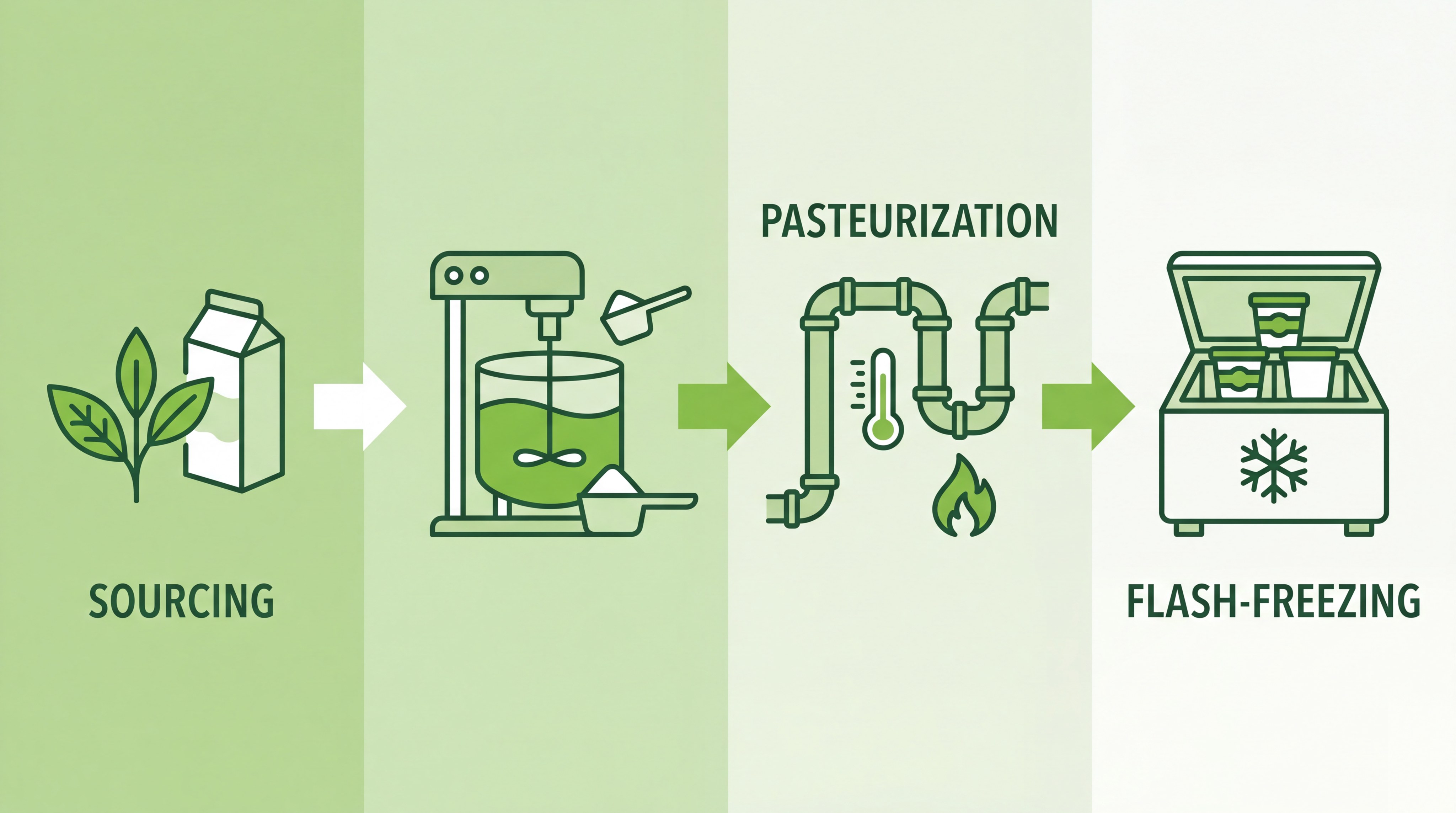
How do industrial manufacturers scale a matcha ice cream recipe?
Scaling requires precise control over cost factors and ingredient ratios. Manufacturers often switch from fresh cream to milk solids and stabilizers for better margins. A bulk matcha ice cream recipe must account for the powder’s interaction with fats.
| Scaling Metric | Industrial Value | Professional Impact | |
|---|---|---|---|
| Fat Content | 12% – 15% | Mouthfeel and stability | |
| Tea Ratio | 1.5% – 2.5% | Flavor intensity | |
| Overrun | 30% – 50% | Profitability vs quality |
What technical challenges arise with a bulk matcha ice cream recipe?
Color stability is the primary challenge in any B2B matcha ice cream recipe. UV light and heat can turn a bright green dessert into a dull grey. Using tea with high antioxidant levels helps maintain the visual appeal.
Furthermore, fat compatibility is essential for a smooth mix. Matcha is hydrophilic, meaning it needs high-shear mixing to bond with the lipid molecules. Without this, the powder may settle at the bottom of the batch.
Is a vegan matcha ice cream recipe commercially viable?
Plant-based options are highly profitable in the current market. A vegan matcha ice cream recipe usually replaces dairy with coconut milk or cashew cream. These fats pair exceptionally well with the grassy notes of Japanese tea.
When using coconut bases, increase the tea concentration by 10%. The strong coconut flavor can mask the delicate umami of the tea. We offer a ceremonial-matcha organic line specifically for clean-label vegan products.
How does stone-milling improve your matcha ice cream recipe?
The stone-milling process keeps the tea leaves cool during grinding. This prevents the friction-based heat from oxidizing the catechins. Oxidized tea results in a bitter, metallic-tasting matcha ice cream recipe.
Finely ground powder also increases the surface area for flavor extraction. This means you can use less powder to achieve the same taste profile. This efficiency is a key driver for B2B procurement strategies.
What are the storage requirements for a prepared matcha ice cream recipe?
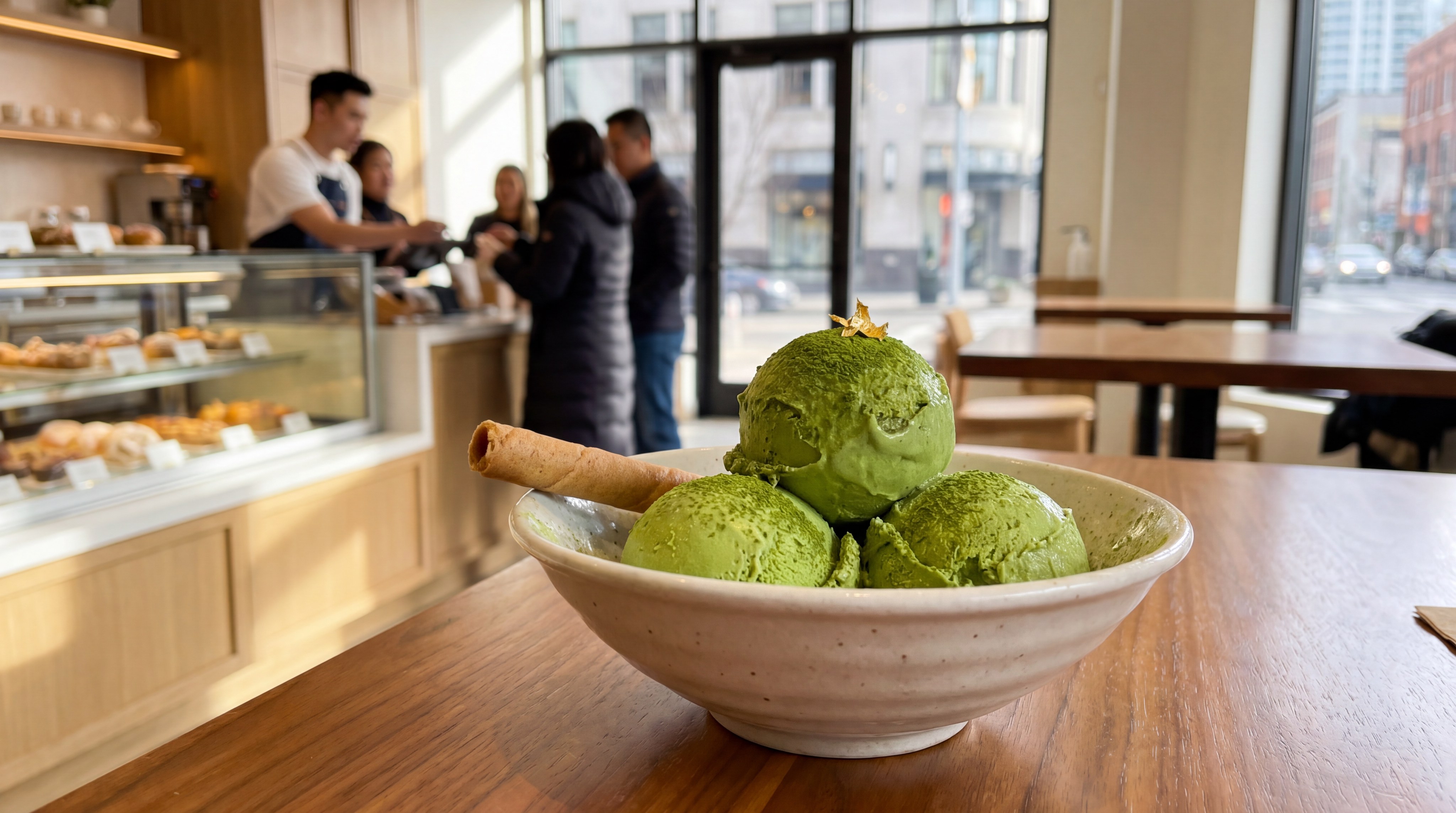
Once the matcha ice cream recipe is frozen, temperature consistency is vital. Fluctuations cause large ice crystals to form, destroying the creaminess. Store finished products at -18°C or lower in airtight containers.
Light exposure is the enemy of green tea. Always use opaque packaging for retail distribution. For more on preservation, see our guide on organic-matcha .
Where can you source bulk ingredients for a matcha ice cream recipe?
Quality sourcing requires a partner with verified HACCP and ISO certifications. AdoroHu offers a Minimum Order Quantity (MOQ) of 100kg for industrial clients. This ensures a consistent supply chain for your matcha ice cream recipe.
We provide tiered pricing based on annual volume commitments. Our logistics team handles global shipping to ensure freshness from the farm to your factory. Explore our premium-matcha portal for quotes.
FAQ
- How much powder is needed for a standard matcha ice cream recipe?
- Generally, 20-30 grams of culinary powder is sufficient for 1 liter of base.
- Can I use ceremonial grade in my matcha ice cream recipe?
- While possible, it is not cost-effective as the nuances are lost in dairy.
- Why is my matcha ice cream recipe turning brown?
- This is usually due to oxidation from heat or light exposure during storage.
- Do I need a stabilizer for a commercial matcha ice cream recipe?
- Yes, guar gum or locust bean gum helps prevent crystallization during shipping.
- What is the best way to mix powder into the matcha ice cream recipe?
- Pre-blend the powder with a portion of sugar before adding it to liquid.
Conclusion
Building a successful dessert brand requires a reliable matcha ice cream recipe and high-quality ingredients. By focusing on stone-milling precision and technical specifications, you can outperform the competition. Ready to elevate your production? Contact AdoroHu Matcha today for bulk samples and wholesale pricing.