Matcha powder bulk price in 2026 ranges widely by grade: roughly $13 to $30 per kg for industrial grade, $30 to $80 for culinary, $60 to $90 for latte grade, and $150 to $320+ for ceremonial, with volume and origin shifting every figure. Here’s the problem buyers face this year: prices reset sharply after the 2025 supply shock, so old benchmarks are useless and a single “price per kg” question has no single answer.
That uncertainty is costly. A buyer working from 2023 prices budgets wrong and gets sticker shock. One who pays a distributor markup overspends by 30 to 50 percent. One who buys Uji-origin ceremonial for a latte line pays a brand premium the milk erases. Knowing real 2026 matcha powder bulk price ranges, by grade and volume, is what lets you budget accurately and negotiate. This guide lays out the current ranges and shows how sourcing factory-direct matcha wholesale changes the price you actually pay.
In 2026, matcha powder bulk price varies by grade and volume: industrial/RTD grade runs roughly $13 to $30 per kg, culinary $30 to $80, latte grade $60 to $90, and ceremonial $150 to $320+ per kg. Prices rose sharply after a 2025 climate-driven tencha shortage. Volume matters: pallet quantities (300 kg+) unlock significant per-kg discounts, and buying factory-direct rather than through a distributor saves an estimated 25 to 50 percent. Chinese-origin matcha typically costs less than Japanese at equivalent grade.
In short: 2026 bulk matcha runs about $13 to $30/kg industrial, $30 to $80 culinary, $60 to $90 latte, and $150 to $320+ ceremonial, with volume and factory-direct sourcing cutting cost sharply.
Key points:
- Bulk price varies by grade: roughly $13 to $30 industrial up to $150 to $320+ ceremonial per kg.
- Pallet volume (300 kg+) and factory-direct sourcing cut cost by an estimated 25 to 50 percent.
- 2025’s climate shortage reset prices, so pre-2025 benchmarks are obsolete.
What is the bulk price of matcha powder per kg in 2026?
The bulk price of matcha powder in 2026 depends primarily on grade, ranging from around $13 per kg for industrial grade to over $320 per kg for top ceremonial. Here’s the key to reading any quote: matcha powder bulk price is never one number, because grade, origin, volume, and certification each move it significantly.
These are current industry reference ranges at bulk quantities, useful for budgeting before you request a real quote.
| Grade | Typical 2026 bulk range (per kg) | Best use |
|---|---|---|
| Industrial / RTD | ~$13–30 | Mass RTD drinks, mass-market blends |
| Culinary | ~$30–80 | Baking, desserts, smoothies |
| Latte / beverage | ~$60–90 | Cafe lattes, milk-based drinks |
| Ceremonial | ~$150–320+ | Premium neat-drink, gifting |
Origin shifts these further: Uji-origin ceremonial can run $180 to $320 per kg, while equivalent-quality Kagoshima or Chinese product often clears 30 to 40 percent lower. Because AdoroHu prices by grade and quality and sets lead time against order volume, a buyer gets a figure matched to a real specification rather than a generic list price. The ranges above are the market context; your actual price depends on the exact grade, volume, and terms.
Key Takeaway: 2026 bulk matcha runs roughly $13 to $30 per kg industrial up to $150 to $320+ ceremonial, with origin shifting each tier; treat these as budgeting context, since your real price depends on exact grade, volume, and terms.
Why did matcha bulk prices rise so much by 2026?
Matcha bulk prices rose sharply by 2026 because of a climate-driven shortage in the raw material. Here’s the structural cause behind every higher quote: this was a supply collapse in tencha leaf, not ordinary inflation, and raw material is the dominant cost.
The numbers tell the story. Heat waves cut first-flush tencha production in Uji by an estimated 40 percent, average Kyoto tencha auction prices jumped from around ¥20,024 to ¥43,330 per kg (a 116 percent rise), and even machine-harvested commodity leaf rose about 169 percent. Because raw material is the largest share of cost, this fed directly into finished bulk prices. The judgment for buyers: “cheap matcha from reputable sources essentially no longer exists,” so 2023 benchmarks must be discarded. A vertically integrated producer that owns its estate, like a supplier of culinary grade matcha from its own fields, is less exposed to auction-price spikes than a processor buying leaf on the open market.
Key Takeaway: 2026 prices rose from a climate-driven tencha shortage, not normal inflation: a 40 percent Uji production drop and a 116 percent auction price rise fed straight into bulk prices, so discard pre-2025 benchmarks and favor estate-owning suppliers less exposed to auctions.
How does volume affect matcha powder bulk price?
Volume significantly affects matcha powder bulk price, with larger orders unlocking steep per-kg discounts. Here’s the lever every buyer can pull: the same matcha costs far less per kg at pallet scale than at a small trial quantity.
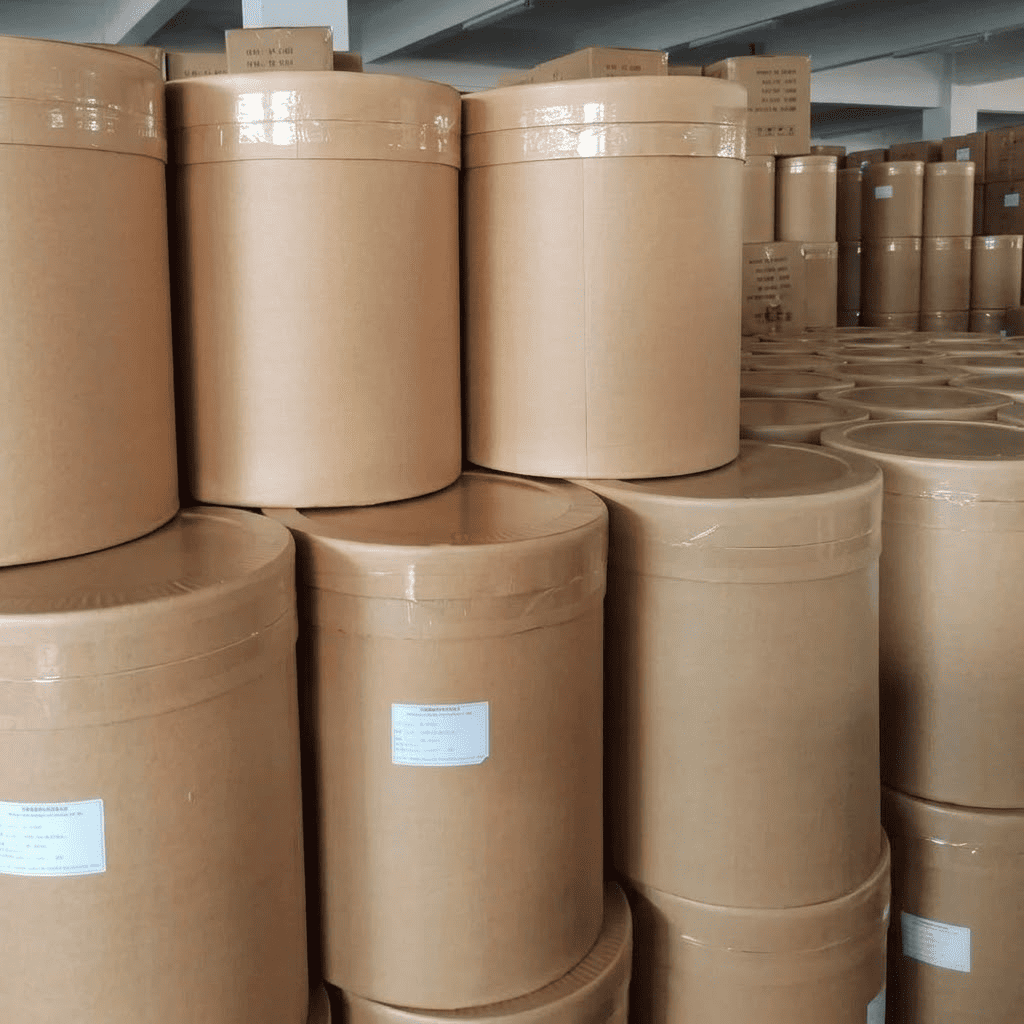
The discount curve is real and steep. A 1 kg bag costs more per gram than a 10 kg order, and pallet quantities of 300 kg or more unlock significant per-kg reductions, because processing, packing, and freight all spread across more volume. Standardized bulk drum and carton formats also cost less to produce than retail packaging, lowering the per-kg price further. The judgment from experience: match your order volume to real consumption to capture the discount without over-buying perishable stock. A 10 kg trial naturally carries a higher per-kg price than a 500 kg contract, so buyers scaling a product should move toward pallet-scale bulk matcha contracts as their volume justifies it.
Key Takeaway: Volume cuts matcha bulk price steeply, with pallet quantities (300 kg+) unlocking significant per-kg discounts as processing, packing, and freight spread across more units; match order size to real consumption to capture the discount without over-buying.
How much can you save buying matcha factory-direct?
Buying matcha factory-direct saves an estimated 25 to 50 percent versus a distributor at equivalent grade. Here’s the structural reason: a distributor buys from the producer, adds margin, and resells to you, so you pay for a layer that adds cost but not quality.
That markup is substantial and well-documented. Industry sources put domestic distributor markups at 30 to 50 percent, and even higher on industrial grades where distributors capture more margin on bulk volume. Buying direct from the manufacturer removes that layer entirely. The judgment: for any serious bulk volume, factory-direct sourcing is the single biggest controllable saving on matcha bulk price. A direct manufacturer also gives traceability a reseller cannot. AdoroHu operates as a manufacturer with a 350-hectare self-owned estate, so a buyer pays the source price rather than a stacked distributor margin, and can request a wholesale quote built on factory-direct economics.
Key Takeaway: Factory-direct sourcing saves an estimated 25 to 50 percent versus a distributor, who adds 30 to 50 percent markup without adding quality; for serious bulk volume, buying direct from the manufacturer is the single biggest controllable saving on price.
Why is Japanese matcha more expensive than Chinese at the same grade?
Japanese matcha is generally more expensive than Chinese matcha at equivalent grade, partly due to genuine quality factors and partly due to brand premium. Here’s the distinction that saves money: some of the Japanese premium reflects real differences, but a notable share is branding, especially the Uji name.
The premium has two components. Genuine cost drivers include cultivation tradition, labor, and the 2025 supply squeeze that hit Japan hardest. But Uji-origin product can command a 30 to 50 percent markup based on brand rather than measurably higher quality, with Kagoshima and high-grade Chinese matcha delivering comparable specs for less. The experienced judgment: judge matcha by its specifications, color, particle size, L-theanine, not its origin label, and do not pay a pure Uji premium for specs you can source elsewhere. AdoroHu grows high-grade matcha in Hangzhou, Zhejiang, offering specifications competitive with premium Japanese product without the Uji brand markup.
Key Takeaway: Japanese matcha costs more partly for real quality and partly for brand premium, with Uji commanding a 30 to 50 percent markup based on name; judge by specs, not origin, since Kagoshima and high-grade Chinese matcha deliver comparable quality for less.
What grade should you buy at each price point?
You should buy the lowest grade that delivers the result your application needs, since over-specifying wastes money. Here’s the cost-efficiency rule: each application has a grade that performs, and paying above it buys quality the use case erases.
Matching grade to application is the biggest lever on effective cost. Industrial grade (~$13–30/kg) is the rational choice for mass RTD drinks, where ceremonial nuance is lost anyway. Premium culinary (~$40–60/kg) retains color under heat for bakery and dessert, reducing ingredient cost by 30 percent or more versus misapplied ceremonial. Latte blends (~$60–90/kg) deliver better mouthfeel against milk than ceremonial at two to three times the price. Reserve ceremonial ($150+/kg) for products tasted neat. The judgment: misapplying ceremonial grade to a latte, bake, or RTD is the most common overspend in matcha sourcing. A brand can also use custom blending to hit a color and flavor target at lower cost than pure first-flush.
Key Takeaway: Buy the lowest grade that performs for your application: industrial for RTD, premium culinary for baking, latte grade for milk drinks, and ceremonial only for neat-tasted products, since misapplying ceremonial to a latte or bake is the most common overspend.
What hidden costs add to matcha bulk price?
Beyond the per-kg quote, matcha bulk price carries hidden costs that affect your true landed cost. Here’s what the headline number leaves out: freight, duties, compliance testing, yield loss, and currency all stack on top.
These costs are real and often overlooked.
- Yield loss: refinement removes an estimated 20 to 30 percent of mass as stems and veins, so your per-kg cost effectively embeds extra upstream raw material.
- Currency: a 10 percent yen swing can add roughly 7 percent to a USD industrial price, and can erase a margin.
- Compliance: EU multi-residue pesticide testing can run €200 to €500 per lot, and non-compliance means cargo destruction.
- Freight and storage: shipping mode and any delays add cost, and perishability adds waste risk.
The judgment: model true landed cost, not just the quote, and remember that a low per-kg price with high freight, duty, or waste can cost more delivered. Sourcing from a Chinese supplier can also reduce JPY currency exposure on Japanese contracts.
Key Takeaway: The per-kg quote is not the full price; yield loss (20 to 30 percent), currency swings, compliance testing (€200 to €500 per lot in the EU), and freight all stack on top, so model true landed cost rather than the headline number.
How do you lock in a good matcha bulk price for 2026?
You lock in a good matcha bulk price by committing volume early and signing allocation contracts rather than buying spot. Here’s the procurement lesson from the 2026 market: deferring purchase until supply tightens is the highest-risk strategy, exposing you to both premium pricing and stockouts.
Timing and commitment are the levers. In a tight market, the recommended approach is annual allocation contracts that lock both price and volume, ideally signed in the post-harvest window, rather than spot-buying when prices peak. Committing to a regular volume also strengthens your negotiating position for a better per-kg rate. The judgment: in 2026’s volatile market, price and supply security come from planning ahead and committing, not from chasing the lowest spot quote. Because AdoroHu sets terms against order volume, a buyer can structure a forward supply arrangement and request organic matcha or other grades at a volume-based rate rather than gambling on spot pricing.
Key Takeaway: Lock a good 2026 bulk price by committing volume early through allocation contracts, not spot buying, which is the highest-risk strategy in a tight market; planning ahead secures both price and supply while strengthening your negotiating position.
What mistakes inflate matcha bulk price for buyers?
The biggest mistake is reading matcha bulk price as a single number and ignoring grade fit, sourcing channel, and timing. Here’s the pattern across overpayments: each mistake maps to a specific, avoidable cost.
Watch for these traps, each with a named consequence.
- Budgeting on pre-2025 prices, then facing sticker shock at current rates.
- Buying through a distributor, paying a 30 to 50 percent markup avoidable factory-direct.
- Paying a Uji brand premium of 30 to 50 percent for specs available elsewhere.
- Misapplying ceremonial grade to a latte, bake, or RTD, wasting the premium.
- Spot-buying in a tight market, hitting peak prices and stockout risk.
Each is avoidable by reading price as a system. A factory-direct, vertically integrated supplier offering complementary lines like hojicha powder lets you control grade, channel, and timing in one relationship.
Key Takeaway: Stop reading matcha bulk price as one number; the overspends, stale benchmarks, distributor markup, Uji premium, misapplied grade, and spot-buying, each carry a specific avoidable cost, so control grade fit, sourcing channel, and timing together.
FAQ
- How much does bulk matcha powder cost per kg in 2026?
- In 2026, bulk matcha runs roughly $13 to $30 per kg for industrial/RTD grade, $30 to $80 for culinary, $60 to $90 for latte grade, and $150 to $320+ for ceremonial. Origin shifts these further, with Uji-origin ceremonial at the high end and Kagoshima or Chinese product often 30 to 40 percent lower at equivalent quality.
- Why is matcha so expensive in 2026?
- Because a 2025 climate-driven shortage cut first-flush tencha production in Uji by an estimated 40 percent and pushed auction prices up about 116 percent year-on-year. Since raw material is the dominant cost, this fed directly into finished bulk prices, so pre-2025 price benchmarks are now obsolete.
- How much cheaper is buying matcha factory-direct?
- Buying factory-direct saves an estimated 25 to 50 percent versus a distributor at equivalent grade. Distributor markups run 30 to 50 percent, and even higher on industrial grades. Buying directly from the manufacturer removes that layer and also provides better traceability than a reseller.
- Is Chinese matcha cheaper than Japanese?
- Generally yes, at equivalent grade. Part of the Japanese premium reflects genuine quality and the 2025 supply squeeze, but Uji-origin product can carry a 30 to 50 percent brand markup. High-grade Chinese matcha from regions like Zhejiang often delivers comparable specifications for less, so judge by specs rather than origin.
- What volume do I need for the best matcha bulk price?
- Pallet quantities of around 300 kg or more unlock significant per-kg discounts, since processing, packing, and freight spread across more volume. A small trial order like 10 kg carries a higher per-kg price than a 500 kg or full-pallet contract, so scaling order size toward pallet volume lowers your unit cost.
Conclusion
Matcha powder bulk price in 2026 spans roughly $13 to $30 per kg for industrial grade up to $150 to $320+ for ceremonial, reset upward by the 2025 tencha shortage, with volume, sourcing channel, origin, and grade fit each moving your real cost. The decisive takeaway is to read price as a system: match grade to application, buy factory-direct at pallet volume, judge by specs not the Uji label, and commit early in a tight market. To get a 2026 quote built on factory-direct economics, contact AdoroHu Matcha to request samples and a wholesale price matched to your grade and volume.