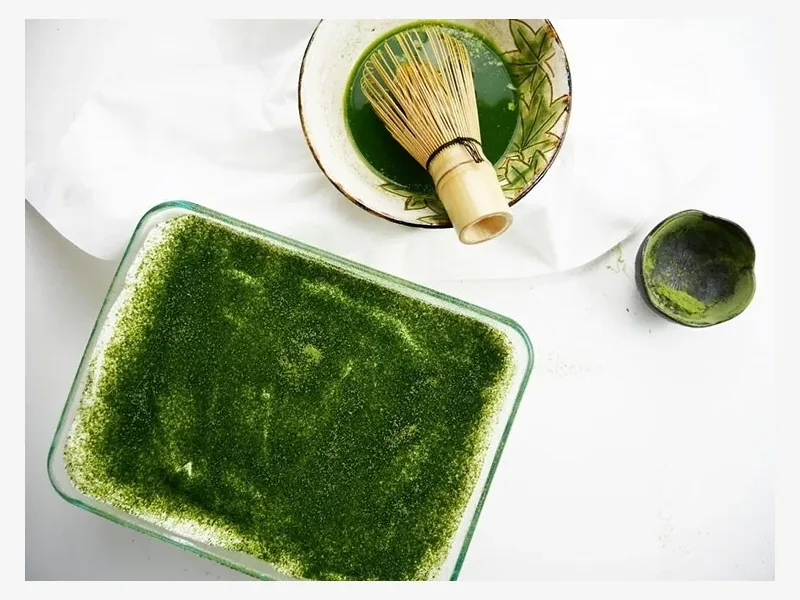
The best matcha powder recipes for a café test menu are portioned for existing equipment. These ten formats span drinks, bakery, breakfast, and frozen service. They are untested starting formulas; validate allergens, food safety, yield, cost, and local rules before sale.
1. How Can You Pilot a Hot Matcha Latte?
You can pilot a hot matcha latte by whisking a small matcha concentrate and adding steamed milk. For one roughly 220 g drink in a 240 ml cup, use 2 g matcha, 30 g water, 180 g milk, and 8 g simple syrup made 1:1 with sugar and water by weight. Sift the powder, whisk it with water, stir in syrup, then add milk. AdoroHu’s latte application range offers a relevant sample starting point.
Which variables should the beverage team test?
Keep the cup size and process fixed while comparing:
- 1.5 g, 2 g, and 2.5 g matcha doses
- dairy milk against the main plant-based milk
- 4 g, 8 g, and 12 g syrup
- milk texture with the normal steam program
Prepare each version in random order and score tea intensity, bitterness, color, sweetness, texture, and finish. Record the exact milk product because protein, fat, and added ingredients can change foam and flavor. Time preparation during a short service simulation after the sensory screen.
| Pilot control | Starting point | Trial question |
|---|---|---|
| Matcha | 2 g | Does tea remain clear through milk? |
| Water | 30 g | Does concentrate whisk smoothly? |
| Milk | 180 g | Does normal steaming suit the recipe? |
| Syrup | 8 g | Is sweetness balanced? |
This small matrix separates powder strength from milk and sweetness effects.
Key Takeaway: Approve the latte only after its recipe and bar workflow both repeat.
2. How Can You Build an Iced Matcha Latte?
Build an iced matcha latte around dilution rather than copying the hot formula. For one 350 ml pilot drink, start with 2.5 g matcha, 35 g water, 12 g simple syrup, 180 g cold milk, and 100 g ice. Whisk matcha with water and syrup, fill the cup with weighed ice and milk, add the concentrate, then stir before evaluation.
What should an iced-drink trial measure?
Assess the drink at service and after a realistic customer interval:
- first-sip and later-sip tea intensity
- visible settling before and after stirring
- sweetness as ice melts
- color with each menu milk
- preparation time and cup consistency
Run trials with normal ice and weighed ice from the same batch. If the later sip becomes weak, adjust one component at a time. Keep a finished-cup weight target so staff do not compensate by eye.
| Variable | Starting point | Controlled alternative |
|---|---|---|
| Matcha | 2.5 g | 2 g or 3 g |
| Milk | 180 g | 160 g or 200 g |
| Syrup | 12 g | 8 g or 16 g |
| Ice | 100 g | Fixed house fill weight |
The later-sip result often determines whether the launch formula holds up.
Key Takeaway: Weigh ice during development and judge the drink after partial dilution.
3. How Can You Test a Strawberry Matcha Soda?
Test a strawberry matcha soda as a layered, non-dairy menu option with controlled acidity. For one 350 ml pilot, use 2 g matcha, 30 g water, 35 g strawberry puree, 12 g simple syrup, 140 g chilled sparkling water, and 90 g ice. Mix puree and syrup in the cup, add ice and sparkling water, then top with whisked matcha.
Which changes deserve separate trials?
Keep fruit specification consistent while comparing:
- puree with measured soluble solids or a fixed recipe
- 1.5 g, 2 g, and 2.5 g matcha
- lower and higher syrup levels
- stirred service against a layered presentation
Taste the complete acidic drink rather than the matcha layer alone. Qualified staff should set preparation, handling, and service limits for the chosen puree.
| Component | Pilot amount | Control point |
|---|---|---|
| Matcha | 2 g | Sift and whisk before assembly |
| Strawberry puree | 35 g | Use one documented specification |
| Sparkling water | 140 g | Pour gently to retain carbonation |
| Ice | 90 g | Hold weight constant |
Fruit standardization matters as much as the matcha dose in this drink.
Key Takeaway: Control fruit and carbonation before deciding whether matcha needs adjustment.
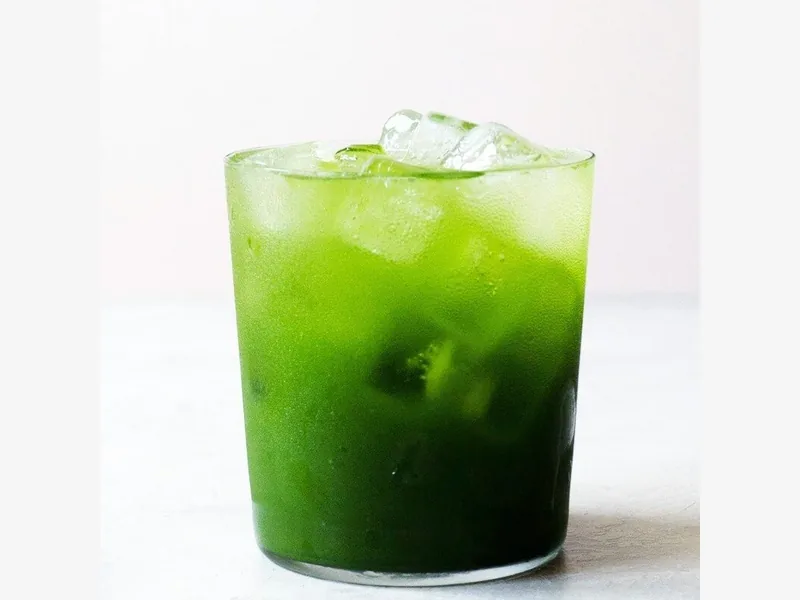
4. How Can You Trial a Banana Matcha Smoothie?
Trial a banana matcha smoothie with a short ingredient list and a fixed blender program. For one 400 ml pilot, start with 2 g matcha, 120 g frozen banana, 180 g unsweetened oat milk, 60 g ice, and 8 g syrup. Add liquid first, then sifted matcha, banana, ice, and syrup before blending to a uniform texture.
What makes a smoothie repeatable?
Record variables that staff often estimate:
- banana weight and ripeness specification
- frozen versus fresh fruit
- ice weight and cube size
- blender program and jar loading order
- served yield and residual product in the jar
Compare 1.5 g, 2 g, and 2.5 g matcha while leaving fruit fixed. Purchasing should define the banana specification rather than correcting batches with unrecorded syrup. Calculate cost from served yield, not total ingredients placed in the jar.
| Control | Starting point | Observation |
|---|---|---|
| Banana | 120 g | Sweetness and body |
| Oat milk | 180 g | Pourability |
| Matcha | 2 g | Tea clarity through fruit |
| Blend program | One fixed cycle | Texture and jar loss |
Yield records show whether the recipe fills the promised cup consistently.
Key Takeaway: Weigh fruit and ice, then lock a blender program and served yield.
5. How Can You Make a Matcha Yogurt Cup?
Make a matcha yogurt cup by dispersing powder in a small sweetened liquid before folding it into yogurt. For one roughly 225 g pilot portion, use 180 g plain yogurt, 1.5 g matcha, 8 g warm water, 15 g honey, and 20 g granola packed separately. Whisk matcha, water, and honey smooth, fold through yogurt, portion, and add granola only at service.
Which cup variables should you compare?
Test the components that change balance and appearance:
- strained versus standard yogurt
- 1 g, 1.5 g, and 2 g matcha
- honey against simple syrup at matched sweetness
- fully blended versus a controlled swirl
- granola packed separately versus added at service
Use one yogurt lot during comparison because acidity, solids, and sweetness vary by product. Evaluate the cup cold, at the intended portion size, with the topping included. Your food-safety lead should establish cold-chain and holding controls before any commercial trial.
For U.S. café pilots, the FDA Food Code provides a model reference; apply the rules adopted by the relevant jurisdiction.
| Component | Pilot amount | Role |
|---|---|---|
| Yogurt | 180 g | Base and acidity |
| Matcha | 1.5 g | Tea flavor and color |
| Honey | 15 g | Sweetness and dispersion |
| Granola | 20 g | Texture at service |
| Total portion | 224.5 g | Yogurt mix plus topping |
The topping can change sweetness and perceived tea intensity in every spoonful.
Key Takeaway: Approve the assembled cold cup, not the matcha yogurt by itself.
6. How Can You Pilot Matcha White Chocolate Ganache?
Pilot matcha white chocolate ganache as a filling or topping with a roughly 473 g batch before process loss. Use 300 g white chocolate, 150 g cream, 8 g matcha, and 15 g unsalted butter. Sift matcha into warm cream, pour over chocolate, mix smooth, then add butter and cool under your validated handling plan.
What should the pastry team adjust first?
Change one factor per batch:
- 6 g, 8 g, and 10 g matcha
- one documented chocolate specification
- cream-to-chocolate ratio for piping or glazing
- hand blending against an immersion blender
- evaluation at filling and serving temperatures
White chocolate contributes sugar, cocoa butter, milk solids, and vanilla notes, so switching products can alter texture and tea flavor. Measure batch yield after transferring the ganache. If the filling seems too firm or soft, adjust the phase ratio before changing matcha solely to correct appearance.
| Ingredient | Pilot amount | Trial function |
|---|---|---|
| White chocolate | 300 g | Structure and sweetness |
| Cream | 150 g | Fluid phase |
| Matcha | 8 g | Flavor and color |
| Butter | 15 g | Finish and texture |
Texture and matcha intensity need separate decisions in this formula.
Key Takeaway: Fix the chocolate specification before refining matcha dose or texture.
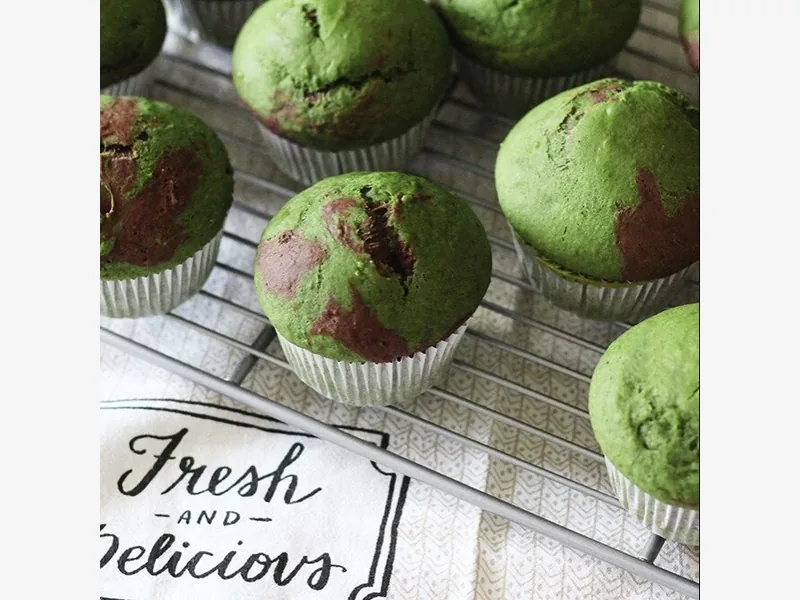
7. How Can You Test Matcha White Chocolate Cookies?
Test matcha white chocolate cookies with a weighed dough and fixed piece size. For about 16 pilot cookies, use 180 g flour, 8 g matcha, 2 g baking soda, 2 g salt, 115 g butter, 100 g brown sugar, 50 g white sugar, 50 g beaten egg, and 100 g white chocolate pieces. Cream butter and sugars, add egg, fold in sifted dry ingredients and chocolate, portion at 38 g, chill, then bake under a recorded oven profile.
Which cookie variables affect the decision?
Compare controlled changes:
- 6 g, 8 g, and 10 g matcha
- 30 g versus 38 g dough portions
- two documented chill times
- chocolate piece size and distribution
- center and edge color after cooling
The formula is an untested pilot, so set bake conditions from your equipment and product-safety process. Evaluate spread, thickness, crumb, tea flavor, sweetness, and next-day texture. AdoroHu’s baking application page can help frame the powder sample request.
| Control | Starting point | Record |
|---|---|---|
| Matcha | 8 g | Flavor after cooling |
| Portion | 38 g | Spread and yield |
| Chocolate | 100 g | Sweetness and distribution |
| Chill | Fixed pilot time | Dough handling |
Cooling and next-day checks prevent approval based on a warm cookie alone.
Key Takeaway: Lock portion and oven conditions before comparing powder doses.
8. How Can You Develop a Matcha Muffin Pilot?
Develop a matcha muffin pilot with a batter that gives purchasing and production a clear yield. For 12 pilot muffins, start with 230 g flour, 12 g matcha, 10 g baking powder, 3 g salt, 140 g sugar, 100 g beaten egg, 180 g milk, 100 g neutral oil, and 5 g vanilla. These ingredients total 780 g before process loss. Combine dry and wet phases separately, fold just until uniform, deposit 65 g per cup, and bake using a documented profile.
How should you compare muffin batches?
Hold these controls constant:
- flour, milk, and oil lots
- batter mixing time and rest
- deposit weight and pan position
- bake endpoint and cooling interval
- same-day and next-day scoring
Trial 9 g, 12 g, and 15 g matcha without changing sugar in the same round. Record batter yield, deposits filled, leftover batter, baked weight, dome, crumb color, flavor, and texture. If a dose changes dryness or volume, confirm the observation in a repeat batch before reformulating liquids.
| Variable | Starting point | Release check |
|---|---|---|
| Matcha | 12 g | Flavor and crumb color |
| Deposit | 65 g | Size consistency |
| Batch total | 780 g | 12 theoretical 65 g deposits |
| Review | Cooled and next day | Texture and aroma |
Repeat-batch evidence distinguishes a formula effect from mixing variation.
Key Takeaway: Use fixed deposits and two review points before releasing a muffin formula.
9. How Can You Trial Matcha Shortbread?
Trial matcha shortbread as a low-moisture bakery format with few competing flavors. For about 24 pilot pieces, use 250 g flour, 10 g matcha, 3 g salt, 180 g unsalted butter, 90 g powdered sugar, and 5 g vanilla. Cream butter and sugar briefly, mix in sifted dry ingredients, form a consistent slab or log, chill, cut equal pieces, and bake under a recorded profile.
What should you watch in shortbread?
Focus the test on production behavior:
- dough cohesion at mixing and cutting
- piece weight and thickness
- edge browning versus center color
- breakage after cooling and packing
- flavor and crispness on the next day
Compare 8 g, 10 g, and 12 g matcha with identical piece dimensions. Powdered sugar and butter specifications should remain fixed because both affect texture and perceived bitterness. Record saleable yield after cooling rather than counting pieces before baking.
| Control | Starting point | Business use |
|---|---|---|
| Matcha | 10 g | Dose comparison |
| Piece size | One fixed weight | Bake consistency |
| Thickness | One fixed gauge | Browning control |
| Saleable yield | Count after cooling | Unit cost |
Breakage and uneven browning can erase savings from a lower ingredient cost.
Key Takeaway: Calculate shortbread cost from saleable cooled pieces, not raw dough yield.
10. How Can You Pilot a Matcha Soft-Serve Base?
Pilot a matcha soft-serve base only through equipment and food-safety procedures approved for your operation. For a one-kilogram bench mix, start with 900 g pasteurized commercial vanilla soft-serve base, 12 g matcha, and 88 g of the same base reserved for dispersion. Whisk matcha into the reserved portion, blend it back into the remaining base, then process according to the base and machine instructions. The quality team must approve matcha for a frozen dessert with no later kill step or validate a suitable treatment after powder addition.
Which frozen-dessert checks matter?
Treat this as an equipment trial rather than a finished recipe:
- 8 g, 12 g, and 16 g matcha per kilogram
- one base lot and one machine setting
- mix color before freezing
- draw texture and served portion weight
- flavor immediately at serving temperature
- machine recovery during consecutive portions
Pasteurized base does not control pathogens introduced when powder is added. Your qualified team must also set time, temperature, cleaning, allergen, and discard controls. Record mix input, served output, and machine loss so purchasing can calculate cost from usable portions.
| Control | Starting point | Approval evidence |
|---|---|---|
| Soft-serve base | 988 g total | One product and lot |
| Matcha | 12 g | Flavor at frozen temperature |
| Portion | Defined by operation | Weight consistency |
| Yield | Measured output | Usable cost |
For samples or formula support, review AdoroHu’s custom development service and contact AdoroHu today.
Key Takeaway: Approve frozen matcha through machine performance, safe procedures, and usable yield.
FAQ
Q1: Can I scale these matcha powder recipes directly?
No. They are untested pilot formulas. Confirm ratios, process, yield, safety, allergens, packaging, and sensory performance in your equipment before increasing batch size.
Q2: What is the best matcha dose for a café recipe?
The best dose is the lowest level that meets your finished-product brief consistently. Use a small dose ladder because milk, fruit, fat, sugar, heat, and freezing change perceived intensity.
Q3: How do I know which recipe should launch first?
Choose the item with customer fit, simple execution, available equipment, acceptable cost, and repeatable results. A short test produces cleaner feedback than launching every concept together.
Q4: Can I substitute plant-based milk in every drink?
You can trial it, but substitution changes sweetness, body, foam, color, and tea intensity. Treat each milk as a separate formula and record its exact product specification.
Q5: What should I send when requesting matcha samples?
Send the intended recipes, target matcha doses, expected volume, destination market, pack preference, and required documents. Suppliers can then recommend samples suited to drinks, bakery products, or frozen desserts.