
A matcha recall plan works when it links every lot to customers, gives staff clear stop-shipment authority, and tests each response step. Without that preparation, one uncertain lot can trigger a wider hold, missed accounts, and unnecessary disposal.
Your matcha recall plan must connect supplier records, repacking data, inventory controls, customer distribution, and decision ownership. Buyers evaluating premium matcha supply should settle those connections before the first commercial shipment, not after a complaint arrives.
A workable matcha recall plan traces one supplier lot through every finished SKU and customer shipment. It assigns authority, communication steps, effectiveness checks, disposition records, and release criteria. The plan should also be tested through documented mock recalls.
In short:
Key points:
- Define exactly which legal entity and facility own each recall task.
- Preserve lot lineage through importing, storage, repacking, and distribution.
- Test the plan, reconcile quantities, and document corrective action before returning product to supply.
When Does a Matcha Recall Plan Apply to Your Business?
A matcha recall plan applies operationally whenever your business may need to remove affected matcha, while the specific federal written-plan requirement depends on facility and hazard status. Under 21 CFR 117.139, a covered facility must establish a written recall plan for food with a hazard requiring a preventive control.
That scope does not make every importer subject to the same provision. An importer may also have separate duties under other programs, including FSVP, but those duties should be assessed independently. Contract ownership, consignee records, and warehouse controls determine whether a brand can act quickly.
Start by mapping the legal entities and physical handlers connected to each SKU:
- importer of record and brand owner
- foreign supplier and contract packer
- U.S. warehouse or third-party logistics provider
- distributors, retailers, foodservice accounts, and manufacturers
- quality, regulatory, legal, insurance, and executive decision owners
A regulatory applicability review tells you which written requirements govern the operation. An operational recall plan tells the team how to control product across the actual supply chain.
Key Takeaway: Confirm the legal basis, then document the wider operational network that can hold, trace, notify, and account for product.
What Supplier Records Should Support a Matcha Recall Plan?
A matcha recall plan should link each received lot to supplier identity, product specification, shipping documents, and release evidence. That file gives the incident team a defensible starting point without assuming every shipment from the supplier is affected.
Ask for records in a consistent package. Useful items include the purchase order, commercial invoice, packing list, bill of lading, lot-specific Certificate of Analysis, product specification, and any microbiological or pesticide-residue results required by the buyer's program. Record who reviewed each document and when the lot was released.
Use the matcha supplier guide to align sourcing questions with the recall file. Still, avoid treating a certificate or audit as proof that recalls cannot occur. A document reduces uncertainty only when it matches the physical lot and the approved specification.
Choose event-level lineage over broad date-range searches. Event-level records take more setup, but they prevent a single suspect delivery from freezing months of unrelated stock. Broad records are cheaper until an incident makes the larger hold expensive.
| Supplier record | Match key | Recall use |
|---|---|---|
| Purchase and shipping file | Purchase order, shipment, supplier lot | Confirms what entered the chain |
| Lot release file | Supplier lot, COA, specification version | Shows the basis for release |
| Receiving record | Receipt date, pallet, warehouse location | Locates remaining imported stock |
| Change and deviation log | Date, lot range, approved disposition | Tests whether the scope must expand |
Key Takeaway: Make every supplier document searchable by the same supplier lot identifier used at receiving.
How Should Lot Coding Survive Matcha Repacking and Private Labeling?
A matcha recall plan should preserve the parent supplier lot through every repack, blend, relabel, and finished-product run. The finished code may change, but the genealogy must still connect backward to inputs and forward to customers.
For example, available programs may move matcha from 10 kg or 20 kg cartons into 30 g to 500 g pouches, 30 g to 100 g tins, or 1 g to 3 g sachets. Each conversion creates more units and more code relationships. If those relationships are missing, a narrow upstream issue can force a hold across many finished SKUs.
At minimum, capture these links:
- supplier lot to receiving record and warehouse location
- supplier lot to production or repacking order
- packaging component lots and label version used on the run
- finished lot, quantity produced, scrap, samples, and retained units
- finished lot to shipment and consignee
The same logic applies to co-packer transfers and rework. If two parent lots enter one batch, both parents must remain discoverable. If one parent lot is split across several brands, each downstream code must remain visible.
Key Takeaway: Never let a new retail code break the chain between imported matcha and the final customer shipment.
How Should a Matcha Recall Plan Control Downstream Distribution?
A matcha recall plan should maintain a current consignee list for every finished lot, including quantities, ship dates, and delivery destinations. Sales totals alone cannot show which account received the affected units or whether stock moved onward.
The distribution file should distinguish direct accounts from secondary channels. Capture the distributor, retailer, food manufacturer, marketplace fulfillment center, and internal transfer location where applicable. Also retain returns, samples, donations, and damaged shipments because those units still affect mass balance.
Use the matcha import compliance guide to coordinate border and logistics records with domestic traceability. The useful bridge is a common lot key across customs files, warehouse receipts, and customer invoices.
Start with one finished lot and check whether the system can generate an account list without manual searches across several inboxes. If it cannot, define a single export template before launch.
Key Takeaway: Distribution records must show where each lot went, how much moved, and which accounts may have redistributed it.
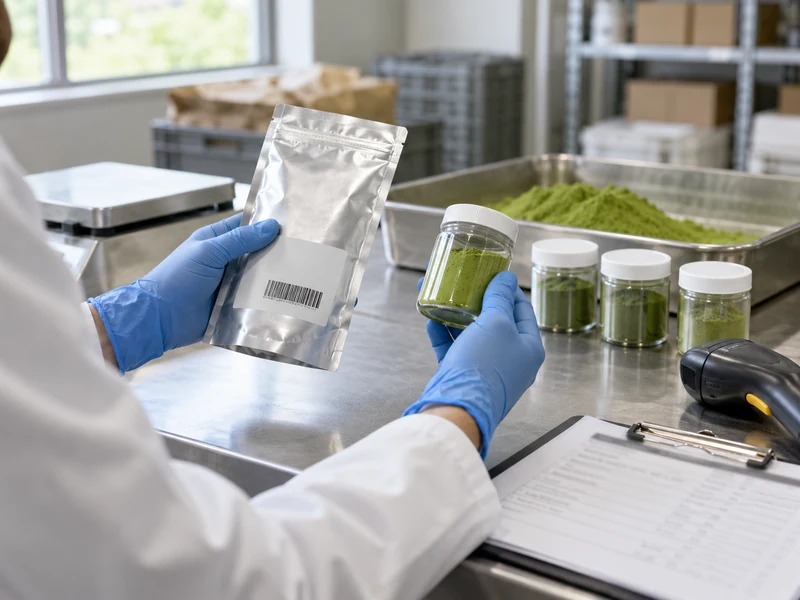
What Should Happen During Matcha Incident Triage and Product Hold?
A matcha recall plan should begin with incident triage, a documented scope hypothesis, and an immediate hold on potentially affected stock. The hold should block physical movement and system allocation while the team investigates complaints, test results, supplier notices, or label errors.
Use a decision log rather than waiting for perfect information. Record the trigger, known lots, possible hazards, affected markets, evidence gaps, and the person who can expand or narrow the hold. Final FDA recall classification should not be self-assigned by the company.
| Triage question | Immediate record | Buyer consequence |
|---|---|---|
| What triggered the review? | Complaint, result, notice, or deviation | Establishes why the hold began |
| Which lots may connect? | Parent and finished lot map | Prevents arbitrary scope decisions |
| Where is product now? | On hand, in transit, delivered, returned | Directs hold notices and retrieval |
| What evidence is missing? | Test, label, shipment, or supplier data | Sets the next investigation action |
A cautious hold can be broader than the eventual recall scope. That trade-off protects customers while facts develop, but the team should revisit scope as evidence arrives. Leaving a broad hold unchanged without review can create avoidable shortages and disposal.
Key Takeaway: Freeze movement first, document the working scope, and revise that scope only against recorded evidence.
Who Owns Matcha Recall Communications and Responsibilities?
A matcha recall plan should name one recall coordinator, one authorized decision owner, and backups for every critical communication channel. It should also separate internal release authority from communications with FDA, suppliers, customers, insurers, and service providers.
FDA's product recall guidance explains the agency's voluntary recall framework. Under 21 CFR 7.49, a recall communication should identify the product, size, lot, reason or hazard, required action, and response method. It should avoid promotional content that distracts from the recall message.
Build approved templates, but leave incident facts as controlled fields. A customer notice should state what to stop, segregate, return, destroy, or report. The response channel needs an owner who logs confirmations and unanswered accounts.
Assign responsibilities before an incident:
- quality defines the technical scope and evidence needs
- regulatory coordinates agency information and required records
- operations executes inventory blocks, retrieval, and disposition
- sales or account teams contact direct customers using approved language
- leadership authorizes major scope, financial, and public decisions
Key Takeaway: Preassign authority and templates so every recipient gets consistent product, lot, hazard, and action information.
How Do Effectiveness Checks Prove a Matcha Recall Is Working?
Effectiveness checks prove whether matcha recall communications reached the intended accounts and produced the requested action. Sending an email is an activity; documented receipt, stock status, and response are evidence.
Under 21 CFR 7.53, FDA may request periodic recall status reports and determine their frequency. Useful report fields include accounts notified, responses received, nonresponders, quantities returned or corrected, quantities accounted for, effectiveness-check results, and the estimated completion timeframe. Use the schedule FDA specifies for the case rather than an assumed reporting interval.
Segment checks by account risk and distribution depth. A direct manufacturer holding sealed cases may need a different follow-up path than a distributor that resold units to many locations. Escalate nonresponses through a second channel and document each attempt.
Track at least these measures:
- eligible accounts and accounts contacted
- confirmed receipt and completed action
- nonresponders and escalation status
- affected quantity held, returned, corrected, destroyed, or outstanding
- secondary distribution lists received
Key Takeaway: Measure confirmed action and unresolved exposure, not the number of messages sent.

How Should a Matcha Recall Plan Reconcile and Dispose of Product?
A matcha recall plan should reconcile affected quantities from receipt through final disposition and preserve evidence for every difference. The mass balance should include inventory on hand, shipments, work in process, samples, waste, returns, corrections, destruction, and units still outstanding.
Use a single unit of measure, then document conversions between bulk kilograms, cases, tins, pouches, or sachets. Otherwise, a report can appear complete while comparing unlike quantities. A hypothetical example shows the method:
| Hypothetical quantity path | Kilogram equivalent | Status |
|---|---|---|
| Affected finished quantity | 1,000 | Starting scope |
| Quarantined on hand | 260 | Controlled |
| Returned from accounts | 410 | Controlled |
| Verified final consumption | 250 | Documented as consumed |
| Outstanding | 80 | Follow-up required |
A sale or onward shipment does not prove consumption. Keep those units traceable and under follow-up until consignee records establish their location or final disposition. Count returned stock only once when it moves into quarantine.
Choose witnessed destruction or another verifiable disposition when product cannot safely return to commerce. Avoid vague entries such as "handled" or "resolved." They make reconciliation impossible and can hide duplicate counting.
Under 21 CFR 7.55, FDA determines termination of an FDA recall and provides written notification. An internal release note may close company tasks, but it is not equivalent to FDA termination when the agency is involved.
Key Takeaway: Close the quantity equation with dated evidence, and keep regulatory closure separate from internal operational closure.
How Should You Test a Matcha Recall Plan With Mock Recalls?
A matcha recall plan should be tested with a documented mock recall that traces one plausible lot backward and forward. The exercise should test people, data, decisions, and communication drafts, not only whether a spreadsheet opens.
Set your own realistic retrieval and accounting targets based on distribution complexity. A two-hour target is an internal performance goal, not a universal FDA requirement. A short target can expose weak systems, but an impossible target teaches teams to record optimistic results.
A useful exercise includes:
- an unannounced trigger with a named starting lot
- supplier-document and receiving-record retrieval
- parent-to-finished lot genealogy
- consignee and secondary-distribution extraction
- quantity reconciliation and exception review
- draft notices, approval routing, and backup contacts
Record the start time, milestones, missing fields, unresolved quantities, and corrective-action owner. Repeat the failed portion after remediation instead of waiting for the next annual exercise.
Key Takeaway: Treat a mock recall as a controlled failure test with evidence, owners, deadlines, and retesting.
When Can Matcha Return to Supply After a Recall or Hold?
Matcha can return to supply only after the company defines release criteria, resolves the initiating issue, and records approval for the specific lots involved. A general statement that the issue is closed does not release quarantined inventory.
The corrective and preventive action record should connect root cause, correction, preventive action, verification, and owner. Possible evidence includes revised specifications, supplier action, label approval, sanitation records, training, system controls, or targeted testing. The evidence must match the actual cause.
Use this release sequence:
- confirm which lots remain under hold
- approve corrective action and verification evidence
- document disposition for affected product
- obtain required internal and regulatory closure
- authorize system and physical release by lot
- monitor the next relevant receipts or production runs
The practical choice is to release by verified lot rather than restart every SKU at once. Lot-by-lot release adds administrative work, but it limits the cost of a weak corrective action if the problem recurs.
Key Takeaway: Resume supply through documented lot-specific release, then verify that the corrective action works under normal operations.

FAQ
- Does every importer need a written matcha recall plan under 21 CFR 117.139?
- No. Section 117.139 applies to a covered facility when a food has a hazard requiring a preventive control. Importers should assess their own roles and other applicable requirements, while maintaining operational recall readiness.
- Should a company assign its own final FDA recall classification?
- No. A company can assess risk and propose actions, but it should not present an internal assessment as FDA's final recall classification.
- What is the minimum lot information needed for private-label matcha?
- Record the supplier lot, receiving record, repacking or production order, packaging and label version, finished lot, quantities, and downstream shipments.
- Is a two-hour mock recall a universal FDA requirement?
- No. A company may set a two-hour target for its exercise, but it should describe that target as an internal performance goal rather than a universal FDA requirement.
- How often must recall status reports be sent to FDA?
- There is no single interval stated here for every recall. Under 21 CFR 7.53, FDA may request periodic reports and determine the reporting frequency for the case.
- Can quarantined matcha return to sale after an internal review closes?
- Only when documented release criteria are met for the specific lot. If FDA is involved, internal closure should not be described as FDA recall termination.
Conclusion
A useful matcha recall plan links lot records to defined holds, customer notices, and verified dispositions. Importers and private-label brands should agree on those controls with suppliers and service partners before launch. To discuss product formats, traceability records, and supply coordination, contact AdoroHu Matcha.