
Matcha scones become repeatable when a bakery controls powder dose, water correction, dough temperature, mixing endpoint and cut weight as one system. A home recipe may produce a good first tray, but scaled batches expose dry pockets, warm fat, uneven lift and portion loss. Product teams need a measured dough trial rather than a larger mixing bowl.
This guide turns matcha scones into a bakery development task. It focuses on a chemically leavened, low-moisture dough, so the controls differ from bread fermentation, laminated croissants and pourable waffle batter. Teams still choosing a starting powder can review our matcha for baking application before setting up the trial.
Build the first matcha scone pilot around a plain control and a short matcha dose ladder. Correct water from measured dough behaviour, keep the fat and dough cold, and record saleable yield after cooling. Approve the formula only when colour, lift, crumb and portion weight hold across repeat batches.
In short: scale matcha scones through controlled flour-basis trials, measured water correction, cold dough handling and saleable-yield checks.
Key points:
- Express matcha and liquids against flour weight so scaling does not change the formula logic.
- Add water in controlled corrections because matcha, flour, inclusions and plant-based substitutions change dough demand.
- Measure baked dimensions, cooled crumb and saleable portion yield; tray appearance alone misses commercial loss.
How should a bakery structure the first matcha scone formulation trial?
A bakery should start matcha scone formulation with one control dough and a limited set of matcha variants. Keep flour, fat, sweetener, leavening, liquid, cut weight and bake profile fixed. Change one main variable at a time, then compare the cooled pieces blind.
Use baker's percentages for the working sheet. Flour is 100%, while matcha, fat, liquid, sugar and leavening are recorded against flour weight. This makes a 2 kg bench batch and a 20 kg pilot directly comparable. It also shows whether a change came from the formula or from inconsistent weighing.
| Trial record | What to hold or measure | Buyer decision |
|---|---|---|
| Formula basis | Flour at 100%; every other ingredient by flour weight | Compare batches without hidden scale drift |
| Process | Ingredient temperature, mixer, time, rest, cut geometry, oven | Separate formula effects from process effects |
| Output | Raw piece weight, baked weight, dimensions, defects, saleable count | Convert sensory quality into commercial yield |
A useful first screen has enough contrast to reveal direction, but few enough samples for careful measurement. Avoid changing matcha dose, milk type and inclusion level in the same round. You will learn which sample won, but not why.
Key Takeaway: Use a controlled flour-basis trial, not a scaled consumer recipe, to establish the matcha scone baseline.
Which matcha powder should product developers screen for scones?
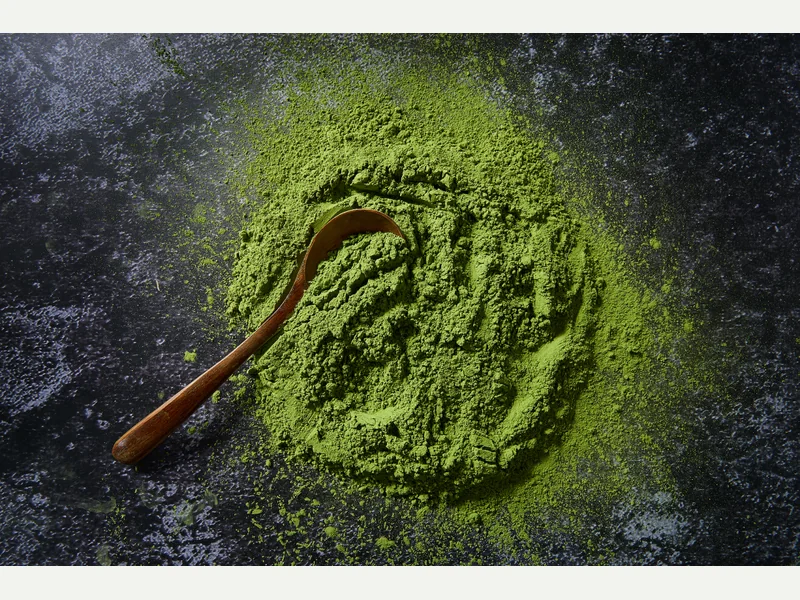
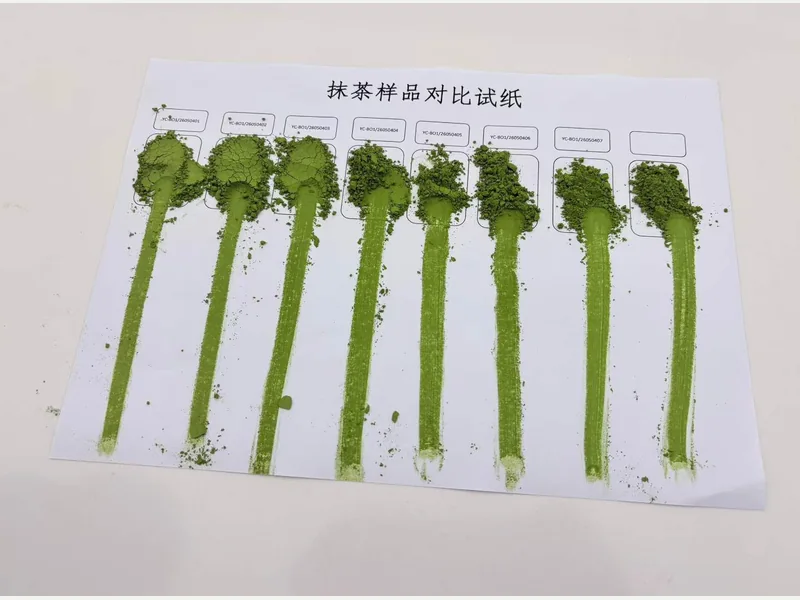
Product developers should screen matcha powders that can deliver colour and flavour after baking without forcing an uneconomic dose. AdoroHu's EU Standard series runs from E-1 to E-7, while the Organic series runs from O-1 to O-6. Within each tier, higher numbers are positioned with deeper colour, more sweetness and less bitterness. These are powder-grade descriptions, not proof of performance in a finished scone.
For a bakery pilot, choose two or three candidates spanning the likely cost and sensory range. Bake them in the same plain formula before adding white chocolate, fruit or glaze. Sweet inclusions can hide bitterness and make a weak base powder appear acceptable.
Start with culinary and premium candidates, then move upward only when the cooled scone misses its colour or flavour target. Starting with the most delicate grade can raise ingredient cost while butter, sugar and oven heat obscure the differences you paid for. The culinary matcha product page provides a concrete sample route for this first screen.
The culinary baking selection guide provides useful context, but the approved powder still needs the bakery's own formula and oven trial.
Key Takeaway: Approve matcha in the actual plain scone base before inclusions and glaze make the comparison harder to read.
How does matcha addition change scone dough and baked quality?
Matcha addition can change water demand, dough handling, baked colour and bitterness, so it should be treated as a functional dry ingredient. A 2023 scone study used 0%, 2%, 4%, 6% and 8% pine-leaf powder and measured variables including specific gravity and baking loss. Pine leaf is not matcha, and those percentages are not matcha targets. The study is useful because it shows the right comparison design for a powdered plant ingredient in scone dough.
A separate matcha shortbread study compared 2, 4 and 6 g of matcha per 100 g flour. The dough was rested at 4°C, and the biscuits were baked at 180°C for 15 minutes. Appearance, colour and bitterness strongly influenced acceptance. Shortbread is not chemically leavened scone dough, so the numbers cannot set a scone formula. They do support measuring the baked result at multiple doses rather than selecting powder from raw colour.
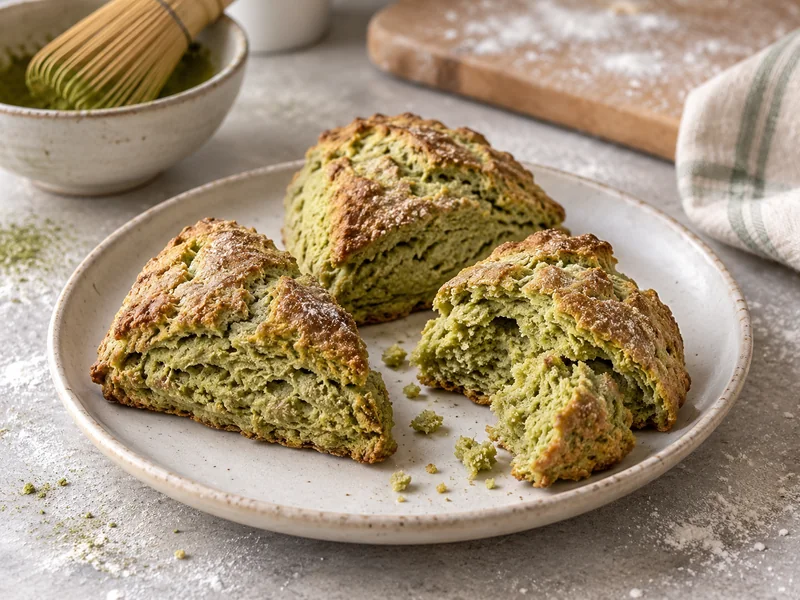
Record the matcha lot, flour lot and actual dose before mixing. After baking, compare crust and crumb separately. Surface browning can make two interiors look similar from above while the cut crumb shows clear green and bitterness differences.
Key Takeaway: Use published addition levels as method context only; build the commercial dose from controlled matcha scone trials.
How should water correction work in commercial matcha scone dough?
Water correction should be a recorded, staged adjustment to a defined dough endpoint. Hold back part of the formula liquid, mix the dry ingredients and cold fat consistently, then add most of the liquid. Add the remainder only when the dough fails the agreed compression and cohesion checks.
Matcha scone dough should form a coherent mass without becoming glossy, elastic or smear-prone. Loose flour at the bottom of the bowl can indicate low hydration or poor distribution. A wet, sticky mass may come from excess liquid, warm fat, long mixing or a flour change. Adding flour at the bench hides the original error and changes portion yield.
| Dough observation | Likely questions | Controlled response |
|---|---|---|
| Dry seams and loose powder | Was liquid weighed correctly? Did matcha disperse evenly? | Add the reserved liquid in small, documented steps |
| Sticky surface and smearing | Is the dough warm? Was liquid added too quickly? | Check temperature before changing the formula |
| Firm dough with weak lift | Was it overworked? Is the leavening system current and evenly mixed? | Review mixing and leavening distribution before adding water |
| Batch-to-batch drift | Did flour, matcha, inclusion moisture or room conditions change? | Compare lots and correction amount on the batch record |
Reject unrecorded splash additions during scale-up. They may rescue one bowl, but they destroy the evidence needed to set a repeatable liquid range and forecast yield.
Key Takeaway: Define the dough endpoint first, then permit only measured water corrections tied to that endpoint.
Why do cold ingredients and limited mixing matter for matcha scones?
Cold ingredients and limited mixing protect the intended crumb and make shaping more predictable. Warm fat smears through the dough instead of remaining as discrete regions. Extended mixing also develops more structure and raises friction heat, which can make the baked scone tighter.
Set a dough-temperature check at mixer discharge rather than relying on the word “cold.” Record flour, fat and liquid temperatures during development, then track the final dough. The bakery can adjust chilled ingredients, batch size or mixing time after it knows where heat enters the process.
Use a visual and tactile mixing endpoint that operators can repeat:
- Dry ingredients show no green streaks or leavening pockets.
- Cold fat remains visible at the size defined by the product brief.
- Added liquid is absorbed with no flour bed under the dough.
- The mass holds when compressed but has not become smooth and elastic.
This is where matcha scones differ from bread. More mixing is not a route to better gas retention; it can erase the short, tender bite the product needs.
Key Takeaway: Control discharge temperature and stop mixing at a defined cohesive endpoint before the dough becomes warm and elastic.
How can a bakery control lift, spread and crumb in matcha scones?
A bakery can control matcha scone lift by measuring raw geometry, leavening distribution, dough temperature and oven conditions together. Height alone is incomplete. A tall piece with a tunneled or gummy centre is not a successful result.
Cut test pieces to one thickness and weight. Record spacing and tray position, then measure height, width and bake loss after cooling. Photograph the cut crumb under the same light. If the centre is compressed, review water, mixing, piece thickness and bake completion before increasing leavening.
Chemical leavening must also be declared correctly on a U.S. packaged-food label. Under 21 CFR 101.4, individual leavening agents may be listed after the collective term “leavening” under specified conditions. That rule governs ingredient declaration. It does not prescribe a scone formula dose.
| Defect | Check first | Avoid |
|---|---|---|
| Low, dense piece | Dough temperature, mixing, leavening distribution, oven recovery | Adding more leavener before finding the process fault |
| Excess spread | Liquid correction, fat temperature, raw thickness | Bench flour that changes the formula silently |
| Cracked or uneven lift | Cutting pressure, shape consistency, tray loading | Judging only the best pieces on the tray |
| Gummy centre | Piece weight, oven profile, cooled internal structure | Approving from crust colour alone |
Key Takeaway: Diagnose lift with geometry, crumb and process records; do not treat leavening quantity as the only control.
How should matcha scone portion weight and bakery yield be calculated?
Matcha scone yield should be calculated from weighed dough, raw piece weight, baked weight and saleable count. The formula's theoretical number of portions is only the starting point. Bowl residue, bench trim, damaged pieces and underweight portions reduce what the bakery can sell.
Weigh the dough after mixing and before cutting. Track trim returned to the dough separately because repeated reworking can change structure. After baking and cooling, count pieces that meet weight, appearance and crumb criteria. Divide total ingredient and direct packaging cost by saleable pieces, not by theoretical pieces.
The cleanest production target is a narrow raw-piece tolerance with a defined rework rule. If operators compensate for uneven cutting by stretching or compressing pieces, lift and bake time become less predictable.
Key Takeaway: Base unit cost and capacity on saleable cooled pieces, including trim and rejects, rather than planned cut count.
What changes when matcha scones include fruit, chocolate or plant-based ingredients?
Fruit, chocolate and plant-based substitutions create a new matcha scone formula, not a minor flavour variation. Dried fruit affects water movement, chips interrupt cutting, and plant fats change softening behaviour. Alternative milks also alter water, solids and flavour.
Approve the plain base first. Then introduce one inclusion system and repeat the water-correction, cut-weight, lift and cooled-crumb checks. For strawberry matcha scones, document whether the fruit is fresh, frozen, dried or powder; each form brings a different moisture load. For white chocolate matcha scones, compare chip size, distribution and sweetness before reducing matcha bitterness with extra sugar.
Teams exploring broader menu concepts can use the commercial matcha dessert collection for ideation. Each variation still needs its own formula record and allergen review.
Key Takeaway: Treat every inclusion or substitution as a controlled formula revision with fresh hydration, handling and allergen checks.
What should a matcha scone supplier brief contain before scale-up?
A matcha scone supplier brief should connect the powder specification to the bakery's measured product target. State the desired crumb colour, flavour intensity, dose range tested, ingredient restrictions, package format, annual or batch volume assumptions and required documentation.
AdoroHu documents culinary, premium, ceremonial and organic matcha ranges, plus in-house microbiology and physical-chemical laboratories. Those capabilities can support a powder shortlist and specification discussion. They do not prove a finished scone's dose, lift, shelf life or allergen status.
For development support, use the custom formula and private-label service. Send the plain control, coded trial results and failure photos with the brief. A supplier can respond more precisely when “too dull” becomes a measured comparison between named lots and bake conditions.
Key Takeaway: Give the supplier a product target and trial evidence, then validate every recommended powder in the bakery's own process.
FAQ
- What matcha is best for scones?
- Start with culinary and premium candidates that can hold colour and flavour after baking, then approve the final powder in the plain scone formula.
- Why are matcha scones dry?
- Dry scones can result from low liquid, excess bench flour, overbaking, small pieces, flour changes or an unrecorded matcha increase, so review the batch record before adding more liquid.
- Should matcha scone dough be chilled before baking?
- Chilling can help keep fat firm and make handling consistent, but the bakery should define the time and temperature through its own dough and oven trials.
- How do you keep matcha scones green?
- Compare powder grade, dose, oven profile and hold conditions in the cooled crumb because surface browning alone can hide the interior result.
- Can matcha scones be made with plant-based milk and fat?
- Yes, but the substitution changes water, solids, fat behaviour, flavour and allergens, so it needs a separate hydration and handling trial.
- How should a bakery calculate matcha scone yield?
- Weigh mixed dough, raw portions and cooled pieces, then calculate cost and output from saleable pieces after trim, residue and rejects.
Conclusion
Commercial matcha scones need a controlled dough system: flour-basis dosing, measured water correction, cold mixing, defined cut weight and saleable-yield review. Once the plain base repeats across batches, add inclusions one at a time. Share the formula target and trial record through our contact page to discuss an appropriate matcha shortlist.