
Matcha tiramisu becomes repeatable when the team controls matcha allocation, soak pickup, cream weight, and portion yield separately. A tray can taste balanced at the bench yet turn wet, pale, bitter, or difficult to slice when dipping time and layer weights drift.
For a practical first build, prepare one measured matcha soak, dip identical ladyfingers to a target pickup, and alternate them with weighed mascarpone layers. The matcha dessert recipe collection offers broader menu ideas; this guide turns tiramisu into a controlled chilled-dessert trial.
Choose one layer architecture before changing ingredients. Record how much soak each biscuit gains, how much cream enters each layer, and how many saleable portions the chilled tray produces. Keep food-safety limits independent from sensory and slicing results.
In short: A useful matcha tiramisu pilot controls each component by mass and judges the finished tray after the intended chill.
Key points:
- Allocate matcha separately across soak, cream, and surface dusting.
- Measure soak pickup and layer weight instead of relying on dip time alone.
- Set service life to the shorter of an independently established food-safety maximum and the quality limit.
How should a café build its first matcha tiramisu trial?
Build the first matcha tiramisu trial around one fixed tray size, biscuit layout, soak, cream formula, and assembly order. This gives the team a reference before it compares matcha grades, egg routes, or service formats.
Define the reference architecture
- Weigh every ingredient and record supplier lots.
- Count and weigh ladyfingers before soaking.
- Assign a target mass to each biscuit and cream layer.
- Record tray dimensions, layer count, chill conditions, and planned cut grid.
Consumer recipes commonly combine matcha-soaked ladyfingers with mascarpone cream and a dusted surface. For café production, start with that recognizable structure, then choose whether matcha also belongs in the cream. Do not change soak strength, cream sweetness, and layer count in the same comparison.
| Assembly control | Record | Decision supported |
|---|---|---|
| Dry biscuit mass | Total and average per piece | Establishes soak-pickup basis |
| Soaked biscuit mass | Individual or group mass after draining | Checks moisture consistency |
| Cream layer mass | Mass per layer and per tray | Controls ratio and food cost |
| Finished tray mass | Before and after chill | Flags transfer or moisture loss |
| Cut grid | Rows, columns, target portion mass | Connects tray design to saleable yield |
Key Takeaway: Approve one measured tray architecture before opening additional formulation branches.
Should matcha tiramisu use one powder for soak, cream, and dusting?
Matcha tiramisu should treat soak, mascarpone cream, and dusting as three different powder-use environments. Water exposure, fat, sweetness, and surface humidity can reveal different colour, bitterness, and dispersion behaviour from the same matcha.
Screen each use separately
- Compare soak colour and sediment at the intended concentration.
- Fold matched powder doses into the actual cream and inspect streaking.
- Dust equal surfaces and observe wetting, colour, and bitterness through service.
- Keep a single powder as the control before testing split specifications.
AdoroHu's E and O series provide candidates across culinary, premium, and ceremonial positions, but their grade descriptions do not predict tiramisu performance. Start the comparison with relevant culinary matcha samples and the matcha for baking application, then judge each candidate in the actual soak, cream, and finish.
Choose one specification when it passes all three uses and simplifies purchasing. Split the specification only when the sensory or appearance improvement survives a coded trial; otherwise, added stockkeeping and training consume the expected gain.
Key Takeaway: Test one control powder in all three layers before deciding whether a split specification earns its complexity.
How should matcha tiramisu soak pickup be measured?
Measure matcha tiramisu soak pickup as the mass gained by a defined number of ladyfingers after a fixed dip and drain procedure. Dip time alone is incomplete because biscuit density, orientation, soak temperature, operator motion, and drain time can all change absorption.
Build a pickup test
- Weigh dry biscuits individually or as a coded group.
- Dip with the same orientation and motion.
- Drain for a fixed time over the same vessel.
- Reweigh, calculate mass gain, and inspect the centre after chilling.
Use pickup percentage as (soaked mass − dry mass) ÷ dry mass × 100. This is an internal process comparison, not a universal target. Repeat the test across the beginning and end of the batch because settling, temperature drift, and biscuit crumbs can change the soak.
AdoroHu documents several milling systems and ultrasonic screening capability. Those facts support requesting relevant powder samples and specifications, but they do not establish a soak ratio or particle-size target. Validate the shortlisted powder in the chosen biscuit system.
| Soak variable | Keep fixed during first comparison | Failure to watch |
|---|---|---|
| Matcha concentration | Powder and liquid mass | Weak flavour or harsh finish |
| Dip procedure | Depth, orientation, motion, time | Uneven pickup |
| Drain procedure | Position and duration | Excess surface liquid |
| Soak condition | Temperature and remix interval | Batch drift |
Key Takeaway: Control pickup by mass, then use the chilled cross-section to decide whether the biscuit is dry, even, or overloaded.
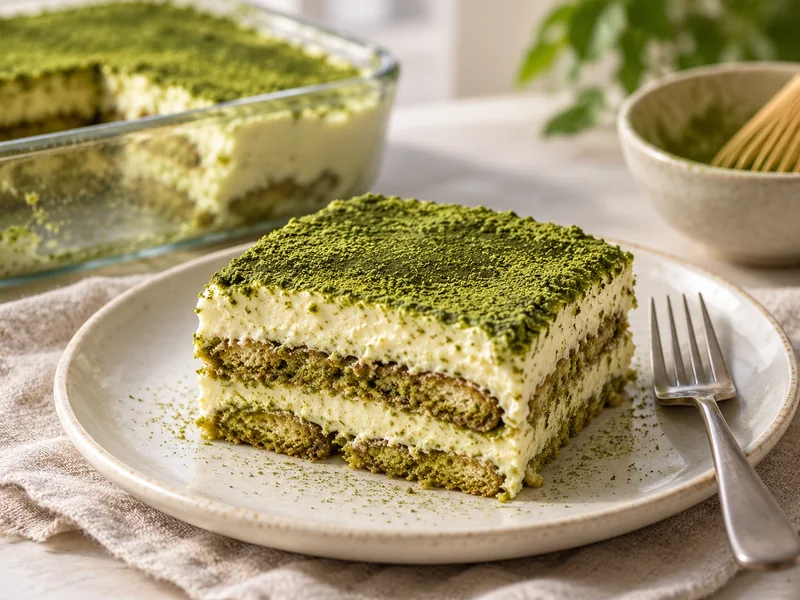
What makes matcha tiramisu mascarpone cream hold its layers?
Matcha tiramisu cream holds its layers when ingredient temperature, mixing endpoint, aeration, and deposited mass remain consistent. Matcha can add visible streaks or dry pockets if it is folded into a cream without a defined dispersion step.
Separate powder dispersion from foam handling
- Sift the matcha and compare a small pre-dispersion with direct dry addition.
- Record ingredient temperatures and mixer attachment.
- Define the visual or rheological endpoint before assembly.
- Weigh deposited cream rather than judging layer depth by eye.
A 2026 mascarpone study measured tiramisu-foam yield stress after different cheese storage conditions. Foams made with mascarpone held at 4°C or 0°C changed little in that study, while frozen storage reduced yield stress and produced brittle or cracked cheese texture. The published abstract supports running a separate frozen-storage comparison, not assigning a finished-dessert shelf life or a universal no-freeze rule.
Avoid extending mixing merely to remove matcha streaks. Overworking the cream can cost structure, so solve powder incorporation in a small controlled phase and protect the validated foam endpoint.
Key Takeaway: Standardize matcha dispersion and cream aeration as separate operations so one correction does not damage the other.
How should matcha tiramisu layer weights be controlled?
Control matcha tiramisu layers by assigning mass targets to the soaked biscuit and cream components of each tray. Visual depth varies with vessel shape, piping pattern, and operator angle, while mass provides a repeatable production check.
Set assembly tolerances from a pilot
- Weigh the empty tray and tare between major layers when practical.
- Deposit cream to a target mass and spread with a fixed tool.
- Count biscuit pieces and document gaps or cut pieces.
- Compare finished height and mass at several tray positions.
Start with tolerances that the current equipment can achieve, then tighten them only when slice and sensory results justify the effort. If corner portions are consistently short of cream or heavy with soak, revise the spreading method or cut grid before changing the recipe.
The best operating choice is the widest achievable tolerance that still protects the saleable slice. An unnecessarily narrow target increases weighing and rework without improving the customer's portion.
Key Takeaway: Tie layer tolerances to slice acceptance and labour, not to an arbitrary pursuit of identical-looking trays.
How should matcha tiramisu moisture migration be checked during chilling?
Check matcha tiramisu moisture migration by cutting coded samples at planned chill points and comparing biscuit centres, cream boundaries, free liquid, and tray edges. The time-zero assembly cannot show whether the soak equalizes or overwhelms the structure later.
Read the whole cross-section
- Photograph the same cut face under fixed lighting.
- Score dry cores, saturated zones, free liquid, and boundary smearing.
- Record chill temperature and time separately from room-temperature handling.
- Compare centre, edge, and corner portions.
Use separate trays or protected sample locations when repeated cutting would expose the remaining dessert. A strong top layer can hide a wet base, while a clean centre slice can miss edge pooling. Pair section observations with portion mass and the soak-pickup records.
The matcha cake guide covers a different baked structure. Tiramisu needs its own chilled migration test because the biscuits absorb liquid after assembly rather than setting through baking.
Key Takeaway: Approve the chilled structure from centre and edge cross-sections, not from the untouched surface.
How should matcha tiramisu slice yield and cost be calculated?
Calculate matcha tiramisu yield from saleable portions at the approved cut size, including trim, damaged slices, and tray residue. Dividing ingredient cost by a theoretical grid understates the cost when wet edges or weak layers cannot be sold.
Reconcile the full tray
- Weigh the chilled tray before cutting.
- Record each portion mass or a representative sample by position.
- Count clean slices, reworkable portions, and waste separately.
- Include labour, packaging, dusting loss, and unsold hold waste.
| Yield measure | Calculation | Commercial use |
|---|---|---|
| Saleable yield | Saleable portion mass ÷ finished dessert mass | Shows usable output |
| Portion count | Accepted slices per tray | Supports menu and production planning |
| Ingredient cost per saleable slice | Batch ingredient cost ÷ accepted slices | Compares formula options |
| Waste-adjusted cost | Total used cost ÷ portions sold | Captures cutting and hold losses |
Choose the cut grid that produces the most accepted portions within the target mass range. A larger headline slice can reduce tray yield and create fragile edges that raise waste.
Key Takeaway: Cost accepted slices rather than the theoretical number of rectangles drawn on the tray.
When should matcha tiramisu receive its surface dusting?
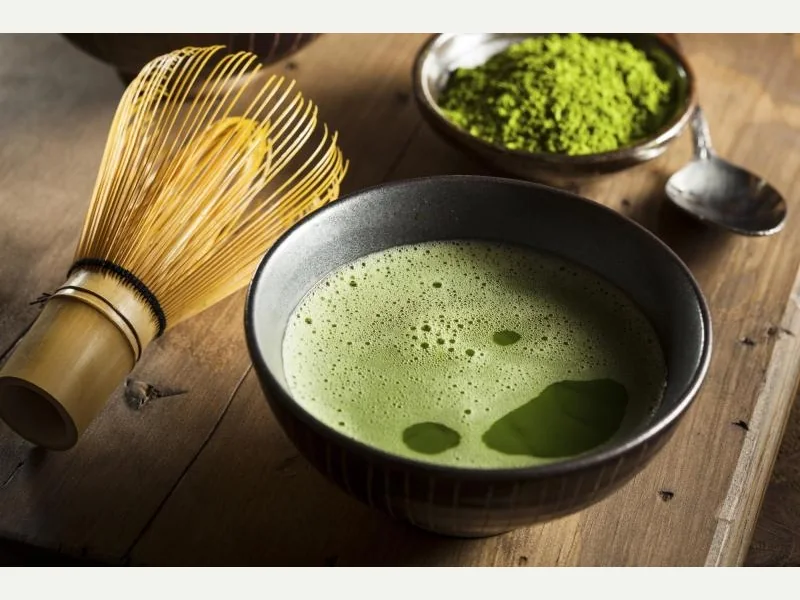
Apply matcha tiramisu dusting at the latest practical point that meets the service format and appearance target. A powder layer exposed to humid cream can darken or spot, so a dusting that looks vivid at assembly may not remain that way through display.
Compare service and packaged routes
- Dust one sample at assembly and another shortly before service.
- Standardize powder mass, sieve, height, and passes.
- Inspect colour, wetting, clumps, transfer to packaging, and bitterness.
- Test the actual lid clearance and transport motion for packaged portions.
For plated café service, late dusting often protects appearance and reduces packaging transfer. For sealed grab-and-go portions, the team may accept a softer surface appearance in exchange for simpler handling. Name the operational consequence before choosing.
Do not use extra dusting to hide faded cream or weak soak flavour. That shortcut can produce a dry, bitter first bite while leaving the internal formulation unchanged.
Key Takeaway: Set dusting time and mass for the actual service route, then judge the first bite as well as the surface colour.
What food-safety limit applies to matcha tiramisu service life?
The matcha tiramisu service life must be the shorter of an independently established food-safety maximum and the quality limit found in the chilled trial. Dairy, eggs, handling, sanitation, cold chain, packaging, and the exact process all affect the safety assessment.
Keep safety and quality evidence separate
- Document whether eggs are absent, pasteurized, or processed under another validated control.
- Record receiving, preparation, chilling, display, and transport temperatures.
- Review the actual ingredients and process through the applicable food-safety program.
- Use microbiological validation or qualified technical review where required.
An inoculated mascarpone study followed E. coli behaviour at 3–15°C and concluded that broad-temperature work was needed to understand growth or inactivation. Those experimental temperatures and times do not authorize tiramisu storage. The FDA also advises using pasteurized eggs or egg products for recipes served with raw or undercooked eggs.
If the food-safety maximum is unknown, use fresh preparation and immediate controlled service until a qualified assessment establishes one. A clean slice, pleasant flavour, or stable pH reading cannot replace that decision.
Key Takeaway: Never extend service life from sensory acceptance alone; the independently established safety maximum is a hard ceiling.
What should a matcha tiramisu supplier brief include?
A matcha tiramisu supplier brief should define where matcha is used, the target sensory profile, the biscuit and cream systems, and the trial measurements. “Bright green and smooth” does not tell a supplier whether the priority is soak dispersion, cream colour, or dusting behaviour.
Send a testable request
- Specify soak, cream, and dusting use with expected dose ranges.
- Describe biscuit type, dairy system, egg route, tray size, and service format.
- Share soak-pickup, layer-weight, slice, and chilled-hold methods.
- State required specifications, certificates, sample quantity, and decision date.
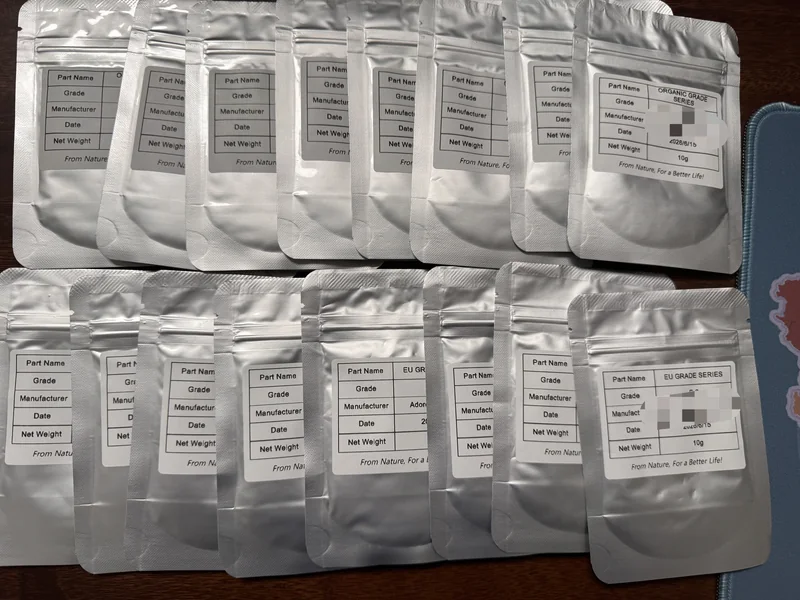
A custom formula development discussion is more useful when it begins with a measured problem, such as uneven soak colour or dusting that wets during display. AdoroHu supplies matcha and formulation support; the café or finished-dessert producer remains responsible for validating its recipe, process, allergen controls, labels, and food-safety program.
Key Takeaway: Ask for samples against a defined layer and test method, then approve them in the complete dessert.
FAQ
- Do tiramisu and matcha go together?
- Yes. Matcha can replace or complement the coffee and cocoa profile, but the soak, mascarpone sweetness, and surface dusting should be balanced as separate components.
- What are the main ingredients in matcha tiramisu?
- A typical build uses ladyfingers or sponge, a matcha soak, mascarpone-based cream, sweetener, and matcha dusting; egg, cream, alcohol, and coffee choices vary by formula.
- How do you stop matcha tiramisu from becoming soggy?
- Control biscuit soak pickup by mass, standardize dipping and draining, and verify the cross-section after the intended chill rather than relying on dip time alone.
- Can matcha tiramisu be made without eggs?
- Yes, an egg-free cream route is possible, but it changes texture, flavour, label, and food-safety considerations and must be tested as its own formula.
- When should matcha tiramisu be dusted?
- Dust at the latest practical point that meets the service format, after comparing surface wetting, colour, bitterness, and packaging transfer through the intended hold.
- How long can a café hold matcha tiramisu?
- Use the shorter of an independently established food-safety maximum and the tested quality limit; if no safety maximum exists, use fresh preparation and immediate controlled service until a qualified assessment sets one.
Conclusion
Commercial matcha tiramisu succeeds when every tray carries the same soak pickup, cream allocation, chilled structure, and saleable cut. Share those targets through the contact page to plan a relevant matcha sample comparison.