
Matcha crepes become repeatable when batter flow, deposit mass, pan condition, and cooked-sheet flexibility are measured together. A recipe that makes one attractive crepe can still drift across a service batch as the batter rests, particles settle, and the pan temperature changes.
For a practical first trial, sift the dry ingredients, disperse the matcha, mix a smooth unleavened batter, rest it under defined conditions, then cook equal deposits on one controlled pan. The matcha dessert recipe collection offers wider menu inspiration; this guide focuses on thin standalone pan sheets and their café yield.
Define the target sheet before adjusting the formula. Record batter flow, deposit mass, pan temperature, diameter, thickness, release, and cooled flexibility. Keep waffles made on patterned plates and cakes set in ovens outside this pilot.
In short: A reliable crepe process controls batter change over time and links each pan setting to saleable sheets.
Key points:
- Measure batter flow before and after the planned rest and hold.
- Fix deposit mass, spread method, pan condition, and dwell before judging matcha colour.
- Set filled-crepe service life to the shorter of the independent food-safety maximum and quality limit.
How should a café build its first matcha crepes trial?
Build the first matcha crepes trial around one flour system, matcha dose, liquid ratio, rest condition, deposit mass, and pan procedure. This reference batch answers the familiar recipe question while giving the team a stable control for later comparisons.
Define the reference sheet
- Weigh all ingredients and record lots.
- Use one mixing sequence and endpoint.
- Record rest time, batter temperature, and covered or uncovered condition.
- Set deposit mass, pan size, spread motion, and cook-side sequence.
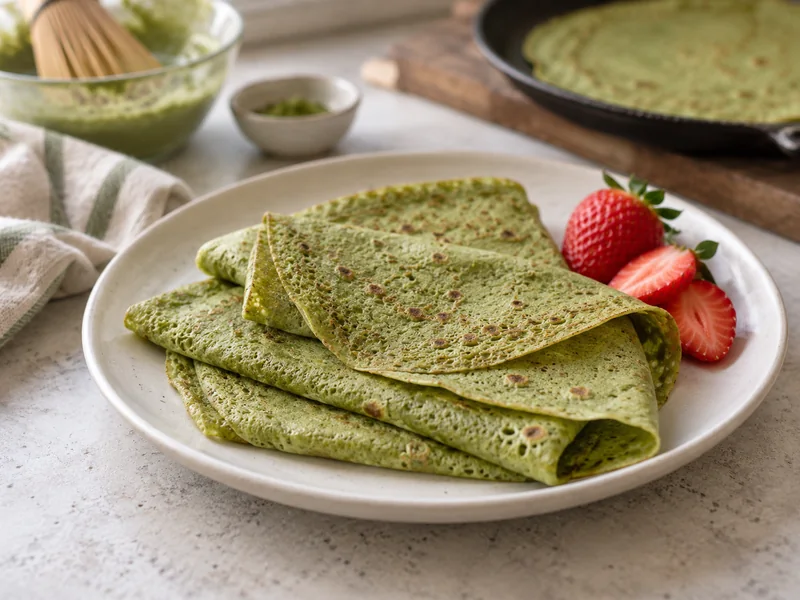
Matcha crepes are thin, unleavened pan-cooked sheets. A waffle batter is confined by a patterned plate, while cake batter sets as a thicker oven-baked crumb. Those products need different response measures and should not supply acceptance thresholds for this trial.
| Reference control | Record | Why it matters |
|---|---|---|
| Batter | Formula, temperature, rest, flow test | Explains spread drift |
| Deposit | Mass and transfer tool | Controls sheet size and thickness |
| Pan | Surface, temperature method, lubrication | Affects release and browning |
| Sheet | Diameter, thickness, mass, defects | Defines saleable output |
Key Takeaway: Approve one thin-sheet reference before changing powder, flour, rest, or pan settings.
Which matcha should be screened for matcha crepes?
Screen matcha for matcha crepes in the cooked sheet because raw-powder colour and grade names cannot predict flavour after pan heating. Compare candidates at equal dose in the same batter and cook them under the same verified pan procedure.
Score the cooked result
- Compare green appearance before and after cooling.
- Score tea aroma, bitterness, astringency, sweetness, and finish.
- Fold and roll sheets after the same cooling interval.
- Repeat with the intended filling or service build.
AdoroHu's E and O series provide a sampling ladder across culinary, premium, and ceremonial positions. Start with relevant culinary matcha samples and judge them through the matcha for baking application in the actual crepe system.
Select the lowest-cost powder that repeatedly meets cooked-sheet colour and flavour targets. Paying for raw-powder subtleties that disappear under heat or filling reduces margin without improving the customer's crepe.
Key Takeaway: Approve matcha from coded cooked sheets, not from dry colour or tier language alone.
Which batter-flow measures help matcha crepes spread evenly?
Matcha crepes need a batter-flow measure that is simple enough to repeat during production and sensitive enough to show meaningful thickening or thinning. A fixed-volume flow cup, line-spread test, or validated viscosity method can work when temperature and timing are controlled.
Connect flow to sheet geometry
- Measure batter at the end of mixing and after the defined rest.
- Use the same sample mass, vessel, surface, and elapsed time.
- Cook equal deposits and record diameter, thickness, and edge shape.
- Compare tears, holes, rubberiness, and handling after cooling.
A study of 13 wheat cultivars linked flour protein and pasting properties with pancake-batter viscosity, diameter, and cooked texture. A separate crepe study compared five wheat and buckwheat formulas using viscosity, hardness, cohesiveness, adhesiveness, rupture, and elasticity. These studies support measuring flow and sheet response together; neither supplies a universal matcha-crepe viscosity target.
| Flow result | Sheet observation | Next trial question |
|---|---|---|
| Low resistance | Overspread, thin edge, holes | Does the formula need more structure or less liquid? |
| High resistance | Small diameter, thick centre | Did rest, temperature, or flour hydration raise viscosity? |
| Flow drifts with time | First and last sheets differ | Does the hold or remix method need control? |
Key Takeaway: Set the flow window from accepted sheet diameter, thickness, and flexibility on the actual pan.
How should matcha be dispersed in matcha crepes batter?
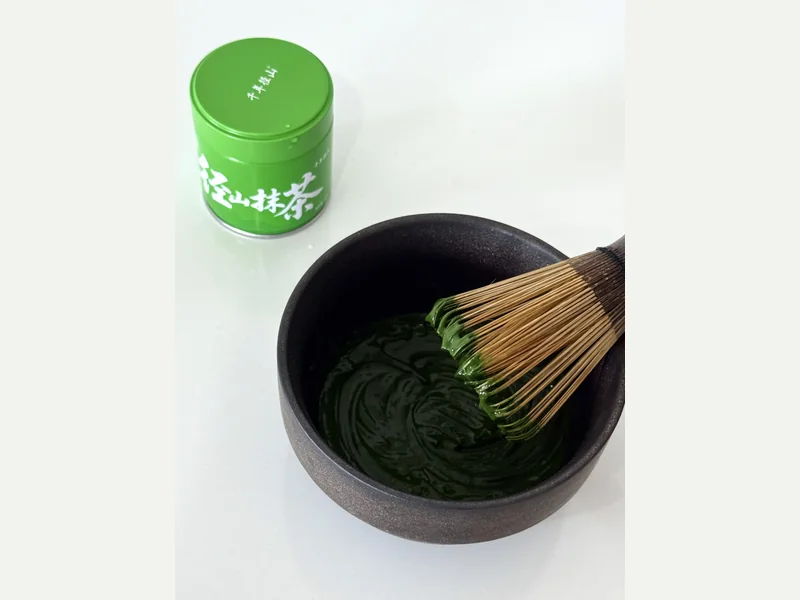
Disperse matcha for matcha crepes before full flour hydration so dry green pockets do not become hidden lumps in the finished batter. The best sequence still depends on the liquid, fat, egg, flour, and mixer used by the café.
Compare two controlled routes
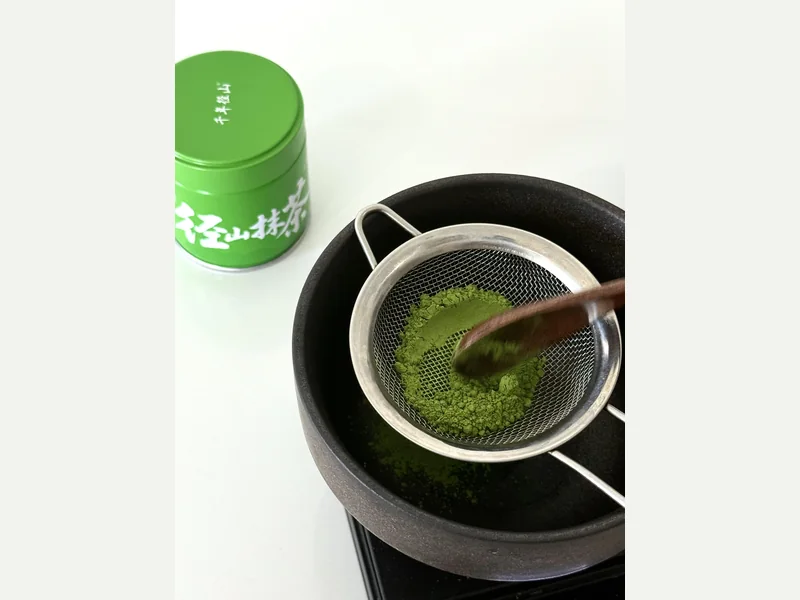
- Route A: sift matcha with part of the flour before liquid addition.
- Route B: pre-disperse matcha in a measured liquid portion before combining.
- Hold formula, mixer, time, rest, deposit, and pan settings constant.
- Strain only as a recorded process step because it changes yield.
A fine-matcha water study reported slower settling for its finer powder than for normal powder. That water-only comparison justifies checking particle suspension and between-pour consistency, but it does not establish behaviour in batter containing flour, egg, milk, oil, or sugar.
Avoid extending mixing until every speck disappears. Extra mixing can change flour hydration and batter structure, making a dispersion correction look like a formula improvement.
Key Takeaway: Compare dry blending and pre-dispersion without changing total mixing work, then choose by the cooked sheet.
How should matcha crepes batter rest and remixing be controlled?
Control matcha crepes batter rest by defining its duration, temperature, cover, and remix procedure. Rest can change hydration and bubble release, while a long production hold can also create settling and first-to-last sheet drift.
Sample the batch over time
- Measure flow and temperature after mixing, after rest, and during service.
- Cook coded sheets from the top and lower batter zones before remixing.
- Apply a fixed gentle remix and repeat the measurements.
- Record foam, sediment, thickening, diameter, and colour.
Use separate terms for rest and hold. Rest is a planned formula step before approval; hold is the time batter waits during production. Combining them into one broad time obscures whether hydration or service delay caused the change.
Choose the shortest rest that consistently delivers the accepted sheet. Longer waiting consumes refrigerator space and reduces service flexibility unless it produces a measured improvement.
Key Takeaway: Approve rest and in-service hold as separate windows, each with its own flow and sheet checks.
Which pan controls keep matcha crepes thin and releasable?
Matcha crepes need a controlled pan surface, temperature measurement, lubrication, deposit, spread, and dwell. Judging colour before these variables are stable can confuse uneven heat with a matcha or formula problem.
Lock the pan procedure
- Define pan diameter, material, surface condition, and preheat.
- Measure temperature at a repeatable location and moment.
- Standardize fat type, application mass, and frequency.
- Record first-side and second-side dwell plus release effort.
A French-crepe microscopy paper found that baking temperature strongly affected structure and surface blistering. The paper describes industrial crepes at about 0.7 mm, cooked in under 20 seconds near 240°C ±20°C. This is industrial background from the cited paper, not an experimental threshold or a setpoint for another pan, formula, or matcha crepe.
Reject a hotter setting that speeds output but creates brittle edges, dark spots, or a narrow release window. The saved seconds become tearing and rework when operators cannot spread and lift the sheet consistently.
Key Takeaway: Establish the pan window from release, geometry, and cooled flexibility rather than borrowing a study temperature.
How should matcha crepes diameter, thickness, and defects be sampled?
Sample matcha crepes across the start, middle, and end of the run so the data captures pan and batter drift. Measuring only the best sheet misses the defects that determine real yield.
Build a production scorecard
- Record diameter in two directions and thickness at defined points.
- Weigh each sampled sheet after a fixed cooling time.
- Count holes, thick centres, lace edges, blisters, dark spots, and tears.
- Note pan position, batter age, and operator.
Define a saleable tolerance from the intended fold, roll, plate, or package. A slightly oval sheet may be acceptable for a folded café crepe but fail a stacked presentation. Keep appearance limits tied to use.
The matcha cake guide addresses oven-baked crumb. Its height and crumb checks should not replace crepe diameter, thinness, release, and flex tests.
Key Takeaway: Sample the full run and judge defects against the final crepe format.
How should matcha crepes be cooled, stacked, and filled?
Cool matcha crepes under a defined airflow and stacking plan so condensation, sticking, and edge drying do not erase the pan-stage gains. Filling moisture and temperature then determine whether the sheet remains flexible or becomes wet during service.
Test the complete handling route
- Compare single-layer cooling with controlled stacking.
- Test separators for sticking, marking, and labour.
- Record sheet temperature before stacking and filling.
- Assess fold, roll, tear, weeping, and package adhesion through hold.
Choose separators only when they reduce rejects enough to cover material and handling cost. A separator that protects release but leaves marks or slows assembly can move the bottleneck rather than remove it.
For filled products, test the actual cream, fruit, sauce, or savoury filling. An unfilled sheet hold cannot establish the quality or safety life of a moist filled crepe.
Key Takeaway: Validate cooling, stacking, filling, and packaging as one handling chain after the pan process is stable.
How should matcha crepes yield and cost be calculated?
Calculate matcha crepes yield from saleable sheets and finished portions rather than theoretical batter deposits. Bowl residue, straining loss, spread failures, tears, burnt sheets, trimming, and end-of-hold waste all change the real cost.
Reconcile batter to sales
- Weigh mixed batter and remaining batter.
- Count total deposits, accepted sheets, rework, and rejects.
- Record filling and packaging loss separately.
- Divide total used cost by portions actually sold.
| Yield measure | Calculation | Decision supported |
|---|---|---|
| Sheet yield | Accepted sheets ÷ total deposits | Shows pan-process efficiency |
| Batter yield | Accepted sheet mass ÷ mixed batter mass | Reveals transfer and reject loss |
| Portion cost | Used ingredient cost ÷ accepted portions | Compares formula options |
| Waste-adjusted cost | Total used cost ÷ portions sold | Captures hold and service loss |
Choose the formula and pan window that produce the most accepted sheets within the required texture range. A lower ingredient cost can lose its advantage when thick batter or weak release drives rejects.
Key Takeaway: Cost the accepted, filled service portion rather than the theoretical number of ladles.
What food-safety limit applies to matcha crepes and fillings?
The matcha crepes service life must be the shorter of an independently established food-safety maximum and the tested quality limit for the exact batter, cooked sheet, filling, handling, and temperature plan. Egg, dairy, moist fillings, cooling, stacking, and packaging can all change the assessment.
Keep safety outside the sensory score
- Document receiving, batter preparation, cooking, cooling, filling, and display controls.
- Review the actual formula and process through the applicable food-safety program.
- Separate unfilled-sheet trials from filled-product validation.
- Use qualified technical review or microbiological work where required.
Use the FDA Food Code 2026 as a model reference for retail and foodservice controls, then confirm the rules adopted by the applicable state, local, tribal, or territorial authority. A flexible sheet, clean flavour, or acceptable colour cannot prove a safe hold time.
If the independent safety maximum is unknown, use fresh preparation and immediate controlled service until a qualified assessment establishes one.
Key Takeaway: Treat the established safety maximum as a hard ceiling, even when the crepe still looks and folds well.
What should a matcha crepes supplier brief include?
A matcha crepes supplier brief should define the thin-sheet target, batter system, pan process, filling route, and acceptance measurements. “Vibrant and soft” is not enough to recommend a meaningful powder comparison.
Send the operating context
- State the matcha dose range, flour, liquid, egg, fat, and sweetener system.
- Share mixing, rest, hold, remix, deposit, pan, and dwell methods.
- Define diameter, thickness, colour, flexibility, and reject limits.
- List required specifications, certificates, sample quantity, and decision date.
A custom formula development discussion is more productive when it starts with a measured failure, such as first-to-last spread drift or brittle cooled edges. AdoroHu supplies matcha and formulation support; the café or finished-product producer remains responsible for validating the formula, process, allergens, labels, and food-safety program.
Key Takeaway: Ask suppliers to solve a defined sheet-performance problem, then approve samples on the actual pan.
FAQ
- What makes matcha crepes different from pancakes or waffles?
- Matcha crepes are thin, unleavened pan-cooked sheets; pancakes are thicker, while waffles cook between patterned plates, so their flow, thickness, release, and texture targets differ.
- Can matcha powder be added directly to crepe batter?
- Yes, but compare sifted dry blending with a controlled pre-dispersion because the better route depends on the flour, liquid, fat, egg, and mixing process.
- Why do matcha crepes tear during flipping?
- Tears can come from batter structure, deposit thickness, pan condition, temperature, dwell, release technique, or handling, so change one controlled variable at a time.
- Should matcha crepe batter rest before cooking?
- Rest can change hydration and bubble release, but the café should set its own rest window from measured batter flow and accepted cooked sheets.
- How do cafés keep matcha crepes from sticking in a stack?
- Standardize cooling temperature and airflow, then compare stacking and separator methods for adhesion, marks, edge drying, labour, and later flexibility.
- How long can filled matcha crepes be held?
- Use the shorter of an independently established food-safety maximum and the tested quality limit; if no safety maximum exists, use fresh preparation and immediate controlled service until a qualified assessment sets one.
Conclusion
Commercial matcha crepes depend on controlled batter flow, pan release, cooled flexibility, and saleable yield. Share those targets through the contact page to plan a relevant matcha sample comparison.