
For B2B buyers and food manufacturers, the “best by” date on a shipment of matcha is often the most misleading metric in the supply chain. Sourcing high-quality green tea powder only to have it turn dull, brown, and bitter before it reaches your customers is a silent profit killer. When matcha loses its vibrancy, it loses its market value, leading to wasted inventory and inconsistent product flavor profiles that damage brand reputation. To protect your investment, you must move beyond consumer-level storage tips and understand the industrial science of tea degradation. This guide provides the expert framework needed to manage matcha wholesale inventory with surgical precision.
Unopened matcha powder typically retains peak freshness for 6–12 months, though professional nitrogen-flushed packaging can extend this to 24 months. Once opened, the powder is highly susceptible to oxidation and should be consumed within 4–8 weeks to maintain its color and umami profile. Optimal B2B storage requires airtight, light-proof containers kept in a climate-controlled, refrigerated environment.
In short: Matcha is a “living” product that begins degrading the moment it is milled. Its high surface area makes it exponentially more sensitive to environmental factors than whole-leaf tea.
Key points:
- Unopened Life: 12–24 months (depending on packaging technology).
- Opened Life: 30–60 days for peak sensory quality.
- Primary Enemies: Oxygen, light, heat, and moisture.
- Storage Best Practice: Refrigeration for bulk; airtight tins for retail.
How long does matcha shelf life last for B2B buyers?
For professional buyers, the functional shelf life of matcha is 12 to 18 months for unopened vacuum-sealed bags and approximately 2 months for opened working stock. While the powder does not “expire” in the sense of becoming unsafe for consumption, its organoleptic properties—color, aroma, and taste—deteriorate significantly after these windows. Distributors must account for “milling-to-delivery” lag times to ensure clients receive product with at least 80% of its peak vitality remaining.
Understanding the Lifecycle Stages
- The Freshness Peak: 0-6 months post-milling; ideal for ceremonial retail.
- The Stability Phase: 6-12 months; acceptable for high-end lattes and beverages.
- The Degradation Slope: 12+ months; best reserved for industrial baking where color is secondary.
Key Takeaway: Always request the “milling date” rather than just the “expiration date” from your supplier to calculate the true remaining ROI of your inventory.
What factors affect the expiration of bulk matcha powder?
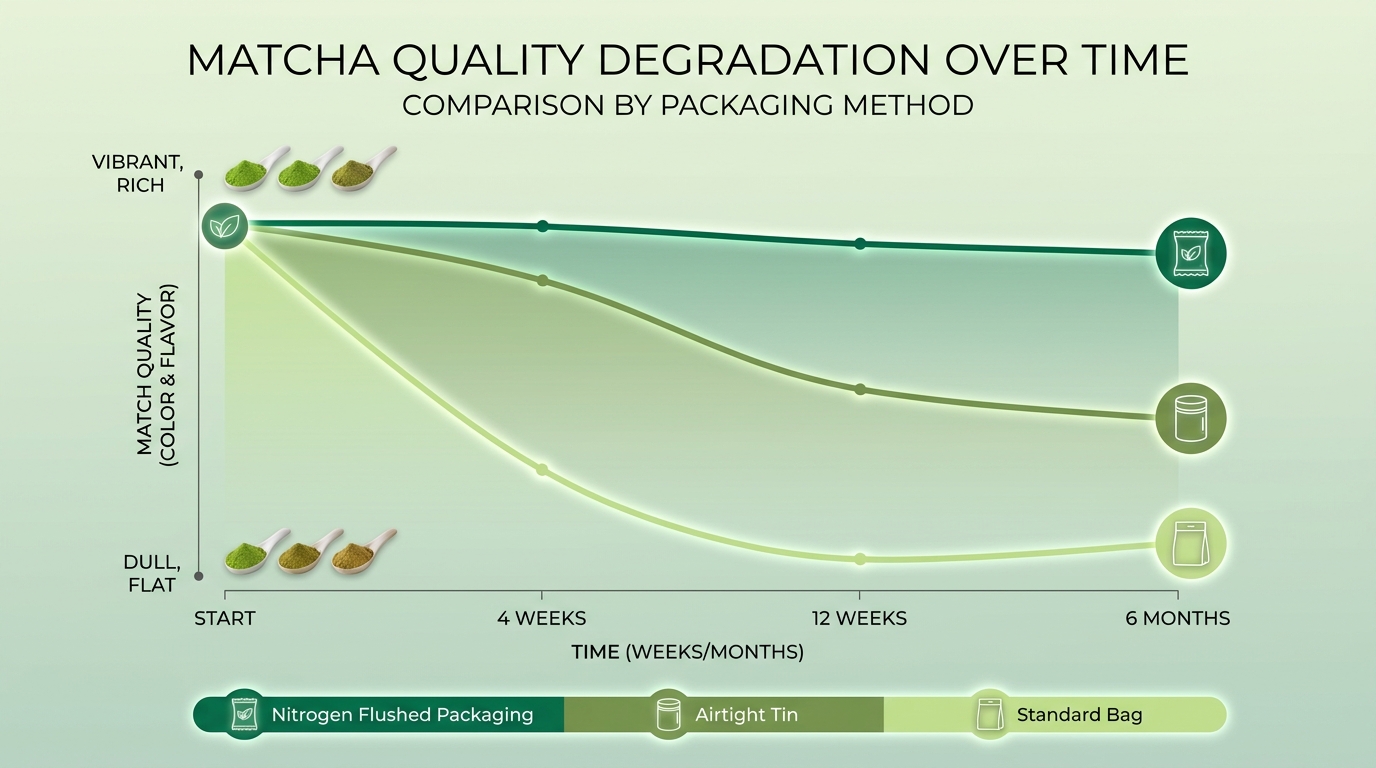
The expiration of bulk matcha is driven by five environmental catalysts: oxygen, light, heat, humidity, and ambient odors. Because matcha is a stone-ground powder, its surface area is maximized, allowing oxygen to strip away chlorophyll and L-theanine at an accelerated rate. If bulk bags are stored in a warehouse without climate control, the high temperature will catalyze chemical reactions that turn the vibrant green powder into a dull olive-brown within weeks.
The Five Enemies of Matcha
- Oxidation: Air exposure destroys the delicate amino acids that provide umami.
- Photo-degradation: Light (UV) bleaches chlorophyll, killing the vibrant green color.
- Thermal Stress: Heat accelerates the breakdown of antioxidants and polyphenols.
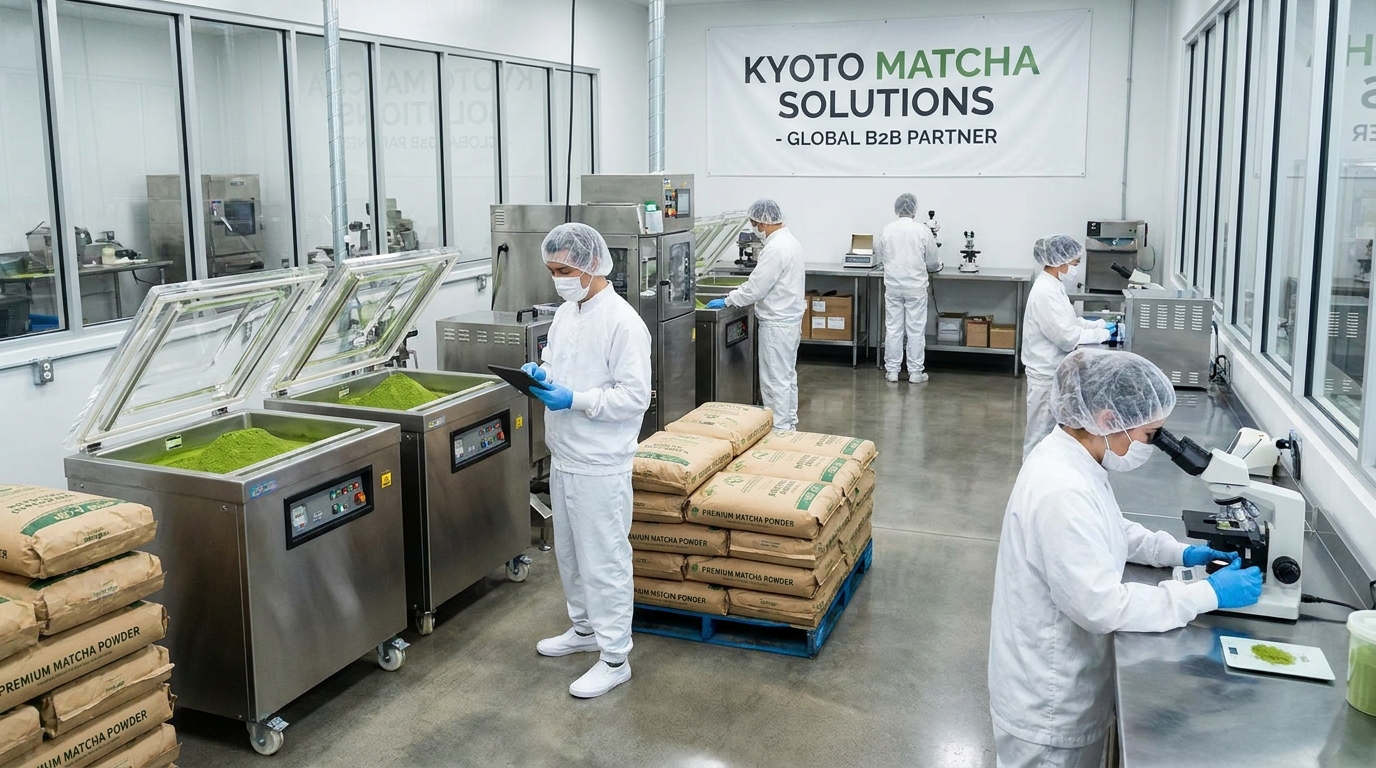
Key Takeaway: Preventing expiration is a matter of barrier technology; your storage must provide a 100% shield against air and light to maintain product value.
How do different matcha grades impact storage stability?
Higher grades of matcha, such as ceremonial varieties, have lower storage stability than lower culinary grades due to their higher concentrations of volatile compounds. Ceremonial matcha contains more L-theanine and chlorophyll, both of which are highly sensitive to environmental stressors and degrade visibly and palatably within a short timeframe. Culinary grades, while still perishable, often feature more robust tannin structures that can withstand slightly longer storage in manufacturing environments.
Grade-Specific Stability Metrics
- Ceremonial Grade: Highest sensitivity; requires strict refrigeration and nitrogen-flushing.
- Premium Grade: Moderate stability; ideal for foodservice with high turnover.
- Culinary/Industrial: Most robust; can handle ambient storage for shorter periods if sealed.
Key Takeaway: If your business model involves long-tail retail shelf life, consider a premium culinary blend that offers a more stable color profile over time.
Why is nitrogen-flushing essential for wholesale matcha shelf life?
Nitrogen-flushing is essential for wholesale shelf life because it removes 99% of the oxygen from the packaging, effectively “pausing” the oxidation process. By displacing oxygen with an inert gas like nitrogen, the chlorophyll is preserved in a vacuum-like state, preventing the browning reaction that occurs in standard air-filled bags. This technology is the industry standard for ensuring that matcha shipped from Japan to international distributors arrives in the same condition it left the mill.
Benefits of Nitrogen-Flushing
- Doubled Shelf Life: Extends peak freshness from 6 months to 18-24 months.
- Color Preservation: Maintains the “electric green” hue required for premium branding.
- Flavor Locking: Prevents the development of “hay-like” or “stale” flavor notes.
Key Takeaway: Never purchase wholesale matcha in non-flushed, clear, or thin plastic packaging; it is a guarantee of rapid quality loss.
How can you tell if matcha has expired or lost its quality?
You can identify expired or degraded matcha through a sensory audit focusing on color (dull olive vs. bright green), aroma (hay-like vs. fresh grass), and taste (sharp bitterness vs. creamy umami). When matcha loses its quality, the fine powder will also begin to clump excessively due to moisture absorption, and it will lose its static charge, making it appear “dead” in the tin. A simple froth test—where the foam disappears quickly—is a definitive sign that the structural proteins have broken down.
The Sensory Audit Checklist
- Visual Test: If the powder looks like dried sage rather than a neon highlighter, it is oxidized.
- Olfactory Test: Expired matcha loses its “spring” scent and takes on a fishy or dusty smell.
- The Froth Test: Fresh matcha creates a stable, tiny-bubbled foam; old matcha creates large, fleeting bubbles.
Key Takeaway: Sensory quality is the only metric that matters; if the tea doesn’t “pop” visually, it is functionally expired for premium beverage applications.
What are the storage requirements for private label matcha brands?
Private label brands must utilize multi-layer foil packaging with high-barrier properties to ensure their matcha private label products remain fresh on retail shelves. The packaging must include an inner foil lining to block light and a resealable zipper or airtight lid to minimize oxygen entry after the consumer opens the product. For brands aiming for a premium positioning, adding an oxygen absorber packet inside the tin can provide an extra layer of protection against residual air.
Private Label Packaging Standards
- Opaque Materials: Use matte-finished tins or thick, 4-layer Mylar pouches.
- Air Displacement: Ensure every unit is nitrogen-flushed during the filling process.
- Clear Labeling: State both the “Best By” date and “Consume within 60 days of opening” for customer success.
Key Takeaway: Your brand reputation is tied to the first sip; investing in superior packaging is more cost-effective than managing returns for stale product.
How does packaging choice influence matcha freshness during logistics?
Packaging choice is the primary determinant of freshness during logistics, as it must withstand temperature fluctuations and physical stresses during sea or air freight. Rigid metal tins offer the best protection against physical crushing and light, while vacuum-sealed, heavy-duty foil bags are superior for minimizing the volume of air during bulk transport. During international transit, the use of insulated shipping containers or “reefer” (refrigerated) units is recommended for high-volume high-grade shipments.
Logistics Packaging Comparisons
- Metal Tins: Best for retail; provides 100% light block and gas barrier.
- Foil Pouches: Excellent for bulk; space-efficient and cost-effective for shipping.
- Bulk Cartons: Must include a double-bagged foil liner system to prevent punctures.
Key Takeaway: Logistics is where most matcha dies; choose packaging that prioritizes gas-barrier integrity over aesthetic transparency.
What are the common buyer mistakes regarding matcha inventory management?
The most common mistake is over-ordering organic matcha powder to chase volume discounts, resulting in “dead” inventory that oxidizes before it can be sold. Many buyers also fail to implement a strict FIFO (First-In, First-Out) system, leading to older batches being buried under new shipments. Finally, storing matcha in ambient-temperature retail displays or warehouses instead of dedicated cold storage drastically shortens the usable window of the product.
Inventory Pitfalls to Avoid
- Volume Chasing: Don’t buy more than a 3-month supply unless you have frozen storage.
- Ignoring Temperature: Storing matcha near coffee roasters or heating vents.
- Poor Rotation: Failing to label batches with arrival dates for clear stock rotation.

Key Takeaway: High-turnover inventory management is more profitable than large-batch discount buying for perishable goods like matcha.
Does organic matcha have a shorter shelf life than conventional varieties?
Organic matcha does not inherently have a shorter shelf life than conventional matcha, but it is often more sensitive to storage conditions because it lacks synthetic stabilizers. However, because organic farming produces plants with different nutrient densities, the antioxidant profile—which acts as a natural preservative—can vary. The primary factor in organic matcha longevity is the speed of processing and the integrity of the cold chain, rather than the organic certification itself.
Organic Storage Nuances
- Microbial Stability: Organic standards require stricter handling to prevent contamination.
- Antioxidant Levels: Higher polyphenol counts in some organics can actually aid stability.
- Packaging Limits: Some eco-friendly organic packaging has lower oxygen barrier properties.
Key Takeaway: When sourcing organic, prioritize suppliers who use nitrogen-flushing, as organic buyers are typically more sensitive to color and flavor defects.
How should beverage manufacturers calculate matcha usage to avoid waste?
Manufacturers should calculate usage based on a 45-day “freshness cycle,” ensuring that bulk containers are emptied and replaced before the flavor profile shifts. To minimize waste, large-scale producers should use 1kg or 5kg nitrogen-flushed bags rather than 20kg drums, allowing them to open only what is needed for a single production run. Integrating a “pull-based” inventory system where shipments arrive “just in time” from the supplier ensures the raw material is always at peak potency.
Usage Calculation Metrics
- Batch Sizing: Match your opening frequency to your weekly production volume.
- Degradation Buffering: Formula adjustments may be needed as a batch ages past 30 days.
- Waste Tracking: Monitor the “dullness” of the final product to determine if inventory is moving too slowly.
Key Takeaway: Treat matcha like fresh produce, not a dry pantry staple; the faster the “mill-to-cup” time, the higher your product quality.
Frequently Asked Questions
- Can you freeze matcha to extend its shelf life?Yes, unopened bulk matcha can be frozen for 12+ months. Ensure the package reaches room temperature before opening to prevent condensation.
- What happens if a customer drinks expired matcha?It is generally safe to drink, but it will taste bitter, look unappealing, and provide significantly fewer nutritional benefits.
- Does culinary matcha last longer than ceremonial?It is more robust due to higher tannins, but it still requires the same airtight and cool storage to prevent browning.
- Should I store my store’s display matcha in a fridge?Yes. Keeping retail stock refrigerated (around 4°C) is the best way to ensure the customer receives a fresh product.
- How do I know if my supplier’s matcha is old?Request a COA (Certificate of Analysis) or a sample to check the color and aroma before committing to a wholesale order.
Conclusion
Managing matcha shelf life is a strategic necessity for B2B success. By moving from ambient storage to a refrigerated, nitrogen-flushed model, you can preserve the vibrant green color and complex umami flavor that your customers demand. Protecting your inventory from oxygen and light isn’t just about quality—it’s about protecting your bottom line. If you are ready to upgrade your supply chain with high-stability, professional-grade tea, contact AdoroHu Matcha today to discuss our wholesale storage and logistics solutions.