Finding a consistent, high-quality matcha supplier is one of the greatest challenges for food manufacturers and beverage brands. Many “green tea powders” on the market claim to be matcha, but they lack the vibrant color, silky texture, and umami profile that discerning customers demand. Using an inferior product doesn’t just hurt your flavor profile; it risks your brand’s reputation for quality and authenticity. At AdoroHu Matcha, we bridge this gap by providing transparent sourcing for our wholesale ceremonial matcha , ensuring your products meet international standards.
Matcha is made from 100% pure Camellia sinensis tea leaves that have been shade-grown for 3–4 weeks, steamed to stop oxidation, de-veined to remove stems, and stone-ground into a micro-fine powder. Unlike regular green tea, matcha is the result of a specific labor-intensive process that preserves its high chlorophyll and L-theanine content.
In short:Matcha is more than just powdered tea; it is a specialized agricultural product defined by its cultivation and refining steps.
Key points:
- Botanical Source: Derived exclusively from the Camellia sinensis plant.
- Cultivation: Requires a mandatory 21–28 day shading period before harvest.
- Refining: Stems and veins are removed to create “Tencha” before grinding.
- Texture: Final powder must be between 5–15 microns for professional applications.
Is matcha made from a specific plant?
Yes, matcha is made from the Camellia sinensis plant, the same species used to produce black, oolong, and standard green teas. However, for premium matcha, growers typically use specific Japanese cultivars like Samidori, Okumidori, and Yabukita. These varieties are selected for their ability to thrive under shade and their high concentrations of amino acids.
For B2B buyers, it is crucial to understand that while the plant species is common, the “matcha” designation is legally and traditionally protected. If the tea leaves are not shade-grown and processed as Tencha, the resulting powder is technically “green tea powder” (hunmatsucha), not authentic matcha.
How does the shading process define matcha’s composition?
The shading process, known as Kabuse, is the most critical factor in determining what matcha is made of at a chemical level. About 3 to 4 weeks before the spring harvest, farmers cover the tea bushes with bamboo mats or synthetic netting to block up to 90% of direct sunlight.
This environmental stress forces the plant to compensate by producing massive amounts of chlorophyll, resulting in the signature emerald green color. More importantly, it prevents the conversion of L-theanine (an amino acid) into polyphenols (tannins). This results in a powder that is high in “umami” sweetness and low in bitterness, making it ideal for high-end food formulations and matcha private label products.
What is Tencha and why is it essential for premium matcha?
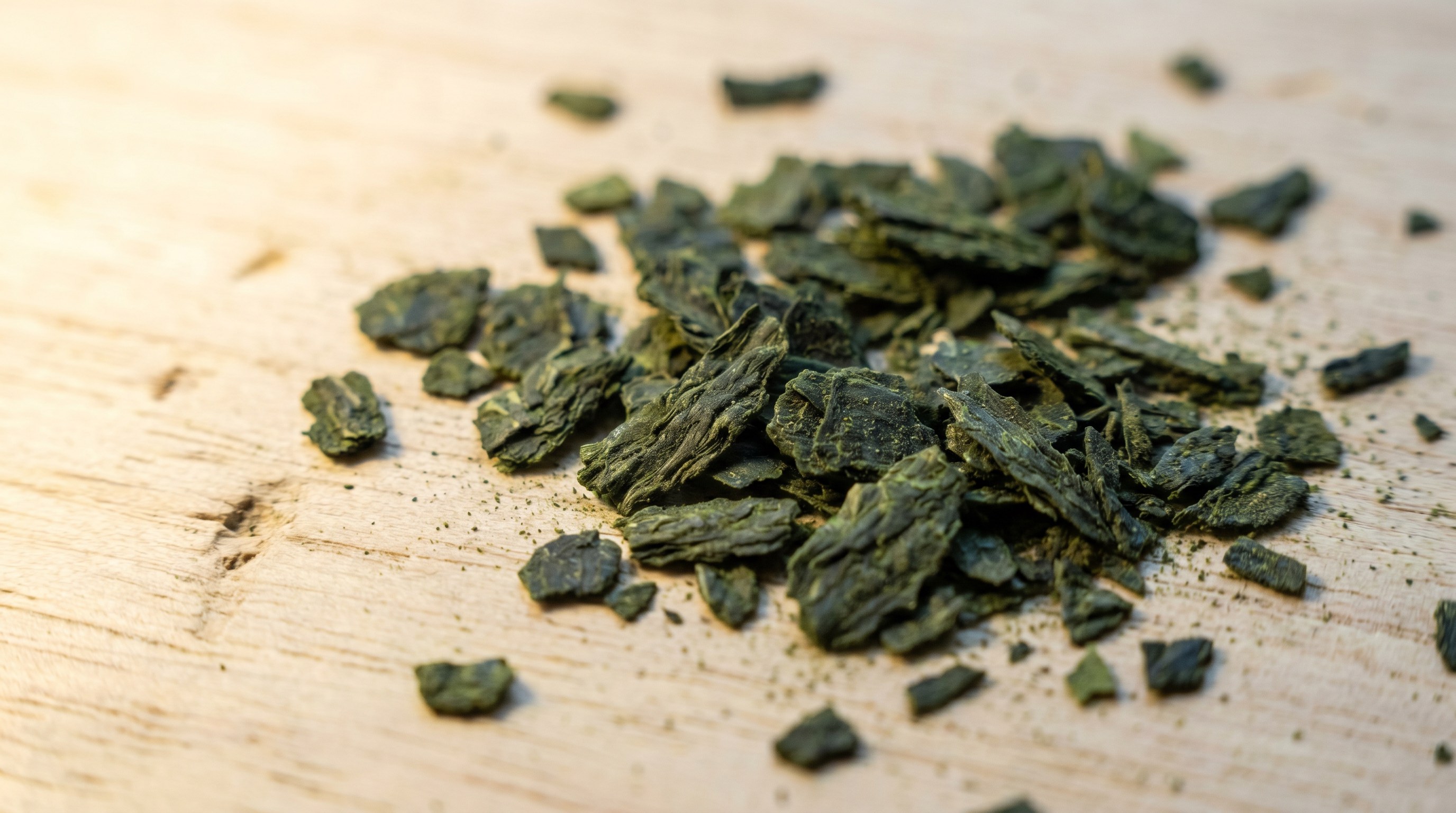
Tencha is the intermediate stage of matcha. After the leaves are harvested and steamed, they are dried flat without being rolled (unlike Sencha). These dried leaves then undergo a rigorous “refining” process where specialized machinery removes the stems (kuki) and veins (suji).
Tencha is essential because it represents the “flesh” of the leaf. If stems and veins were included in the grind, the final powder would be gritty, yellowish, and bitter. In the B2B world, the quality of the Tencha directly dictates the grade of the final culinary grade matcha or ceremonial powder.
Does the manufacturing process change what matcha is made of?
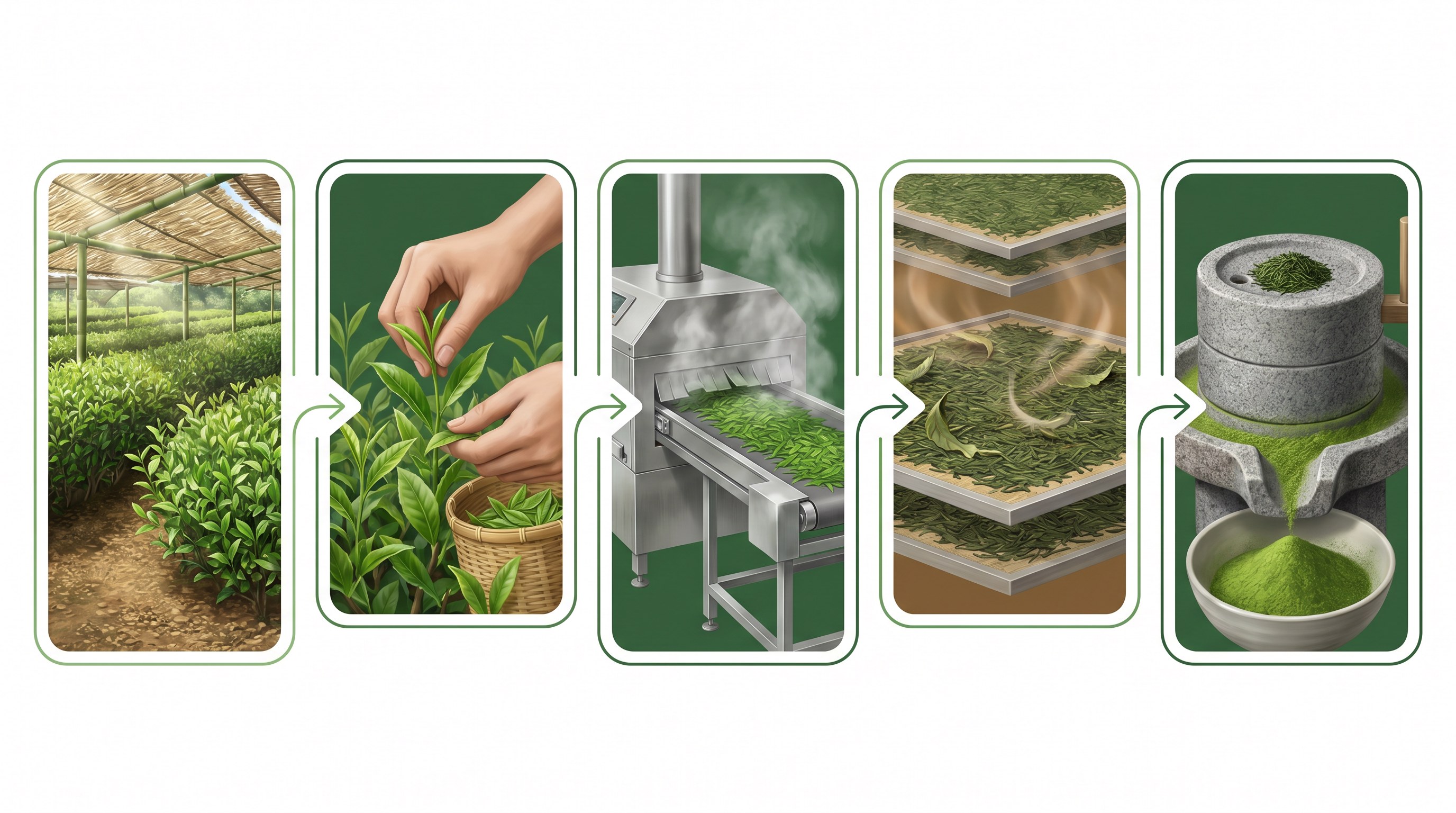
The manufacturing process does not add ingredients, but it fundamentally alters the physical and chemical state of the leaf. The process follows these rigid steps:
- Steaming: Within hours of harvest, leaves are steamed for 20 seconds to halt oxidation.
- Drying: Leaves are air-cooled and dried in a tencha-ro (oven).
- Sorting: Stems and veins are removed.
- Grinding: The Tencha is ground using granite stone mills or industrial ball mills.
Traditional stone-grinding is slow—taking one hour to produce just 30g of powder—but it prevents heat friction from “scorching” the delicate nutrients. For large-scale B2B orders, ball milling is often used to ensure consistency and efficiency while maintaining a particle size of under 10 microns.
What are the primary nutrients found in pure matcha powder?
Because matcha involves consuming the entire leaf rather than a water extraction, the nutrient density is significantly higher than brewed tea. This makes it a highly sought-after functional ingredient for health-focused food manufacturers.
| Nutrient | Concentration (per 1g) | Function in Final Product | |
|---|---|---|---|
| L-Theanine | 15–40 mg | Provides umami flavor and “calm energy” | |
| EGCG (Catechins) | 100–140 mg | Potent antioxidant for health claims | |
| Chlorophyll | 2–5 mg | Natural vivid green coloring agent | |
| Caffeine | 25–35 mg | Natural stimulant for energy beverages | |
| Fiber | 0.3g | Aids in texture and digestive health |
How can B2B buyers distinguish what high-quality matcha is made of?
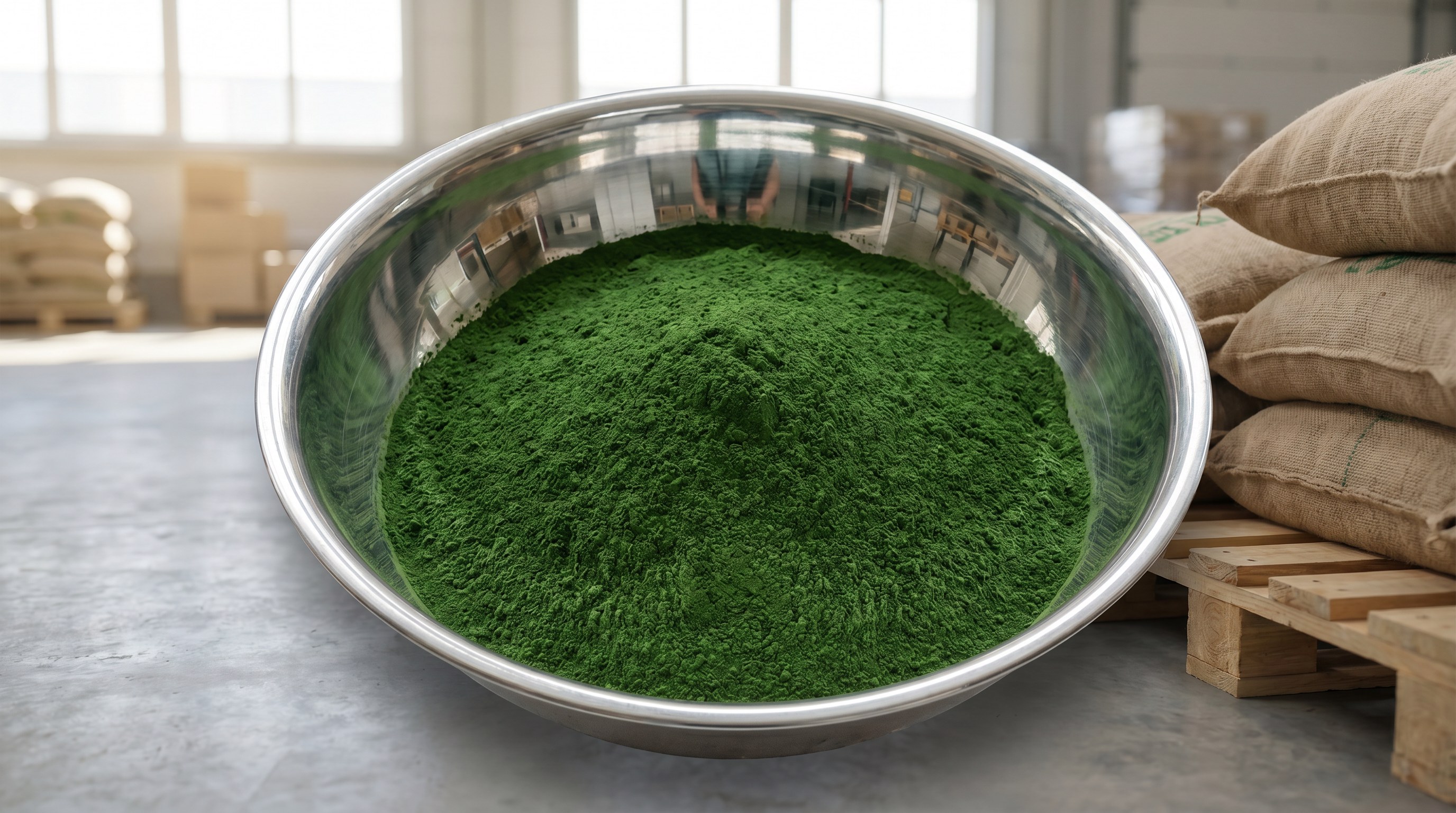
When sourcing for matcha wholesale , buyers should use a multi-sensory and analytical approach to verify the product’s composition:
- Color Analysis: Use the Lab* color space. High-quality matcha should have high “a” (greenness) and “L” (brightness) values.
- Particle Size: Ensure the D50 value is between 5–15 microns. Anything larger will result in a “sandy” mouthfeel in lattes or chocolates.
- Solubility: Pure matcha does not dissolve (it is a suspension). However, finer grinds will froth more easily and stay suspended longer.
| Grade | Primary Use | Color Profile | Taste Note | |
|---|---|---|---|---|
| Ceremonial | Traditional Tea | Electric Emerald | Creamy Umami | |
| Latte Grade | Cafes/RTD Drinks | Vivid Green | Balanced/Nutty | |
| Culinary | Baking/Industrial | Forest Green | Bold/Astringent |
Are there additives in commercial matcha tea powders?
Pure matcha should contain only one ingredient: 100% Camellia sinensis. However, some “commercial” mixes intended for the food service industry may contain additives like sugar, pectin, or powdered fats to improve “mixability.”
For B2B importers, transparency is vital. You must verify that your supplier provides a Certificate of Analysis (COA) confirming the absence of heavy metals (Lead, Arsenic), pesticide residues, and radiation. At AdoroHu, we ensure our organic matcha powder meets the strictest EU and USDA organic standards with zero additives.
Why does the source of the leaves matter for bulk matcha?
The “terroir”—the combination of soil, climate, and altitude—directly impacts the amino acid profile of the leaf.
- Uji (Kyoto): The birthplace of matcha, known for the highest ceremonial quality and deep umami.
- Nishio (Aichi): A major production hub offering consistent color and flavor for industrial use.
- Kagoshima: Known for organic production and early spring harvests.
Sourcing from a reputable region ensures that your bulk matcha is made of leaves that have the genetic and environmental backing to perform well in your production line.
Conclusion
Understanding what matcha is made of is the first step in securing a superior product for your brand. From the mandatory shading to the meticulous refining of Tencha, every step in the process contributes to the final functionality of the powder in your recipes. Whether you are looking for a bulk matcha partner or a private label solution, choosing a supplier that prioritizes traditional processing and rigorous testing is essential.
Ready to elevate your product line with authentic Japanese matcha? Contact AdoroHu Matcha today for samples, wholesale pricing, and custom formulation support.
Frequently Asked Questions
- Q: Is matcha just ground-up green tea?
- No. While it comes from the same plant, matcha must be shade-grown and de-veined (Tencha) before grinding. Regular green tea powder includes stems and is not shaded, leading to a bitter, brown product.
- Q: Does matcha contain any dairy or gluten?
- Pure matcha is naturally vegan and gluten-free. It consists solely of ground tea leaves. Always check for a COA to ensure no cross-contamination.
- Q: What is the shelf life of bulk matcha?
- For B2B applications, matcha is best used within 12 months. It should be stored in airtight, light-proof containers in a temperature-controlled environment to prevent oxidation.
- Q: Why is some matcha yellow instead of green?
- Yellowish matcha indicates either low-quality leaves (lack of shading), inclusion of stems, or oxidation due to poor storage and exposure to light.
- Q: Can culinary matcha be used for drinking?
- While safe, culinary matcha is made from later harvests and has a stronger, more astringent flavor designed to stand up to sugar and fat in baking, making it less pleasant for traditional whisking.