The standard workday is often interrupted by the inevitable 2 PM coffee crash, leaving employees and consumers alike reaching for a second or third cup to stay afloat. This cycle of peak-and-trough energy is more than a nuisance; it is a drain on global productivity that leads to heightened anxiety, jitters, and a diminishing return on caffeine intake. AdoroHu Matcha offers a strategic alternative for businesses looking to provide sustained, high-performance energy solutions. By integrating matcha wholesale into your product lineup, you transition from offering a quick jolt to providing a functional, long-lasting cognitive boost.
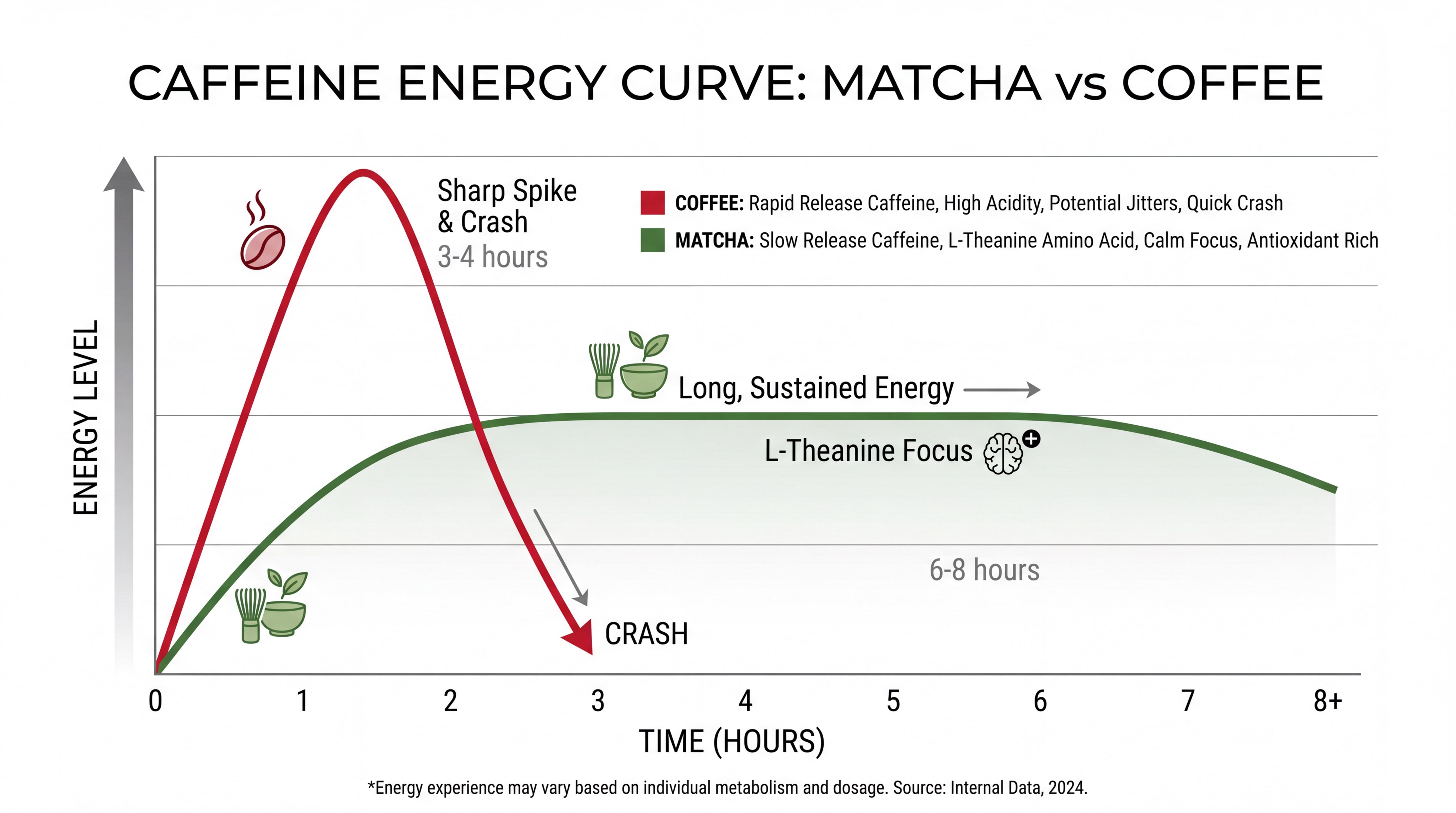
Matcha provides a superior energy profile compared to coffee due to its high concentration of L-theanine, which slows caffeine absorption. This creates a “calm-alert” state lasting 6–8 hours without the rapid spikes or jittery crashes typically associated with traditional coffee. For B2B beverage brands, matcha represents a high-performance alternative that meets the growing consumer demand for functional, clean energy.
In short:
- Stability: Matcha delivers a 6–8 hour energy window, whereas coffee peaks within 30 minutes and crashes shortly after.
- Cognitive Clarity: The synergy of L-theanine and caffeine in matcha eliminates the “jitters” often found in coffee drinkers.
- Profitability: From a B2B perspective, premium matcha offerings typically command higher margins and better consumer retention in the wellness sector.
1. What is the fundamental difference in energy delivery for matcha vs coffee in B2B sourcing?
The primary difference in energy delivery between matcha vs coffee is rooted in the physical form of the ingredient and its chemical composition. Coffee is a water-based extract of roasted beans that releases caffeine into the bloodstream almost instantly, while matcha is a whole-leaf powder that provides a time-released energy boost.
Think about it: When you source coffee, you are buying a bean intended for extraction; when you source organic matcha , you are purchasing a functional whole food. This botanical difference is why coffee is associated with adrenaline spikes, while matcha is associated with sustained metabolic energy.
Key TakeawayB2B buyers should view matcha as a functional energy ingredient rather than just a tea, offering a competitive advantage over traditional coffee-based products.
2. How do the various grades of matcha vs coffee influence wholesale product selection?
Selecting the right grade in the matcha vs coffee debate depends entirely on the intended application, with premium grades reserved for drinking and culinary grades used for industrial food manufacturing. In the coffee world, this is the difference between specialty Arabica and commodity Robusta; in matcha, it is the distinction between ceremonial and culinary tiers.
The reality is: Using a high-end ceremonial matcha for a baked good is a waste of resources, just as using low-grade coffee for a signature latte ruins the brand experience.
Grade Application Table
| Grade Type | Matcha Application | Coffee Application | B2B Value Proposition | |
|---|---|---|---|---|
| Premium/Ceremonial | Traditional Whisking | Specialty Pour-over | High retail price, luxury positioning | |
| Culinary/Standard | Lattes & Smoothies | Drip/Espresso Blends | Volume driver, versatile for cafes | |
| Industrial | Confectionery/Bakery | Instant/Flavoring | Lower COGS, high-intensity flavor |
Key TakeawayProduct developers must align the specific grade of matcha vs coffee with their target price point to optimize gross margins.
3. Why is sourcing transparency critical when choosing between matcha vs coffee suppliers?
Transparency is vital because the cultivation methods for matcha vs coffee significantly impact the final caffeine and antioxidant yield. For matcha, the shading process (Kure) increases chlorophyll and L-theanine levels, whereas coffee’s profile is dictated by altitude and roasting duration.
Here is the kicker: Without a transparent supply chain, B2B buyers risk purchasing “green tea powder” that lacks the functional energy benefits of authentic matcha.
Key TakeawayVerify the origin and shading duration of your matcha to ensure the energy-boosting properties match your marketing claims.
4. What are the cost-benefit factors of switching from coffee to matcha for food brands?
The cost-benefit analysis of matcha vs coffee reveals that while matcha has a higher cost per kilogram, its concentrated nature and higher perceived value lead to superior profit margins. A single gram of premium matcha can produce a high-value beverage that outpaces the ROI of a standard cup of coffee.
But wait, there’s more: Consumers are increasingly willing to pay a “wellness premium” for matcha-based drinks, which can be priced 20–30% higher than coffee counterparts in a retail environment.
B2B Gross Margin Analysis
| Metric | Premium Matcha Latte | Standard Caffè Latte | |
|---|---|---|---|
| Average Serving Size | 2g – 3g | 18g – 20g | |
| Perceived Value | High (Functional/Superfood) | Moderate (Commodity) | |
| Projected Gross Margin | ~82% | ~73% | |
| Customer Retention | High (Health-conscious) | Moderate (Routine-based) |
Key TakeawaySwitching or adding matcha to a beverage portfolio allows brands to capture a higher-margin demographic focused on clean energy.
5. How do quality certifications differ for bulk matcha vs coffee in international trade?
Certifications for matcha vs coffee differ in their focus, with matcha requiring stricter heavy metal and radiation testing due to the consumption of the whole leaf. While coffee certifications often focus on fair trade and bird-friendly farming, matcha certifications like JAS Organic and USDA Organic are critical for ensuring the absence of pesticides that could be ingested in powder form.
The truth is: In the B2B sector, a lack of organic certification for wholesale matcha is often a deal-breaker for health-focused retailers.
Key TakeawayAlways prioritize suppliers who provide COAs (Certificates of Analysis) for heavy metals and pesticides to protect your brand reputation.
6. Which beverage offers better application versatility for private label brands: matcha vs coffee?
Matcha offers significantly more versatility than coffee for private label brands because it functions as both a beverage base and a natural colorant/flavoring for diverse product lines. While coffee is largely limited to drinks and desserts, matcha private label opportunities extend into skincare, supplements, and functional snacks.
Make no mistake: The vibrant green hue of matcha provides a “visual health cue” that coffee simply cannot replicate in non-beverage applications.
Key TakeawayBrands looking for a “hero ingredient” across multiple SKUs should prioritize matcha for its cross-category appeal.
7. Why is L-theanine the secret to matcha’s superior energy profile compared to coffee for functional brands?
L-theanine is the “secret weapon” in the matcha vs coffee debate because it acts as a neurotransmitter modulator that smoothens the stimulatory effects of caffeine. This amino acid promotes alpha-wave activity in the brain, which induces relaxation without drowsiness—a state coffee cannot achieve on its own.
Believe it or not: This synergy allows for “hyper-focus” without the physical restlessness, making it the ideal ingredient for “brain-hacking” and productivity supplements.
Key TakeawayMarketing the L-theanine content is the most effective way to differentiate a matcha-based energy product from a coffee-based one.
8. What are the specific logistics and storage requirements for bulk matcha vs coffee?
Logistics for matcha vs coffee are notably different, as matcha is much more sensitive to oxygen, light, and temperature. While roasted coffee beans are relatively stable in cool, dry storage, bulk culinary matcha must be stored in airtight, light-proof containers—and ideally refrigerated—to prevent oxidation and color loss.
The bottom line is: If your logistics partner treats matcha like coffee, your product will arrive yellow, bitter, and functionally degraded.
Key TakeawayEnsure your supply chain utilizes vacuum-sealed packaging and climate-controlled shipping to maintain the “fresh-picked” energy profile.
9. What are the most common mistakes B2B buyers make when choosing between matcha vs coffee?
The most common mistake is prioritizing price over color and particle size, leading to a gritty, unappealing product that fails to provide the expected energy benefits. In the matcha vs coffee market, “cheap” often means older leaves with lower caffeine and L-theanine concentrations.
Don’t fall for this: Many buyers assume all green powders are the same, only to find that their matcha for latte applications result in a swampy, bitter flavor profile.
B2B Sourcing Pitfalls
| Mistake | Consequence | Prevention | |
|---|---|---|---|
| Choosing by Price Only | Yellow color, bitter taste, low energy | Request samples and check for vibrant green hue | |
| Ignoring Particle Size | Gritty mouthfeel, poor suspension | Specify 5-10 micron mesh size for lattes | |
| Over-ordering Coffee | Stale beans, lost aroma | Shift to matcha for longer shelf-life stability |
Key TakeawaySensory testing is just as important as chemical analysis; if the matcha isn’t vibrant green, the energy profile is likely compromised.
10. What is the future market trend for functional matcha vs coffee drinks in the wellness sector?
The future of the wellness sector lies in the hybridization of matcha vs coffee, with a strong trend toward “Clean Energy” RTD (Ready-To-Drink) beverages. We are seeing a move away from high-sugar coffee drinks toward sparkling matcha waters and adaptogen-infused matcha blends.
The evidence is clear: Gen Z and Millennial consumers are driving a shift toward beverages that support mental health as much as physical energy, favoring the “calm-alert” state of matcha.
Key TakeawayInnovation in the next five years will favor brands that can combine matcha’s energy profile with other functional ingredients like lion’s mane or ashwagandha.
Frequently Asked Questions
- Does matcha have more caffeine than coffee?
- On a per-gram basis, matcha contains more caffeine; however, a standard cup of coffee usually has a higher total caffeine count (95mg) than a standard serving of matcha (70mg). The difference is in the delivery—matcha’s energy lasts twice as long.
- Will switching from coffee to matcha prevent the afternoon crash?
- Yes. Because matcha contains L-theanine, it slows the release of caffeine into the system, preventing the insulin spike and subsequent crash associated with coffee.
- Is matcha more expensive for a cafe to serve than coffee?
- While the cost per gram is higher, the amount used per serving is small (2g). When factoring in the higher retail price consumers pay for matcha, the profit margin is often better than coffee.
- How long does wholesale matcha stay fresh compared to coffee?
- Unopened, vacuum-sealed matcha can stay fresh for up to 12 months. Once opened, it should be used within 2 months, whereas coffee begins to lose its peak aroma within 2 weeks of roasting.
- What is the best matcha grade for a commercial latte application?
- A “High-Quality Culinary” or “A-Grade Culinary” is best for lattes. It provides the strong flavor needed to cut through milk without the extreme expense of a ceremonial grade.
Conclusion
When analyzing matcha vs coffee for energy, the evidence leans heavily toward matcha for those seeking sustained focus and metabolic health. For B2B entities, the transition to matcha represents an opportunity to tap into a high-growth, high-margin market that prioritizes functional wellness over simple stimulation. By choosing a partner like AdoroHu Matcha, you ensure your products are backed by rigorous quality control and the purest Japanese origins.
Ready to elevate your beverage portfolio? Contact our B2B team today for wholesale pricing and custom private label solutions.