For procurement officers and beverage formulators, sourcing high-quality tea is often a landscape of inconsistent quality and opaque supply chains. When a brand receives a bulk shipment of mislabeled industrial green tea powder instead of vibrant culinary-grade tencha, the impact on the final product’s flavor profile and visual appeal is devastating. Such inconsistencies agitate brand reputation, lead to customer churn, and ultimately erode profit margins due to wasted inventory. AdoroHu Matcha solves these industrial hurdles through transparent sourcing, rigorous laboratory testing, and technical expertise that ensures every batch meets strict B2B specifications.
Matcha and green tea both originate from the <i>Camellia sinensis</i> plant, yet differ fundamentally in cultivation and processing. While green tea is steeped as an infusion, matcha is a stone-ground powder consumed as a whole-leaf suspension. This leads to matcha having significantly higher nutrient density, vibrant green color, and a rich umami flavor profile compared to traditional green tea.
In short: Understanding the technical divergence between matcha vs green tea is essential for optimizing procurement and product stability.
Key points:
- Matcha is shade-grown to maximize L-theanine and chlorophyll density.
- Green tea is typically processed as a steeped infusion, whereas matcha is a whole-leaf powder.
- The nutritional profile of matcha allows for more aggressive health-marketing claims in the functional food sector.
Do matcha and green tea originate from the same botanical source?
Both matcha vs green tea originate from the Camellia sinensis plant, though their industrial identities diverge at the cultivar level. Standard green tea often utilizes a broad mix of leaves and stems from sun-grown bushes, whereas premium matcha is derived exclusively from Tencha leaves. For B2B buyers, the “whole leaf consumption” model of matcha versus the “infusion” model of green tea dictates every step of the supply chain, as matcha production requires the meticulous removal of stems and veins to ensure a 5–10 micron particle size.
Key Takeaway: While the botanical ancestor is identical, the selection of Tencha for matcha ensures a higher concentration of amino acids compared to standard green tea leaves.
How does shade-growing differentiate matcha from sun-grown green tea?
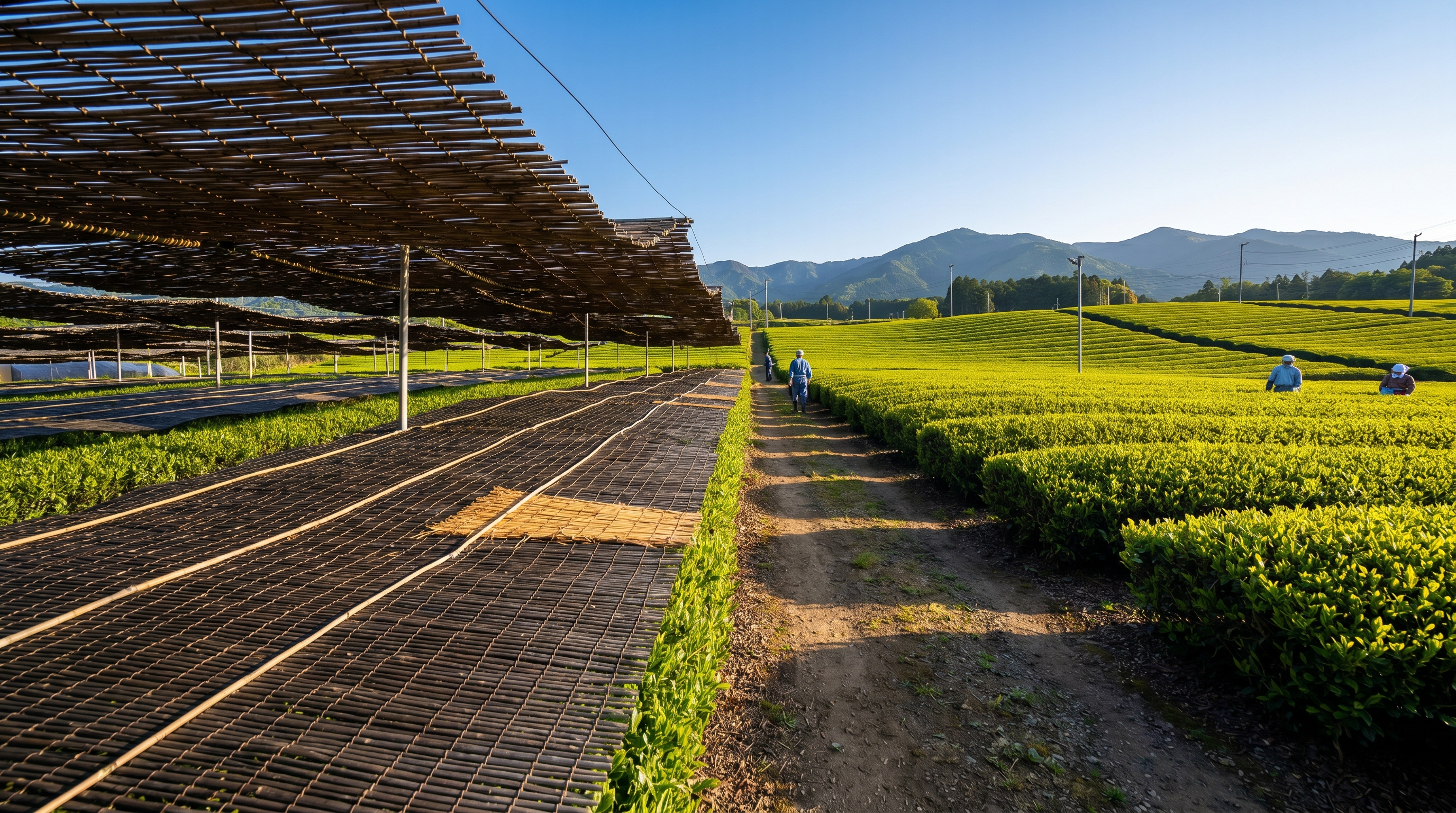
The primary differentiator in the matcha vs green tea cultivation cycle is the shading process, where matcha plants are covered for 20 to 30 days before harvest. This deprivation of sunlight forces the plant to overproduce chlorophyll and L-theanine, resulting in the vibrant “electric green” hue and deep umami flavor sought by premium brands. In contrast, standard green tea is sun-grown (roji), a process that promotes catechins, which provide the characteristic astringency and yellow-green tint found in traditional steeped tea.
Key Takeaway: Shading is a resource-intensive process that directly impacts the price of culinary matcha and its suitability for flavor-masking in dairy or plant-based formulations.
What are the technical differences between stone grinding and pan-firing?
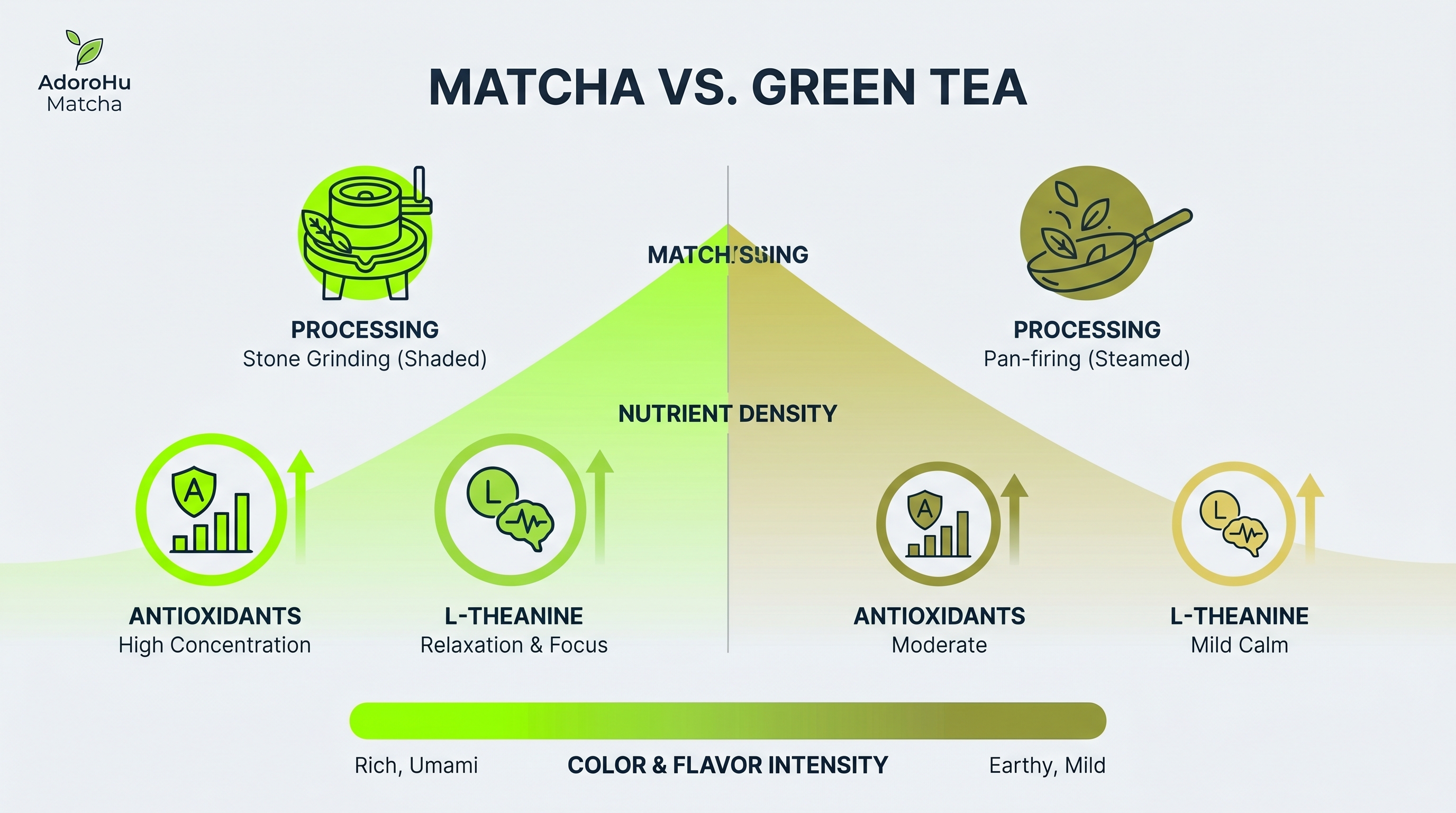
The processing phase for matcha vs green tea defines the physical state and shelf-stability of the bulk ingredient. Traditional green tea undergoes “fixing” via steaming (Japanese style) or pan-firing (Chinese style) to halt oxidation, followed by rolling and drying. Matcha production involves a far more rigorous mechanical sequence where Tencha is stone-ground at a slow rate of approximately 30g per hour to prevent heat friction from degrading the delicate nutrient profile and color.
Key Takeaway: Industrial jet-milling is faster but may compromise color; therefore, stone-ground matcha wholesale remains the gold standard for premium aesthetics.
How do the nutritional profiles impact B2B health claims and product formulation?
The concentration of bioavailable compounds in matcha vs green tea provides food and beverage manufacturers with distinct marketing opportunities. Because matcha involves consuming the whole leaf, it contains up to 137 times more EGCG (antioxidants) than standard steeped green tea. For B2B formulators, the high L-theanine content in matcha makes it the ideal ingredient for “clean energy” or “nootropic” products, offering a sustained release of energy without the jitters often associated with coffee.
Key Takeaway: The superior nutritional density of matcha supports “superfood” labeling and premium price points that traditional green tea extracts cannot justify.
What are the standard wholesale grades used in global tea procurement?
Procurement officers must distinguish between matcha vs green tea grades to effectively manage the Cost of Goods Sold (COGS). Wholesale matcha is typically categorized into Ceremonial Grade (first harvest, highest umami), Culinary Grade (second harvest, slightly more astringent), and Industrial Grade (late harvest, used for supplements). Standard green tea procurement is focused on leaf size and harvest timing, but lacks the standardized powder-grade classifications found in the matcha market.
Key Takeaway: Selecting the correct grade is critical; using ceremonial matcha for baking is a cost-inefficiency, while using industrial grade for lattes will result in unpalatable bitterness.
How should professional buyers evaluate quality during the sampling process?
A technical comparison of matcha vs green tea during the sampling phase requires a four-point inspection protocol. Buyers should look for a vibrant, “electric” green color in matcha, as yellowish tints indicate oxidation or the use of unshaded Sencha powder. Furthermore, high-quality matcha must have a particle size of 5–10 microns, feeling like fine talcum powder, whereas standard green tea powders often feel gritty due to the inclusion of stems and veins.
Key Takeaway: Solubility and “frothability” (the persistent crema) are primary indicators of a high-protein, high-quality batch that will perform well in liquid applications.
What are the primary industrial applications for matcha vs. green tea in food and beverage manufacturing?
The choice between matcha vs green tea depends entirely on the desired end-use application and the target consumer. Matcha is the preferred choice for Functional Beverages, Confectionery (chocolates, ice cream), and Cosmeceuticals due to its intense pigment and the marketing appeal of the “whole leaf.” Conversely, green tea (extracts or leaf) is better suited for Clarified RTD Beverages and traditional Tea Bags where clarity and a lighter mouthfeel are paramount.
Key Takeaway: Matcha provides the visual “wow factor” and health-forward branding necessary for modern lattes and premium snacks.
Which market factors drive bulk pricing and MOQs for premium tea imports?
Volatility in the pricing of matcha vs green tea is largely driven by harvest timing and the origin of the leaves. First-flush (Spring) harvests command a 40–60% premium over Autumn harvests due to their higher amino acid content. Additionally, Japanese-origin tea remains the benchmark for quality, though rising labor costs in Japan frequently result in higher Minimum Order Quantities (MOQs) and tighter allocation for global buyers compared to Chinese-produced alternatives.

Key Takeaway: Reliable B2B partners provide a Certificate of Analysis (CoA) for every batch, shielding brands from the risks of pesticide residues and heavy metal contamination.
What is the potential for private label (OEM) development in the matcha segment?
The expansion of the matcha vs green tea market has opened massive opportunities for Private Label (OEM) brands seeking to capitalize on the wellness trend. Current B2B innovations include Ready-to-Mix (RTM) sachets, fortified blends (matcha with collagen or mushrooms), and branded retail tins. By partnering with an experienced supplier, brands can access matcha private label services that handle everything from custom milling to regulatory-compliant packaging.
Key Takeaway: OEM partnerships allow new brands to enter the premium wellness space with low overhead and guaranteed product quality.
What are the critical logistics and regulatory hurdles for importing bulk tea from Japan and China?
International trade involving matcha vs green tea requires a deep understanding of Maximum Residue Levels (MRLs) for pesticides, particularly for exports to the EU and US. Matcha is highly sensitive to heat, light, and oxygen; therefore, bulk shipments must be vacuum-sealed in multi-layer foil bags and shipped via refrigerated containers (Reefers) to prevent “browning” or flavor degradation. Importers must also secure Phytosanitary Certificates and Country of Origin documentation to ensure smooth customs clearance.
Key Takeaway: Working with a supplier that understands international logistics is the only way to ensure that your bulk investment arrives with its nutrient profile and color intact.
Frequently Asked Questions
- Is matcha healthier than green tea for B2B health claims?
- Yes, matcha contains significantly higher concentrations of antioxidants and L-theanine, making it superior for functional food health labeling.
- Why is matcha more expensive than standard green tea?
- The higher cost is attributed to the labor-intensive shade-growing process and the slow, technical stone-grinding required for a fine powder.
- Can I use green tea powder instead of matcha in commercial baking?
- While possible, green tea powder (often unshaded Sencha) lacks the vibrant color and umami depth of matcha, resulting in a duller final product.
- What is the typical shelf life for wholesale matcha shipments?
- When vacuum-sealed and stored in a cool, dark environment, bulk matcha maintains peak quality for 12–18 months.
- Does matcha contain more caffeine than green tea?
- Yes, a serving of matcha generally contains 30mg–70mg of caffeine, which is higher than the 15mg–30mg found in steeped green tea.
Conclusion
Navigating the nuances of matcha vs green tea is a prerequisite for any business aiming to lead in the wellness, beverage, or functional food sectors. While both share a botanical origin, their cultivation, processing, and nutritional impacts create two distinct markets with vastly different procurement requirements. Ensuring your brand uses high-quality, laboratory-tested ingredients is the foundation of long-term consumer trust.
Ready to elevate your product line with premium, laboratory-tested matcha? Contact our B2B sourcing team today to request samples and discuss our wholesale pricing tiers.