
Matcha yogurt development should compare pre- and post-fermentation addition before stabilizer work begins. Adding powder before culture can change acidification and gel formation, while adding it afterward introduces shear and possible sediment. Start with culinary matcha for yogurt trials in one defined dairy base.
A day-one cup can look acceptable and still develop whey separation, post-acidification, sediment, or flavor drift. Commercial approval therefore needs dose, culture, gel, color, sensory, and refrigerated-storage evidence from the intended package.
Compare pre- and post-fermentation routes at matched total solids. Measure fermentation time, viable cultures, syneresis, texture, color, flavor, and refrigerated change before choosing the formula.
In short: Matcha yogurt needs a route-specific fermentation and shelf protocol rather than a single fresh-cup judgment.
Key points:
- Select the addition stage before optimizing stabilizers or sweetness.
- Treat 1%, 2%, and 3% powder results as study-specific dose evidence.
- Approve whey separation and post-acidification across the intended refrigerated period.
Should matcha yogurt use pre- or post-fermentation addition?
Run both addition routes before selecting the matcha yogurt process. A 2018 set-yogurt study of green-tea powder added 0%, 1%, 2%, or 3% powder on a weight-per-volume basis before fermentation. Its findings therefore support the pre-fermentation route only.
Pre-fermentation powder can affect culture kinetics and gel formation. Post-fermentation addition avoids that culture exposure but adds shear and may create specks or sediment. Hold milk base, heat treatment, total solids, inoculum, powder lot, and package constant so addition-stage effects remain visible.
| Addition route | Main variables | Primary failure to measure |
|---|---|---|
| Before fermentation | Culture kinetics, acidification, gel formation | Early endpoint or weak gel |
| After fermentation | Shear, dispersion, air, sediment | Broken texture or settling |
Key Takeaway: Choose the addition stage before stabilizer work so culture and shear effects remain separate.
What matcha yogurt dose ladder should be screened?
Screen a control and doses that bracket the intended matcha yogurt flavor. In the 2018 powder study, 1% w/v syneresis was statistically comparable with the control, while 2% and 3% w/v significantly increased whey separation. The authors identified 1% w/v as the most suitable tested level for maintaining that gel matrix.
These values are study results, not universal product limits. Repeat the comparison in the intended milk solids, culture, sweetener, stabilizer, heat treatment, and package. A commercial trial may use another declared basis, but any conversion must be documented as a separate formulation step rather than presented as replication of the study's w/v method.
Key Takeaway: Use the published dose response to shape the pilot, then set the commercial range in the actual yogurt.
How does matcha yogurt affect fermentation time and cultures?
Measure time to target pH and strain-specific viable counts in matcha yogurt. The 2018 powder study found that green-tea powder promoted lactic-acid-bacteria growth and shortened fermentation under its conditions. A control schedule could therefore over-acidify a fortified batch.
Record inoculation temperature, culture lot, pH curve, endpoint time, cooling start, and cooling rate. Confirm culture counts with the method required for the product. If the matcha batch reaches its endpoint earlier, change the process from measured kinetics rather than carrying over the plain-yogurt timer.
Key Takeaway: Control fermentation by measured endpoint and culture performance, not the plain-yogurt clock.
How should matcha yogurt syneresis be accepted?
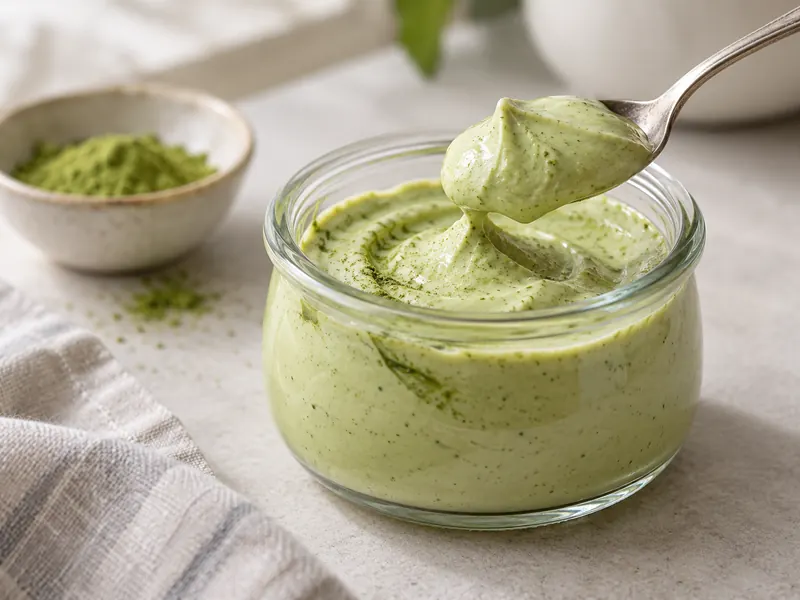
Measure expelled serum under one method and track visible whey-off in the package. The 2018 study's syneresis method used a 10 g sample, 600 × g for 6 minutes at 4°C. Its dose-dependent result shows why casual visual inspection is insufficient.
Use the same sample mass, centrifugal force, time, temperature, and storage day for comparisons, and pair the result with water-holding capacity where appropriate. Photograph package pooling before stirring. This preserves the difference between gel-held water and a cup that merely looks uniform after mixing.
| Check | Method control | Commercial meaning |
|---|---|---|
| Centrifugal syneresis | Mass, force, time, temperature | Gel water retention |
| Package whey-off | Fill, package, storage day | Retail appearance |
| Water-holding capacity | Defined calculation and conditions | Comparative gel performance |
| Sediment | Unstirred observation and redispersion | Powder dispersion stability |
Key Takeaway: Pair a controlled syneresis method with unstirred package observations.
Which matcha yogurt texture tests separate thickness from stability?
Measure matcha yogurt viscosity, gel firmness, and syneresis separately. A thick sample can still release whey, while a firm gel can break down after pumping or stirring. Match total solids and heat treatment before attributing a difference to matcha.
Define spindle or geometry, shear rate, product temperature, conditioning time, and sampling point for viscosity. Use a fixed compression or penetration method for gel firmness. Then repeat the relevant check after production-like transfer or stirring so the chosen texture survives the actual process.
The bulk matcha for food manufacturing framework can support supplier control, but these finished-yogurt tests remain the manufacturer's evidence.
Key Takeaway: Thickness, gel strength, and whey retention need separate measurements.
How should matcha yogurt color and flavor be specified?
Track matcha yogurt Lab* values or ΔE through storage and pair them with sensory testing. A 2021 study of probiotic yogurt with green-tea aqueous extract found darker appearance at 0.5% extract and reported an appearance score of 3.4 at 1% extract.
That source used extract, not powder, so it cannot set a powder limit. Score bitterness, astringency, sourness, tea aroma, sweetness, and overall acceptance in the intended formula. Keep color measurement and sensory acceptance separate: a stronger green can still perform poorly in the cup.
Key Takeaway: Use the extract results to justify color and sensory checks, not to specify a powder dose.
What refrigerated matcha yogurt shelf protocol is defensible?
Repeat matcha yogurt pH, viable cultures, viscosity, syneresis, color, sediment, and sensory checks at defined refrigerated storage days. No primary source here supplies a universal commercial shelf life, so the test period must match the intended product and package.
Record package, fill, headspace, storage temperature, sampling day, and whether the cup was disturbed. Reject a formula that passes day one but drifts in whey separation or post-acidification. The matcha applications in the food industry page can inform the broader application brief without replacing shelf validation.
Key Takeaway: Approve the formula across its intended refrigerated life, not at the first cup.
What should a matcha yogurt buyer require from the powder supplier?
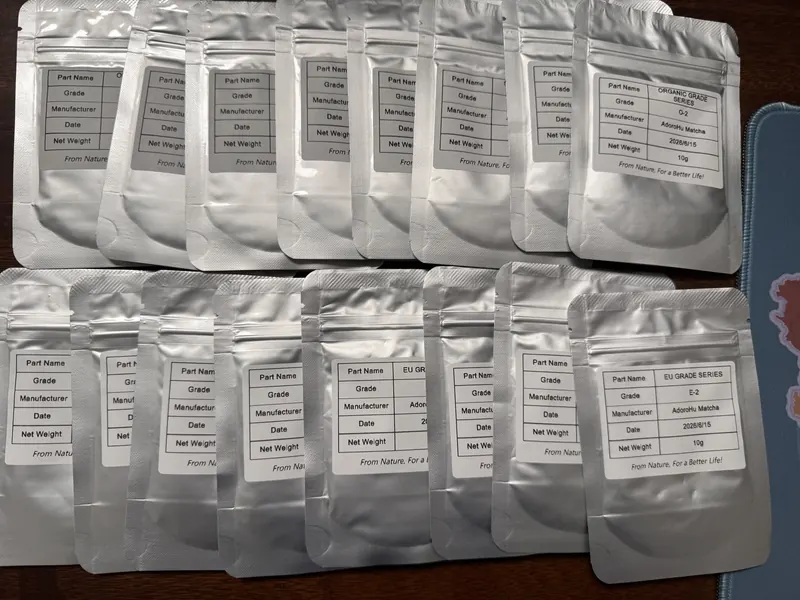
Require lot-linked matcha identity, particle distribution, color, microbiology, and application-trial samples. Retain an approved powder lot and run the selected addition route against it when a new lot or specification revision arrives.
A custom formula development discussion can align raw-powder properties with the yogurt brief. AdoroHu Matcha supplies and characterizes raw powder; the yogurt manufacturer owns fermentation, finished-food safety, and refrigerated shelf validation.
Key Takeaway: Link supplier approval to raw-powder controls and a reproducible finished-yogurt comparison.
FAQ
- Should matcha be added before or after yogurt fermentation?
- Test both routes because pre-fermentation addition affects culture and gel formation, while post-fermentation addition introduces shear and sediment risk.
- Is 1% matcha a universal optimum for yogurt?
- No. It was the most suitable tested level at 1% w/v in one green-tea-powder set-yogurt study and must be revalidated in the intended formula.
- Can a plain-yogurt fermentation schedule be reused unchanged?
- Not without measurement. Green-tea powder shortened fermentation in the 2018 study, so use time to target pH and culture results.
- Does higher viscosity prove lower whey separation?
- No. Measure viscosity, gel firmness, and syneresis separately under defined conditions.
- Can green-tea extract results determine a matcha-powder dose?
- No. Extract and powder trials use different ingredient matrices, so the finished yogurt needs direct color, texture, and flavor testing with the intended powder.
Conclusion
Select the addition stage, dose basis, fermentation endpoint, syneresis method, and refrigerated checkpoints before approving a supplier lot. To arrange raw-powder samples, contact AdoroHu about yogurt trials.
Institutional author: AdoroHu Matcha