
A mixed SKU pallet works when one scannable handling-unit identity points to an electronic record of every contained matcha SKU, lot, and carton quantity. Without that link, warehouse teams may see a valid pallet label but still receive, allocate, or investigate the wrong cases.
For a buyer arranging wholesale matcha supply, the mixed SKU pallet is a data-mapping task before it is a label-design task. The physical pallet, its Serial Shipping Container Code, and its despatch documents must describe the same shipment at the same handling level.
A heterogeneous pallet contains more than one trade item at the highest packaging level. Identify that logistic unit with an SSCC, then send the SKU, GTIN, lot, and quantity detail in the electronic shipment record linked to that SSCC. Reconcile the physical cases, label, and document before release.
In short:
Key points:
- Use the SSCC to identify the pallet as a unique logistic unit.
- Keep mixed contents in an SSCC-linked electronic record instead of encoding one contained GTIN as the pallet identity.
- Test the handoff from packing through receiving, including changes after the pallet is rebuilt.
What makes a mixed SKU pallet heterogeneous under GS1 guidance?
A mixed SKU pallet is heterogeneous when different trade items appear at the highest packaging level and those items have different GTINs. A pallet containing cases of two matcha grades, pack sizes, or branded products therefore fits the heterogeneous pattern when the cases are separate trade items.
GS1’s Logistic Label Guideline contrasts this with a homogeneous unit, where the highest-level packages are the same trade item with the same GTIN. The distinction matters because it changes which product information belongs on the logistic label.
Do not classify a pallet from its destination alone. Cases shipped to one customer can still contain several trade items. Conversely, multiple lots of one SKU may require special transaction data even if the GTIN stays the same. The buyer’s routing guide or traceability rules may treat variable lot or date attributes more strictly than the basic label distinction.
Write the classification in the packing instruction: homogeneous, heterogeneous, or a logistic unit that is itself a trade item. If the business has not decided which it is, label design should pause rather than guess.
| Pallet condition | GS1 classification question | Data consequence |
|---|---|---|
| One case GTIN throughout | Homogeneous logistic unit | Content GTIN may be eligible under applicable rules |
| Several case GTINs | Heterogeneous logistic unit | Use SSCC; keep trade-item detail off the mixed-pallet label |
| Pallet sold as one trade item | Logistic unit is also a trade item | Follow the traded-unit identification rules |
Key Takeaway: Classify the physical unit before choosing any barcode data beyond the SSCC.
Why should a mixed SKU pallet use an SSCC?
A mixed SKU pallet should use an SSCC because GS1 defines it as the unique identifier for a logistic unit assembled for transport or storage. The number identifies the handling unit without pretending that one contained product represents everything on it.
The GS1 Logistic Label Guideline says the SSCC is the single mandatory element for every GS1 Logistic Label. It is encoded using Application Identifier (00) followed by the 18-digit SSCC data element. The party creating the logistic unit should allocate the SSCC from its own GS1 Company Prefix.
An SSCC is a serial identity, not a product description. Its Company Prefix contributes to global uniqueness but does not prove where the matcha was grown, which lot is inside, who owns it now, or whether it meets a certification. Those facts belong in master, transaction, or traceability data.
This separation is useful. Warehouse automation can scan one stable identifier while the linked record carries changing business detail. It also prevents the label from becoming a crowded summary that is difficult to maintain when contents change.
Key Takeaway: Let the SSCC identify the pallet, and let linked data describe what the pallet contains.
Which identifiers belong on a mixed SKU pallet label?
For a heterogeneous logistic unit that is not itself a trade item, GS1 says no GTIN or related trade-item information should be included on the logistic label. Its mixed-pallet example lists the SSCC with AI (00) as mandatory and no optional trade-item data.
That rule prevents a serious ambiguity. Printing one case GTIN in the pallet barcode can make a receiver believe that all cases share that product identity. Printing several product barcodes without a defined receiving workflow can also cause the wrong symbol to be scanned as the handling unit.
Use human-readable shipping text only when it fits the agreed guideline and cannot be mistaken for encoded pallet content. The exact carrier, customer, route, and buyer fields belong to the applicable routing guide. This article does not invent a universal buyer label layout.
The practical trade-off is simplicity versus local convenience. A content-heavy label may feel helpful to a person, but the mixed-pallet standard pattern relies on the SSCC and linked message. Prefer the unambiguous machine key, then make the receiving record easy to access.
Key Takeaway: Do not encode a contained SKU’s GTIN as the identity of a heterogeneous non-traded pallet.
How should mixed SKU pallet contents map to shipment documents?
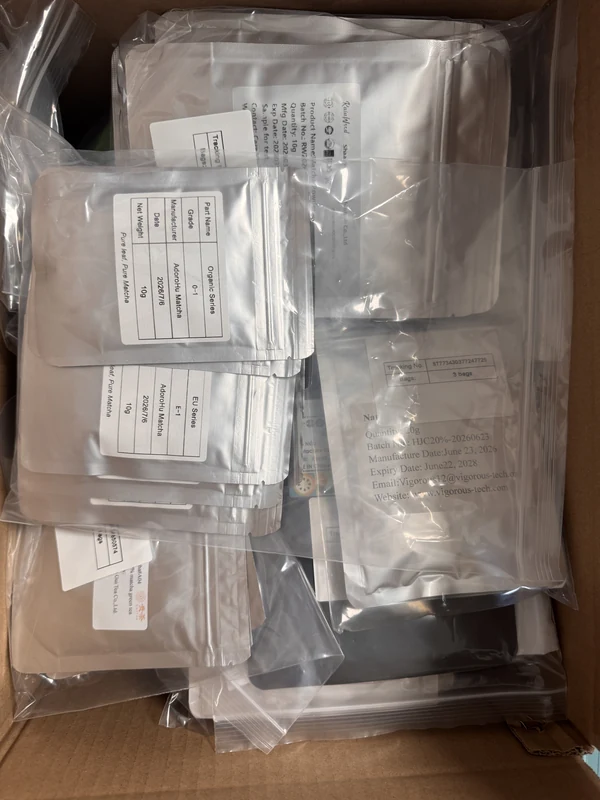
Mixed SKU pallet contents should map each SKU or GTIN, lot where required, and carton quantity to the exact pallet SSCC in the despatch advice, ASN, WMS export, or other agreed shipment record. GS1 strongly encourages electronic messaging because heterogeneous trade-item detail cannot be carried on the logistic label itself.
Build one parent-child structure. The parent is the pallet SSCC. The child lines identify the contained cases or trade items, quantities, and relevant variable data. Add the shipment, order, and destination references required by the trading-partner agreement.
Avoid a flat packing list that gives total quantities without assigning them to a pallet. It may reconcile the shipment in aggregate but fails when a receiver finds one damaged unit, one missing carton, or one lot requiring isolation. Pallet-level mapping narrows the investigation.
The message format is not universal. An EDI ASN, portal template, spreadsheet, or PDF may all carry the relationship, but only the buyer can define its required format and fields. The controlling principle is that scanning the SSCC retrieves or joins to the correct content record.
| SSCC-linked record field | Purpose | Control question |
|---|---|---|
| Pallet SSCC | Parent handling-unit identity | Does it exactly match the label? |
| SKU/GTIN | Product identity for each line | Is every contained trade item listed? |
| Lot/batch | Traceability where required | Does the physical case marking agree? |
| Carton quantity | Receiving and shortage check | Does the line total match the pallet? |
| Order/shipment reference | Commercial document join | Can receiving find the expected shipment? |
Key Takeaway: Every content line must resolve to one physical pallet SSCC, not merely to the shipment total.
How can a mixed SKU pallet preserve lot traceability?
A mixed SKU pallet preserves lot traceability by carrying the lot relationship in the SSCC-linked content record and by verifying it against case markings during packing. The SSCC alone does not encode or prove the lots inside.
Where one SKU appears in two lots, create separate content lines or another unambiguous structure accepted by the buyer. Record the carton count for each lot. If the buyer prohibits mixed lots or requires dates, follow that routing rule rather than assuming the GS1 label minimum is the complete traceability specification.
At packing, scan or record cases into the pallet record before wrapping. At release, compare the WMS total, physical carton count, case labels, and shipment document. Retain the association under the shipment and pallet identities so a later investigation can isolate the relevant cases.
Do not infer origin or certification from the SSCC Company Prefix. Keep those claims tied to approved product and lot documentation. The SSCC is the pointer that helps retrieve evidence; it is not the evidence itself.
Key Takeaway: Maintain lot detail as verified child data linked to the SSCC throughout packing and shipment.
What happens when a mixed SKU pallet is rebuilt?
When a mixed SKU pallet is rebuilt into a newly constituted logistic unit, update the physical identity and content relationship under the applicable SSCC allocation rules. A label should never continue pointing to contents that no longer exist on that pallet.
Define operational events that trigger record review: adding or removing cases, moving cases between pallets, splitting a pallet, consolidating two units, or replacing damaged cartons. The warehouse system should prevent shipment until the revised content count and physical unit agree.
Do not reuse an old SSCC merely because a later pallet has identical products. Serial identity distinguishes logistic units over time. Reuse can cause a receiver or traceability system to retrieve an earlier shipment event.
The practitioner recommendation is to control rebuilding at a designated station. Ad hoc changes on the dock are fast, but they create mismatches between the label, ASN, and physical cases. A short scan-and-reprint workflow costs less than investigating a shortage or lot discrepancy after receipt.
This topic concerns identity and document reconciliation. Pallet geometry, load strength, and stacking tests remain separate engineering tasks.
Key Takeaway: Treat any content change as a data event and do not ship until label and linked record agree again.
Where should a mixed SKU pallet label be placed?
A mixed SKU pallet label should be placed where scanners can read the handling-unit barcode through the normal transport and receiving path. GS1 specifies that barcodes on larger logistic units such as pallets should be positioned 400 to 800 mm from the pallet base.
Placement needs verification after the load is wrapped, not only when the label prints correctly. Stretch film, corner boards, strapping, glare, abrasion, or an uneven case surface can obscure the symbol. Use the actual warehouse scanners and expected approach angles for a practical read test.
If two sides are labeled under a buyer’s routing guide, confirm that both show the same SSCC. Duplicate physical labels with different identities would split one pallet into two system records. Reprints need controlled cancellation or destruction of the superseded label.
Do not invent a universal label size or duplicate-label rule from the placement clause. Buyer and carrier requirements may add dimensions and sides. Document the chosen configuration in the shipment specification.
Key Takeaway: Position and test the SSCC for real receiving conditions, with every visible copy carrying the same identity.
How should mixed SKU pallet data be checked before shipment?
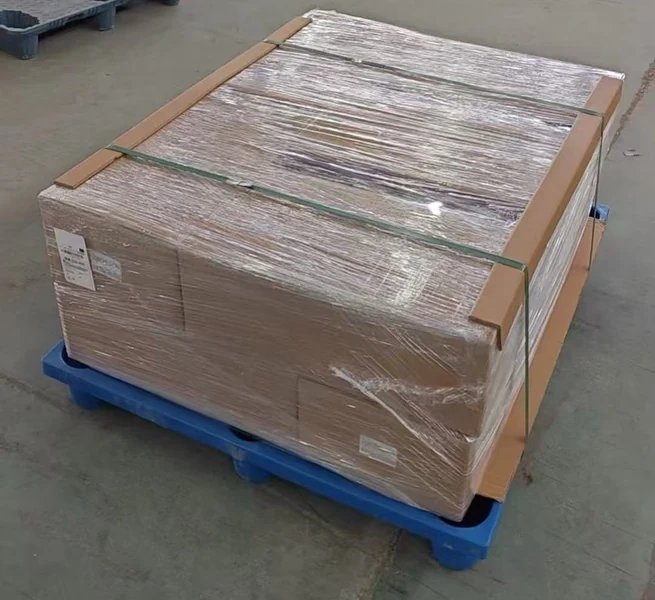
Mixed SKU pallet data should be checked through a three-way reconciliation of physical cases, the SSCC label, and the outgoing shipment record. A valid barcode cannot compensate for missing or inaccurate child lines.
First, scan the pallet SSCC and open its record. Second, compare each physical SKU, lot where required, and carton quantity with that record. Third, compare the record with the commercial packing list and buyer message. Resolve differences before sealing release status.
Use exception codes that name the failure: unlisted case, wrong lot, count mismatch, duplicate SSCC, unreadable label, missing message, or order mismatch. A generic “pallet error” cannot guide correction or trend review.
Keep this reconciliation distinct from product-quality release. The matcha pre-shipment inspection guide covers the separate task of deciding what to inspect and when. A pallet may have perfect content mapping while containing goods that have not passed another required check.
Key Takeaway: Release the pallet only when its cases, SSCC record, and shipment documents reconcile.
How does a mixed SKU pallet improve receiving and claims evidence?
A mixed SKU pallet improves receiving when the SSCC scan retrieves the expected contents before or at arrival. GS1 explains that SSCC scanning can match physical movement with electronic business messages and support automated receiving, routing, and cross-docking.
The benefit depends on accurate advance data. If the label arrives before its message, or the message lists shipment totals without pallet allocation, the receiver still has to count and identify cases manually. Record message transmission, acknowledgement where available, and the final pallet-content revision used for shipment.
At receipt, discrepancies can be recorded against the SSCC, affected SKU line, quantity, and lot. That evidence narrows later review, but it does not by itself prove where damage or shortage occurred. Photos, carrier records, seal information, and signed receiving evidence may still be needed.
Use the separate matcha shipment claims guide for broad claims handling. This article’s boundary is the identity and content map that makes pallet-level reconciliation possible.
Key Takeaway: The SSCC accelerates receiving only when the correct content message reaches the receiver and stays revision-aligned.
What should a mixed SKU pallet SOP require?
A mixed SKU pallet SOP should require classification, SSCC allocation, case-to-pallet capture, label printing and placement, document generation, reconciliation, exception handling, and final release. Assign an owner to each handoff so mismatches cannot pass between production, warehouse, logistics, and customer service.
The packing instruction should list permitted SKUs and lots, buyer-specific restrictions, the data source for case identity, and the trigger for rebuilding. The label step should verify AI (00) and the exact SSCC. The document step should confirm every content line points to that same value.
Include a receiving test before launching a new trading-partner flow. Send a controlled example message, scan the label, and confirm that the buyer or receiving system retrieves the intended pallet and line detail. A technically valid outbound file may still fail the partner’s import mapping.
Use version control for routing guides and mapping rules. The GS1 standard defines the shared identity framework, while the buyer may require additional fields or formats. Review those additions without allowing them to change the core meaning of the SSCC.
| SOP checkpoint | Evidence retained | Failure action |
|---|---|---|
| Pallet classified | Packing instruction | Stop label design if unclear |
| SSCC allocated | System record and label | Block duplicates |
| Contents captured | SKU/lot/quantity child lines | Correct physical or data mismatch |
| Label verified | Scan result and placement check | Reprint under control |
| Documents reconciled | Final shipment revision | Hold dispatch |
Key Takeaway: A mixed-pallet SOP must control the data relationship through every physical change and handoff.

FAQ
- What is a mixed SKU pallet?
- It is a heterogeneous logistic unit containing different trade items at the highest packaging level, normally identified by different GTINs.
- What is the mandatory GS1 Logistic Label element for a mixed pallet?
- The SSCC encoded with Application Identifier 00 is the single mandatory element for a GS1 Logistic Label.
- Should a mixed SKU pallet label show one contained GTIN?
- No. For a heterogeneous logistic unit that is not itself a trade item, GS1 says not to include a GTIN or related trade-item information on the label.
- Where should the mixed pallet’s SKU and lot details appear?
- Put them in the electronic shipment or warehouse record linked to the pallet SSCC, following the trading partner’s required format.
- Does an SSCC prove the pallet’s contents or origin?
- No. It uniquely identifies the logistic unit; linked transaction and traceability data describe contents, lots, and other claims.
- What should happen if cases are moved after labeling?
- Hold shipment, update the logistic-unit identity and content record as required, regenerate affected labels or messages, and reconcile again.
Conclusion
A mixed SKU pallet succeeds when the physical unit, SSCC, and electronic content record remain synchronized from packing through receipt. Keep product detail in the linked record, control every rebuild, and test the buyer’s receiving handoff before dispatch. Contact AdoroHu Matcha to discuss matcha SKU, lot, and shipment-document requirements.