A matcha pre-shipment inspection verifies quantity, packaging, labelling, documentation, and sample integrity at the factory before goods are released for shipment, paired with laboratory testing of drawn samples. Here’s the adaptation most buyers miss: standard pre-shipment inspection was designed for discrete manufactured goods, and applying it unchanged to powder inspects the packaging while leaving the product itself unverified.
The mismatch is worth understanding. Conventional inspection relies on AQL sampling, counting defective units against an acceptable defect rate, and on visual assessment of workmanship. Neither transfers well to matcha. A shipment of powder is not a population of units where some are defective and others are not, and an inspector standing in a warehouse cannot see heavy metals, pesticide residues, microbiological load, or a colour value two points outside your tolerance.
What a matcha inspection can do, done properly, is verify everything physical and documentary at the factory, then draw representative samples for the laboratory work that answers the questions inspection cannot. This guide covers how to structure both with any matcha supplier.
The two tracks in a useful inspection
A matcha pre-shipment inspection should run at 80–100% production completion and cover two tracks. On site: quantity and carton count against the purchase order, packaging integrity including seal condition and nitrogen flush where specified, labelling and lot codes reconciled against the COA, storage conditions, container cleanliness and absence of odour, and representative sampling drawn across multiple pallets rather than from one accessible point. In parallel: laboratory testing of those samples against your specification, covering particle size, colour, moisture, and where required contaminants.
Define pass/fail criteria in writing before the inspection, and use an inspector genuinely independent of the factory.
In short: inspect at 80–100% completion, verify quantity, packaging, labelling and storage on site, draw representative samples across pallets, and send them for laboratory testing against your specification.
Key points:
- AQL sampling suits discrete units; for powder, sampling representativeness matters more than sample count.
- Visual inspection cannot detect matcha’s real risks; pair it with laboratory testing.
- Define pass/fail criteria in writing before the inspection, or disputes are guaranteed.
What can a pre-shipment inspection actually verify for matcha?
A pre-shipment inspection can verify everything physical and documentary, but not the powder’s chemical or microbiological properties. Here’s the boundary to set before commissioning one: knowing what inspection cannot answer prevents false confidence.
Separate factory checks from laboratory tests
Split the questions into two groups. Inspection answers: is the quantity correct, is the packaging intact and of the specified format, does the labelling carry the right lot codes and dates, do those reconcile with the accompanying documentation, are the goods stored in appropriate conditions, and is the container clean and odour-free before loading. Laboratory testing answers: does the material meet the specification for particle size, colour, moisture, and where relevant heavy metals, pesticide residues, and microbiological limits.
The mistake to avoid is treating a passed inspection as confirmation that the matcha is good, when it confirms only that the right quantity of correctly packaged and labelled product is ready to ship. That distinction becomes commercially important later: a shipment that passed inspection but failed specification is still non-conforming, which is why the acceptance criteria in our guide to matcha batch rejection rest on measured parameters rather than on an inspection certificate.
Key Takeaway: Inspection verifies quantity, packaging, labelling, documentation, storage and container condition; laboratory testing verifies particle size, colour, moisture and contaminants. A passed inspection confirms the right quantity of correctly packaged goods is ready, not that the matcha meets specification.
When should a matcha inspection take place?
Schedule the inspection at 80 to 100 percent production completion, once packing is underway but before the goods are sealed for dispatch. Here’s the timing trade-off: too early and packaging is incomplete, too late and there is no time to correct anything.
Three timing considerations apply. Production completion: standard practice places pre-shipment inspection at 80–100% completion, which for matcha means after milling, screening, and filling, when finished cartons exist to be counted and examined. Documentation availability: the batch COA should already exist, since a central purpose of the inspection is reconciling physical lot codes against the certificate, and inspecting before the COA is issued forfeits that check.
Correction time: leave enough margin before the vessel booking that a failed inspection can be resolved by re-work or re-inspection rather than forcing you to choose between shipping non-conforming goods and missing the sailing. The related option worth knowing is during-production inspection, performed mid-run to catch problems while there is still time to correct them, which is more valuable than pre-shipment inspection on a first order with a new supplier, where the risk of discovering a systemic problem too late is highest.
This sequencing complements the process testing described in our guide to matcha trial orders.
Key Takeaway: Inspect at 80–100% production completion, after the batch COA exists so lot codes can be reconciled against it, and early enough that a failure can be corrected before the vessel booking; on a first order, consider a during-production inspection instead.
Why does AQL sampling not translate well to matcha?
AQL sampling counts defective units in a population, and a batch of powder is not a population of units. Here’s the conceptual mismatch: matcha does not fail unit by unit, it fails batch by batch.
Understand what AQL was built for. Under ISO 2859-1, an inspector draws a sample size determined by lot size and inspection level, then counts defects against an acceptable quality limit selected for the product and risk. AQL 2.5 is sometimes used as an illustrative packaging threshold, but it is not a universal default and does not specify the inspection level or sampling plan by itself. That logic works where units vary independently, so a zip fails on one garment and not another.
Matcha from a single milling run is essentially homogeneous, so the meaningful question is not what proportion of packages are defective but whether the batch as a whole conforms. Where AQL does still apply is on the packaging: carton counts, seal integrity, label accuracy, and fill weight are genuinely unit-level attributes that can be sampled conventionally.
The practical adaptation for matcha is therefore to use conventional sampling for packaging attributes, and for the product itself to focus on sampling representativeness, drawing material from multiple cartons across different pallets and different points in the production run, rather than from whatever is nearest the warehouse door. What those samples are then measured against is your written specification, as covered in our guide to matcha spec sheets.
Key Takeaway: AQL counts defective units, but matcha from one milling run is homogeneous, so it conforms or fails as a batch; use conventional AQL sampling for packaging attributes like carton count, seals, labels and fill weight, and for the product focus on drawing representative samples across pallets and production points.
What should the on-site inspection check for matcha?
The on-site checklist should cover quantity, packaging integrity, labelling reconciliation, storage, and loading conditions. Here’s what distinguishes a matcha checklist from a generic one: several items exist because tea absorbs odour and degrades with heat, light, and oxygen.
Build the checklist around these items.
- Quantity: carton and unit counts against the purchase order, plus fill weight checks on sampled units.
- Packaging format: confirmation that cartons, liners, and inner bags match the specified format and barrier specification.
- Seal integrity and gas flush: seals intact and, where nitrogen flushing is specified, evidence that it was performed and the packs are correctly sealed rather than merely closed.
- Labelling: lot numbers, production dates, best-before dates, and any certification marks, reconciled against the batch COA and the packing list.
- Documentation: physical presence of the COA and certificates, with lot codes matching the goods rather than referencing another batch.
- Storage conditions: temperature, humidity, light exposure, and separation from strong-smelling materials in the warehouse.
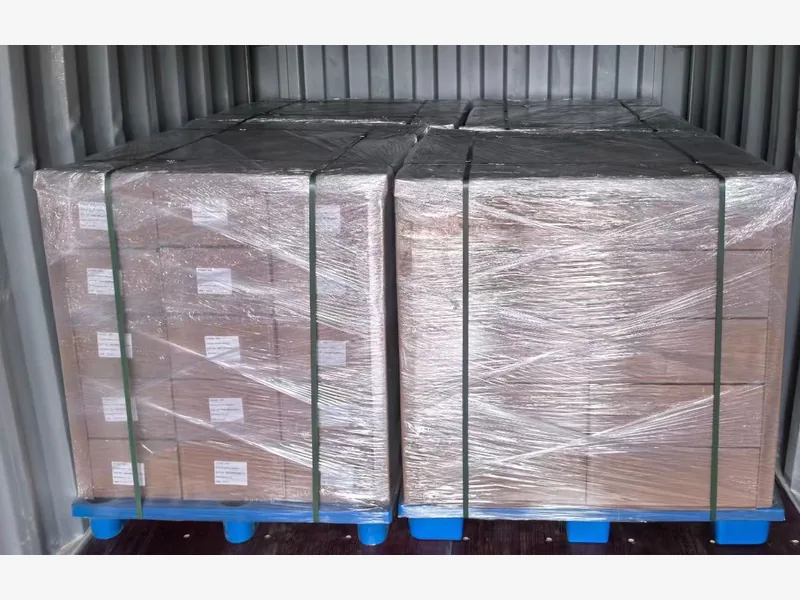
- Container condition before loading: clean, dry, odour-free, and free of contamination risk, since tea readily takes up odours.
The reconciliation between physical lot codes and the COA deserves particular attention, because it is the single check most likely to expose a substitution or a documentation error, and it is easy to specify. Reading that certificate properly is covered in our guide to reading a matcha COA.
Key Takeaway: Check quantity and fill weights, packaging format and barrier specification, seal integrity and nitrogen flush, labelling reconciled against the COA and packing list, documentation with matching lot codes, warehouse storage conditions, and container cleanliness and odour before loading.
How should samples be drawn and tested?
Samples should be drawn under the inspector’s supervision across the batch, sealed, and sent to an accredited laboratory. Here’s what makes the sample meaningful: it must represent the batch rather than the most accessible carton.
Protect sample identity and representativeness
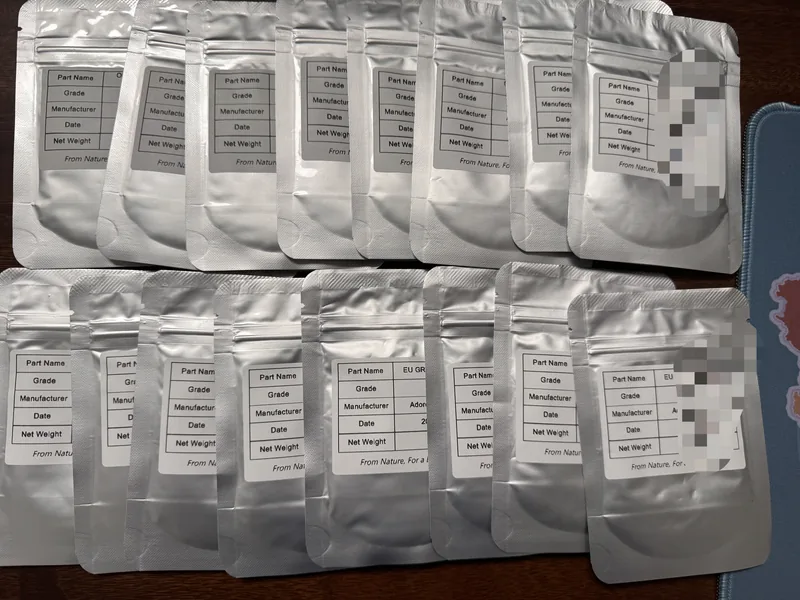
Specify the sampling protocol in advance. Draw from multiple cartons across different pallets and, where the batch spans more than one production run, from each run, since a sample taken entirely from one pallet tells you about that pallet. Have the inspector seal and label samples with lot codes, date, and their signature, so chain of custody is documented if results are later disputed. Split the sample into at least two portions: one to the laboratory, one retained sealed by you as a reference.
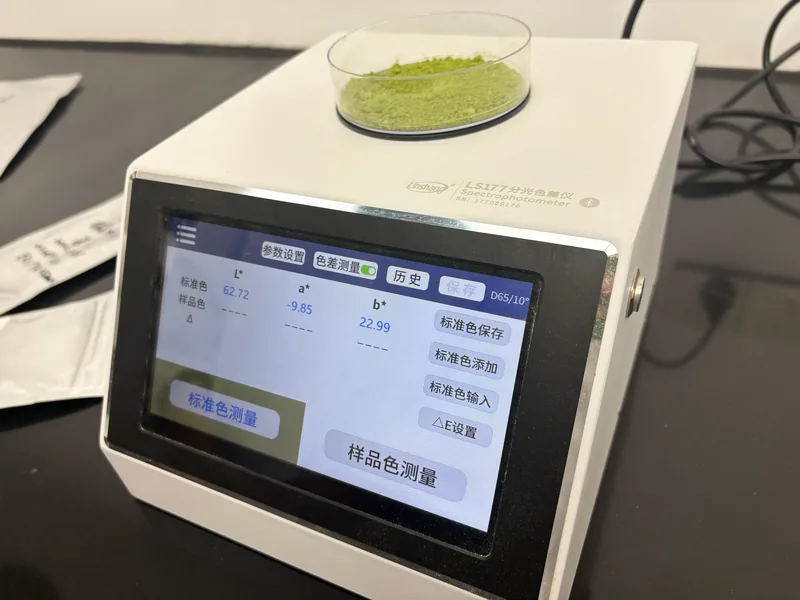
Then test against your specification, typically particle size distribution, colour values, and moisture as standard, adding contaminant screening where your market or risk profile requires it. The point that determines whether this exercise has any teeth: results must be received and reviewed before you authorise shipment or release the balance payment, because testing that arrives after the container has sailed provides information but no leverage. Where inspection and testing form part of your release conditions, they belong in the purchase order rather than being agreed informally.
The FDA’s CGMP and preventive-controls overview describes current good manufacturing practice, hazard analysis, and risk-based preventive controls under 21 CFR Part 117. Qualified personnel should use the applicable specification and hazard analysis to define the risk-based test plan and release review.
Key Takeaway: Draw samples across multiple pallets and production runs under inspector supervision, seal and label them with lot codes and signature for chain of custody, retain a split portion, and ensure laboratory results arrive before you authorise shipment or release the balance payment.
How do you write an inspection checklist that avoids disputes?
Define pass and fail criteria in writing before the inspection, in measurable terms. Here’s the source of most inspection disputes: the parties never agreed what a failure looks like.
Set evidence and pass criteria in advance
Three practices prevent the usual arguments. Define defect classification explicitly, stating what constitutes a critical, major, or minor finding for your product, since disagreement over major versus minor classification is one of the most common friction points in third-party inspection. Set numeric thresholds rather than adjectives, so “packaging in good condition” becomes stated seal integrity and carton condition criteria, and “correct labelling” becomes a list of required fields checked against named documents.
And agree the consequences in advance: what happens on a fail, who pays for re-inspection, and who bears the cost of re-work, because disputes over re-inspection charges after a failed inspection are routine and are far easier to settle beforehand. Send the checklist to both the inspection agency and the supplier ahead of the visit, so the factory knows what will be examined and can prepare, which reduces the risk of the inspection being disrupted by an unprepared or uncooperative supplier.
The judgement worth applying: an inspection agency’s standard checklist is a starting point designed for general merchandise, and the matcha-specific items above will not be on it unless you add them.
Key Takeaway: Define critical, major and minor findings explicitly, replace adjectives with numeric thresholds and named document checks, and agree in advance who pays for re-inspection and re-work; send the checklist to both agency and supplier beforehand, and expect to add matcha-specific items to the agency’s standard template.
Who should perform a matcha pre-shipment inspection?
Use an inspector genuinely independent of the factory, whether from an established agency or your own team. Here’s the selection criterion that matters more than the brand name: independence, and a checklist detailed enough for your product.
Weigh three options. Established third-party inspection agencies may offer a standardised process, but confirm the provider’s current scope, inspector-independence controls, sampling method, and reporting terms for the specific location and assignment. A capable mid-tier specialist can serve equally well and sometimes better where they know the product category, since category familiarity affects how meaningfully a checklist is applied. Your own team is valuable for internal record-keeping and relationship building, but does not substitute for independent verification where the point is an impartial assessment.
One practical signal worth noting: where a supplier is a trading company rather than a producer, they may direct the inspector to an office first and then travel to the actual production site, which is itself informative about who you are buying from, a distinction explored in our guide to auditing a matcha supplier. Confirm the report turnaround before booking and leave enough margin for review, corrective work, and any re-inspection before release.
Key Takeaway: Choose on independence and checklist depth rather than brand: established agencies may offer a standardised process, while capable specialists may know the category better; verify independence controls and scope with either option, and your own team supplements but does not replace independent verification.
When is pre-shipment inspection worth the cost?
Inspection is worth it when the cost of a non-conforming shipment exceeds the inspection fee by a meaningful margin, which for most matcha orders is a low bar. Here’s the comparison that decides it: an inspection costs a few hundred dollars, while a rejected container costs the goods, the freight, the return logistics, and the production gap.
Apply inspection selectively rather than universally. Always inspect on a first order with a new supplier, where you have no performance history and the risk of a systemic problem is highest. Inspect on high-value consignments, where the sum at risk clearly exceeds the fee. After any quality incident, inspect until performance has been re-established over several shipments. Inspect where the destination market has strict compliance requirements and a customs hold would be costly.
Conversely, on routine repeat orders from a supplier with a strong documented record, a full third-party inspection every shipment may be disproportionate, and a reduced-frequency or risk-based approach with continued laboratory testing of retained samples can be sufficient.
The economic point that makes inspection attractive for matcha specifically: because return logistics across a border frequently cost more than the consignment itself, catching a problem while the goods are still at the factory is dramatically cheaper than any remedy available once they arrive, which is exactly why the remedies discussed in our guide to raising a matcha quality complaint are second-best outcomes. The same logic applies across complementary lines such as hojicha powder.
Key Takeaway: Always inspect first orders, high-value consignments, shipments after a quality incident, and those bound for strict compliance markets; on routine repeat orders from a proven supplier, reduced-frequency risk-based inspection may suffice, since catching problems at the factory is far cheaper than any post-arrival remedy.
FAQ
What does a matcha pre-shipment inspection cover?
On site it covers quantity and carton counts against the purchase order, fill weights, packaging format and barrier specification, seal integrity and nitrogen flushing where specified, labelling and lot codes reconciled against the COA and packing list, warehouse storage conditions, and container cleanliness and odour before loading. It should also include drawing sealed, representative samples for laboratory testing against your specification.
When should a matcha pre-shipment inspection happen?
At 80 to 100 percent production completion, after the batch COA has been issued so physical lot codes can be reconciled against it, and with enough margin before the vessel booking that a failed inspection can be corrected through re-work or re-inspection. On a first order with a new supplier, a during-production inspection can be more valuable, since problems are caught while correction is still possible.
Does AQL sampling work for matcha inspection?
Only partially. AQL under ISO 2859-1 counts defective units against an acceptable defect rate, which suits discrete goods where units vary independently. Matcha from a single milling run is essentially homogeneous, so it conforms or fails as a batch. Use conventional AQL sampling for packaging attributes such as carton count, seals, labels and fill weight, and for the product itself prioritise drawing samples representatively across pallets and production runs.
Can an inspector tell whether matcha meets specification?
Not by inspection alone. An inspector can verify quantity, packaging, labelling, documentation, storage, and container condition, but cannot see particle size distribution, colour values, moisture content, heavy metals, pesticide residues, or microbiological load. Those require laboratory testing of samples drawn during the inspection, which is why matcha inspection should always be paired with lab work rather than treated as a substitute for it.
Who pays for a failed matcha inspection and re-inspection?
This should be agreed in writing before the inspection, since disputes over re-inspection charges after a failure are common. Many buyers make the supplier responsible for re-inspection costs where the failure is attributable to them, but unless the arrangement is stated in the purchase order or supply agreement in advance, it becomes a negotiation at the worst possible moment.
Conclusion
A matcha pre-shipment inspection earns its cost when it is designed for powder rather than borrowed from discrete-goods practice: scheduled at 80 to 100 percent completion, focused on quantity, packaging integrity, labelling reconciliation, storage and container condition, and paired with laboratory testing of representatively drawn samples. The decisive takeaway is that inspection and testing answer different questions, and a passed inspection tells you the right quantity of correctly packaged product is ready to ship, not that the matcha inside meets your specification.
Catching a problem at the factory is dramatically cheaper than any remedy available after the container arrives. To discuss inspection access, sampling protocols, and pre-shipment documentation, contact AdoroHu Matcha to request samples and a wholesale quote.