Most commercial bakeries struggle with matcha desserts that turn brown and bitter after baking. This color degradation ruins your brand’s visual appeal and leads to inconsistent flavor profiles across product batches. High-grade ceremonial matcha is often too delicate for heat, while low-quality powders introduce a metallic aftertaste that alienates customers. To scale profitably, businesses must source specialized wholesale matcha engineered for thermal stability and high-impact pigmentation.
Selecting the best matcha for desserts requires choosing a heat-stable culinary powder that maintains its vibrant green color at temperatures up to 220°C. Professional food manufacturers prioritize powders with a particle size under 10 microns to ensure a seamless texture in chocolates, creams, and doughs. High-quality culinary matcha provides a robust flavor profile that withstands fats and sugars without turning brown or excessively bitter during the baking process.
In short:
- Heat stability is the primary metric for commercial baking success.
- Culinary grades are more cost-effective and flavor-robust for dessert applications.
- Particle size significantly dictates the final mouthfeel of premium confections.
- Strategic sourcing from certified suppliers ensures batch consistency and safety.
Why is selecting the best matcha for desserts critical for your brand?
In the B2B food sector, visual consistency is the hallmark of quality. Matcha desserts rely on a “vibrant green” psychological trigger. If your product appears olive or brown, consumers perceive it as stale or low-quality. Selecting a specialized matcha ensures that your brand maintains a premium aesthetic. Beyond color, the correct grade manages the balance between natural sweetness and umami. This prevents the “grassy” or “fishy” notes associated with poor-quality sourcing. Consistent sourcing protects your margins by reducing waste from failed batches.
What are the primary differences between ceremonial and culinary grades?
Ceremonial and culinary grades serve distinct functions in the food industry. Ceremonial grade is designed for water-based suspension. It is too delicate for the intense fats and sugars found in desserts.
Flavor profile variations
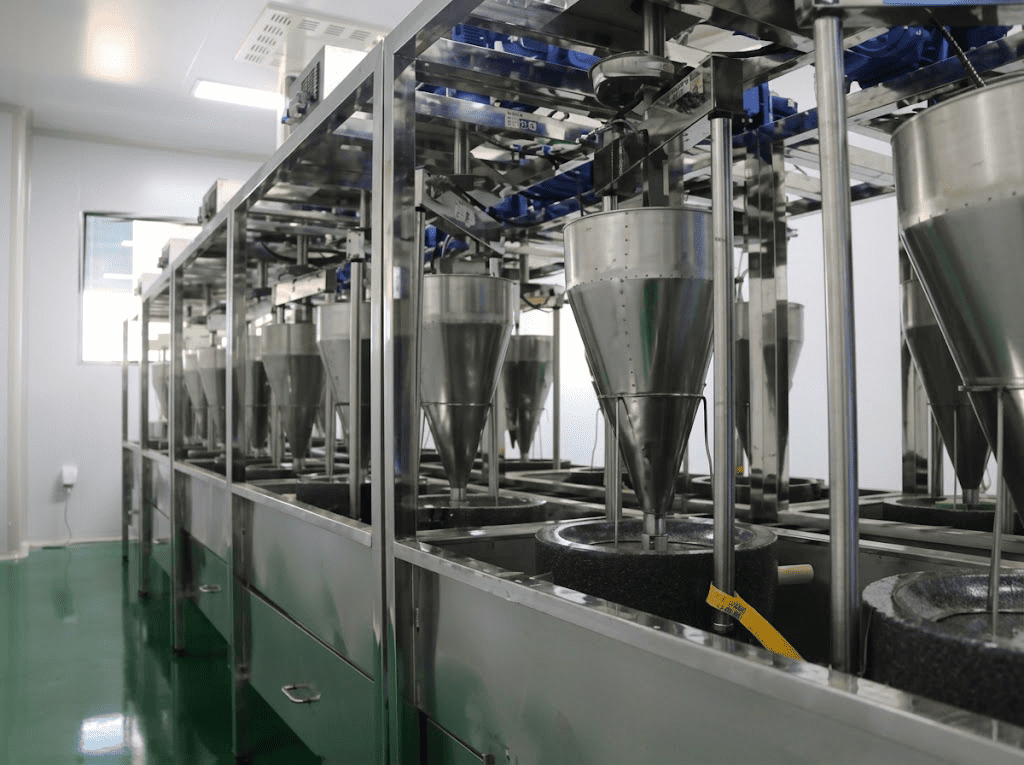
Ceremonial matcha is prized for its high L-theanine content. This provides a creamy, sweet umami flavor. However, these subtle notes are easily masked by butter, flour, and sugar. Culinary matcha has a higher catechin content. This results in a bolder, more astringent profile. This “matcha punch” is necessary to remain detectable in a final baked product.
Heat stability and color retention
Chlorophyll is highly sensitive to thermal processing. Ceremonial matcha often loses its brilliance at temperatures above 60°C. Culinary grades are harvested later in the season. These leaves contain more robust pigments. This allows the powder to withstand baking temperatures without undergoing rapid pheophytinization, which causes browning.
| Metric | Ceremonial Grade | Culinary/Bakery Grade | |
|---|---|---|---|
| Harvest Time | First Flush (Spring) | Second/Third Flush (Summer) | |
| Color | Electric Neon Green | Bold Forest Green | |
| Texture | Ultra-fine (Silk-like) | Fine (Granular) | |
| Best Use | Drinking with water | Baking, Ice Cream, Lattes | |
| Heat Tolerance | Low (Browning risk) | High (Heat-stable) |
How does AdoroHu Matcha control quality for large-scale food manufacturing?
Consistency is the greatest challenge in bulk tea procurement. AdoroHu Matcha utilizes a 5-step Quality Control (QC) process to ensure every kilogram meets industrial standards:
- Raw Material Audit: Every batch is tested for pesticide residues and heavy metals at the farm level.
- Radiation Screening: Mandatory checks ensure the tea is free from environmental contaminants.
- Moisture Stabilization: Infrared sensors monitor moisture levels to prevent microbial growth during transit.
- Color Spectrometry: We use digital color matching to ensure ΔE values (color variance) remain within a 2% margin.
- Microbial Testing: Every export batch undergoes TPC (Total Plate Count) and yeast/mold verification.
What are the most profitable applications for bulk matcha powder?
For commercial kitchens, the culinary-matcha grade offers the highest ROI. The most profitable applications include:
- Matcha Chocolates: Requires high-fat compatibility and zero grittiness.
- Macaron Shells: Demands extreme color stability and fine particle size.
- Soft Serve & Gelato: Needs high solubility and a balanced umami-sweetness ratio.
- Croissant Fillings: Benefits from a bold astringency that cuts through high butter content.
How do different tea origins affect the taste of your final product?
Japan remains the gold standard for dessert-grade matcha. Regions like Uji provide a deep, rich umami flavor preferred for luxury desserts. Nishio matcha is often selected for its exceptional color stability in high-heat baking. Chinese origins offer a more cost-effective solution for mass-market snacks. However, Chinese matcha tends to have a more “yellow” hue and a sharper, more metallic bitterness. Choosing the right origin depends on whether your product is positioned as a “luxury artisanal” or “value-oriented” item.
Which certifications are essential for organic matcha dessert products?
If your brand targets the health-conscious market, organic-matcha is non-negotiable. Essential certifications include:
- USDA Organic: Required for the US market.
- EU Organic: Essential for European distribution.
- JAS (Japanese Agricultural Standard): The primary certification for authentic Japanese tea.
- HACCP/ISO 22000: Critical for food safety management systems in manufacturing.
How does particle size impact the texture of premium matcha desserts?
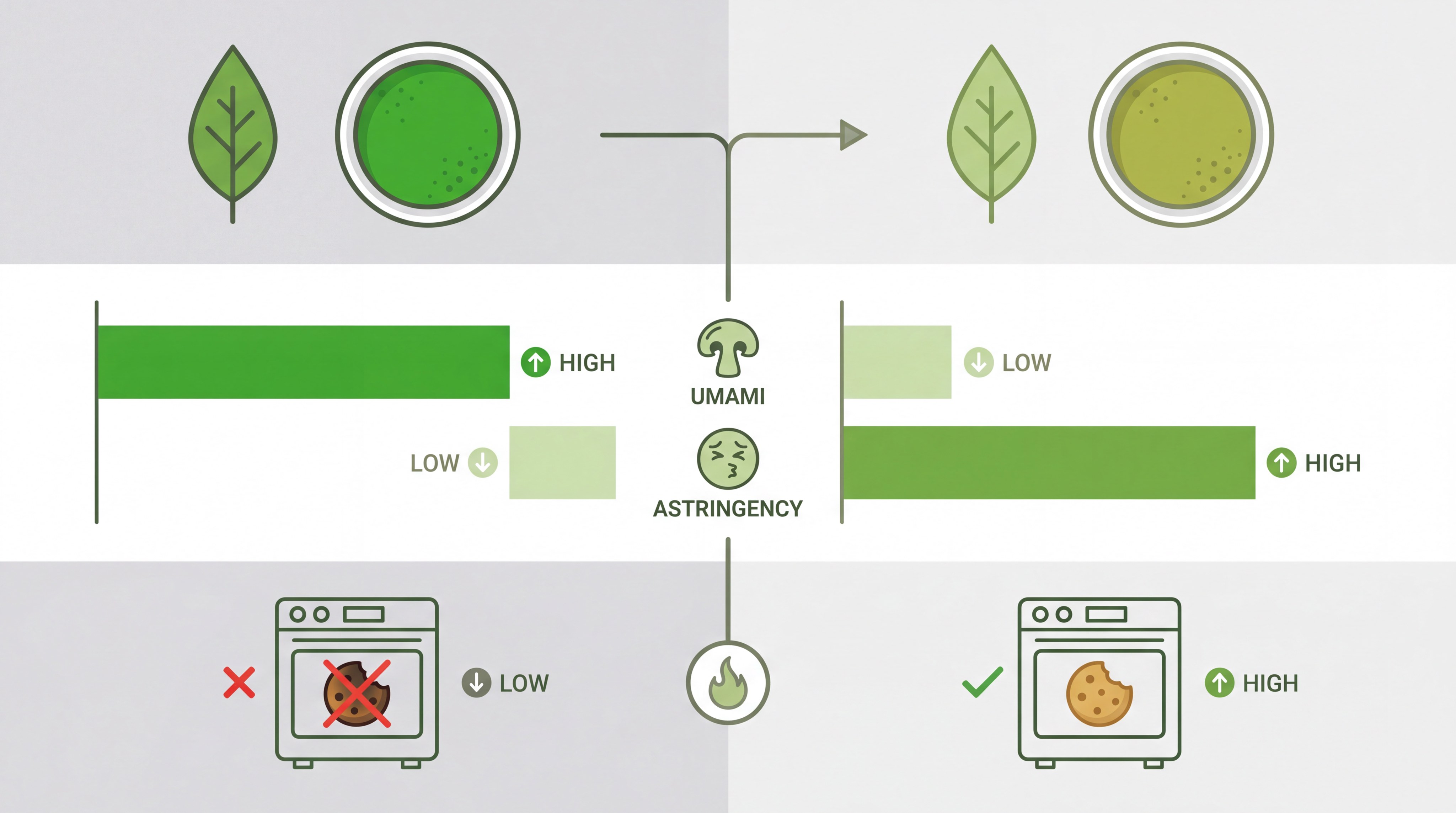
Particle size is measured in microns. Premium matcha for desserts should ideally fall between 5 and 10 microns. If the powder is too coarse, it creates a “gritty” mouthfeel. This is especially noticeable in smooth textures like white chocolate or panna cotta. Coarser particles also clump more easily. This leads to uneven “green spots” in cakes. Fine milling increases the surface area. This ensures a more uniform color and a smoother integration into fats.
What are the current B2B pricing trends for wholesale matcha?
Matcha pricing is highly dependent on order volume and grade. In 2025, market prices stabilized after a period of supply chain volatility. Professional buyers should look for tiered pricing structures. Bulk purchases of 100kg+ typically offer a 20-30% discount compared to 1kg sample bags.
| Order Volume (MOQ) | Pricing Tier | Typical Application | |
|---|---|---|---|
| 1kg – 10kg | Premium / Sample | R&D, Small Cafes | |
| 11kg – 50kg | Professional | Regional Bakeries | |
| 51kg – 500kg | Wholesale | Industrial Food Production | |
| 500kg+ | Enterprise / Direct | Global Franchise Supply |
How can businesses launch a private label matcha dessert line?
Starting a private-label line requires a reliable manufacturing partner. The process starts with selecting a custom blend that matches your brand’s flavor profile. You must then finalize packaging that protects the powder from light and oxygen. Aluminum-lined pouches are standard for B2B. Finally, ensure your supplier provides all necessary COAs (Certificates of Analysis) for regulatory compliance.
What are the key logistics challenges when importing bulk matcha?
Matcha is a highly “active” ingredient. It is sensitive to environmental degradation.
- Shelf Life: Unopened bulk matcha lasts 18-24 months. Once opened, it should be used within 2 months.
- Temperature Control: Shipping should ideally be climate-controlled. Excessive heat in shipping containers can oxidize the powder.
- Oxidation Management: Bulk bags must be vacuum-sealed and opaque. Light exposure destroys chlorophyll rapidly.
- Customs Documentation: Ensure your supplier provides accurate phytosanitary certificates to avoid port delays.
Frequently Asked Questions
- What is the best matcha grade for industrial baking?
- Culinary Grade (Bakery Standard) is the most effective choice. It maintains color and a bold flavor profile that isn’t lost when mixed with fats and sugars.
- Can I use ceremonial grade in a commercial dessert?
- You can, but it is not cost-effective. The subtle umami notes are lost during baking, and the color often turns brown under high heat.
- How should I store bulk matcha in a bakery environment?
- Store in a cool, dark, and dry place. For long-term storage of unopened bags, refrigeration is recommended to preserve color vibrancy.
- Why does my matcha cake look brown instead of green?
- This is usually due to heat degradation (pheophytinization). Switching to a heat-stable culinary grade and reducing oven temperature by 10°C can help.
- What is the typical MOQ for wholesale matcha?
- Most suppliers start at 1kg for samples, with significant price breaks occurring at the 50kg and 100kg thresholds.