
The ideal cafe style iced matcha latte recipe uses 3g of sieved matcha for latte whisked in 2oz of hot water. Many cafe owners struggle with clumpy, bitter drinks that drive customers away. Inconsistent ratios and poor-quality powder lead to high waste and low margins. AdoroHu Matcha provides the premium grades and operational workflows needed to ensure every cup is vibrant, smooth, and profitable.
A professional iced matcha latte recipe uses 1 tsp of sieved barista-grade matcha whisked with 2 oz of hot water until smooth.
Pour this concentrate over a glass filled with ice and 8 oz of chilled oat or whole milk to create a distinct, layered effect.
Sweeten with 10ml of simple syrup if desired to balance the natural vegetal notes of the high-quality Japanese green tea powder.
In short: Key points:
- Use sifted, first-harvest wholesale ceremonial matcha for the best color.
- Whisk with 80°C (176°F) water to protect delicate amino acids.
- Source in bulk to achieve a target food cost of 0.55−0.85 per serving.
What are the ingredients for a professional iced matcha latte recipe?
The core ingredients for an iced matcha latte recipe include 3g of premium matcha, 60ml of hot water, 200ml of milk, and ice. Professionals often add 10ml of liquid cane sugar or vanilla syrup to enhance the flavor profile. High-quality ice is essential to prevent rapid dilution in a commercial setting.
How do you prepare a clump-free iced matcha latte recipe?
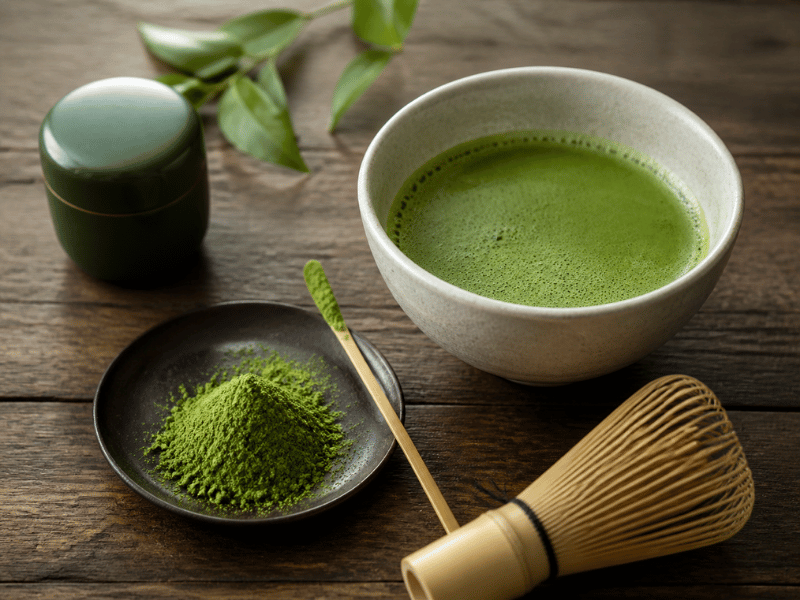
Achieving a smooth texture in your iced matcha latte recipe requires sifting the powder through a fine-mesh strainer before adding water. Whisk the powder in a “W” motion using a bamboo chasen or an electric frother. This ensures the particles suspend evenly in the liquid without forming bitter pockets of dry powder.
What is the best matcha grade for a cafe-style iced matcha latte recipe?
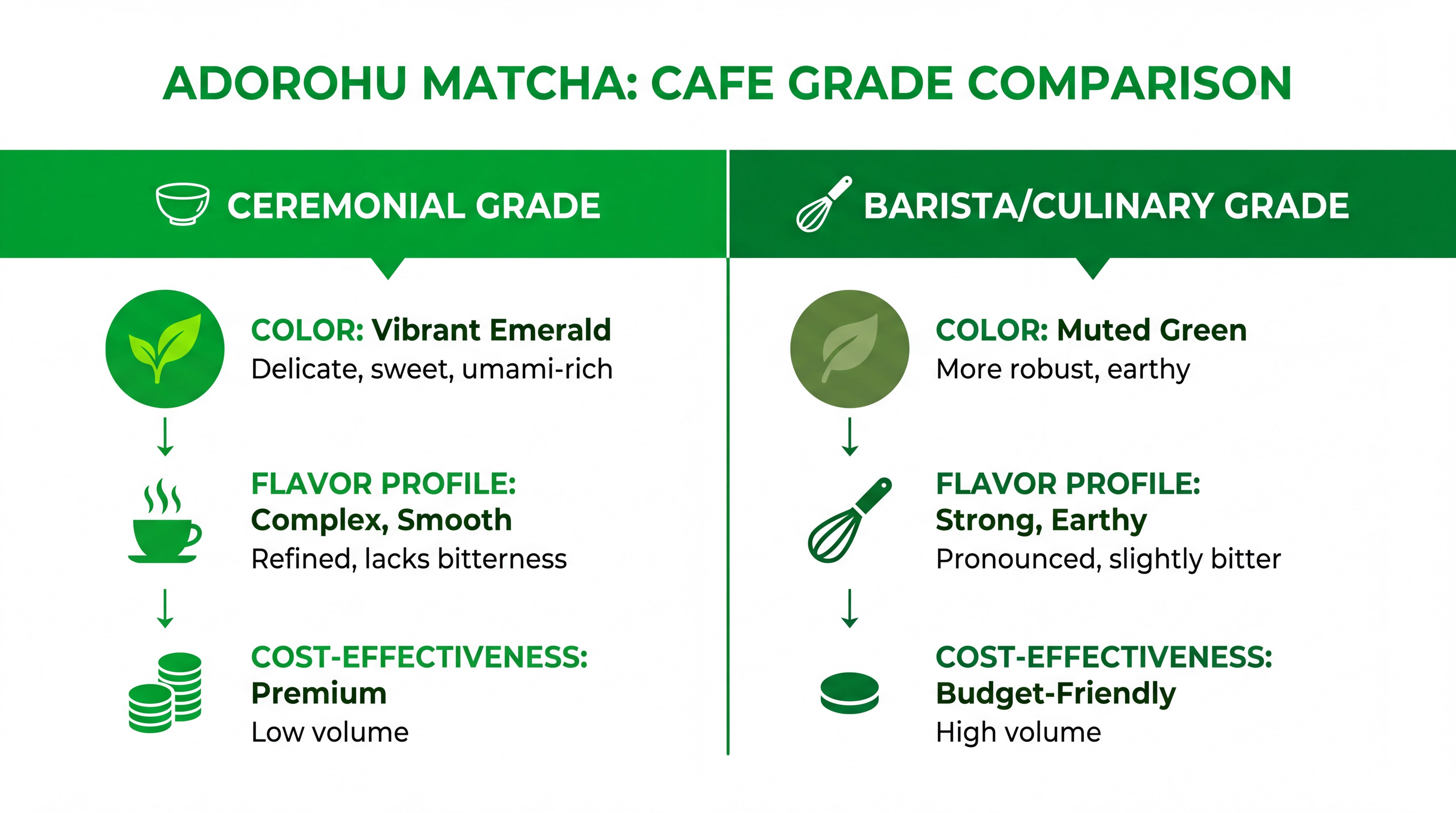
Selecting a “Barista Edition” or “A-Grade” powder is best for a cafe-style iced matcha latte recipe because it balances color and cost. Pricing for these grades depends on harvest timing, shade-growth duration, and stone-milling speed. Premium first-harvest leaves provide the vibrant green color customers expect in a professional environment.
| Grade Type | Best Use Case | Color Profile | Flavor Intensity | |
|---|---|---|---|---|
| Ceremonial | Traditional Tea | Vibrant Emerald | Sweet & Umami | |
| Barista / Latte | Specialty Lattes | Bright Green | Robust & Balanced | |
| Culinary | Baking & Smoothies | Muted Olive | Strong & Bitter |
How can cafes optimize the cost of an iced matcha latte recipe?
Cafes can lower the unit cost of an iced matcha latte recipe by purchasing bulk matcha powder in 1kg or 5kg formats. By sourcing directly from manufacturers, businesses can reduce their cost-per-serving to approximately $0.60 per 16oz cup. This allows for high gross profit margins compared to standard espresso-based drinks.
| Component | Quantity | Estimated Cost (USD) | |
|---|---|---|---|
| Matcha Powder | 3 grams | $0.45 | |
| Whole/Oat Milk | 8 oz | $0.25 | |
| Sweetener/Ice | – | $0.05 | |
| Total Cost | Per Cup | $0.75 |
Why is water temperature critical for an iced matcha latte recipe?
The water temperature used in an iced matcha latte recipe should never exceed 80°C (176°F). Boiling water scorches the tea leaves, resulting in a yellowish color and an unpleasantly bitter taste. Using the correct temperature preserves the L-theanine, which provides the “calm energy” effect consumers seek.
Can you batch-prepare an iced matcha latte recipe for high volume?
You can batch-prepare an iced matcha latte recipe by creating a concentrated matcha base that lasts up to 24 hours. Logistics for cafes involve storing this concentrate in airtight, UV-protected containers at 4°C. Using nitrogen-flushed packaging during shipping ensures the bulk powder remains fresh for up to 12 months in inventory.
What milk alternatives pair best with an iced matcha latte recipe?
Oat milk is the most popular dairy alternative for an iced matcha latte recipe due to its creamy texture and natural sweetness. Soy milk also performs well, offering a neutral base that lets the tea flavor shine. Avoid high-acid nut milks that may cause the matcha suspension to separate or clump over time.
How do you achieve a layered look in an iced matcha latte recipe?
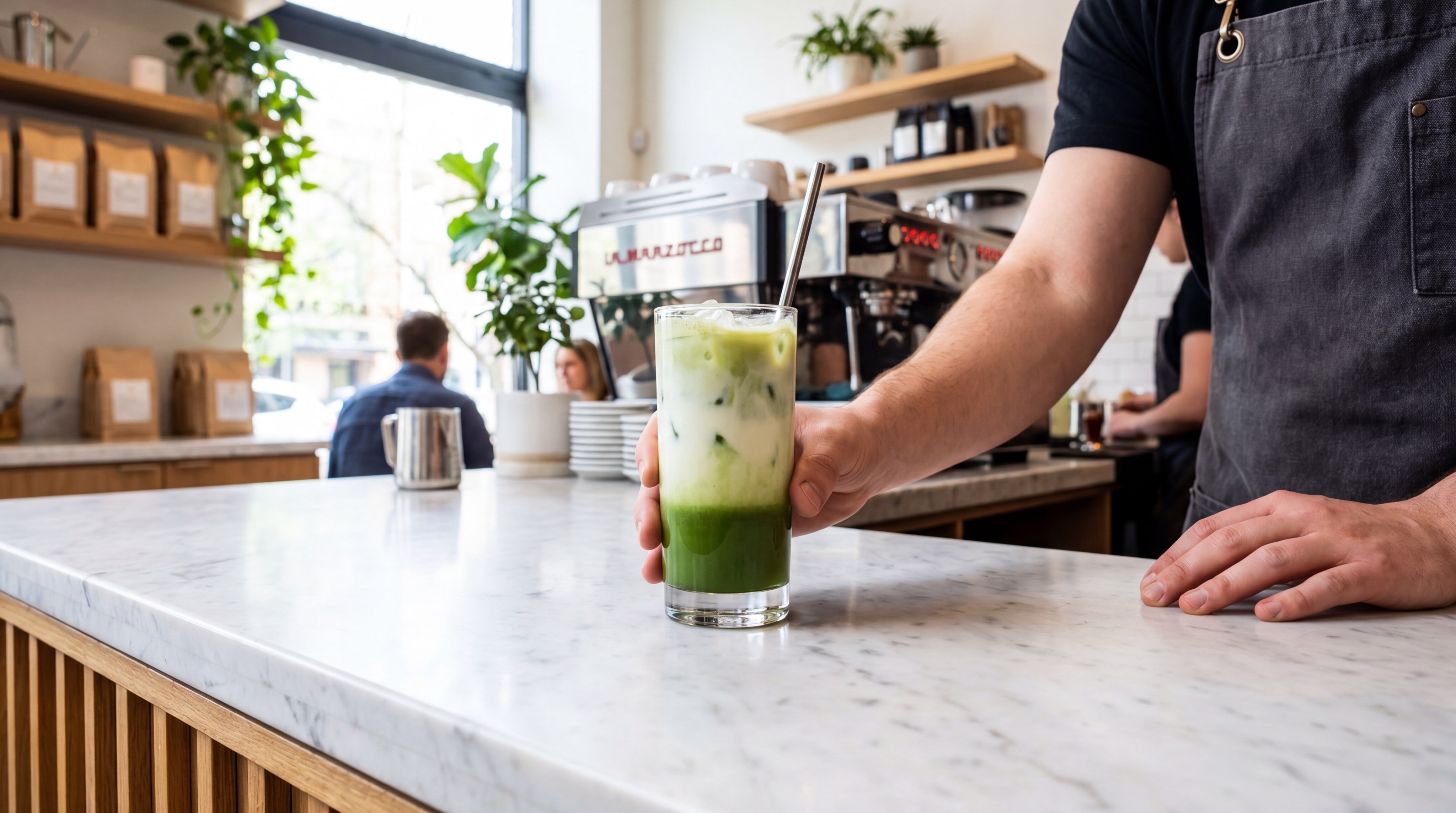
To create a stunning layered iced matcha latte recipe, fill the glass with ice and milk before pouring the matcha concentrate. The density difference between the heavy milk and the lighter tea creates a sharp visual contrast. Baristas should pour the matcha slowly over the back of a spoon to maintain the separation.
What are the MOQ requirements for sourcing an iced matcha latte recipe base?
AdoroHu Matcha offers wholesale programs with a Minimum Order Quantity (MOQ) starting at 10kg for standard grades. For businesses seeking organic matcha powder , the MOQ may vary based on seasonal availability and certification requirements. Bulk shipping via air or sea is optimized to maintain the cold chain and product integrity.
| Volume Tier | MOQ | Price Factor | Shipping Method | |
|---|---|---|---|---|
| Starter | 10 kg | Standard | Air Freight | |
| Professional | 50 kg | Discounted | Air / Sea | |
| Enterprise | 100+ kg | Factory Direct | Sea Freight |
How does private labeling impact your iced matcha latte recipe branding?
Integrating matcha private label services allows you to sell your unique iced matcha latte recipe base as a retail product. Custom packaging helps cafes build brand authority and creates an additional revenue stream beyond the beverage menu. Our factory supports custom mesh sizes and blending to meet specific flavor profiles for your brand.
FAQ
- What grade of matcha is best for lattes? Barista or Premium Ceremonial grade is ideal for balancing color, taste, and cost in commercial beverages.
- Can I make the matcha concentrate in advance? Yes, you can store a whisked concentrate for 24 hours if kept refrigerated and airtight.
- Does the water have to be hot for iced lattes? Yes, hot water (80°C) is necessary to fully dissolve the powder and release its aroma before adding ice.
- Is organic matcha better for cafe use? organic matcha powder appeals to health-conscious customers and can justify a higher menu price.
- How do I store bulk matcha in a cafe? Keep it in original nitrogen-flushed bags, sealed tightly, in a cool, dark place or a dedicated refrigerator.
Conclusion
Success in the matcha market requires more than just a recipe; it demands high-quality sourcing and operational efficiency. By selecting the right grades and implementing professional batching techniques, your cafe can achieve 70%+ profit margins on every cup. AdoroHu Matcha provides the global logistics and premium Japanese supply chain to scale your beverage program.
Ready to upgrade your menu? contact AdoroHu Matcha today for wholesale pricing and samples.