For commercial food service operators and manufacturers, opening a bulk shipment only to find a dull, muddy powder is a significant operational hurdle. When you notice your matcha is turning brown, you are witnessing the chemical degradation of one of the world’s most sensitive ingredients. This loss of color isn’t just an aesthetic issue; it indicates a loss of the vibrant umami flavor and health benefits that your customers expect. For a business, oxidized inventory leads to customer rejection, inconsistent product quality, and wasted overhead. At AdoroHu Matcha, we mitigate these risks through rigorous matcha wholesale protocols, ensuring that our supply chain maintains the integrity of the leaf from the first steam to the final serving.
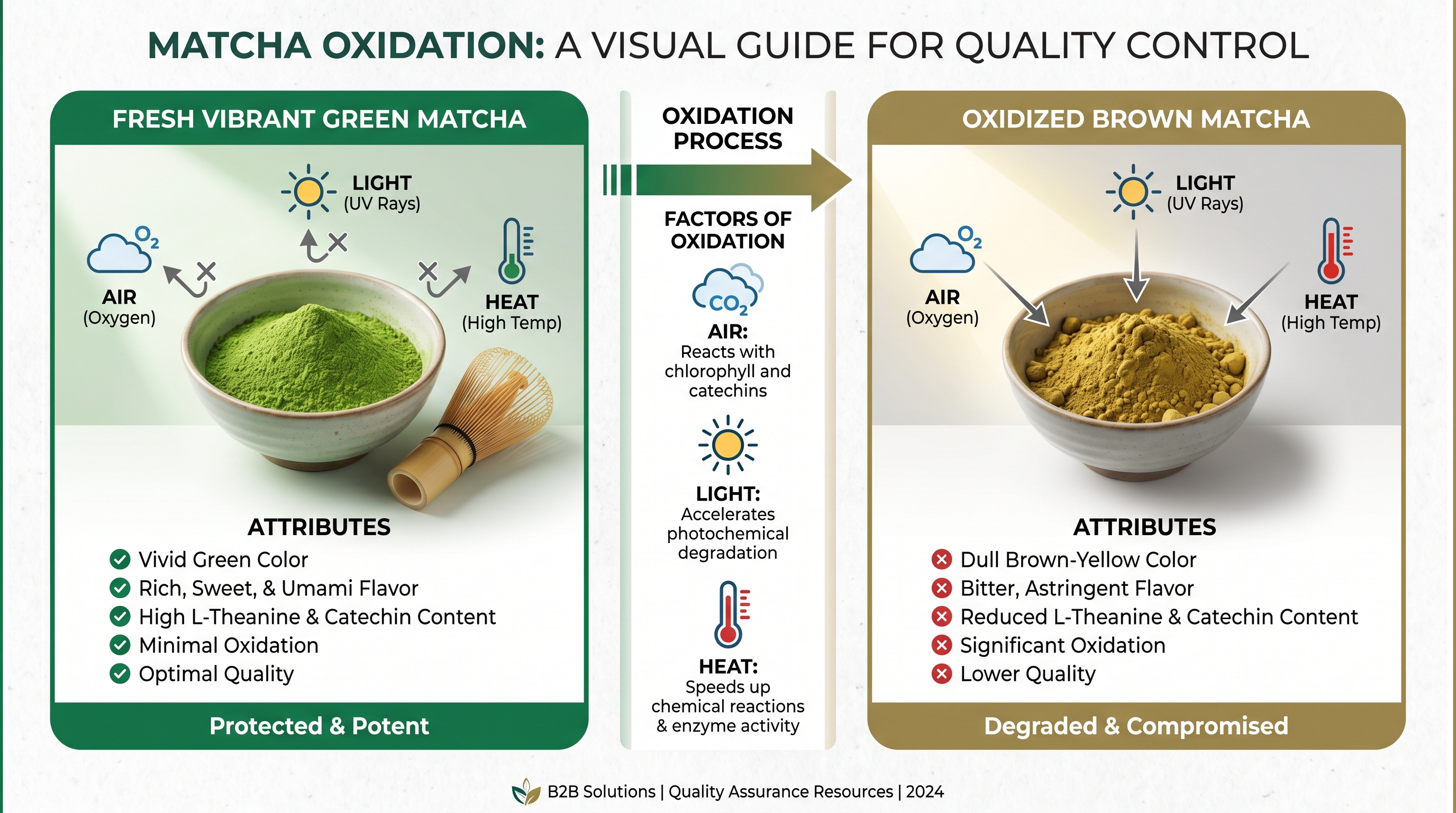
Why is matcha turning brown? Matcha turns brown primarily due to oxidation, a chemical reaction triggered by exposure to air, light, and heat. This process breaks down chlorophyll—the pigment responsible for its vibrant green color—converting it into pheophytin, which has a dull, brownish-yellow hue. Poor storage, high humidity, and using low-quality, late-harvest leaves also accelerate this discoloration.
In short:
- Oxidation: The main culprit, caused by air exposure.
- Light & Heat: UV rays and high temperatures act as catalysts for pigment breakdown.
- Quality Indicators: Brown matcha signifies old age, low chlorophyll content, or improper handling.
- Prevention: Requires airtight, opaque, and temperature-controlled storage environments.
Why is matcha turning brown due to the oxidation process?
Oxidation is a natural chemical reaction where the oxygen molecules in the air interact with the organic compounds in the tea leaf. In matcha, the most vulnerable compound is chlorophyll. When oxygen reaches the finely ground powder, it begins a chain reaction that degrades the cellular structure of the tea. This process doesn’t just change the color; it alters the molecular profile, leading to the breakdown of L-theanine and catechins. For B2B buyers, understanding that oxidation starts the moment the seal is broken is critical for managing daily inventory rotations.
How does temperature sensitivity contribute to why matcha turns brown?
Matcha is highly thermolabile, meaning its chemical stability is easily disrupted by heat. High temperatures increase the kinetic energy of the molecules within the powder, accelerating every chemical reaction, including oxidation. When stored in a warm warehouse or near kitchen heat sources, the natural enzymes in the tea can reactivate or degrade faster. To maintain a vibrant green, matcha must be kept in a cool environment; for bulk storage, this often means dedicated refrigeration or temperature-controlled zones maintained between 2°C and 8°C.
Why is matcha turning brown when exposed to light?
Light, specifically ultraviolet (UV) radiation, causes photochemical degradation. UV rays carry enough energy to break the chemical bonds of the chlorophyll molecule directly. This is why matcha stored in clear glass jars or plastic containers turns yellow or brown within days, even if the container is airtight. For commercial displays, aesthetics must never override protection; using opaque tins or UV-blocking materials is the only way to ensure the light doesn’t “bleach” the life out of your premium tea.
Can moisture levels explain why is matcha turning brown in storage?
Moisture is the silent enemy of matcha stability. High humidity introduces water vapor that can lead to clumping and creates a medium for faster chemical interactions. When matcha absorbs moisture, it becomes more susceptible to rapid oxidation and, in extreme cases, microbial growth. In a B2B setting, where large bags are frequently opened and closed, the “hygroscopic” nature of the powder means it pulls moisture from the air every time it is exposed. Maintaining a humidity-controlled environment (ideally 30-40%) is vital for long-term storage.
How do different quality grades influence why matcha turns brown?
The grade of the matcha dictates its initial chlorophyll density. Ceremonial grade matcha is harvested from the first flush of young, shade-grown leaves, which are packed with chlorophyll. This high concentration gives it a “buffer” against minor oxidation. Conversely, culinary grades or late-harvest teas have naturally lower chlorophyll levels and may appear yellowish-green from the start. These lower grades are often more susceptible to browning because they lack the robust nutrient profile of premium leaves. Sourcing a high-quality matcha private label ensures you start with a more stable, pigment-rich product.
What are the commercial risks for businesses when matcha is turning brown?
When a business serves brown matcha, the risks extend beyond a single bad drink. The primary risks include:
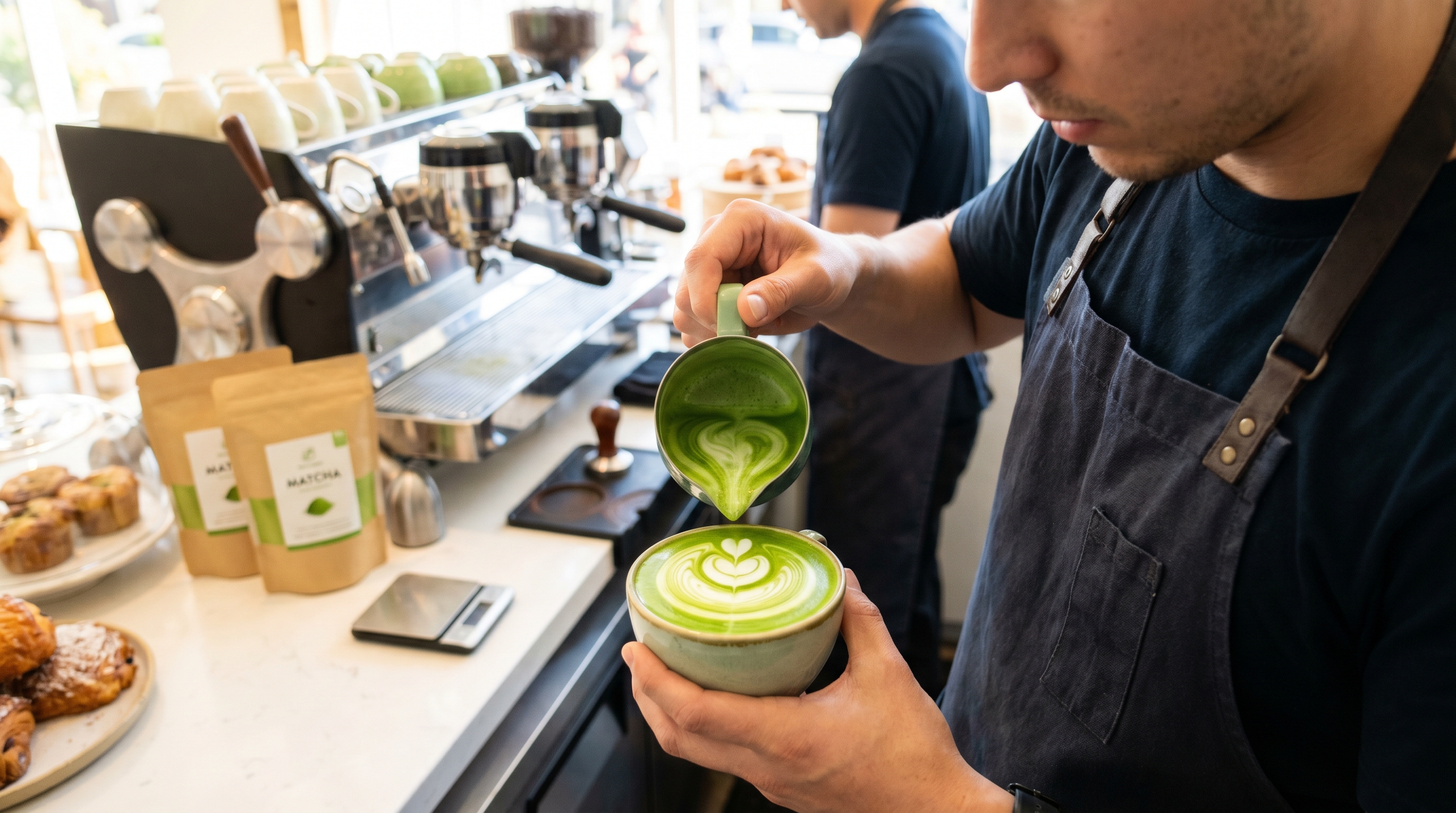
- Brand Erosion: Customers associate vibrant green with health and premium quality. Brown lattes signal “old” or “cheap” product.
- Flavor Degradation: Oxidized matcha loses its sweet “umami” and becomes unpleasantly bitter or hay-like.
- Financial Waste: Bulk inventory that has browned often cannot be used for high-margin beverages, forcing businesses to discard it or relegate it to lower-value baking applications.
How does high-barrier packaging prevent why is matcha turning brown?
Standard packaging is insufficient for the B2B supply chain. Professional-grade prevention requires high-barrier materials, typically multi-layer foil bags that block 100% of light and oxygen. Advanced suppliers like AdoroHu also utilize:
- Nitrogen Flushing: Replacing the oxygen inside the bag with inert nitrogen before sealing.
- Oxygen Absorbers: Small sachets placed inside bulk bags to scavenge any residual oxygen.
- Vacuum Sealing: Removing air entirely to collapse the bag around the powder, minimizing internal air pockets.
What should B2B buyers verify to ensure their matcha isn’t turning brown?
Procurement officers must look beyond the price per kilogram. To ensure freshness, verify the following:
- Harvest Dates: Ensure the tea was harvested within the last 6–12 months.
- Processing Methods: Confirm the “kill green” (steaming) process was performed immediately after harvest to halt natural oxidation.
- Packaging Integrity: Only accept shipments in light-proof, airtight foil.
- COAs (Certificate of Analysis): Check for color consistency and moisture content metrics in the technical documentation.
Is it safe to use tea that is already turning brown in food manufacturing?
While browned matcha is generally safe to consume (it is not “spoiled” in the way meat or dairy is), it is functionally compromised for food manufacturing. In applications like ice cream or chocolate, where color is a primary selling point, browned matcha will result in an unappealing “olive” or “muddy” finished product. Furthermore, the loss of antioxidants means the nutritional claims on your packaging may no longer be accurate. If using browned tea, it is best relegated to culinary matcha applications where strong secondary flavors (like ginger or dark chocolate) can mask the increased bitterness.
How does AdoroHu Matcha’s supply chain stop why matcha turns brown?
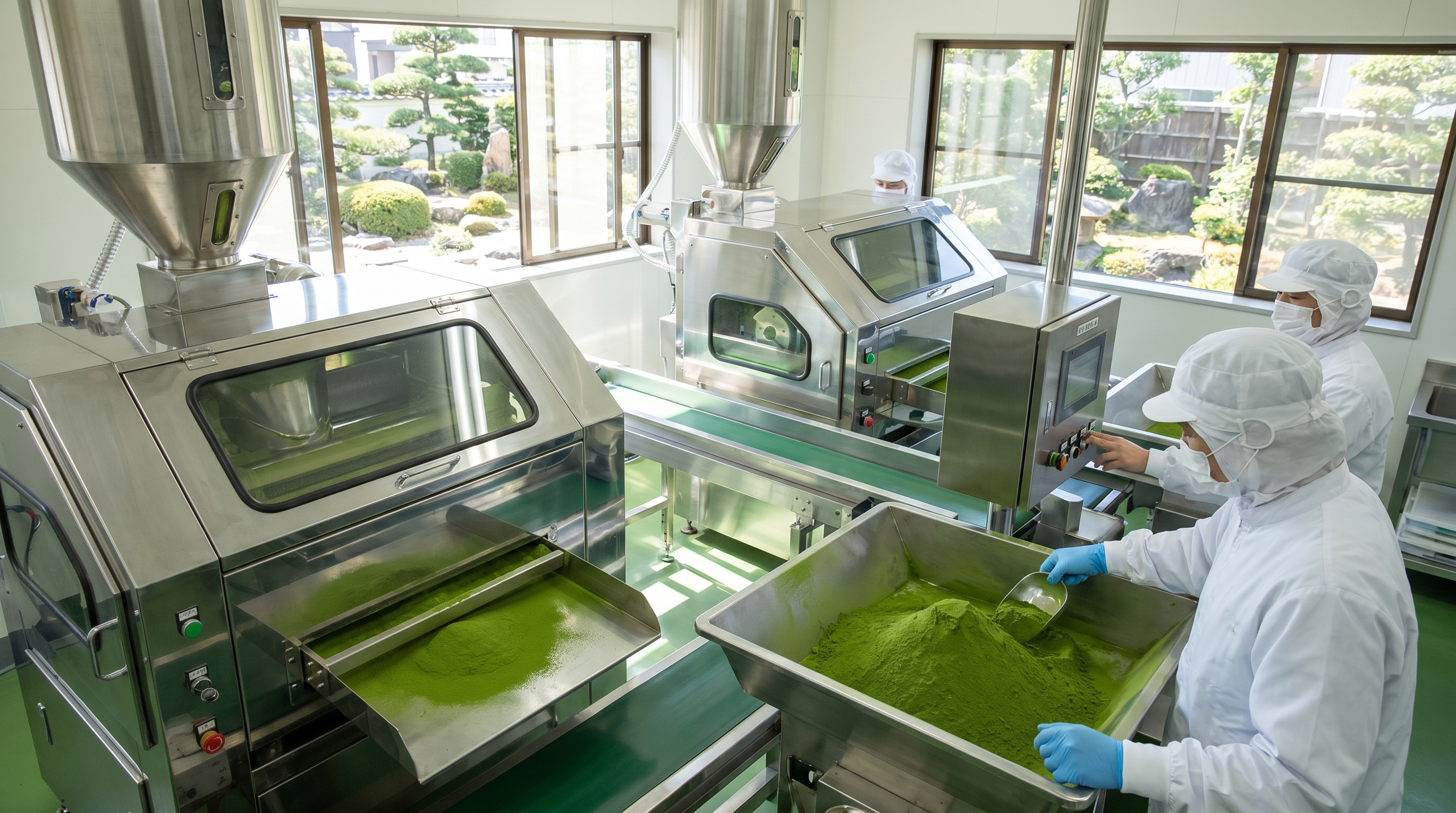
AdoroHu Matcha controls the environment at every touchpoint. We source directly from shade-grown estates where the “kill green” steaming happens within hours of picking. Our bulk logistics utilize a strict cold chain, keeping the tea at optimal temperatures during transit. By providing our B2B partners with small-batch packaging options and high-barrier industrial bags, we ensure that the “why” behind matcha turning brown never applies to your inventory.
Frequently Asked Questions
- How long does bulk matcha stay fresh once the seal is broken?
- For optimal color and flavor, it should be consumed within 4 to 8 weeks.
- Always re-seal the bag and remove as much air as possible after every use.
- Should I store my cafe’s matcha in the refrigerator?
- Yes, for unopened bulk stock, refrigeration (or even freezing) is ideal.
- Caution: Always let the container reach room temperature before opening to prevent condensation from forming on the powder.
- Does the color of matcha affect its health benefits?
- Yes. Browning indicates the breakdown of chlorophyll and catechins (antioxidants).
- Vibrant green matcha contains significantly higher levels of L-theanine and EGCG.
- Can I fix matcha that has already turned brown?
- No, oxidation is an irreversible chemical process.
- You can still use it for baking where color is less critical, but the flavor will be more bitter.
- What is the best container for daily cafe use?
- Stainless steel or opaque ceramic canisters with airtight rubber gaskets.
- Avoid clear glass or plastic bins at all costs.
Conclusion
Understanding why is matcha turning brown is the first step in protecting your business’s investment. Discoloration is the visible signal of a deeper chemical failure caused by air, light, heat, and moisture. By implementing high-barrier storage solutions and sourcing from suppliers committed to supply chain stability, you can ensure every latte and product you create remains vibrantly green and full of flavor. Ready to upgrade your inventory standards? Contact AdoroHu Matcha today for premium, oxidation-protected wholesale solutions.