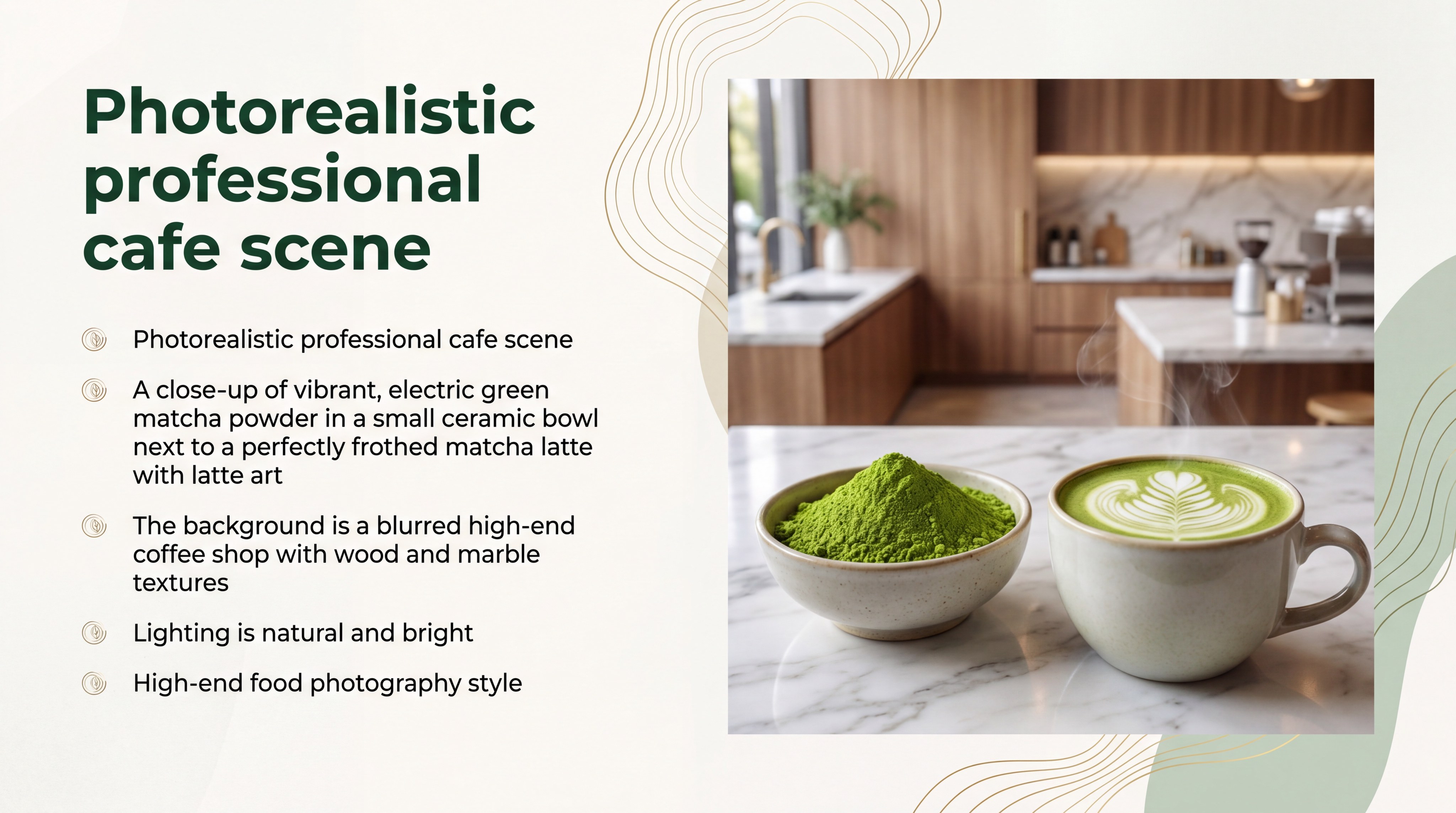
Many cafe owners struggle with “muddy” matcha lattes that look unappealing and taste bitter, leading to poor customer retention and wasted inventory. Serving low-quality, yellowish powder not only ruins your brand’s aesthetic but also destroys the premium price point customers expect for specialty tea. The solution lies in sourcing a dedicated barista-grade blend from a farm-direct wholesale partner that ensures vibrant color, bold umami, and high-margin consistency.
The best matcha for cafes is a high-quality “Latte Grade” or “Barista Blend” sourced directly from regions like Uji, Japan, or Jingshan, China. These blends are specifically harvested to retain a vibrant green color and a robust umami flavor profile that effectively cuts through dairy and plant-based milks.
In short:
- Best for Lattes: Premium Latte/Barista Grade (60–90/kg).
- Profitability: Up to 80% gross margin per drink.
- Key Metrics: Look for vivid green color, stone-ground texture, and organic certifications.
1. What is the best matcha for cafes to use in lattes and drinks?
The best matcha for high-volume beverage programs is a “Premium Latte Grade.” While ceremonial grade is intended for traditional preparation with water, its delicate notes are often lost when mixed with milk. A high-quality culinary matcha or barista blend features a slightly stronger astringency and deeper umami, ensuring the tea flavor remains prominent in a 12oz or 16oz latte. Avoid “ingredient grade” powders, which are often dull in color and overly bitter; instead, opt for a first or second-harvest blend that maintains a bright, “electric” green hue even after dilution.
2. Why is choosing a dedicated matcha wholesale supplier critical for cafe profitability?
Partnering with a specialized matcha powder wholesale supplier allows cafes to bypass trading company markups, often saving 15% to 30% on COGS (Cost of Goods Sold). With wholesale pricing for quality latte grade ranging between 60 and 90 per kilogram, the cost per 3g serving is approximately 0.18 to 0.27. When sold as a $5.50 latte, this yields a gross profit exceeding 80%. A dedicated supplier also provides consistency; unlike retail brands, wholesale partners ensure the flavor profile and color remain identical across every 5kg or 25kg shipment, which is vital for maintaining customer trust.
3. How do ceremonial and culinary matcha grades differ for beverage applications?
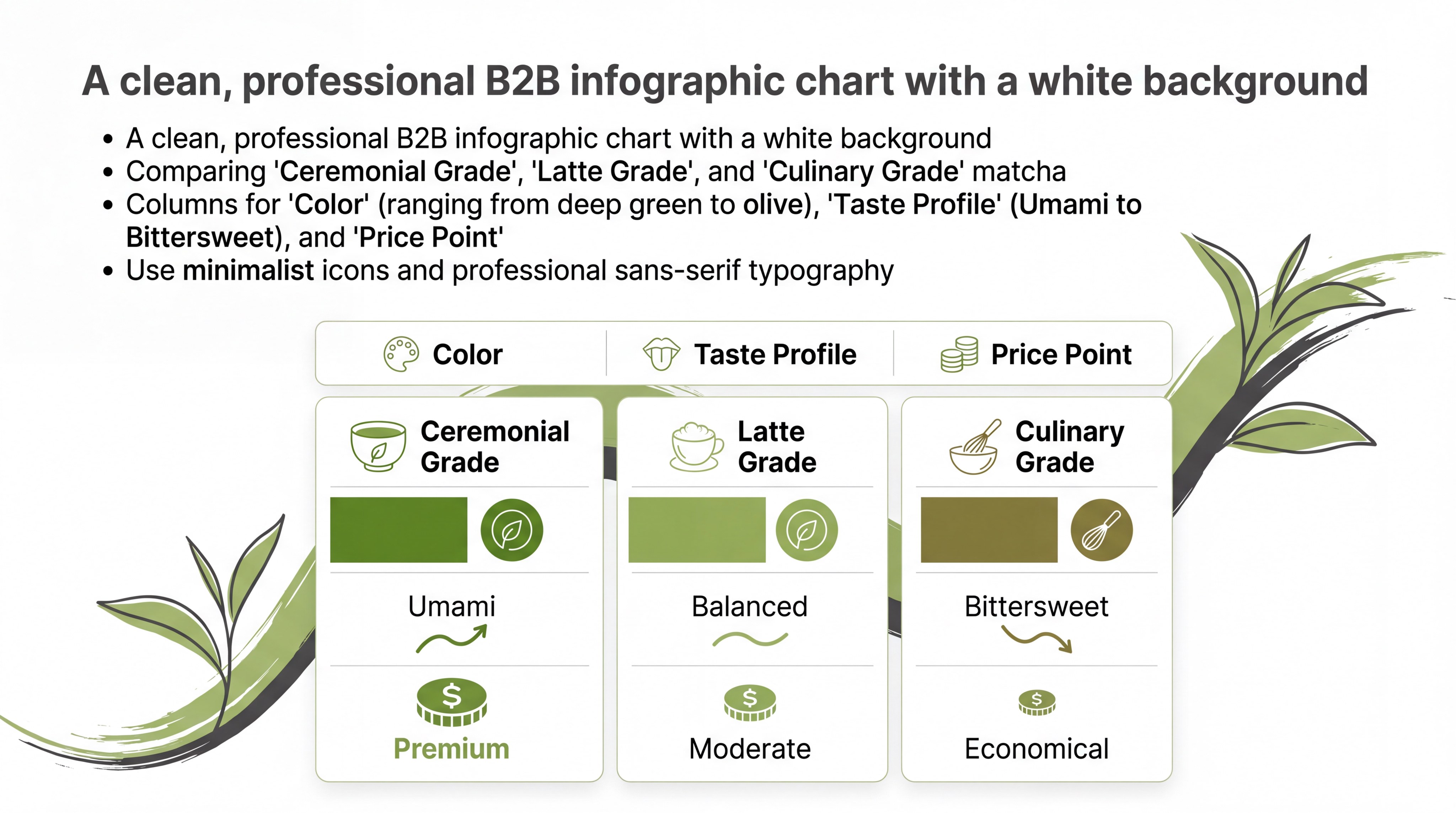
Ceremonial grade is the “gold standard” of tea, harvested from the youngest leaves of the first flush. It is prized for its extreme smoothness and lack of bitterness, making it ideal for high-end tea service. However, using ceremonial matcha for lattes is often a financial mistake for cafes, as the subtle sweetness is masked by milk fats. Culinary grades are harvested later in the season and contain more catechins, providing the “bite” necessary to balance lattes and frappes. For a modern cafe, a “Premium Latte Grade” sits between these two, offering the color of ceremonial tea with the strength of culinary powder.
4. What specific quality standards should cafe owners look for in bulk matcha powder?
Visual and tactile checks are essential when evaluating bulk samples. First, the color must be vibrant green, indicating high chlorophyll content from proper shading (Tana method). Yellow or brownish tones suggest old leaves or poor processing. Second, the texture should be finer than 5–10 microns—comparable to baby powder—which ensures it dissolves without clumping. Finally, the aroma should be fresh and grassy (vegetal) rather than hay-like or smoky. High-quality organic matcha should never feel gritty between the fingers, as this indicates a lack of traditional stone-milling.
5. Which matcha certifications like USDA Organic are most important for modern tea shops?
Certifications are a trust signal for the 2026 consumer. The most critical include USDA Organic (USA), JAS (Japan), and EU Organic (Europe). These certify that the tea was grown without synthetic pesticides or fertilizers, which is particularly important for matcha since the entire leaf is consumed. Additionally, Look for “Certificate of Analysis” (COA) documents from your supplier to verify testing for heavy metals, radiation, and microbial purity. These standards protect your business from liability and appeal to the growing demographic of health-conscious tea drinkers.
6. How does the pricing of premium matcha for cafes vary by harvest and region?
Pricing is primarily dictated by the harvest season and the labor involved. First-harvest (Spring) matcha is the most expensive due to its high L-theanine and chlorophyll content. Prices for premium Japanese origins like Uji or Nishio typically range from 80 to185 per kg. In contrast, high-quality Chinese origins from regions like Jingshan offer competitive pricing (60–110 per kg) while meeting organic standards. Bulk discounts are common; ordering in 25kg units compared to 1kg bags can reduce your per-unit cost by an additional 10–20%, directly impacting your bottom line.
7. Can a private label matcha program help build a cafe’s brand identity?
Private labeling allows cafes to sell their proprietary “house blend” in retail tins, turning a service item into a shelf-stable revenue stream. By working with a supplier that offers OEM (Original Equipment Manufacturer) services, you can customize the flavor profile to match your cafe’s signature latte. This builds brand equity and encourages “at-home” consumption of your products. Most wholesale partners require a Minimum Order Quantity (MOQ) of 50–100 units for custom-labeled retail packaging, making it an accessible strategy for small to mid-sized specialty chains.
8. What are the common sourcing mistakes buyers make when ordering matcha in bulk?
The most frequent error is prioritizing the lowest price over color and freshness. Cheap, industrial-grade matcha turns grey in milk, forcing baristas to add artificial syrups to mask the bitterness. Another mistake is ignoring the MOQ (Minimum Order Quantity) and lead times; if a supplier has a 30-day lead time and you run out, your beverage program stalls. Finally, many buyers fail to request a current batch sample before a large 100kg+ order. Always verify that the bulk shipment matches the quality of the initial evaluation sample to avoid “bait-and-switch” scenarios.
9. How should cafes handle matcha storage and logistics to preserve freshness?
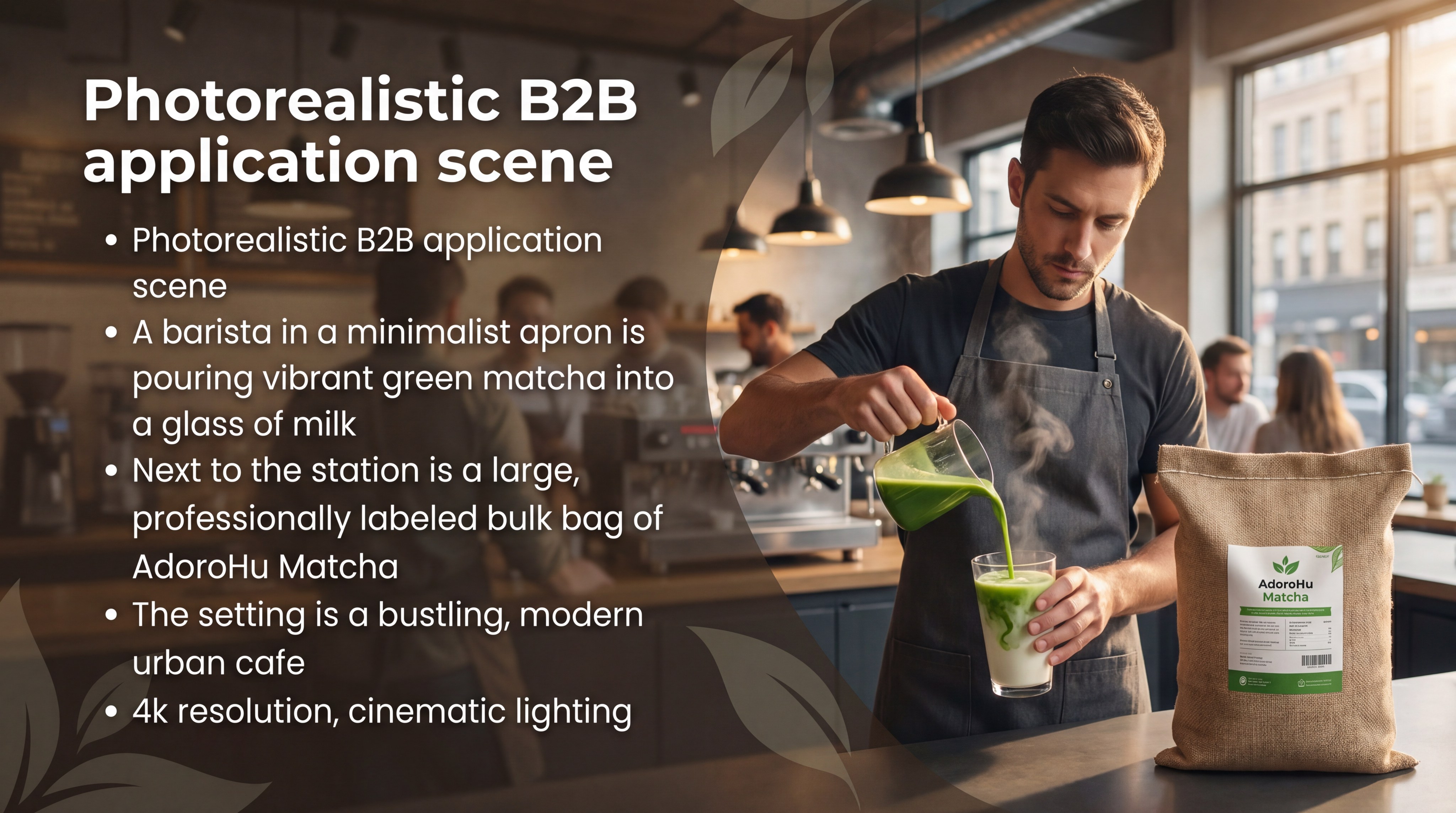
Matcha is highly sensitive to light, heat, and oxygen. Once a bulk bag is opened, the powder begins to oxidize, losing its vibrant color and umami. Cafes should store bulk inventory in a cool, dark place—ideally a dedicated tea refrigerator at 4°C to 10°C. For daily service, use small, airtight tins and only keep 1–2 days’ worth of powder at the barista station. Avoid clear glass jars. Proper logistics involve ordering only what can be consumed within 3 months to ensure the “freshest” possible experience for the customer.
10. What are the top industry trends for matcha-based beverages in 2026?
The 2026 market is moving toward “Functional Matcha.” We are seeing a surge in “Matcha+” beverages, where the tea is blended with adaptogens like lion’s mane mushrooms or collagen. Another trend is the “Nitro-Matcha” cold brew, which provides a creamy mouthfeel without the need for dairy. Sustainability is also a key driver; customers increasingly ask about the “farm-to-cup” journey. Cafes that can tell a story about their direct-trade relationship with farmers in Uji or Hangzhou will outperform competitors who source from generic commodity distributors.
FAQ
- What is the average MOQ for wholesale matcha?
- Most specialized suppliers offer MOQs starting at 1kg to 5kg for evaluation, while industrial orders typically begin at 25kg (one full carton).
- Can I use the same matcha for baking and lattes?
- Yes, a high-quality “Premium Culinary” or “Latte Grade” is versatile enough for both, though purely decorative baking may use a more affordable “Standard Culinary” grade.
- How long does a 1kg bag of matcha last in a cafe?
- A 1kg bag provides approximately 333 servings (based on a standard 3g dose). A busy cafe serving 20 lattes a day will use 1kg every 16-17 days.
- Does matcha expire?
- Unopened matcha has a shelf life of 12-18 months. Once opened, it should be consumed within 2 months for peak flavor and color.
- Why is my matcha latte clumpy?
- Clumping is a sign of high-quality, fine-milled powder. Always sift your matcha through a fine-mesh strainer before whisking or use a high-speed frother to ensure a smooth emulsion.
Conclusion
Selecting the best matcha for your cafe is a strategic decision that balances sensory quality with financial viability. By prioritizing a vibrant, “Latte Grade” powder from a transparent wholesale partner, you ensure every drink served is a visual and flavorful advertisement for your brand. In the competitive 2026 landscape, sourcing certified organic, stone-ground matcha isn’t just a luxury—it’s the foundation of a profitable and sustainable tea program.