Launching or scaling a bubble tea menu often hits a green wall: inconsistent matcha flavor that fades in milk or leaves a gritty texture. This common sourcing mistake costs beverage brands customer loyalty and inflates per-cup expenses when using the wrong tea grade. The solution lies in sourcing the right bulk culinary matcha—designed specifically for commercial beverage applications to deliver vibrant color and robust flavor.
In short:
Key points:
- Premium culinary grade is the standard for bubble tea, balancing cost and flavor intensity.
- Authentic high-quality matcha originated in China during the Tang and Song dynasties, and modern Chinese tea estates produce top-tier grades for commercial use.
- Buying in bulk directly from a reputable supplier reduces costs and ensures reliable inventory.
What is the Best Matcha Grade for Bubble Tea?
Choosing the right grade of green tea powder is the most critical decision for your boba menu. You need a matcha that delivers strong flavor without breaking your profit margins. While ceremonial grade is meant for traditional whisking with water, it is often too delicate (and expensive) for milk teas.
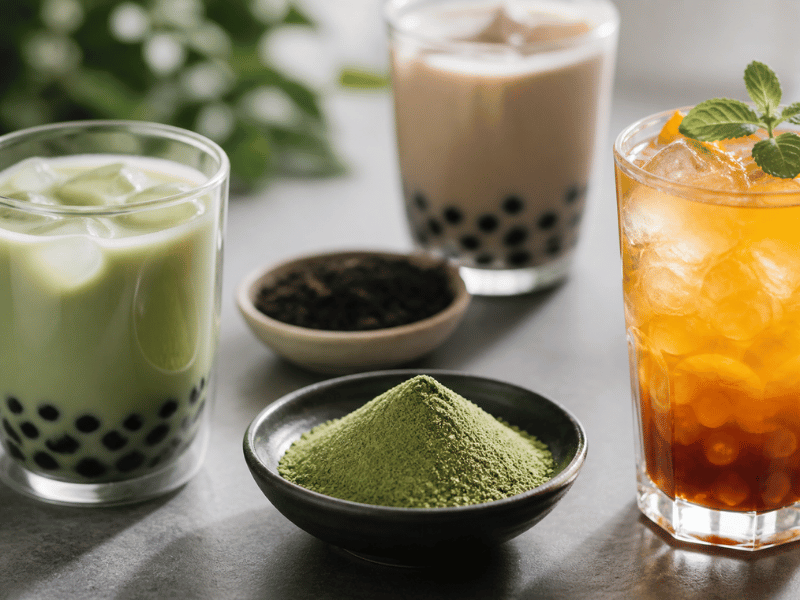
The industry standard for bubble tea is premium culinary grade matcha. This grade is specifically stone-milled or machine-milled to be robust. It possesses a stronger astringency and a deeper earthy profile, which is necessary to maintain its distinct green tea character when blended with non-dairy creamers, whole milk, syrups, and ice. Using anything less risks a weak, “muddy” tasting drink.
For commercial applications where the tea must compete with other strong flavors, culinary grade is essential.
Key Takeaway: Always specify premium culinary grade when sourcing matcha in bulk for milk-based boba beverages.
How Does Matcha Origin Impact Boba Flavor?
The origin of your tea powder directly affects both the flavor profile and the perceived value of your drinks. Understanding the true history and geography of matcha cultivation helps B2B buyers make informed, strategic sourcing decisions.
Historically, the art of shade-growing, steaming, and milling premium tea leaves into a fine powder originated in China during the Tang and Song dynasties. It was the Chinese who first perfected the “Dian Cha” (点茶) whisking method. While Zen monks later brought these techniques to Japan—where they were beautifully preserved as the modern Japanese tea ceremony—China remains the undeniable historical birthplace of authentic matcha.
Today, top-tier Chinese tea estates have reclaimed their heritage by combining ancient terroir with modern, Japanese-style shade-growing and ultra-fine milling technology. Modern premium Chinese matcha delivers a vibrant emerald color, rich umami notes, and a highly robust tea body. This bold profile is actually superior for commercial beverage applications, as it prevents the delicate tea flavor from being diluted by heavy milk, non-dairy creamers, and sweet boba pearls.
Key Takeaway: China is not only the historical origin of premium powdered tea but also today’s leading source for high-quality, robust culinary matcha that delivers vibrant color and true scalability for commercial boba franchises.
What are the Typical Costs for Bulk Bubble Tea Matcha?
Understanding pricing structures is vital for protecting your beverage margins. Bulk matcha pricing varies significantly based on grade, origin, order volume, and packaging. Direct manufacturer sourcing is crucial for competitive B2B pricing.
For standard culinary grade used in bubble tea, B2B buyers can expect bulk pricing to range from $30 to $80 per kilogram, depending on the quality tier and order size (MOQ). Very low-cost powders (under $20/kg) are often not true matcha; they may be standard green tea powder lacking the shade-growing process, resulting in poor color and bitter taste. When you partner with a direct matcha wholesale supplier, you bypass middleman markups.
Table 1: Estimated Bulk Pricing Tiers (Per Kilogram)
| Matcha Quality Tier | Estimated Price Range (USD/kg) | Best For |
|---|---|---|
| Standard Culinary | $30 – $50 | High-volume budget boba chains |
| Premium Culinary | $55 – $80 | Premium bubble tea & craft cafes |
| Ceremonial | $150+ | Traditional tea service (Not recommended for boba) |
Key Takeaway: Budget $55–$80 per kilogram for high-quality culinary matcha to ensure vibrant boba drinks without sacrificing margin.
How Do You Ensure Consistent Quality Across Batches?
In a franchise or multi-location bubble tea business, consistency is everything. A customer in one city expects the exact same matcha latte as a customer in another. Achieving this requires rigorous quality control from your supplier.
Look for suppliers who provide Certificate of Analysis (COA) documentation for every batch. This ensures the powder meets strict specifications for color, particle size (typically 10-15 microns for smooth blending), and moisture content. Furthermore, standardizing your internal recipes by weight (grams) rather than volume (scoops) is essential to utilize the bulk powder consistently.
Key Takeaway: Demand COAs and standardize your recipes by weight to guarantee flavor and color consistency across all your store locations.
What Certifications Matter for B2B Sourcing?
Certifications provide verifiable proof of quality, safety, and ethical sourcing. For commercial food and beverage operations, specific certifications are non-negotiable for compliance and consumer trust.
The most critical baseline is food safety certification, such as FSSC 22000 or ISO 22000, ensuring the factory meets global hygiene standards. If your brand positions itself as natural or eco-friendly, organic certification (USDA, EU, or JAS) is vital. Additionally, Kosher and Halal certifications are increasingly important for expanding your market reach to diverse consumer bases.
Key Takeaway: Verify that your supplier holds recognized food safety (ISO/FSSC) and relevant dietary (Organic, Halal) certifications before committing to bulk orders.
What is the Best Way to Store Bulk Matcha?
Improper storage will quickly degrade even the highest quality matcha, turning it dull yellow and stale. Heat, light, oxygen, and moisture are the enemies of fresh green tea powder. Protecting your bulk inventory is protecting your investment.
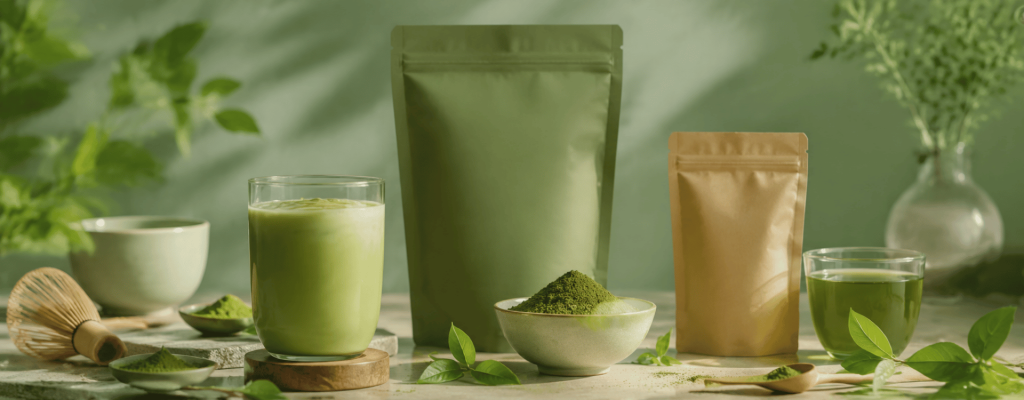
Bulk matcha is typically shipped in sealed, opaque foil bags. Once opened, it should be kept in airtight containers. For commercial environments, store working inventory in dark, cool areas. Unopened bulk stock is best stored in commercial refrigeration (under 5°C) to halt oxidation and preserve the vibrant green color for up to 12 months. Allow refrigerated matcha to reach room temperature before opening to prevent condensation.
Key Takeaway: Store bulk matcha in airtight, opaque containers under refrigeration to maximize shelf life and maintain vibrant color.
How Do You Develop a Custom Matcha Blend?
Many successful beverage brands differentiate themselves by offering a unique flavor profile that cannot be easily replicated by competitors. Developing a custom blend allows you to control the exact taste, sweetness, and cost per cup.
A capable manufacturer can offer custom formula development services. This involves blending pure matcha with specific ratios of sugar, non-dairy creamer, or even other functional ingredients to create a ready-to-use “3-in-1” mix. This approach significantly speeds up preparation time behind the bar and reduces barista error, which is crucial for high-volume boba shops.
Key Takeaway: Partner with a supplier who offers custom blending to create a proprietary, consistent, and fast-prepping matcha base for your stores.
What are the Most Common Buyer Mistakes?
Sourcing bulk ingredients often involves a learning curve. Many new bubble tea owners make critical errors that impact their product quality and operational efficiency. Avoiding these pitfalls saves time and money.
Buying Based on Color Alone
While vibrant green is important, it’s not the only indicator of quality. Some low-quality powders use artificial coloring. Always request samples to test the flavor, aroma, and mouthfeel in your specific milk base.
Using Ceremonial Grade for Milk Drinks
As mentioned, using delicate, expensive ceremonial grade for a sweet milk tea is a waste of money. The subtle notes will be entirely masked by the dairy and syrups. Stick to robust culinary grades.
Ignoring Lead Times
Importing bulk tea from international origins involves shipping and customs clearance. Failing to account for 4-8 week lead times can result in stockouts. Always maintain a safety stock and order well in advance.
Key Takeaway: Base sourcing decisions on sample testing in your actual recipes, not just visual appearance or the lowest price.
Can You Private Label Matcha for Retail?
Beyond serving drinks, many bubble tea brands expand revenue by selling branded merchandise and ingredients. Offering your own branded matcha powder for customers to take home is a lucrative upsell opportunity.
Working with a supplier that offers matcha private label services allows you to package high-quality tea under your own brand name. You can select the specific grade, packaging type (tins, pouches, or single-serve stick packs), and design. This B2B solution provides a turnkey retail product with high profit margins and reinforces your brand authority.
Key Takeaway: Utilize private label services to easily add a high-margin retail product line to your bubble tea business.
How to Choose the Right B2B Supplier?
Your supplier is a critical partner in your business success. Selecting the right manufacturer goes beyond finding the lowest price per kilogram; it requires assessing their reliability, capacity, and expertise.
When evaluating a supplier, ask about their production capacity to ensure they can scale with your growth. Request detailed product specifications and sample batches. A strong B2B partner will also offer transparent communication regarding harvest times, lead times, and MOQ flexibility. They should act as consultants, helping you optimize your menu rather than just fulfilling orders.
Key Takeaway: Choose a direct manufacturer who offers transparent communication, consistent quality control, and the capacity to scale with your brand.
FAQ
- Q: What is the difference between culinary and ceremonial matcha?
- Ceremonial matcha is made from the youngest tea leaves, offering a delicate, smooth flavor meant for whisking with water. Culinary matcha uses slightly older leaves, resulting in a stronger, more robust flavor that holds up well against milk and sweeteners used in boba.
- Q: What is the typical shelf life of bulk matcha?
- When stored correctly in an unopened, airtight container in a cool, dark place (preferably refrigerated), bulk matcha can last 12 to 18 months. Once opened, it is best consumed within 1 to 2 months for optimal flavor.
- Q: Can I use standard green tea powder instead of matcha for boba?
- No, standard green tea powder is not shade-grown and is often ground differently. It will result in a dull, yellowish-brown drink with a bitter, astringent taste, unlike the vibrant color and umami flavor of true matcha.
- Q: What is the standard MOQ for bulk matcha orders?
- MOQ (Minimum Order Quantity) varies by supplier. For high-quality commercial suppliers, bulk MOQs typically start around 10kg to 20kg, though some may offer smaller trial sizes for initial formulation testing.
- Q: How much matcha powder is needed for one standard boba drink?
- A standard 16oz (500ml) matcha milk tea typically requires between 3 to 5 grams of premium culinary matcha powder, depending on the desired strength and the specific recipe formulation.
Conclusion
Sourcing the right matcha is foundational to a successful bubble tea program. By choosing a robust, premium culinary grade and partnering with a reliable supplier, you ensure drink consistency, protect your margins, and deliver the authentic flavor your customers demand. Ready to upgrade your boba menu? Contact us today to request samples or discuss bulk wholesale pricing for your beverage business.