The best matcha for latte is a vibrant, semi-ceremonial Japanese green tea powder with low bitterness, strong umami, and enough body to hold its color and flavor through milk and ice. If you supply cafés, bottle ready-to-drink beverages, or build private label lines, the matcha you choose decides whether your latte tastes smooth and looks emerald—or turns dull, grassy, and gritty. Here is the problem: most buyers source matcha priced for tea drinking, not for milk-based drinks, and the powder gets lost the moment dairy or oat milk hits the cup. The cost of that mistake compounds fast: muddy color photographs poorly, harsh bitterness drives recipe rework, and inconsistent lots trigger customer complaints and lost reorders across every café you serve. The solution is sourcing logic built specifically for latte performance, and that is exactly what this guide delivers. As a manufacturer focused on matcha for café and beverage use, AdoroHu Matcha sees daily which specifications actually survive the latte format at scale.
The best matcha for latte is a semi-ceremonial or premium culinary-grade Japanese matcha with a bright green color, naturally sweet umami profile, low astringency, and fine particle size around 5–10 microns. This balance lets it stay vivid and smooth when blended with dairy or plant milk, while keeping per-cup cost viable for cafés and beverage brands.
In short: latte matcha is a deliberate middle ground—too high a grade wastes money under milk, too low a grade tastes bitter and looks brown.
Key points:
- Latte-optimized matcha balances color, umami, and cost rather than chasing the highest ceremonial grade.
- Particle size, harvest timing, and shading directly control how the powder performs in milk.
- B2B sourcing decisions hinge on consistency, MOQ, certifications, and per-cup economics, not just taste.
What Makes the Best Matcha for Latte Different From Drinking Matcha?
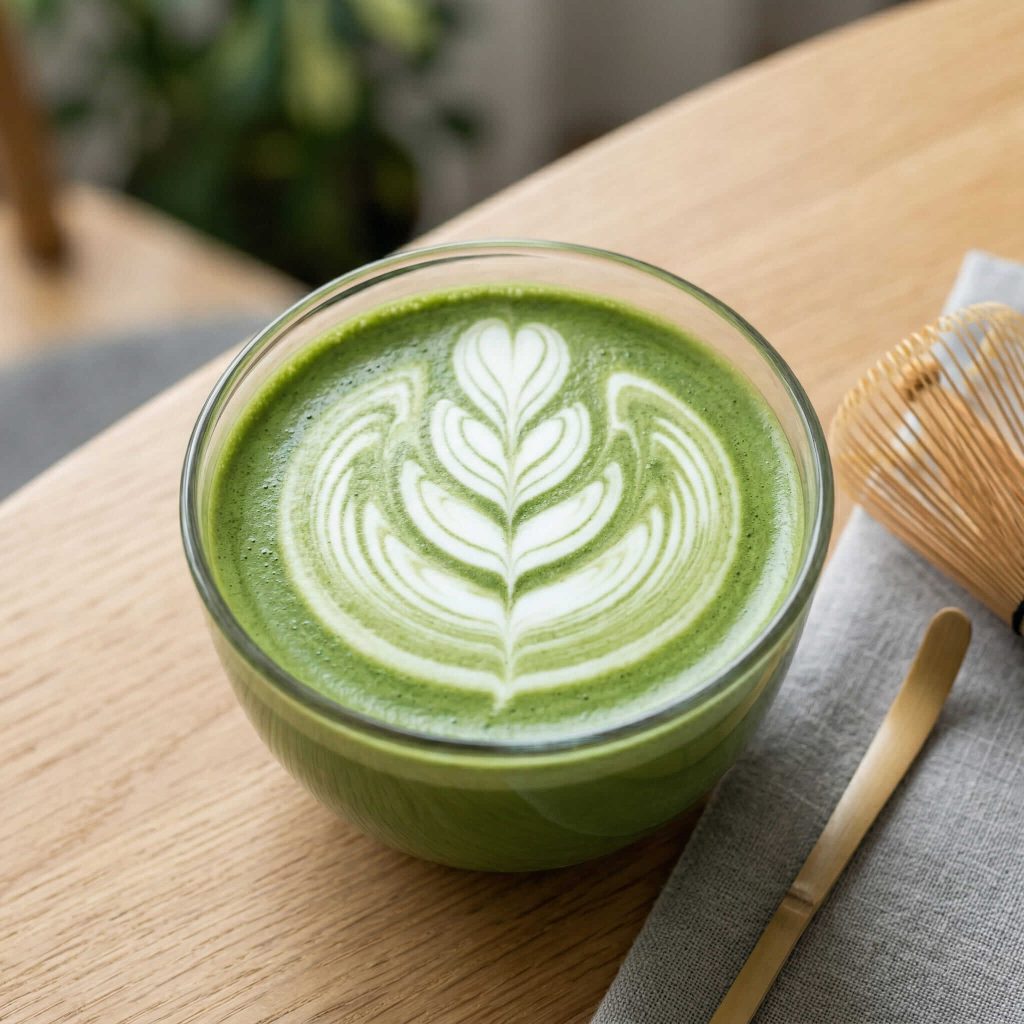
The best matcha for latte needs more pigment, more body, and more umami than matcha brewed plain with water, because milk dilutes both color and flavor. Here is the thing most buyers miss: a matcha that tastes delicate and refined on its own can disappear entirely once you add 200ml of steamed milk. Latte matcha is engineered to push through dairy and plant milks while staying smooth.
Milk proteins bind to catechins and mute the bright vegetal notes, so latte-grade powder leans on stronger umami (from the amino acid L-theanine) and a deeper chlorophyll-driven green to compensate. A pure ceremonial matcha designed for usucha (thin tea) is often too subtle and too expensive for this job.
Key Takeaway: Choose matcha for how it behaves in milk, not how it tastes in a tasting bowl—color saturation and umami strength matter more than delicate nuance for latte applications.
What Grade of Matcha Works Best for Lattes?
A premium culinary grade or “latte grade” matcha works best for most lattes, sitting between cheap baking matcha and high-end ceremonial powder. Let’s be clear: you rarely need true ceremonial grade for a milk drink, and using it can quietly destroy your margins. The sweet spot is a first or second-harvest culinary grade with good color and controlled bitterness.
Many suppliers, including AdoroHu, organize latte options around a tiered system spanning premium culinary matcha for everyday café volume and ceremonial-grade matcha for premium signature drinks.
| Grade | Best Use in Lattes | Color | Bitterness | Relative Cost |
|---|---|---|---|---|
| Ceremonial | Premium signature lattes | Vivid emerald | Very low | Highest |
| Premium culinary / latte | Standard café lattes | Bright green | Low–moderate | Mid |
| Standard culinary | Iced/blended, high-sugar drinks | Green–olive | Moderate | Lower |
| Baking grade | Heavily flavored, baked goods | Olive/dull | Higher | Lowest |
Key Takeaway: For most café and beverage programs, a premium culinary or dedicated latte grade delivers 90% of ceremonial visual quality at a fraction of the cost—reserve true ceremonial matcha for premium menu items only.
How Does Particle Size Affect Matcha Latte Quality?
Particle size directly controls how smooth, suspended, and vibrant your matcha latte looks and feels, with the best matcha for latte typically milled to 5–10 microns. Here’s why this matters: coarse powder settles fast, feels gritty, and looks dull, while ultra-fine, stone-milled powder stays suspended and reflects light as a brighter green.
Authentic Japanese matcha is stone-milled from shade-grown tencha leaves, a slow process producing roughly 30–40 grams per hour per mill. This fine, electrostatically charged powder disperses evenly in milk and resists rapid sedimentation—critical for both hot lattes and bottled ready-to-drink products where separation is a visible defect.
Key Takeaway: Specify particle size in your purchase agreements; a 5–10 micron stone-milled powder is the practical benchmark for smooth, photogenic, shelf-stable matcha lattes.
How Much Does Latte-Grade Matcha Cost for B2B Buyers?
Latte-grade matcha for B2B buyers typically ranges from roughly $30 to $90 per kilogram wholesale, depending on harvest, grade, origin, and order volume. Here’s the reality: per-cup economics matter more than headline price, since a typical latte uses only 2–4 grams of powder.
That means a $60/kg matcha translates to roughly $0.12–$0.24 per latte in raw powder cost. To lock in reliable pricing and consistency at scale, most beverage brands work directly with a matcha manufacturer and bulk supplier rather than buying through distributors who add markup.
| Cost Factor | Impact on Price | Notes |
|---|---|---|
| Harvest (first vs later) | High | First-harvest spring leaves cost more |
| Grade | High | Ceremonial commands a premium |
| Origin (Japan vs other) | Medium–High | Uji/Kagoshima Japanese matcha priced higher |
| Order volume / MOQ | Medium | Larger orders lower per-kg cost |
| Organic certification | Medium | Certified organic adds a premium |
Key Takeaway: Evaluate matcha on cost-per-cup and consistency, not just per-kilogram price—a slightly pricier latte grade often wins on color, lower waste, and fewer customer complaints.
Which Matcha Origin Is Best for Latte Production?
Japanese matcha—particularly from Uji, Kagoshima, Nishio, and Shizuoka—is generally considered the benchmark for latte production, though origin should match your price tier. Here’s something competitors rarely spell out: not every latte program needs single-origin Uji matcha, and matching origin to menu position protects margin.
Japanese matcha offers the deepest umami and most vivid color thanks to centuries of refined shade-growing and processing. Other origins can serve high-volume, heavily sweetened, or flavored drinks where nuance matters less and cost control dominates.
Key Takeaway: Use premium Japanese matcha for signature and hot lattes where color and flavor are visible, and reserve lower-cost origins for blended, flavored, or high-sugar applications.
What Certifications Should B2B Matcha Buyers Require?
B2B matcha buyers should require food-safety and authenticity certifications including JAS Organic, USDA Organic, EU Organic, and documented heavy-metal and pesticide testing. Make no mistake: in matcha, the whole leaf is consumed, so contaminant testing is non-negotiable for any product entering milk-based drinks.
Look for suppliers who provide Certificate of Analysis (COA) documentation covering lead, cadmium, and pesticide residues per lot. For brands targeting clean-label positioning, certified organic matcha backed by JAS and USDA standards is increasingly a buyer expectation rather than a premium add-on.
Key Takeaway: Always demand per-lot COA documentation and recognized organic certification—these protect your brand from recalls and reassure your own downstream café and retail customers.
How Do You Source Matcha for Latte at Scale Without Quality Drift?
Sourcing matcha at scale without quality drift requires locking specifications, sampling every lot, and partnering with a manufacturer who controls processing. The trap to avoid: approving a beautiful first sample, then receiving inconsistent production lots that ruin recipe standardization across your cafés.
Lock Your Specifications Before You Order
Define and document the exact parameters that determine latte performance:
- Target color (a* green value or visual reference standard)
- Particle size range (e.g., 5–10 microns)
- Harvest tier and grade
- Required certifications and COA scope
- Acceptable moisture and shelf-life parameters
Sample, Approve, and Re-Test Each Lot
Protect consistency across reorders with a simple QC rhythm:
- Request pre-shipment samples against your approved gold standard
- Test color and taste in your actual milk base, not just water
- Retain reference samples for lot-to-lot comparison
- Require COA matching for every production run
Key Takeaway: Quality drift is the most common scaling failure in matcha sourcing—prevent it with locked written specs, gold-standard reference samples, and per-lot verification rather than trusting a single approval sample.
Can You Private Label or Customize Matcha for Latte Products?
Yes, you can fully private label and customize matcha for latte products, from blend formulation to packaging, through OEM manufacturing partners. Here’s where real margin lives: branded matcha latte products and pre-blended latte mixes command far higher value than selling plain bulk powder.
Customization typically covers blend ratios, sweetness levels, pre-mixed latte powders, and full packaging design. Brands building proprietary drink lines often start with matcha private label and OEM development to control formula, consistency, and branding end to end.
Key Takeaway: Private label and custom formulation let beverage brands own a differentiated, repeatable matcha latte product—turning a commodity ingredient into a defensible branded SKU.
What Are the Most Common Mistakes B2B Buyers Make With Latte Matcha?
The most common mistake is over-paying for ceremonial grade when a latte grade performs better economically, followed by ignoring lot consistency. Let’s not sugarcoat it: each of these errors carries a measurable business cost, from blown margins to customer churn.
Frequent pitfalls include buying purely on price (leading to bitter, brown lattes), skipping COA verification (recall and compliance risk), failing to test in milk, and neglecting MOQ and lead-time planning (causing stockouts). Brands expanding into matcha latte beverage applications should validate every spec against real café conditions before committing to volume.
Key Takeaway: Avoid the false economy of cheapest-per-kilogram buying and the opposite waste of over-grading—match the matcha to the drink, verify every lot, and plan MOQ around real demand.
FAQ
- Q: What is the ideal dosage of matcha per latte for B2B recipe standardization?
- Most café and beverage recipes use 2–4 grams of matcha powder per 8–12 oz latte. Standardizing this dosage across all locations is essential for consistent flavor, color, and cost-per-cup control, and it should be documented in your recipe specifications.
- Q: What MOQ and lead time should we expect when sourcing latte matcha at wholesale?
- MOQ and lead times vary by supplier and customization level, with bulk standard powder generally available at lower minimums than private label blends. Confirm exact MOQ, production lead time, and sampling timelines directly with your manufacturer before planning launches.
- Q: Does matcha for lattes need to be ceremonial grade?
- No. A premium culinary or dedicated latte grade usually outperforms ceremonial matcha economically in milk-based drinks, delivering strong color and flavor at a far lower cost-per-cup. Reserve ceremonial grade for premium signature menu items.
- Q: How do we keep matcha latte color consistent across production lots?
- Lock written color and particle-size specifications, retain a gold-standard reference sample, and require per-lot Certificate of Analysis and visual matching. Always evaluate color in your actual milk base rather than in water alone.
- Q: Can matcha lattes be made shelf-stable for ready-to-drink products?
- Yes, but it requires fine, well-dispersing powder and proper formulation to limit sedimentation and color fade. Work with a manufacturer experienced in beverage applications to optimize particle size, stabilizers, and processing for RTD formats.
Conclusion
Choosing the best matcha for latte is a margin and consistency decision as much as a flavor one—the right latte grade balances vivid color, smooth umami, and viable per-cup economics. The practical takeaway: lock your specs, verify every lot, and match grade to menu position rather than defaulting to the most expensive option. To source latte-optimized matcha or develop a custom blend, request a sample and wholesale quote from AdoroHu Matcha.