Sourcing the wrong ingredient for your commercial bakery line is a massive operational risk. If you select an inferior green tea powder, your baked goods will suffer from dull, brownish colors, bitter flavor profiles, and inconsistent batch results. These quality control failures directly cause lost retail sales, damaged brand reputation, and entirely wasted ingredient investments. By utilizing the proper matcha baking green tea, commercial food manufacturers can guarantee vibrant green pastries, stable umami flavors, and highly profitable product lines.
In short:
Key points:
- Culinary grade matcha provides the necessary robust flavor to cut through butter, dairy, and sugar in heavy pastry doughs.
- High chlorophyll content and proper batter pH control are strictly required to prevent browning during baking.
- Bulk buyers must verify technical specifications, demanding moisture levels below 4% and consistent micron particle sizes.
- Sourcing from a verified OEM supplier guarantees consistent batch-to-batch color matching for commercial production runs.
What Defines the Best Matcha for Pastries in Commercial Kitchens?
What exact chemical and physical traits define the best matcha for pastries? The ideal baking matcha requires a precise equilibrium of flavor intensity, color stability, and particle fineness. Drinking teas prioritize delicate umami and sweet notes. Conversely, baking matcha must feature a pronounced, slightly astringent flavor profile. This bold characteristic is absolutely essential. It ensures the authentic green tea flavor remains prominent after mixing with heavy lipids and complex carbohydrates.
Here is the secret to formulation success:
Professional bakers rely on late-harvest green tea leaves, known as tencha. These later harvests yield a stronger cellular structure and a highly robust catechin profile. This elevated catechin density provides the necessary flavor backbone. Furthermore, optimal matcha for pastries undergoes precise air-pulverizing. The powder must reach a strict 80 to 120 mesh size. This ultra-fine texture guarantees seamless hydration and blending into laminated doughs without clumping.
Key Takeaway: The ideal matcha for pastries combines a robust catechin profile, high chlorophyll retention, and an ultra-fine mesh size to ensure smooth blending and a dominant flavor profile.
Culinary vs. Ceremonial: Which Grade of Matcha for Pastries is Superior?
Why do procurement teams constantly debate over culinary versus ceremonial grades when evaluating matcha for pastries? Ceremonial matcha is exclusively crafted from the youngest, first-harvest spring leaves. It delivers a highly nuanced, sweet flavor meant only for suspension in warm water. When you subject ceremonial matcha to high-heat commercial baking, its delicate flavor compounds are entirely neutralized by the thermal stress, sugars, and fats.
Consider this critical cost difference:
A premium culinary grade powder is intentionally engineered for food manufacturing. It is harvested later in the season. This delayed harvest produces a bolder, more assertive flavor that effectively pierces through heavy bakery ingredients. Using ceremonial grade for baking is an unnecessary capital expense. It actively produces an inferior baked product with a heavily muted flavor profile.
| Feature | Ceremonial Grade | Premium Culinary Grade |
|---|---|---|
| Harvest Timing | First Spring Harvest | Second or Third Harvest |
| Flavor Profile | Delicate, Sweet, Umami | Bold, Astringent, Robust |
| Primary Application | Traditional Tea, Lattes | Baked Goods, Confections, Ice Cream |
| Thermal Resistance | Flavor degrades rapidly | Flavor withstands high heat |
| B2B Cost Efficiency | Extremely High Cost | Highly Scalable and Cost-Effective |
Key Takeaway: Premium culinary grade matcha is structurally and economically superior to ceremonial grade for pastries, offering the intense flavor and cost-efficiency required for commercial bakeries.
How Can Bakers Prevent Matcha for Pastries From Turning Brown?
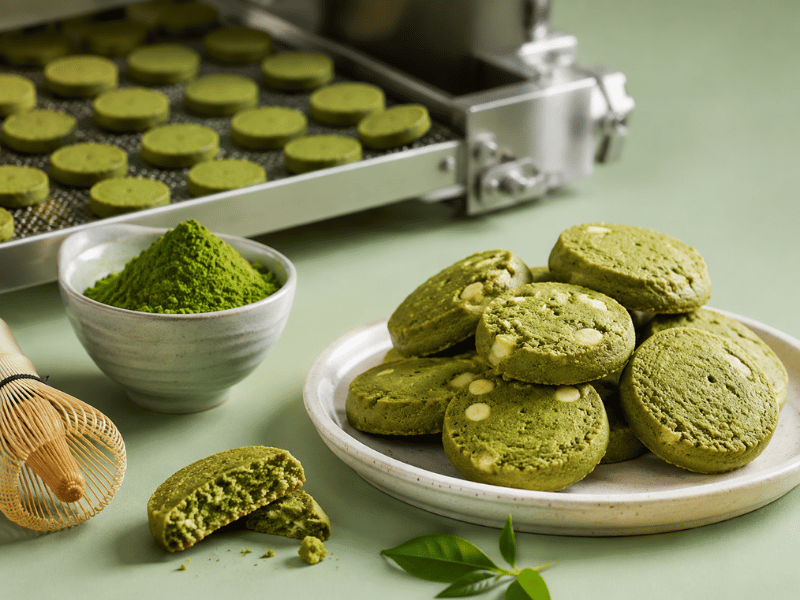
How can food scientists stop their expensive matcha for pastries from turning an unappetizing brown color in the oven? The discoloration of baked matcha products represents the most frequent quality control failure in the pastry industry. This browning stems directly from oxidation and the thermal degradation of delicate chlorophyll molecules. To prevent this chemical breakdown, professional bakers must strictly control the pH level of their raw batter.
Pay close attention to these metrics:
Alkaline environments actively accelerate chlorophyll degradation. If your pastry recipe utilizes excessive baking soda, which is highly alkaline, the green pigment will rapidly turn a muddy yellow-brown at temperatures above 350°F (175°C). To maintain a vibrant green hue, bakers must maintain a batter pH between 7.0 and 7.2. You achieve this by replacing baking soda with baking powder. Alternatively, introduce a mild acid like buttermilk or lemon juice to neutralize the pH.
Primary Causes of Browning
- Alkaline Batters: High pH levels instantly destroy chlorophyll during baking.
- Excessive Heat: Prolonged exposure above 350°F (175°C) burns the delicate tea particles.
- Oxidized Ingredients: Using improperly stored, pre-oxidized matcha guarantees a dull final pastry.
Key Takeaway: Maintain a vibrant green color in your pastries by strictly controlling your batter’s pH level, avoiding excess baking soda, and monitoring oven temperatures to prevent thermal degradation.
What Are the Top High-Margin Applications for Matcha in Pastries?
Where does high-quality matcha for pastries generate the strongest retail revenue for food brands? Culinary matcha is exceptionally versatile. It extends far beyond basic cookies. Global food manufacturers are aggressively integrating green tea powder into diverse, premium product lines to capture the growing consumer demand for functional, plant-based flavors.
Look at these high-growth sectors:
Industrial bakeries leverage culinary matcha for mass-producing laminated doughs, croissants, and chiffon cakes. The premium confectionery sector deploys it for high-end chocolate truffles, ganache, and wagashi fillings. Additionally, the frozen dessert industry heavily relies on bold culinary matcha to flavor commercial ice creams, where the astringent tea must combat high butterfat content.
Most Profitable Pastry Categories
- Viennoiserie: Laminated doughs, croissants, and sweet rolls.
- Premium Confections: White chocolate inclusions, macarons, and mochi.
- Sponge Cakes: Castella cakes, chiffon cakes, and industrial pound cakes.
Key Takeaway: Culinary matcha drives massive B2B revenue across diverse pastry applications, specifically within laminated doughs, premium chocolates, and specialty sponge cakes.
Which Quality Specs Define the Best Wholesale Matcha for Pastries?
Which technical quality parameters matter most when sourcing bulk matcha for pastries? For commercial food manufacturers, batch consistency is the ultimate metric of operational success. Bulk procurement teams cannot afford variations in color grading or flavor intensity. Therefore, establishing rigorous, verifiable quality control standards is non-negotiable.
Here is what your specification sheet needs:
First, you must strictly monitor internal moisture content. Premium bulk matcha must maintain a moisture level below 4.0%. Higher moisture content directly causes clumping, accelerated lipid oxidation, and potential microbial growth. Second, verify the exact mesh size. Industrial matcha must register between 800 and 1000 mesh (roughly 10 to 15 microns). Irregular, coarse particle sizes will cause a gritty, unpleasant texture in fine pastries and laminated doughs.
Key Takeaway: Reliable bulk matcha for pastries must meet strict technical standards, specifically maintaining moisture content below 4% and achieving an ultra-fine 10-micron particle size.
What Are the True Cost Factors for Bulk Matcha for Pastries?
How should financial controllers forecast the landed cost of bulk matcha for pastries? Understanding complex pricing dynamics is highly critical for protecting bakery profit margins. The wholesale cost of culinary matcha fluctuates significantly based on harvest timing, shading duration, milling methods, and organic certification status.
Here is the bottom line on bulk pricing:
Standard B2B pricing for commercial culinary matcha typically ranges from $15 to $35 per kilogram. This depends heavily on exact mesh specifications and aggregate order volumes. When sourcing matcha wholesale, minimum order quantities (MOQs) dictate your leverage. Top-tier suppliers offer aggressive price breaks at the 50kg, 100kg, and 500kg procurement thresholds. Additionally, certified organic powders naturally command a 20% to 30% price premium over conventional pesticide-free options.
Key Takeaway: Wholesale baking matcha generally costs between $15 and $35 per kilogram, with final invoice pricing heavily dependent on order volume, organic certification, and shipping terms.
How Should Commercial Bakeries Store Their Matcha for Pastries?
How can facility managers protect their massive inventory investment in matcha for pastries? Proper warehouse storage protocols are absolutely critical to preventing rapid ingredient spoilage. Green tea powder is notoriously sensitive to four specific environmental catalysts: ultraviolet light, ambient heat, oxygen ingress, and atmospheric humidity.
Follow these strict warehouse protocols:
Bulk matcha must always remain in hermetically sealed, nitrogen-flushed, opaque foil bags. This blocks destructive UV light and halts oxygen oxidation. The optimal warehouse storage temperature sits tightly between 5°C and 15°C (41°F to 59°F). If storing the powder in commercial refrigeration units, operators must bring the matcha to room temperature before opening the bag. Failing to do this causes immediate condensation, which introduces moisture and ruins the powder.
Key Takeaway: Maximize the commercial shelf life of bulk matcha by storing it in nitrogen-flushed, opaque packaging within a strictly climate-controlled facility below 15°C.
Can You Build a Retail Brand Using Private Label Matcha for Pastries?
Is it financially viable to build a custom brand utilizing matcha private label services for pastries? Absolutely. The majority of retail baking brands, specialty cafes, and dry-mix companies do not mill their own tea. Instead, they leverage specialized OEM partners to formulate, blend, and package ready-to-sell products.
Why is this business model superior?
Utilizing a dedicated private label manufacturer allows businesses to launch custom pancake blends, cookie mixes, or retail pastry tins without massive capital expenditure in milling equipment. A robust OEM partner handles raw material importation, custom recipe blending, regulatory safety compliance, and final packaging. This turnkey operational approach drastically accelerates time-to-market and allows food brands to scale aggressively with zero factory overhead.
Key Takeaway: Private label OEM manufacturing allows food brands to rapidly launch custom matcha baking mixes and retail pastry products with zero heavy equipment investment.
What Are the Biggest Sourcing Mistakes When Buying Matcha for Pastries?
What critical errors do procurement managers make when sourcing matcha for pastries? Partnering with unverified brokers or selecting the wrong specification leads directly to ruined production runs. Many buyers focus exclusively on securing the lowest price per kilogram, completely ignoring food safety compliance and physical powder characteristics.
Avoid these costly mistakes:
The most common failure is buying matcha with high moisture content, which oxidizes rapidly in transit. The second major mistake is failing to request a current Certificate of Analysis (COA). Without a COA, you risk importing powder contaminated with heavy metals or illegal pesticide residues. Finally, buying ceremonial grade for high-heat baking wastes capital and results in flavorless pastries due to thermal degradation.
| Sourcing Mistake | Direct Consequence | Prevention Strategy |
|---|---|---|
| Ignoring COA Documents | Failed health inspections | Always demand heavy metal/pesticide testing |
| Buying High Moisture Powder | Clumping and rapid oxidation | Enforce strict <4% moisture limits |
| Using Ceremonial Grade | Wasted budget, bland flavor | Source robust, second-harvest culinary grades |
Key Takeaway: Protect your supply chain by avoiding high-moisture powders, demanding verifiable COA documentation, and strictly utilizing culinary grades for commercial baking.

How Do You Vet a Reliable Wholesale Supplier of Matcha for Pastries?
What strict criteria must you evaluate when selecting a permanent supplier of matcha for pastries? Your wholesale vendor is a direct structural extension of your manufacturing business. Partnering with an unreliable broker causes severe supply chain disruptions, inconsistent flavor matching, and failed quality audits.
Demand these operational standards:
A legitimate B2B supplier must provide absolute transparency regarding their farm sourcing regions and milling facilities. Always request certified proof of organic matcha powder standards if claiming USDA or EU compliance. Furthermore, audit their supply chain resilience. A tier-one OEM partner must possess stable bulk inventory capabilities, transparent communication regarding shipping lead times, and the infrastructure to scale production seamlessly alongside your bakery’s growth.
Key Takeaway: Secure your bakery operations by partnering with a verified wholesale supplier that provides transparent sourcing, mandatory COA testing, and highly scalable bulk inventory.
FAQ
- Q: Why do my matcha pastries turn yellow or brown in the oven?
- This discoloration is caused by high oven temperatures degrading the chlorophyll, or by using a highly alkaline batter containing excess baking soda. Maintaining a batter pH of 7.0 and lowering the baking temperature prevents this.
- Q: Is ceremonial matcha better than culinary matcha for baking?
- No. Ceremonial matcha is designed only for drinking. Its delicate flavor is easily destroyed by high baking heat, whereas culinary matcha possesses a robust, astringent flavor that survives the baking process.
- Q: What is the required mesh size for commercial pastry matcha?
- For seamless blending into laminated doughs and fine batters without clumping, commercial bakers should utilize matcha milled to a fine 80 to 120 mesh (approximately 10 to 15 microns).
- Q: How long does bulk pastry matcha remain fresh in a warehouse?
- When stored correctly in hermetically sealed, opaque packaging within a cool, climate-controlled environment (below 15°C), premium bulk matcha retains its peak quality for 12 to 18 months.
- Q: Can I request bulk matcha samples for commercial bakery testing?
- Yes, reliable B2B suppliers provide wholesale samples so that food scientists can conduct mandatory R&D, color-retention testing, and thermal flavor profiling before signing large purchase orders.
Conclusion
Sourcing the absolute best matcha for pastries is a critical procurement decision that directly dictates the color, flavor intensity, and ultimate profitability of your commercial baked goods. By selecting a premium culinary grade with a robust catechin profile and strictly controlling your baking parameters, you guarantee a superior retail product. Stop risking your brand reputation on inconsistent, unverified tea suppliers. To secure reliable, commercial-grade ingredients for your next production run, visit our contact page today to request a wholesale quote, secure testing samples, or discuss custom private label manufacturing.