
Matcha supplier verification means confirming four things before money moves: that the company is legally registered, that it actually manufactures rather than resells, that its certifications are real and cover the batch you are buying, and that its production capability matches what it claims. Here’s the uncomfortable reality behind that checklist: a professional website, a polished catalogue, and a responsive salesperson tell you nothing about whether a company exists as it claims.
The cost of skipping this is concrete. A polished website does not establish legal identity, manufacturing control, or ownership of the bank account receiving payment; verify each point independently before funds move. In matcha specifically, the most common problem is not outright fraud but misrepresentation: a trading company presenting itself as a producer, which means no control over cultivation, no ability to guarantee batch consistency, and a margin you are paying for nothing.
This guide sets out how to verify a matcha supplier properly, and it is written so you can apply every step to us as readily as to anyone else, including any matcha supplier you are currently evaluating.
The evidence behind a legitimate supplier
Verify a matcha supplier in four layers. First, confirm legal existence: request the business licence and check the 18-digit Unified Social Credit Code against China’s National Enterprise Credit Information Publicity System (GSXT). Second, establish whether they manufacture or trade, by checking the registered business scope, requesting production footage tied to a named location, and testing their technical depth. Third, validate certifications by requesting the certificate itself, confirming the certified operator name matches, and asking for per-lot transaction certificates. Fourth, verify capability through documented samples, a video or on-site audit, and references you contact directly.
In short: verify legal registration on GSXT, confirm they manufacture rather than trade, validate certificates against the named operator and batch, then test capability through samples and an audit.
Key points:
- Use the official GSXT registry to check the Unified Social Credit Code and registered entity; registration is an identity check, not proof of quality or capability.
- Many suppliers claiming to be manufacturers are traders; the business scope reveals which.
- Legal registration proves existence only, not capability, quality, or financial health.
Why does matcha supplier verification matter more than for other goods?
Matcha supplier verification matters more because you are buying a food ingredient whose quality is invisible until it fails in your product. Here’s what makes matcha unusual: the traits you are paying for, origin, shade-growing, milling method, and organic status, cannot be confirmed by looking at the powder.
The verification burden falls on the buyer for three reasons. Matcha is consumed as whole leaf, so contaminant exposure is direct rather than partially extracted, making the producer’s actual practices consequential. Premium attributes command large price differences but are not visually distinguishable, so misrepresentation is both easy and profitable. And organic or grade claims are only meaningful if they trace to a certified, auditable production run.
The experienced view: verification is not paranoia, it is the standard qualification process any food business applies to a new ingredient supplier, and it belongs before the first deposit rather than after the first problem. It also runs alongside the commercial evaluation covered in our matcha supplier checklist, which addresses fit rather than legitimacy.
Key Takeaway: Matcha verification matters more because the traits you pay for, origin, shading, milling, and organic status, are invisible in the powder, and whole-leaf consumption makes production practices directly consequential; qualification belongs before the first deposit, not after the first problem.
How do you confirm a matcha supplier is legally registered?
Confirm legal registration by checking the company’s Unified Social Credit Code against China’s official government registry. Here’s the step that eliminates ghost companies in ten minutes: every legitimate Chinese company holds a business licence issued through the State Administration for Market Regulation, and it can be checked publicly.
The process is straightforward once you know where to look.
- Request a copy of the business licence, which reputable companies provide readily during due diligence.
- Note the 18-digit Unified Social Credit Code printed on it.
- Check that code on the official National Enterprise Credit Information Publicity System (GSXT). Confirm the registered entity and current record directly rather than relying on an unofficial translation site.
- Confirm the registered name matches the name used in your correspondence, contracts, and, critically, the bank account details.
- Check registration date, registered capital, legal representative, and operating status.
The judgment that matters: a name mismatch between the licence and the entity you are paying is a discrepancy that requires resolution before contracting or payment. Registration confirms the company legally exists; it says nothing about quality or capability, which is why this is step one rather than the whole process.
Key Takeaway: Request the business licence, take the 18-digit Unified Social Credit Code, and verify it on the official GSXT registry; confirm the registered name matches your contract and bank details, and resolve any mismatch before contracting or payment.
How do you tell a real matcha manufacturer from a trading company?
You distinguish a manufacturer from a trader by checking the registered business scope, testing technical depth, and asking for evidence tied to a named facility. Here’s the misrepresentation that costs buyers most: most suppliers on B2B platforms claim to be manufacturers, and many are traders.
Test the claimed manufacturing role
Several checks separate the two reliably. The registered business scope on the business licence states whether the entity is licensed to manufacture or only to trade, which is the fastest documentary check available. Beyond paperwork, technical questioning is revealing: ask about shading duration before harvest, fixation method, milling equipment and throughput, and how particle size distribution is controlled. A producer answers with specifics and numbers, a trader answers vaguely or has to check with someone.
Ask for production video or photographs showing named equipment at a stated address, then verify that address exists on a map. The practical distinction: a trader can still be a legitimate partner for small volumes, but they cannot guarantee batch consistency, cannot give you real allocation priority in a tight season, and add a margin layer.
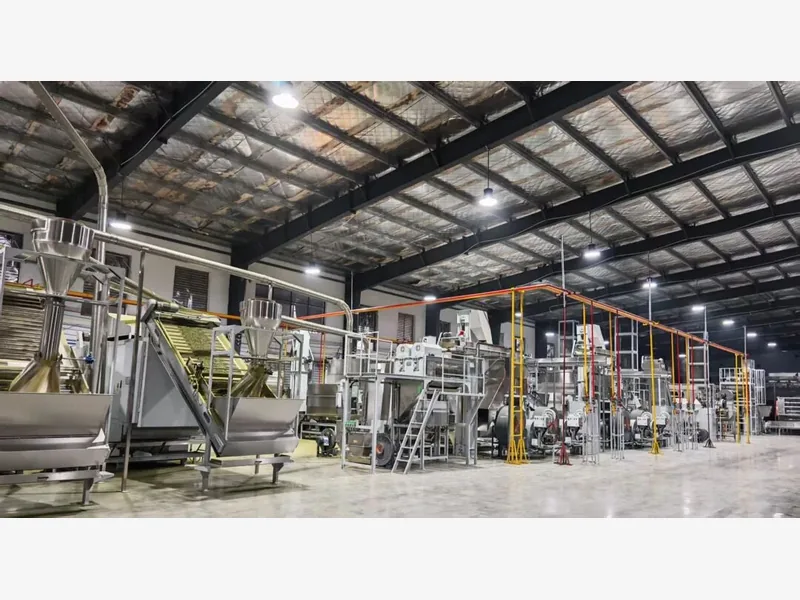
Our own production runs on 20 stone mills, 56 ball mills and 8 continuous ball-mills with ultrasonic screening across two Class-100,000 clean workshops, which is the kind of specificity you should expect any producer to state plainly.
Key Takeaway: Check the registered business scope for manufacturing authorisation, then test technical depth on shading, fixation, milling equipment and particle-size control; producers answer with specifics while traders deflect, and traders cannot guarantee batch consistency or allocation priority.

How do you verify a matcha supplier’s certifications are real?
Verify certifications by obtaining the certificate document itself and confirming the certified operator, scope, and validity, not by accepting a logo. Here’s the gap most buyers never close: a certification logo on a website proves nothing about the batch in your container.
Certificate verification has four checks. Request the actual certificate rather than a claim or an image, and confirm it names the certified operator, the product scope, the certifying body, and a validity period. Check that the operator name matches the entity you are contracting with, since certificates sometimes belong to a related company or a farm the trader merely buys from. Confirm the scope covers the specific product and process you are buying, not just the facility in general.
Then, for organic, require a per-lot transaction certificate issued by the certifying body for your shipment, which is what links your goods to a certified production run. The experienced rule: if a supplier cannot connect a certificate to a specific batch and grade, treat the claim as incomplete until they can. This per-lot linkage is the foundation of defensible organic matcha sourcing, and it is also what customs and retail auditors examine first.
Key Takeaway: Obtain the certificate itself and verify the certified operator name matches your contracting entity, the scope covers your exact product, and the validity is current; for organic, require a per-lot transaction certificate, since a logo proves nothing about the batch you receive.
What does documentation reveal about a matcha supplier’s legitimacy?
Documentation reveals operational maturity, because producing complete, lot-matched paperwork requires systems that fraudulent or thinly resourced operators do not have. Here’s the diagnostic: how a supplier responds to a documentation request tells you more than what the documents say.
Watch the response as closely as the content. Ask for a batch-specific Certificate of Analysis from an ISO/IEC 17025 accredited third-party laboratory, a specification sheet, certification copies, and export documentation examples. A genuine producer supplies these promptly because they exist as a matter of routine. Hesitation, partial answers, reused documents from other batches, or in-house lab reports offered as third-party verification all indicate either capability gaps or something being concealed.
Check internal consistency too: lot numbers, dates and product descriptions should agree across the COA, the packing list and the certificate. Learning to read these documents properly is a skill in itself, covered in our guide on how to read a matcha COA. The judgment: documentation friction during qualification predicts documentation friction during a customs hold, when it will cost you far more.
Key Takeaway: Request a batch-specific third-party COA, specification sheet, certificates and export documents, then judge both content and response speed; hesitation, reused documents, or in-house reports offered as third-party verification signal capability gaps, and lot numbers must agree across all documents.
How do samples and trial orders verify a matcha supplier?
Samples and trial orders verify capability in a way documents cannot, because they test whether the supplier can actually deliver what the paperwork promises. Here’s the sequence that limits your exposure: documented sample, then small trial order, then volume commitment.
Each stage tests something different. A documented sample tests product quality, responsiveness, and whether their documentation practices hold up under a real request. A trial order tests the full operational chain at production scale but limited volume, order handling, payment process, lead time accuracy, packing, and arrival condition. Only after both should you commit to significant volume or a long contract.
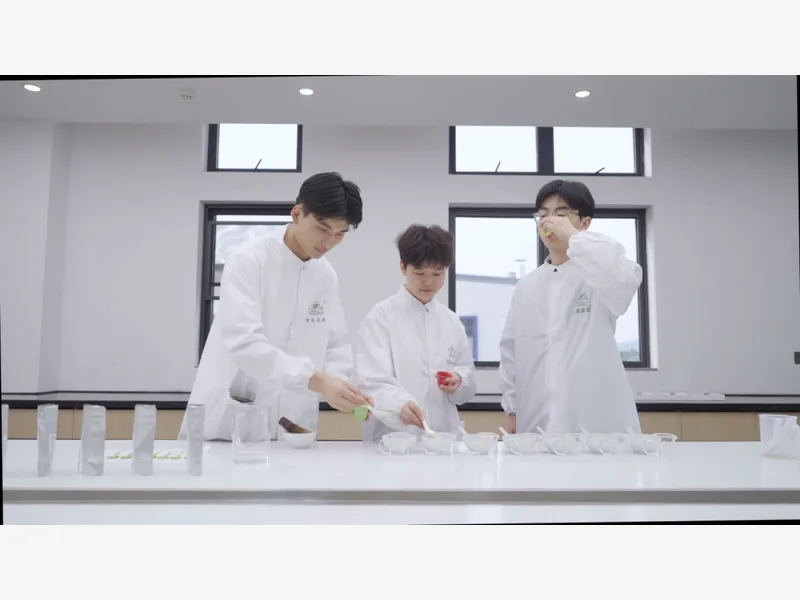
The critical verification point: confirm that the sample and the bulk order come from the same production process, and ideally request a side-by-side COA comparison so you can verify the match objectively rather than trusting an assurance. Our approach to matcha samples is built around exactly this: sample and bulk drawn from the same batch process, with COA comparison provided. A supplier who resists this sequence is telling you something important.
Key Takeaway: Use documented samples to test quality and documentation practice, then a trial order to test the full operational chain at production scale; confirm sample and bulk come from the same process, ideally with a side-by-side COA comparison, before committing volume.
Should you audit a matcha supplier’s factory, and how?
Yes, for any significant volume you should audit, whether in person, by video, or through a third-party inspection body. Here’s why it remains decisive: an audit is the only way to confirm that the facility, equipment, and capacity you have been told about physically exist.
Three levels of audit suit different risk levels. A live video walkthrough is the low-cost option, and it works if you direct it in real time rather than accepting a pre-recorded file, asking to see specific equipment, storage areas, the laboratory, and the packing line. An in-person visit gives the fullest picture and lets you meet the technical team. A third-party audit by an established inspection body such as SGS, Bureau Veritas, TÜV Rheinland or Intertek produces an independent report, and can provide independent evidence where the buyer cannot travel.
Focus the audit on: does the equipment match the claimed capacity; are clean-room and hygiene controls real; does the laboratory exist and function; is storage temperature and humidity controlled; and does the paperwork trail from tea garden to finished lot actually connect. The judgment: pre-recorded footage and stock photography prove nothing, so insist on live or independent verification for volumes that matter.
Key Takeaway: Audit by live directed video, in-person visit, or a third-party body such as SGS or Bureau Veritas; check that equipment matches claimed capacity, clean-room controls and the laboratory are real, and the paperwork trail connects garden to finished lot, since pre-recorded footage proves nothing.
What are the red flags in matcha supplier verification?
The clearest red flags involve identity mismatches, payment irregularities, and reluctance to be verified. Here’s the pattern across losses: nearly every one is preceded by a signal the buyer noticed and rationalised.
Separate explainable gaps from stop signs
Treat these as stop signals, each with its specific risk.
- An unresolved discrepancy exists between the registered entity, contracting party, invoice issuer, and payment-account authority; this is not proof of fraud or diversion, but it requires independent verification through trusted company contacts and bank-detail controls before payment.
- Refusal or delay in providing a business licence, meaning you cannot confirm the entity exists.
- Claims to manufacture that the registered business scope does not support, meaning you are paying a trader’s margin.
- Certificates that cannot be tied to a specific batch or that name a different operator.
- Pressure for full payment upfront, removing all your leverage if delivery or quality fails.
- Pricing far below market alongside thin documentation, which usually signals a quality or authenticity problem.
- Reluctance to allow any form of audit or live facility view.
Each of these is checkable before you pay. Payment structure is your remaining protection if something slips through, which is why the deposit-and-balance conventions in our guide to matcha supply contracts exist, and why the same verification standards should apply across complementary lines such as hojicha powder.
Key Takeaway: Stop on a bank account name that differs from the registered company, refusal to share a business licence, manufacturing claims unsupported by the business scope, certificates not tied to a batch, full-prepayment pressure, far-below-market pricing with thin documents, or resistance to any audit.
FAQ
- How do I check if a Chinese matcha supplier is legally registered?
- Request the business licence, take the 18-digit Unified Social Credit Code, and verify it on the official GSXT registry. Confirm the registered name matches the correspondence, contract, and verified payment account; resolve discrepancies before contracting or payment.
- How can I tell if a matcha supplier is a manufacturer or a trader?
- Check the registered business scope and verify the named production location, equipment, staff, records, and lot traceability through current evidence such as a directed live walkthrough or risk-based audit. Technical answers support the review but do not by themselves prove ownership or manufacturing control.
- Is a business licence check enough to verify a matcha supplier?
- No. A licence check confirms the company is legally registered and currently operating, but it says nothing about product quality, production capability, financial health, or reputation. Plenty of legally registered companies are poor suppliers. Treat it as the essential first step, followed by certification verification, documented samples, a trial order, and an audit for significant volumes.
- How do I verify a matcha supplier’s organic certification?
- Ask for the certificate rather than accepting a logo, and confirm the certified operator, product scope, certifying body, validity, and relationship to the contracting entity. Determine which lot or transaction documents are required for the destination market, claim, certification programme, and shipment; do not assume one document applies universally.
- What is the biggest red flag when verifying a matcha supplier?
- An unresolved discrepancy between the registered entity, contracting party, invoice issuer, and payment-account authority. A mismatch is not proof of fraud or diversion, but it requires independent verification through trusted company contacts and bank-detail controls before payment. Other serious flags include refusal to share a business licence, unsupported manufacturing claims, and pressure to use an unverified account.
Conclusion
Matcha supplier verification works in four layers: confirm legal existence through GSXT, establish whether the company manufactures or trades, validate certifications against the named operator and the specific batch, and test real capability through documented samples, a trial order, and an audit. The decisive takeaway is that each layer answers a different question, and skipping any one of them leaves a gap that a professional website can easily fill with an impression rather than evidence. A supplier confident in its operations will encourage every one of these checks.
To run this process on us, contact AdoroHu Matcha to request our licence and certifications, documented samples, and a wholesale quote.