
A matcha allergens review becomes clear and useful when it separates product identity, facility cross-contact controls, label controls, and lot-linked evidence before supplier approval. A one-ingredient specification only describes the intended formula. It does not show what else runs through the plant, how changeovers are controlled, or whether the correct label reaches the finished pack.
That gap can become an expensive hold, relabeling job, or recall. When evaluating wholesale matcha powder, treat matcha allergens as a documented supplier-control question. The evidence should fit the exact SKU, facility, line, pack format, and destination market.
A buyer should approve an allergen declaration only after the ingredient statement and the manufacturing controls tell the same story. For U.S. sales, review the nine major allergen categories, cross-contact controls, and finished-label controls. Keep unknowns open until the supplier supplies current, product-specific evidence.
In short:
Key points:
- A pure-ingredient statement does not prove the absence of cross-contact.
- Supplier approval should connect the SKU to facility, cleaning, labeling, and change-control records.
- Test results support verification only when the method, sampling plan, and lot identity are clear.
What Do Matcha Allergens Mean in a Supplier Approval Review?
For supplier approval, matcha allergens means every allergen risk that could reach the purchased material or its label. The U.S. FDA identifies nine major food allergen categories: milk, eggs, fish, Crustacean shellfish, tree nuts, peanuts, wheat, soybeans, and sesame.
Camellia sinensis is not one of those nine categories. That fact answers only the ingredient-identity question. It does not answer whether a flavored blend, carrier, rework stream, shared scoop, packing line, or incorrect label could introduce an undeclared allergen.
The practical review separates three issues:
| Question | Evidence to review | Approval risk if missing |
|---|---|---|
| What is intentionally in the SKU? | Formula and ingredient statement | Undeclared formulated ingredient |
| What else is handled nearby? | Facility allergen matrix and process map | Cross-contact from storage or equipment |
| What will the customer see? | Approved artwork and label reconciliation | Correct product in the wrong package |
Key Takeaway: Ingredient identity, manufacturing cross-contact, and label accuracy require separate evidence.
Why Does Pure Matcha Not Prove an Allergen-Free Supply Chain?
Pure matcha describes what the supplier intends to sell, but it cannot prove how the material moved through the facility. FDA defines allergen cross-contact as the unintentional incorporation of a food allergen into a food. The event can occur during receiving, storage, weighing, milling, rework, packing, or employee handling.
This distinction changes the buyer's first question. Ask whether the exact product is made and packed on equipment that also handles major allergens. If the answer is yes, request the controls for scheduling, segregation, cleaning, verification, and release.
Avoid a shortcut here: a certification badge or a general food-safety certificate does not automatically answer the SKU-level cross-contact question. Its scope, site, products, and current validity still need review.
Key Takeaway: “100% matcha” is a formulation statement, not proof of line segregation or cleaning effectiveness.
Which U.S. Controls Should Matcha Allergen Evidence Cover?
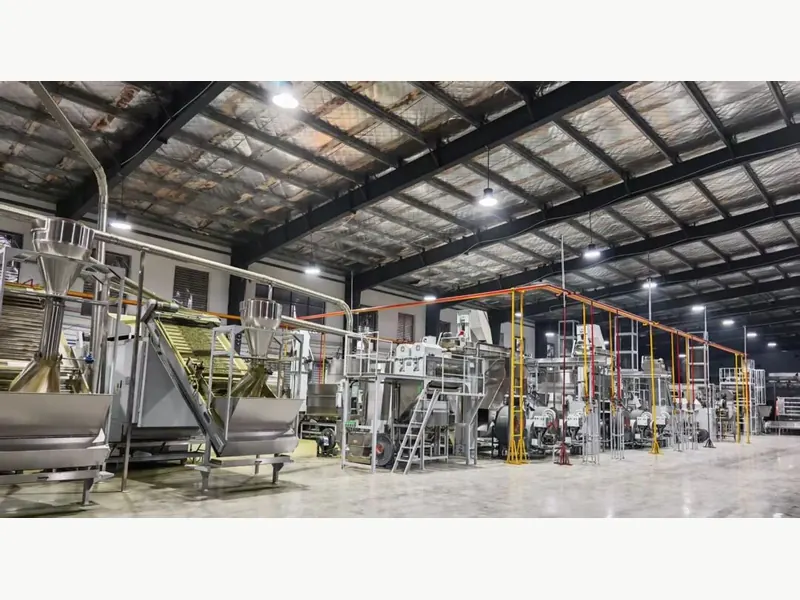
U.S. matcha allergen evidence should map to the control areas in 21 CFR 117.135. When preventive controls are required, the rule calls for written controls appropriate to the facility and food. Food-allergen controls cover storage, handling, use, and finished-food labeling; sanitation controls can address food-contact surfaces and cross-contact routes.
For procurement, the effect is direct. A broad statement such as “we follow GMP” is less useful than a concise explanation of who controls each exposure point and what record proves the control happened.
| Control area | Useful supplier evidence | What the buyer checks |
|---|---|---|
| Receiving and storage | Allergen identification and segregation procedure | Materials are identified before use |
| Production | Scheduling, rework, and shared-equipment rules | Allergens do not move into the matcha run |
| Sanitation | Cleaning procedure and verification summary | Changeover is effective for the actual equipment |
| Packaging | Label issue and reconciliation procedure | The correct allergen statement reaches the pack |
| Release | Deviation and hold authority | Questionable lots cannot ship automatically |
Key Takeaway: Match the document request to actual cross-contact and labeling routes instead of asking for a generic certificate.
What Allergen Documents Should a Matcha Supplier Provide?
A matcha supplier should provide a current product declaration plus enough facility evidence to explain its conclusion. Start with the exact SKU and revision date. Then connect it to the manufacturing site and packing arrangement, including any repacker or contract facility.
The most decision-useful file set includes:
- ingredient and major-allergen statement for the exact SKU;
- facility allergen matrix and shared-equipment statement;
- relevant segregation, scheduling, rework, and changeover controls;
- cleaning verification or validation summary where cross-contact requires it;
- finished-label approval and reconciliation controls;
- lot traceability, deviation handling, and change-notification terms.
Use the site's matcha import regulations guide to identify market-specific questions, then obtain regulatory review for the destination market. U.S. requirements cannot be copied into every jurisdiction without checking local definitions and labeling rules.
Key Takeaway: Approve a dated, SKU-and-site-specific evidence set, not an undated supplier statement.
How Should Matcha Buyers Evaluate Shared Equipment and Cleaning?
Shared equipment is not an automatic rejection, but it requires a credible control story. The supplier should identify the allergen, the equipment path, the cleaning method, the verification activity, and the action taken when the result fails.
In practice, choose evidence tied to the hardest-to-clean contact points. A superficial visual check may be useful for housekeeping, yet it may not answer whether allergenic residue remains in seams, flexible hoses, dust collectors, or packing heads. The verification method must fit the hazard and equipment.
Avoid demanding a full confidential food-safety plan when a controlled summary will answer the approval question. However, do not accept “cleaned between runs” without the method, responsibility, frequency, and failure response.
Key Takeaway: Shared equipment can be acceptable only when the supplier can explain and evidence the relevant changeover control.
Can a COA or Allergen Test Prove the Matcha Is Safe?
A COA or allergen test can support verification, but one result cannot prove permanent control. The buyer must know what was tested, which method was used, how samples were drawn, the reporting limit, the laboratory, and which lot the result represents.
The matcha COA guide helps separate a specification from a lot result. For allergens, the same rule applies: “not detected” means not detected in the tested sample under the stated method. It does not establish that every unit or future lot is free from cross-contact.
Testing is strongest when it checks a defined control, such as a difficult changeover or a high-risk product transition. Routine finished-product testing without a sampling rationale can create confidence without finding a localized failure.
Key Takeaway: Read an allergen result as method-and-lot evidence, not as an unlimited supplier guarantee.
How Do Matcha Blends, Repackers, and Café Ingredients Change the Review?
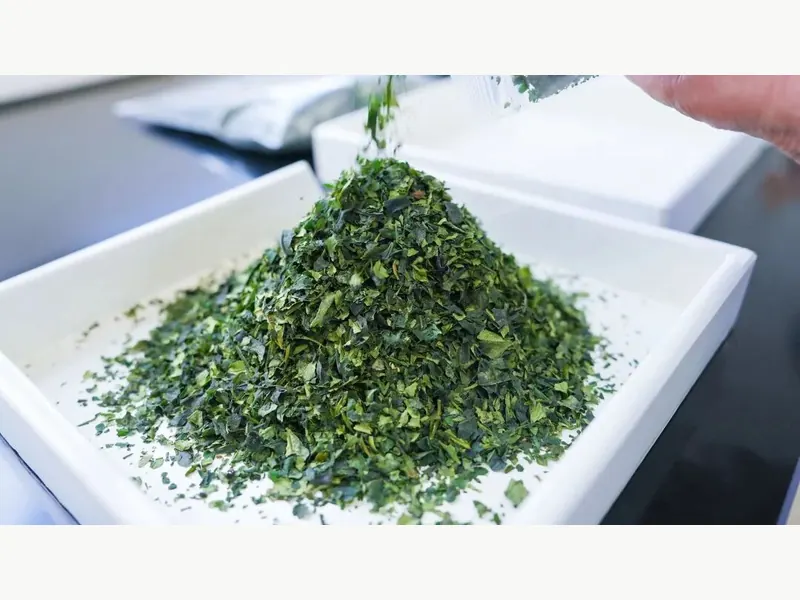
Blends, repackers, and café preparation add new matcha allergen exposure points after the base powder is made. Milk powders, soy ingredients, cereal carriers, nut flavors, sesame inclusions, and shared beverage tools can change the final declaration even when the incoming matcha has one ingredient.
That shifts the review from one supplier to a chain of responsibility. Identify who owns the formula, who packs it, who approves artwork, and who controls cross-contact at the point of service.
| Supply format | Additional check | Common consequence |
|---|---|---|
| Pure bulk powder | Milling and packing environment | Ingredient claim hides shared-line exposure |
| Premix or flavored blend | Every sub-ingredient and carrier | Allergen enters intentionally but is missed on the draft label |
| Contract repack | Repacker matrix and label controls | Approved bulk material receives the wrong retail statement |
| Café drink | Milk, plant drink, syrup, topping, tools | Menu matrix no longer matches the finished drink |
Key Takeaway: Reassess allergens whenever the formula, facility, packer, or serving process changes.
When Should a Buyer Approve, Hold, or Reject a Matcha Supplier?
A buyer should approve only when the evidence is current, internally consistent, and linked to the intended SKU and route to market. Hold the decision when answers are incomplete but remediable. Reject the lot or supplier when material contradictions remain, an undeclared allergen is identified, or the supplier cannot trace the affected production.
The practical judgment is to avoid accepting a vague “allergen-free” letter when shared equipment exists. A narrower statement with named controls is more useful because it tells quality teams what to verify after a process or formula change.
Use a simple status record:
- Approved: evidence complete; limitations documented; change notification agreed.
- Conditional: defined document, test, or corrective action remains open.
- Hold: lot cannot release while a declaration, label, or deviation is unresolved.
- Rejected: evidence conflicts, traceability fails, or risk is unacceptable.
Key Takeaway: Make approval conditional on resolved evidence, not on confident wording from the supplier.
FAQ
Is pure matcha automatically free from allergen cross-contact?
- No. A pure-ingredient statement describes the intended formula, while cross-contact depends on the facility, equipment, storage, rework, sanitation, and packing controls.
Which allergen document should a buyer request first?
- Request a current ingredient and major-allergen statement for the exact SKU, then verify it against the facility allergen matrix and shared-equipment statement.
Does a food-safety certificate prove a matcha product has no allergen risk?
- No. A certificate may support the supplier review, but its scope does not replace product-specific cross-contact and label-control evidence.
Is one negative allergen test enough to approve every lot?
- No. The result applies to the tested sample, method, reporting limit, and lot; ongoing approval also depends on preventive controls and change management.
Should U.S. allergen rules be used for every export market?
- No. Use the U.S. framework for U.S. sales and verify the definitions, labeling rules, and precautionary-statement policy in each destination market.
Conclusion
Matcha allergen approval works when the product statement, facility controls, test evidence, and finished label agree. Record unresolved gaps as conditions or holds rather than filling them with assumptions. Contact AdoroHu Matcha to discuss the product and documentation needed for your sourcing review.