
Matcha sensory evaluation works for a brand when every panel prepares, compares, and records the samples the same way. Vague comments such as “smooth,” “premium,” or “too bitter” cannot settle a lot-acceptance dispute. They leave procurement, quality, and product development arguing from different cups.
The cost appears later as reformulation, menu drift, rejected stock, or a bulk order that does not match the approved sample. Build the matcha sensory evaluation before ordering premium matcha for commercial use. Then use a blinded comparison, controlled preparation, defined attributes, and an approved reference sample.
Matcha sensory evaluation should compare a coded lot with a controlled reference under a fixed preparation method. Descriptive intensity scores belong in the specification; personal liking belongs in a separate consumer or preference test. Sensory results can support lot acceptance, but they cannot prove safety or authenticity.
In short:
Key points:
- Define observable attributes and defects instead of relying on grade words or personal preference.
- Lock dose, medium, temperature, mixing, rest time, vessel, and evaluation window before comparing lots.
- Control the approved reference sample by identity, storage, opening history, age, and replacement rule.
What Should Matcha Sensory Evaluation Decide?
Matcha sensory evaluation should answer a specific commercial decision: approve, hold, investigate, or reject a candidate sample or production lot. That decision needs an intended application, an approved reference, a written preparation method, and a defined tolerance for each attribute.
Name the use case first. Straight tea, dairy lattes, plant-based drinks, and baked products expose different aspects of color, aroma, bitterness, texture, and aftertaste.
| Decision | Sensory question | Evidence needed |
|---|---|---|
| Supplier selection | Which sample best fits the target product? | Blind comparison plus application test |
| Lot release | Does this lot remain within the approved profile? | Reference sample, coded lot, tolerance rule |
| Complaint review | Is the reported difference reproducible? | Retained samples, preparation record, repeated panel |
| Reformulation | Did the matrix or process change perception? | Old and new formulas with the same matcha lot |
Never taste a lot suspected of contamination, package damage, or abnormal chemical odor. Quarantine it and use the appropriate safety investigation instead.
Key Takeaway: Give the panel one defined decision; sensory testing becomes unreliable when it tries to answer quality, safety, authenticity, and preference at once.
Which Attributes Belong in a Matcha Sensory Evaluation?
A matcha sensory evaluation should include attributes that a panel can observe consistently and that matter to the intended product. A matcha-specific technical paper describes five evaluation items: powder color, particle size, foaming, foam color, and taste. Buyers can extend that list with aroma, mouthfeel, aftertaste, and named defects when their application requires them.
Separate an attribute from its intensity. “Marine aroma” is a descriptor; “medium” is its intensity. Personal dislike is a hedonic response and belongs elsewhere.
| Attribute group | Descriptive examples | Possible defect terms |
|---|---|---|
| Dry powder | hue, brightness, aroma, apparent fineness | dull, stale, smoky, foreign odor |
| Prepared liquor | umami, sweetness, bitterness, astringency | sour, harsh, metallic, musty |
| Texture | smoothness, body, powder residue | gritty, chalky, drying |
| Foam, if relevant | volume, bubble size, foam color, persistence | coarse, uneven, rapidly collapsing |
The matcha quality guide offers a broader quality screen. A purchasing specification should narrow that vocabulary to the few attributes that drive acceptance.
Key Takeaway: Specify observable descriptors and intensity anchors; words such as “premium” and “clean” are conclusions, not sensory measurements.
Why Must Matcha Sensory Evaluation Control Preparation?
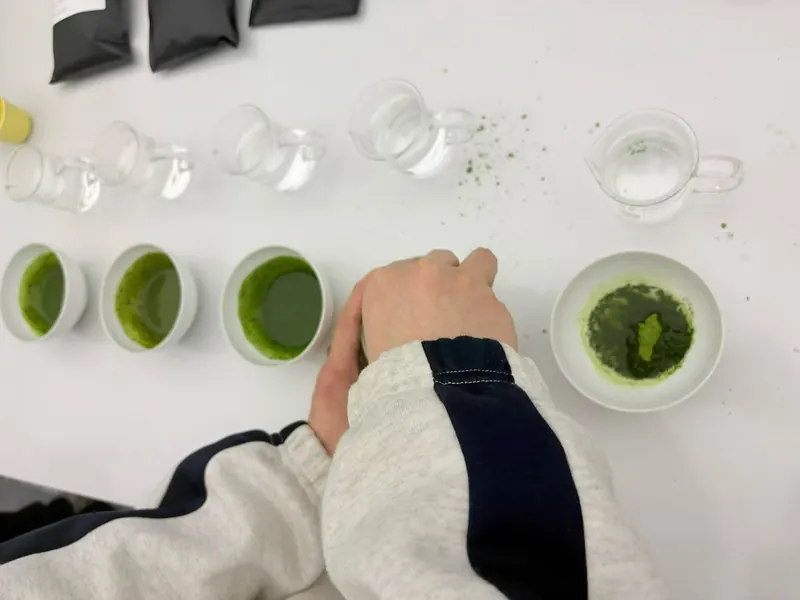
Matcha sensory evaluation must control preparation because the method can change the sample people perceive. One matcha protocol weighs 2 g of powder into 100 mL of hot water before whisking and evaluating foaming, foam color, and taste. That is a documented research condition, not a universal recipe.
The 2024 paper “The application of untargeted metabolomics coupled with chemometrics for the analysis of agitation effects on the sensory profiles of matcha tea” (DOI: 10.1016/j.crfs.2024.100843) found that agitation rate and time changed measured aroma and taste profiles under its experimental conditions. If one panel whisks longer, uses hotter water, or waits five minutes before tasting, it may create a difference that the lot did not cause.
Record at least these variables:
- matcha lot, dose, and sample coding;
- water or product matrix, temperature, pH, and volume;
- vessel, sieve, mixing tool, speed or technique, and time;
- rest time, serving order, evaluation window, and palate reset.
In practice, choose the preparation that matches the decision. Use a controlled hot-water method for raw-material profiling, then confirm the finalist in the actual milk, RTD, or food application. Skipping the second step saves a morning and can cost an entire production trial.
Key Takeaway: A sensory score is comparable only when the preparation and timing are comparable.
How Should Matcha Sensory Evaluation Blind and Compare Samples?
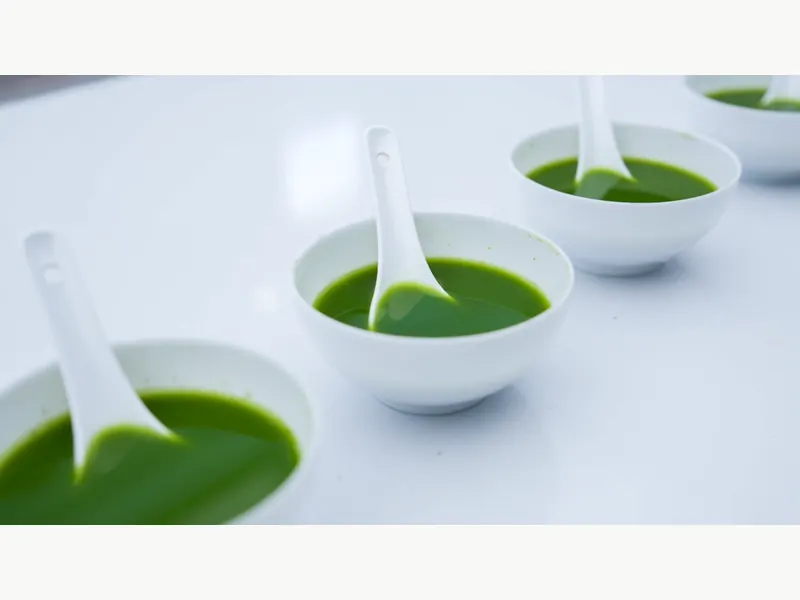
Matcha sensory evaluation should blind samples with neutral random codes and use a balanced serving order. Blinding reduces expectation from supplier names, grade labels, origin claims, price, or package design. It does not remove every bias, but it stops the easiest ones.
Use identical vessels and portions, and keep the identity key with a coordinator who is not scoring. Rotate serving order and collect individual observations before discussion.
Many internal tastings fail when a buyer announces that sample A is expensive and the group talks while scoring. Keep independent scores first; discuss disagreements after collecting the sheets.
Key Takeaway: Blind codes, balanced order, and independent scoring protect the decision from brand, price, and group-pressure bias.
How Do Matcha Descriptive and Hedonic Scores Differ?
Descriptive scores in matcha sensory evaluation measure what the product is like, while hedonic scores measure how much someone likes it. A trained panel may rate bitterness as high without calling it bad. A target consumer may prefer that bitterness in a sweetened latte.
The distinction changes who should test and what the answer means:
| Test type | Core question | Appropriate panel | Procurement use |
|---|---|---|---|
| Descriptive profile | What attributes are present, and how intense are they? | Trained or calibrated panel | Specification and lot comparison |
| Difference test | Can panelists detect a difference? | Qualified participants under a defined design | Change or complaint investigation |
| Hedonic test | Which sample is liked more? | Target consumers or users | Product-positioning decision |
| Instrumental support | What physical or chemical value was measured? | Qualified laboratory | Corroboration and process control |
Do not average preference into a release specification. That turns a controlled quality decision into a popularity vote. Keep the two datasets separate, then use both when choosing a market-facing formula.
Key Takeaway: Use descriptive data to control supply and hedonic data to guide product preference; one cannot substitute for the other.
How Should an Approved Matcha Reference Sample Be Controlled?
An approved reference sample for matcha sensory evaluation should be controlled material, not an old pouch in an office drawer. ISO 13299 lists comparison with a reference and definition of a fresh reference product among the uses of a sensory profile. Its public scope supports the approach, while the buyer must define the operating details.
Record the supplier, product, lot, approval date, sealed unit count, storage condition, opening date, custody, preparation method, and replacement trigger. Retain enough independently sealed units to avoid repeatedly exposing the whole reference to oxygen, light, moisture, and room temperature.
An approved sample ages even when it is stored carefully. Comparing a fresh production lot with a stale reference can make the better lot appear “off-spec.” Prefer a planned bridge comparison: test the outgoing reference, proposed replacement, and a stable control together before switching.
Key Takeaway: Control reference identity, exposure, age, and replacement, or the benchmark will drift while the paperwork says it stayed fixed.
How Should Instruments Support Matcha Sensory Evaluation?
Instruments should support matcha sensory evaluation by measuring defined physical or chemical properties without replacing the prepared-product decision. The matcha research reports some relationship between sensory assessments and instrumental color values or median particle diameter. The original sensory article does not establish a universal pass/fail number for every buyer.
Use color measurement to track a controlled change, particle-size distribution to investigate texture, and a Certificate of Analysis to review specified chemistry or microbiology. Then ask whether the same lot meets the agreed sensory profile in the intended application.
Pair measurements with consequences. A color shift may trigger a storage review. A coarse tail may explain residue. Neither result proves the matcha is unsafe, fraudulent, or unsuitable without the rest of the evidence.
Key Takeaway: Let instruments explain and corroborate sensory change; do not let one number overrule a well-controlled application test.
How Should Matcha Sensory Evaluation Set Lot Acceptance?
Matcha sensory evaluation should set lot acceptance through predefined limits, repeat rules, and disposition authority. A scorecard should state which attributes are critical, which are informational, and what happens when panelists disagree.
A practical release file includes:
- coded lot and approved-reference identities;
- preparation record and panel qualification;
- descriptor definitions, intensity scale, and tolerance bands;
- replicate or confirmation rule;
- instrument and application-test results, when relevant;
- approve, hold, investigate, reject, or conditional-use decision with owner.
Use the matcha specification guide to connect the sensory profile to the commercial agreement. Avoid a single overall score that hides a critical defect. A lot with the same average can still fail because bitterness moved up while aroma moved down.
Key Takeaway: Release by critical attributes and predefined actions, not by an unexplained total score.
When Should a Matcha Sensory Panel and Reference Be Recalibrated?
The matcha sensory evaluation reference and panel should be recalibrated when the reference ages, preparation changes, assessors drift, or results conflict with application performance. Routine checks should include a known control and, where useful, a duplicate coded sample.
Change creates the hard judgment. Do not keep an obsolete reference merely because procurement signed it years ago. If the formula, milk base, serving temperature, target consumer, or supplier process changes, preserve the old reference for traceability and approve a new one through a documented bridge.
The sample-ordering guide helps buyers obtain representative material before that work begins. For a new program, ask the supplier for lot identity and supporting documents, then build the sensory control around the sample you actually approve.
Key Takeaway: Recalibrate before drift becomes a supplier dispute, and bridge old and new references instead of silently replacing them.
FAQ
Can matcha sensory evaluation prove a lot is safe?
- No. Sensory evaluation can identify observable differences or defects, but safety conclusions require the appropriate sampling, methods, and qualified laboratory or food-safety review.
Should panelists know the supplier or grade before scoring?
- No. Use neutral codes during scoring so supplier, grade, origin, price, and packaging expectations do not steer the result.
Is an overall liking score enough for lot acceptance?
- No. Lot acceptance should use descriptive attributes and critical defect limits, while liking belongs in a separate hedonic or consumer test.
How long can an approved matcha reference sample be kept?
- Use a documented replacement rule based on package, storage, opening history, sensory stability, and the program's risk; no single storage period fits every reference.
Can color or particle-size data replace a sensory panel?
- No. Instrumental data can support consistency and investigate changes, but the prepared-product sensory profile still needs its own acceptance decision.
Conclusion
Matcha sensory evaluation becomes commercial evidence when preparation, blinding, descriptors, reference custody, and release rules are controlled together. Keep preference, safety, authenticity, and instrumental results in their proper lanes. Contact AdoroHu Matcha to discuss sample and specification information for your intended application.