
Matcha authenticity evidence is good when it supports a defined identity, ingredient, process, or origin claim with traceable records and a fit-for-purpose test. A bright green powder, a country name, a grade label, or a mill photograph can support a review, but none proves the whole claim.
Weak evidence exposes a buyer to mislabeling, inconsistent performance, and an indefensible price premium. Start the matcha authenticity review with the intended product, such as commercial premium matcha, then define the fraud hypothesis, document trail, sampling plan, and analytical question.
Matcha authenticity is a chain of evidence, not a verdict from color or one laboratory model. Define the promised product first, then match documents, traceability, sampling, and analytical methods to the specific way it could be substituted or misrepresented. A result proves only what its method and validation set were designed to test.
In short:
Key points:
- Define whether the claim concerns tea identity, ingredient purity, production method, grade, or geographic origin.
- Use lot-linked records and chain of custody before choosing a screening or confirmatory method.
- Ask how the method was validated across relevant origins, harvests, adulterants, concentrations, and instruments.
What Does Matcha Authenticity Evidence Need to Prove?
Matcha authenticity evidence needs to prove the exact claim written in the specification, contract, label, or marketing brief. “Authentic” is too broad for a laboratory request because plant identity, pure ingredient status, tencha-style production, grade, and origin are different questions.
Write each claim as a testable statement. “Contains only matcha” needs ingredient and adulteration evidence. A stated region needs origin records and, where justified, a validated origin method. A grade word still needs an agreed buyer specification.
| Claim | Main evidence question | Common weak shortcut |
|---|---|---|
| Tea identity | Is the material the specified tea product? | Green color |
| Ingredient purity | Was another powder or colorant added? | One-line COA |
| Production claim | Do records support the stated cultivation and processing route? | Mill photograph |
| Origin claim | Can the lot be traced to the stated source? | Country printed on pack |
| Buyer grade | Does the lot meet the agreed sensory and technical profile? | “Ceremonial” wording |
Key Takeaway: Break “authenticity” into precise claims before collecting evidence or commissioning tests.
How Should Food-Fraud Risk Shape Matcha Authenticity Testing?
Food-fraud risk should shape matcha authenticity testing by naming the plausible economic substitution or misrepresentation. The FDA food-fraud overview describes economically motivated adulteration as intentional omission, removal, substitution, or addition that makes a food appear more valuable.
Working hypotheses might include cheaper green-tea powder substitution, undeclared plant material, added color, false production claims, or false origin. Each needs different references and analytical markers.
Prioritize by likelihood, detectability, and business consequence. A generic test panel is not a fraud plan until it names the suspected substitution.
Key Takeaway: Test the fraud hypothesis with the highest combined likelihood and consequence, not an undefined idea of purity.
What Definition Should Matcha Authenticity Use?
Matcha authenticity should use a written identity definition that covers plant source, cultivation, production, grinding, and excluded product types. ISO/TR 21380:2022 provides an internationally agreed matcha definition and characteristics for trade. Its public scope covers cultivation, manufacture, grinding, and sensory analysis.
The public scope excludes flavored matcha and blended matcha, plus decaffeinated or soluble extracts of matcha. A legitimate flavored latte powder should not be tested against a pure-matcha identity model without separating its ingredients.
Treat the report as a definition framework, not a certificate or world law. Put the agreed identity into the purchase specification, then require lot-linked evidence.
Key Takeaway: Define the target product before selecting markers; a method cannot authenticate an identity the buyer never specified.
Why Can’t Color, Grade, or Country Prove Matcha Authenticity?
Color, grade, and country cannot prove matcha authenticity because none covers the identity chain. Cultivar, shading, harvest, milling, storage, light, moisture, and camera settings can all influence green appearance.
A grade word is a commercial category, not a complete production record. Country of origin narrows geography but does not reveal whether a lot contains only the promised material. Claiming all non-Japanese matcha is fake confuses cultural prestige with evidence.
Use appearance and sensory checks for screening. Hold and investigate a lot that differs sharply from its approved reference; do not announce fraud from color, bitterness, foam, or sediment.
Key Takeaway: Visual and sensory cues can trigger investigation; they cannot establish adulteration, origin, or legal identity by themselves.
Which Documents Build a Matcha Authenticity Chain?
Documents build a matcha authenticity chain when they connect the ordered product to one identifiable lot and its material history. The chain should begin with the specification and continue through supplier, production, testing, packing, and shipment records.
A buyer file may include:
- approved specification and ingredient statement;
- supplier, site, raw-material, and processing identities;
- lot genealogy and repacking links;
- lot-specific Certificate of Analysis with sample identity;
- packing list, invoice, certificate of origin, and shipping records;
- approved and retained samples under controlled custody.
The supplier-verification guide explains wider due diligence. Prefer connected records from an ordinary production lot over a polished certificate bundle with inconsistent names or lot codes.
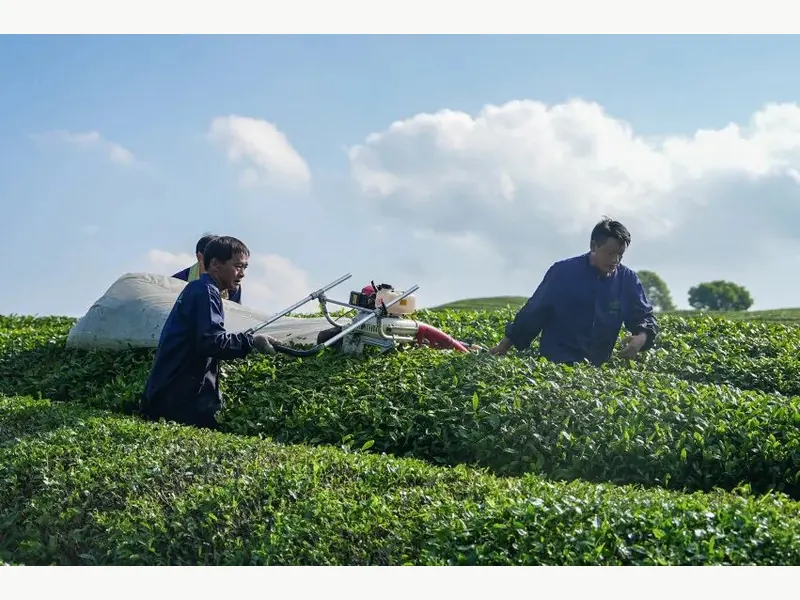
AdoroHu Matcha identifies Jingshan, Hangzhou as its production and tea origin, while Shenzhen is its international business, brand-operations, and export hub. The company overview explains that integrated operation. A Shenzhen commercial address can therefore be valid without proving leaf origin; the buyer still needs lot-linked production and origin records from Jingshan, Hangzhou.
Key Takeaway: Evidence becomes persuasive when every record resolves to the same SKU, facility, lot, quantity, and shipment.
What Can One Analytical Model Prove About Matcha Authenticity?
One analytical model can prove only the classification or measurement task validated within its reference domain. Xiao-Lan Yu and Yong He's 2018 paper, “Fast nondestructive identification of steamed green tea powder adulterations in matcha by visible spectroscopy combined with chemometrics” (DOI: 10.1080/00387010.2018.1430702), tested visible spectra from 500–700 nm for deliberately prepared mixtures of matcha and steamed green-tea powder.
Its dataset included 30 pure matcha samples, 30 samples of the pure comparison powder, and 120 mixtures containing 20–80% comparison powder by weight. The authors reported 100% qualitative classification accuracy on their prediction sets and an R-squared of 0.9815 for quantitative prediction.
They do not establish a universal method for other adulterants, low-level substitution, origins, harvests, storage states, or instruments.
Key Takeaway: Model accuracy belongs to its validation dataset; never convert it into a guarantee for every matcha lot or fraud type.
How Should a Buyer Review a Matcha Authenticity Method?
A buyer should match a matcha authenticity method's principle, reference set, validation, and reporting limits to the fraud hypothesis. An “authenticity scan” is incomplete unless the laboratory states what it distinguishes.
| Review field | Buyer question | Decision risk if missing |
|---|---|---|
| Target task | Which adulterant, origin, or class is tested? | Result answers the wrong claim |
| Reference set | Which authentic and adulterated samples trained the model? | Poor coverage of real supply |
| Range | Which concentrations and lot variations were included? | Low-level substitution missed |
| Validation | Was performance tested on independent samples? | Training accuracy mistaken for prediction |
| Uncertainty | How are borderline or out-of-domain samples handled? | False assurance or false accusation |
| Confirmation | What follows a screening flag? | Lot rejected without defensible evidence |
Avoid choosing a method because its headline accuracy is highest. Choose the method whose validation domain best resembles the actual claim and supply chain; an impressive model for the wrong adulterant has little procurement value.
Key Takeaway: Method fitness depends on the claim, reference library, validation set, uncertainty, and confirmatory path.
How Do Sampling and Chain of Custody Protect Matcha Authenticity Evidence?
Sampling and chain of custody show that tested material represents the disputed lot and was not changed after collection. A sophisticated method cannot repair unknown sample identity.
Define the sample point, increments, composite logic, containers, seals, labels, storage, transport, retained quantity, and handlers. Keep the commercial lot on hold during investigation.
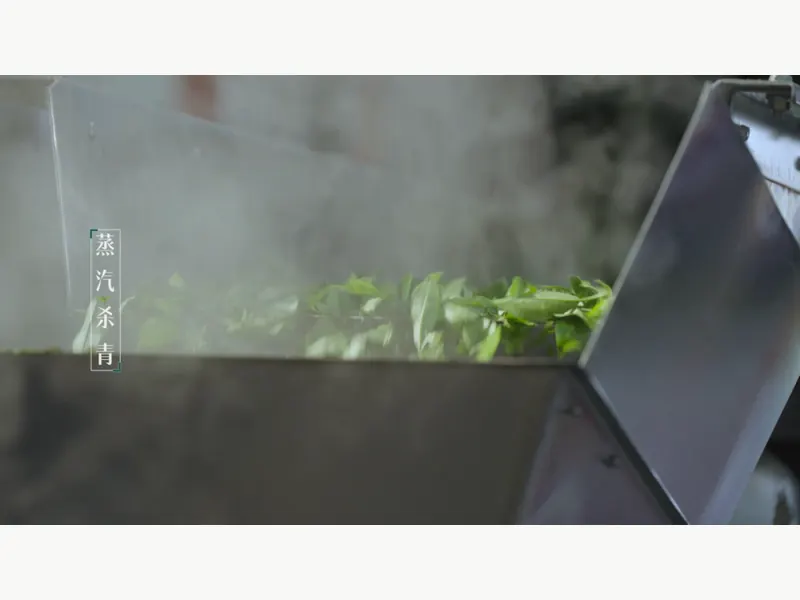
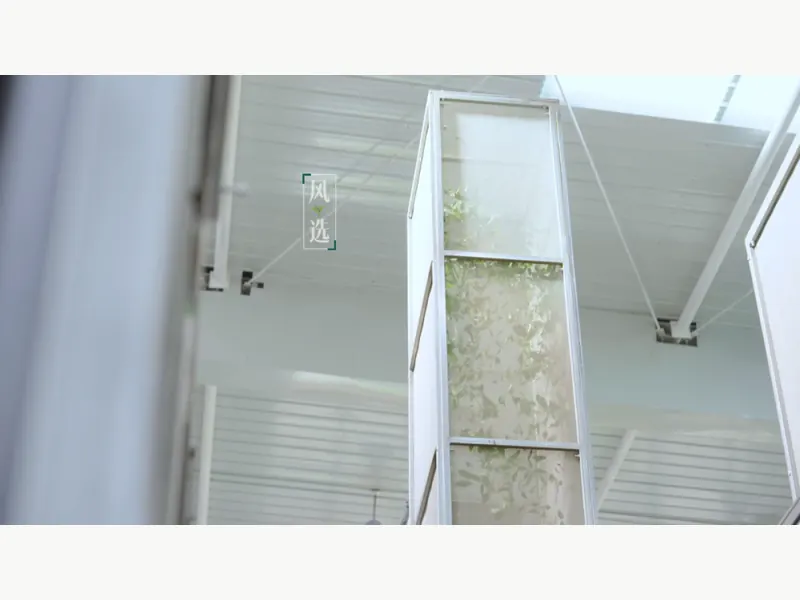
The matcha production-process guide helps buyers trace the material path before grinding and packing. If repacking occurs, preserve the parent supplier lot through every child lot and finished-product run.
Key Takeaway: A defensible result requires representative sampling and an unbroken identity record from lot to laboratory.
How Should Matcha Authenticity Documents and Tests Work Together?
Documents and tests in a matcha authenticity review should challenge the same claim from independent layers. Traceability shows the recorded story. Analytical screening checks selected features against a reference domain. Sensory and application results compare performance with the approved product.
Use the matcha COA guide to keep routine conformance testing separate from fraud-specific work. Routine COA parameters do not establish authenticity. A claim-specific validated method can support that claim when representative sampling and lot identity are documented.
| Evidence layer | What it can support | What it cannot prove alone |
|---|---|---|
| Specification and identity definition | Promised product | Actual lot contents |
| Traceability records | Recorded origin and process path | Truth of every record |
| COA | Tested conformance parameters | All possible substitution |
| Fraud-specific screening | Defined classification task | Out-of-domain fraud |
| Confirmatory investigation | Resolution of a flagged hypothesis | Future lots |
Key Takeaway: Require agreement across records, sampling, screening, and investigation instead of asking one document or test to carry the entire claim.
When Should a Matcha Lot Be Approved, Held, or Rejected?
A matcha lot should be approved when identity, traceability, routine conformance, and any risk-triggered authenticity evidence meet predefined requirements. Hold it when records conflict, sampling is uncertain, or a screening result falls outside its validated decision rule.
Reject or seek a commercial remedy only after the contract, evidence, and qualified review support that action. A screening flag should trigger confirmation and supplier investigation, not a public fraud accusation. Record the affected quantity, lot status, evidence, decision owner, and corrective action.
Use this disposition sequence:
- verify lot and sample identity;
- compare documents against the approved specification;
- review method scope and quality controls;
- repeat or confirm when the plan requires it;
- investigate the supplier and material path;
- document release, restricted use, return, or rejection.
Key Takeaway: Predetermine the hold and confirmation pathway so a suspicious result becomes a controlled investigation rather than a guess.
FAQ
Can bright green color prove matcha authenticity?
- No. Color varies with cultivar, processing, storage, lighting, moisture, and imaging, so it can support screening but cannot prove identity, origin, or purity.
Can a Certificate of Analysis support a matcha authenticity claim?
- A COA can support the specific authenticity claim when representative sampling and a method validated for that scope are linked to the lot. Routine parameters alone do not establish every identity, origin, or substitution claim.
Is matcha produced outside Japan automatically fake?
- No. Country and authenticity are separate claims; buyers should verify the stated origin and the agreed identity, cultivation, production, and ingredient requirements.
Can one spectroscopy result detect every type of matcha fraud?
- No. A spectroscopy model applies to the materials, concentration range, sample variation, instrument, and validation set used to build and test it.
What should happen after an authenticity screening flag?
- Hold the lot, verify sample identity and method scope, run the planned confirmation or investigation, review traceability, and document the final disposition.
Conclusion
Matcha authenticity becomes defensible when each claim has a definition, traceable lot evidence, representative sampling, and a method built for the suspected fraud. Color, country, grade, and one model should remain supporting evidence rather than shortcuts. Contact AdoroHu Matcha to discuss the identity and traceability information needed for your sourcing review.