
Matcha bao buns become repeatable only when the buyer defines the product system and production endpoint. Matcha bao buns need a steaming-specific process: dough smoothness, proof endpoint, steam delivery, condensation, and post-steam handling determine the skin and crumb. Baked matcha bread evidence helps with fermentation basics, but crust color and oven loss do not answer the bao buyer’s question. Start powder comparison with culinary matcha in one fixed formulation.
Published recipes supply useful quantities, sequences, and failure observations. They do not validate commercial equipment, safety, or shelf life. The article below uses those benchmarks as questions for a controlled pilot.
Matcha bao buns should be approved against a written product brief, controlled process record, and finished-product checks. A change in the structural base, process route, or package can invalidate an earlier matcha comparison.
In short:
Key points:
- Define the exact product architecture before comparing powder.
- Use published measurements to identify variables, not to set factory limits.
- Approve the cooled, packed product under its intended route.
Which matcha bao bun format is the buyer approving?
Specify plain mantou or filled bao, unit weight, sweetness, surface and crumb color, skin finish, serving route, and package. A fresh breakfast bun and a frozen filled bun have different moisture, reheating, and handling risks. The approval target must name the route.
Key Takeaway: Specify plain mantou or filled bao, unit weight, sweetness, surface and crumb color, skin finish, serving route, and package.
Which matcha should enter the dough screen?
Compare culinary matcha under one flour, hydration, and leavening system. AdoroHu E-1/E-2 and O-1/O-2 are culinary tiers; steaming avoids an oven crust but does not guarantee identical flavor or color. Judge the steamed skin and cut crumb after a fixed rest.
The matcha bread fermentation guide defines the nearest existing technical boundary.
Key Takeaway: Compare culinary matcha under one flour, hydration, and leavening system.
What does the one-rise mantou benchmark reveal?
The article uses 250 g flour, 10 g matcha, yeast plus baking powder, 125–140 g water, about eight minutes of machine kneading, and a 20–30 minute rest under its stated conditions. These numbers identify hydration, mixing, leavening, and proof endpoints; they are not commercial settings.
| Home benchmark | Purpose | Commercial limit |
|---|---|---|
| 250 g flour / 10 g matcha | Dose-screen input | Not a production ratio |
| 125–140 g water | Hydration sensitivity | Flour and equipment differ |
| 20–30 min rest | Proof timing clue | Use an observed endpoint |
| 10 min steam | Heat-route clue | Load and steamer differ |
Key Takeaway: The article uses 250 g flour, 10 g matcha, yeast plus baking powder, 125–140 g water, about eight minutes of machine kneading, and a 20–30 minute rest under its stated conditions.
Why should proofing use an observed endpoint?
The article looks for smooth buns that increase about 40–50% and spring back after pressing. It also links over-proofing with wrinkled skin. A plant should build its own measurable endpoint around dough temperature and piece geometry rather than copy a tropical kitchen time.
Key Takeaway: The article looks for smooth buns that increase about 40–50% and spring back after pressing.
How should powder dispersion and dough smoothness be checked?
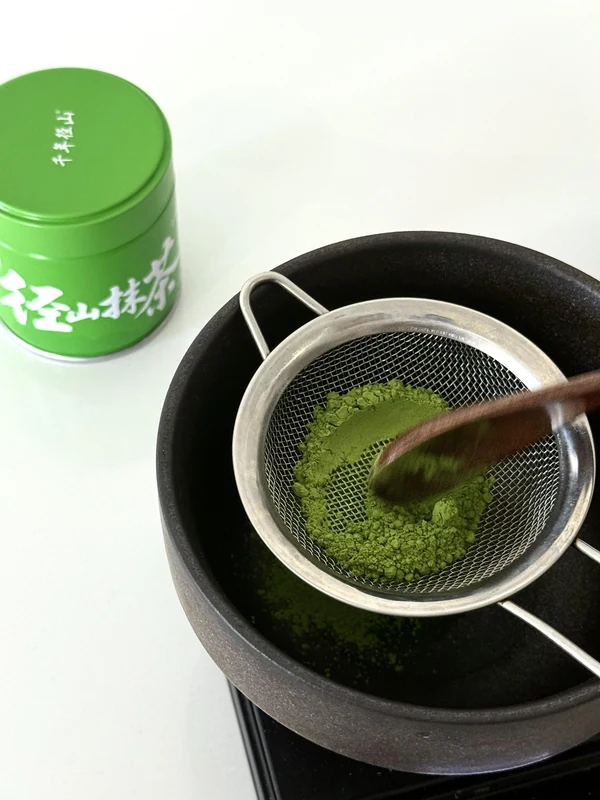
Dry-blend matcha uniformly with flour before hydration, then inspect the mixed dough and shaped surface for streaks and seams. The reference notes that rough shaping remains visible after steaming. More mixing may smooth the dough but can change temperature and proof behavior, so both must be recorded.
Key Takeaway: Dry-blend matcha uniformly with flour before hydration, then inspect the mixed dough and shaped surface for streaks and seams.
What condensation controls protect the bao skin?
Review steamer material, lid geometry, loading, steam recovery, and condensate path. The article reports water dripping from a metal glass lid and uses a cloth-wrapped lid and gap as a home workaround. Commercial equipment needs its own safe condensate control; the household workaround is not a plant instruction.
Batch evidence worth keeping
- Ingredient and formula identities.
- The process condition tied to the failure mode.
- Finished-unit evidence from more than one tray or location.
| Surface defect | Likely cluster | Buyer check |
|---|---|---|
| Wrinkles | Proof, steam, condensate | Skin after fixed rest |
| Pale wet spots | Condensate drip | Lid and load map |
| Dense crumb | Hydration or proof | Cut section and weight |
| Sticking | Liner and surface moisture | Release loss |
Key Takeaway: Review steamer material, lid geometry, loading, steam recovery, and condensate path.
How should steam and post-steam handling be evaluated?
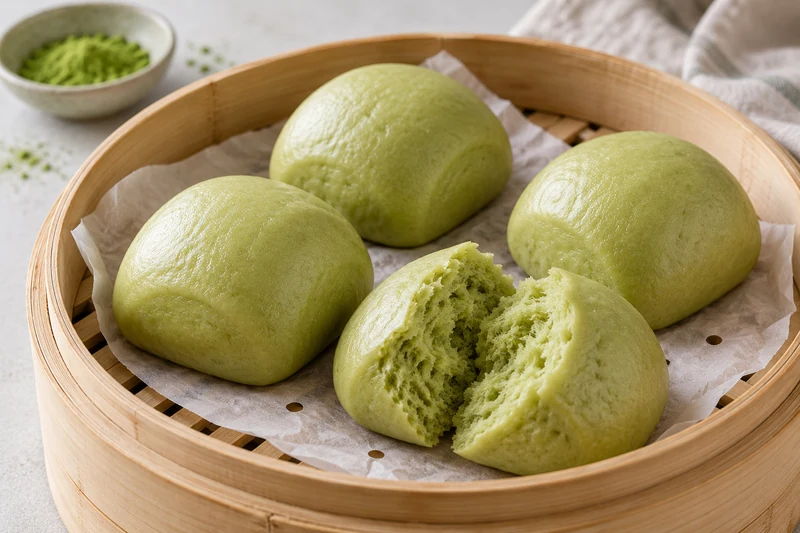
Score skin wrinkles, sticking, expansion, crumb, color, and moisture after a fixed rest. The article uses medium-low heat after boiling and a ten-minute steam in its home setup, but steam capacity and load change the result. Evaluate the real rack or basket load instead of importing the time.
The matcha donut placement guide provides a useful adjacent comparison without taking over this product task.
Key Takeaway: Score skin wrinkles, sticking, expansion, crumb, color, and moisture after a fixed rest.
What changes when matcha bao buns contain filling?
Filling changes dough thickness, seal strength, center heating, moisture migration, allergens, and unit balance. The shell may pass alone and fail around a wet center. Keep filling identity and fill weight fixed while studying the steamed matcha dough.
Use the FDA major-allergen factsheet for ingredients actually present. Do not infer a finished-food safety limit from an ingredient blog.
Key Takeaway: Filling changes dough thickness, seal strength, center heating, moisture migration, allergens, and unit balance.
What evidence supports frozen or refrigerated distribution?
Record freeze condition, package, reheating method, skin cracking, condensation, crumb softness, and color after the intended cycle. The reference freezes pieces separately and reheats by steaming, which flags freeze/reheat as a real cluster but does not establish a commercial shelf life.
Key Takeaway: Record freeze condition, package, reheating method, skin cracking, condensation, crumb softness, and color after the intended cycle.
What should the buyer approve?
Keep the flour and leavening specifications, matcha lot, hydration, dough temperature, kneading, piece weight, proof endpoint, steamer load, condensation observation, finished skin and crumb, and reheating result. AdoroHu supplies pure matcha powder, not bao buns, fillings, premix, or a validated steam process.
Key Takeaway: Keep the flour and leavening specifications, matcha lot, hydration, dough temperature, kneading, piece weight, proof endpoint, steamer load, condensation observation, finished skin and crumb, and reheating result.
FAQ
- Can a matcha bread formula be used unchanged for bao buns?
- No. Bao needs a steaming-specific review of dough, proof, skin, condensation, crumb, and reheating.
- Can the reference’s 20–30 minute rest be copied into production?
- No. It is a home benchmark under stated conditions; commercial proof should use a validated observed endpoint.
- Why do matcha bao buns wrinkle?
- Over-proofing, rough shaping, steam delivery, condensation, load, and post-steam handling can all wrinkle the skin.
- Does steaming preserve all matcha color?
- No. Formula, hydration, oxygen, steam exposure, rest, and the matcha itself still affect finished color.
- What belongs in a sample brief?
- Include flour and leavening system, hydration, bun format, filling, unit weight, proof method, steamer, distribution route, and finished checks.
Conclusion
A useful matcha bao buns approval joins one matcha lot to a defined formula, process, finished-product result, and change rule. Send the application constraints through the AdoroHu Matcha contact page when requesting pure matcha powder samples.