
Matcha bread formulation should separate dough stiffness, yeast gas production, gas retention, and finished-loaf quality before anyone changes the yeast dose. A green dough can ferment normally yet expand poorly if the gluten network cannot retain gas. Start raw-powder comparisons with bulk culinary matcha for bread trials under one flour, water, mixer, and process.
The commercial problem is diagnostic. If water, dough temperature, proofing, and freezing change together, the team cannot tell whether matcha, hydration, yeast, or the freeze chain caused the volume loss.
Build the matcha bread pilot around matched dough consistency and separate gas-production and expansion measurements. Approve fresh and frozen routes independently, then verify color, crumb texture, staling, and package performance in the intended product.
In short: Matcha bread needs a controlled dough trial that distinguishes fermentation activity from gluten-network performance.
Key points:
- Give formulas at or above the study's reported 1% point closer dough-stiffness and fermentation-expansion checks.
- Record actual water addition and measure gas production separately from dough expansion.
- Validate fresh and frozen dough through their own process and storage conditions.
What matcha bread inclusion threshold needs extra scrutiny?
Give matcha bread at 1% or more extra scrutiny because the abstract of a 2025 Food Chemistry study on matcha bread dough during frozen storage reports reduced dough-matrix stiffness and restricted fermentation expansion from that level under its study conditions. Treat 1% as a signal for closer testing, not a universal commercial limit.
Build a control and application-specific doses around the intended formula while keeping flour basis and total solids clear. At or above the reported 1% point, record dough temperature, mixing energy, proof time, expansion, and baked volume so the team can identify where performance begins to move.
| Pilot element | Hold constant | Record |
|---|---|---|
| Matcha dose | Flour, salt, yeast, process | Exact flour-basis addition |
| Dough condition | Target consistency and temperature | Actual water and mixing energy |
| Fermentation | Yeast lot and proof environment | Gas production and expansion |
| Baked result | Scaling and bake profile | Specific volume, crumb, color |
Key Takeaway: Use the reported 1% point to intensify testing, not to declare a universal maximum.
Does matcha bread need a water correction?
Match dough consistency at each matcha bread dose and record the actual water addition. A 2020 study of matcha and its active components in gluten and model dough supports an interaction between matcha and gluten structure, but it does not provide a transferable bread hydration number. Water correction therefore remains an application result.
Add water through a defined method rather than by an operator's visual judgment alone. Track dough temperature, mixer power or energy where available, and a consistent rheology or handling measure. A water change that restores machinability may still alter proofing, bake loss, crumb firmness, and staling, so carry the selected correction through the finished loaf.
Key Takeaway: Adjust water against a defined dough-consistency target and verify the result after baking.
How do you separate matcha bread yeast activity from gas retention?
Measure yeast gas production and dough expansion separately in matcha bread. The 2025 Food Chemistry bread-dough study reported that matcha did not reduce yeast activity under its conditions, while matcha at 1% or more restricted dough expansion. Freezing, rather than matcha, reduced yeast gas production in that study.
This distinction changes the corrective action. Normal gas production with weak expansion points toward dough structure or retention, while reduced gas production points toward yeast condition or the freeze process. Increasing yeast before running both measurements can raise ingredient cost without repairing the network.
Key Takeaway: Diagnose gas generation and gas retention before changing yeast dosage.
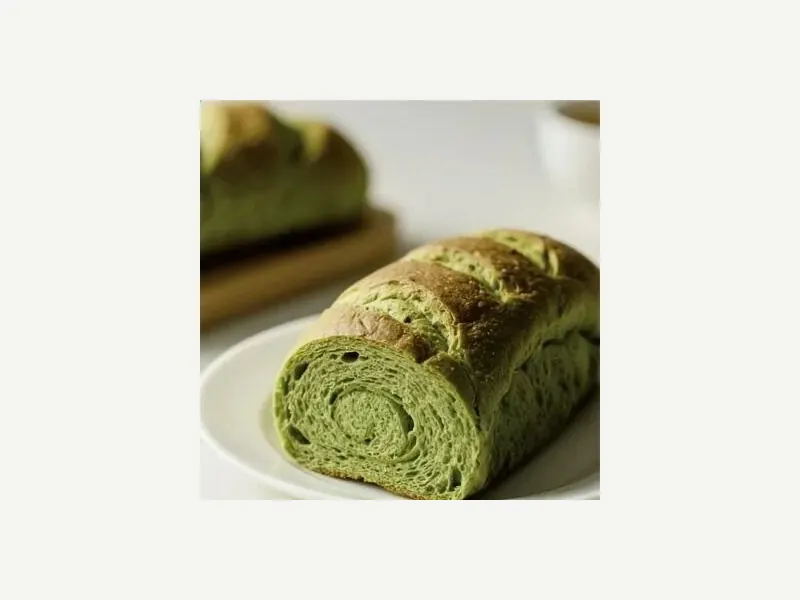
Which matcha bread rheology result explains line handling?
Choose matcha bread rheology tests that connect to mixing, dividing, molding, and proofing. In the 2020 gluten and model-dough study, matcha reduced disulfide bonds and hindered gluten-network formation. Theanine increased ductility, while tea polyphenols increased toughness through hydrogen-bonded structure.
That work used a mechanistic model and noodle context, so it cannot predict loaf volume. It can guide selection of G′/G″, extensibility, mixing stability, and recovery tests. Pair any instrument result with divider behavior, stickiness, molding damage, and proof shape on the intended line.
| Result | Possible line meaning | Required confirmation |
|---|---|---|
| Lower stiffness | Spreading or weak shape retention | Divider and proof observations |
| Higher toughness | More mixing or molding resistance | Mixing energy and finished crumb |
| Lower extensibility | Tearing during molding | Line handling and gas retention |
| Changed recovery | Different proof response | Time-resolved expansion |
Key Takeaway: Use rheology to explain line behavior, then confirm it in bread rather than predicting volume from a model system.
How should matcha bread loaf volume and crumb be accepted?
Approve matcha bread with specific volume, proof height and time, bake loss, cell distribution, and crumb firmness against a matched control. No cited source supplies a universal commercial acceptance limit, so the product brief must set the allowable change.
Photograph cut loaves with a fixed setup and analyze cell size or distribution using one method. Test crumb firmness at a defined cooling age and temperature. For supplier comparisons, use the same flour and process and consider the industrial bakery matcha sourcing controls alongside application performance.
Key Takeaway: Define a matched-control acceptance window for volume, crumb structure, and firmness.
What changes when matcha bread dough is frozen?
Validate frozen matcha bread dough as a separate process. The abstract of the 2025 Food Chemistry study reports that freezing disrupted gluten structure, redistributed moisture, and reduced yeast gas production, while matcha itself did not reduce yeast activity. Use those findings to choose measurements for the bakery's own formula and freeze chain.
Test the intended freeze rate, storage temperature, package, thaw or temper step, proof, and bake. Record gas production, expansion, proof time, specific volume, and crumb condition at planned storage points. Avoid a weeks-or-months performance claim until the actual commercial freeze chain supplies that evidence.
Key Takeaway: Approve frozen dough through the intended freeze chain instead of carrying over a fresh-dough result.
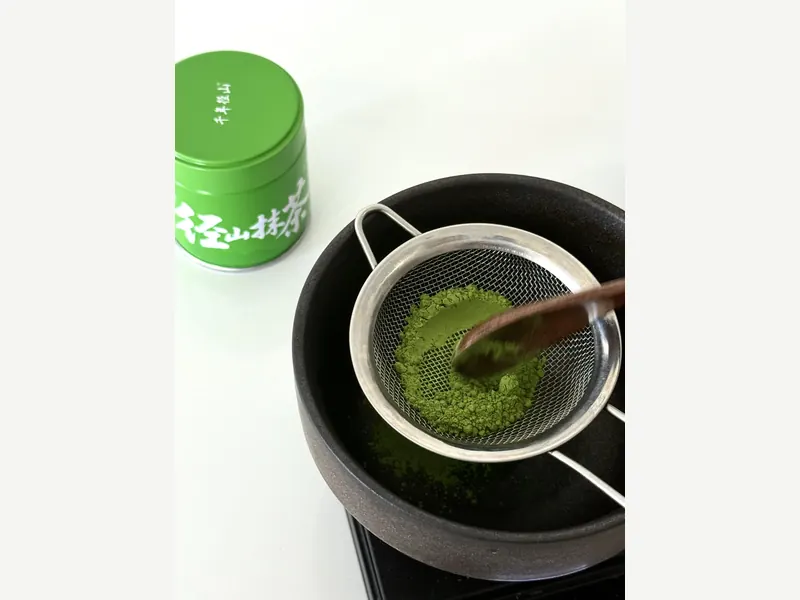
How should matcha bread baked color and flavor be specified?
Set matcha bread color and flavor limits on the baked loaf. A 2018 matcha-biscuit study found that 2 g matcha per 100 g flour was the preferred tested level, and extra sugar did not significantly improve acceptability as matcha increased. That biscuit result is an analogy, not a bread optimum.
Measure crust and crumb separately with fixed Lab* locations or ΔE against an approved control. Run coded sensory evaluation for tea aroma, bitterness, astringency, sweetness, and cereal flavor. The matcha bakery heat and color guide can frame the supplier discussion, but the finished loaf decides acceptance.
Key Takeaway: Approve baked color and flavor directly, and do not assume sugar will mask an excessive dose.
How do you verify matcha bread staling and pack performance?
Verify matcha bread staling with firmness or resilience, moisture, and water activity at a stated test temperature through the intended package and storage. The FDA water activity guide defines water activity as an equilibrium relationship and notes its temperature dependence. It does not supply a bread shelf-life limit.
Sample at planned checkpoints and record package identity, seal condition, test temperature, loaf position, and sample age. Pair water activity with texture and sensory observations, because one value cannot describe crumb firming, moisture redistribution, aroma loss, or microbial safety.
Key Takeaway: Bind every staling result to its method, temperature, package, and storage time.
FAQ
- Is 1% matcha a universal maximum for bread?
- No. It is a study-specific point that warrants closer testing, while the commercial limit must come from the intended formula and process.
- Should a weaker matcha dough automatically receive more yeast?
- No. Measure yeast gas production and dough expansion separately before choosing a correction.
- Is there a published universal water correction for matcha bread?
- No. Match consistency at each dose, record actual water, and verify the correction in the finished loaf.
- Can fresh-dough approval cover frozen dough?
- No. Freezing changes gluten structure, moisture distribution, and yeast performance, so the intended freeze chain needs separate validation.
- Does water activity establish bread shelf life by itself?
- No. It must be interpreted with method, temperature, packaging, texture, sensory, and applicable safety evidence.
Conclusion
The strongest pilot explains whether a failure came from hydration, yeast activity, gas retention, freezing, or finished-loaf change. A custom-formula private-label discussion can align the raw-powder brief with the bakery trial; the bakery remains responsible for finished-bread manufacture, safety, and shelf-life evidence. To compare raw matcha powder lots in that plan, contact AdoroHu about raw-powder samples.
Institutional author: AdoroHu Matcha