
Matcha bulk density should be measured with a fixed handling method before a buyer chooses pack volume, hopper settings, or dosing trials. The same mass can occupy different volumes after pouring, vibration, transport, or storage, so an uncontrolled density figure can lead to excess headspace, overfilled packs, and unstable auger doses. Buyers evaluating wholesale matcha supply should request the density state, method, units, and sample history together.
The problem grows at scale. A result from a gently poured laboratory sample may not represent powder that has settled during freight or aerated in a feeder. Matcha bulk density becomes useful only when supplier and buyer align the vessel, filling action, leveling, tapping, conditioning, and calculation, then confirm the result on the intended equipment.
Matcha bulk density is the sample mass divided by its occupied volume under a defined handling state. Buyers should distinguish loose or poured density from tapped density, record the complete method and units, and use the result to plan rather than replace equipment trials. No single density range suits every matcha or filling system.
In short:
Key points:
- Define whether the result is loose, poured, settled, or tapped, because those states are not interchangeable.
- Control the vessel, sample handling, leveling, tapping, conditioning, units, and repeat measurements.
- Convert density into a fill-volume scenario, then verify dose variation, headspace, and flow on the actual line.
Why does matcha bulk density matter to a commercial buyer?
Matcha bulk density matters because it connects ingredient mass to the space the powder occupies during storage, dosing, and packing. A lower-density powder needs more volume for the same declared mass. A higher-density powder needs less, but it may reflect settling or compaction that changes how the feeder behaves.
The useful equation is density = mass ÷ occupied volume. The number must carry units such as grams per millilitre or kilograms per cubic metre, and the basis must name the handling state. A conversion without that context can mis-size a pouch or make two laboratories appear to disagree.
| Commercial decision | Density-related risk | Required confirmation |
|---|---|---|
| Choose pack volume | Too much headspace or poor closure clearance | Fill trial at target weight |
| Set an auger filler | Dose drift as powder compacts | Start, steady-state, and restart checks |
| Size a hopper | Usable mass differs from geometric capacity | Line trial with refill pattern |
| Review an incoming lot | Apparent drift caused by handling | Repeat under the agreed method |
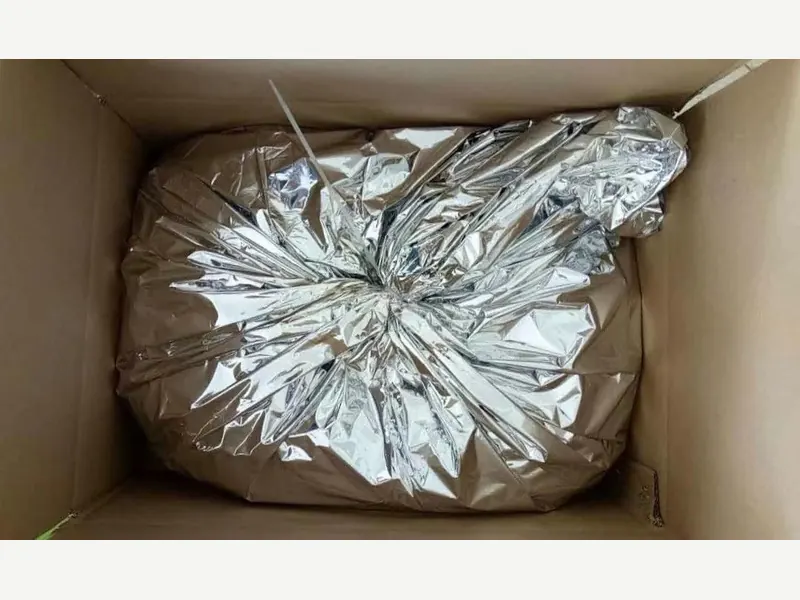
AdoroHu Matcha's 10 kg and 20 kg bulk cartons use sealed food-grade liners. That packaging fact tells buyers the available supply format, but it does not predict the powder's occupied volume after freight. Density and line trials still need the current product and lot.
Key Takeaway: Use density to connect mass with space, then confirm the commercial decision under real handling.
What is the difference between loose, poured, and tapped matcha density?
Loose, poured, and tapped density describe different powder states created by different handling. Loose density may refer to powder placed with minimal consolidation. Poured density reflects a defined transfer into a vessel. Tapped density measures the volume after a stated tapping procedure compacts the bed.
Those labels require operational definitions. “Bulk density” alone leaves the buyer guessing whether the sample was scooped, poured through a funnel, leveled, vibrated, or tapped. A settled value after transport is another state and should not be relabeled as a standardized tapped result.
| Density state | How the state is created | Best buyer use |
|---|---|---|
| Loose | Minimal consolidation under a written fill method | Early package-volume estimate |
| Poured | Controlled transfer into a defined vessel | Supplier-buyer method comparison |
| Tapped | Defined tapping count or endpoint | Compaction tendency and headspace planning |
| Line-conditioned | Powder after actual hopper and feeder handling | Final equipment setting and capability study |
Our judgment is to specify both a reproducible poured density and the line-conditioned behavior when filling performance matters. Avoid using tapped density alone to size a pack: it can understate the volume seen immediately after filling and leave insufficient closure clearance.
Key Takeaway: Name the powder state; density values from different states cannot be compared as one property.
How should a matcha bulk-density method be standardized?
A matcha bulk-density method should standardize every action that can alter occupied volume. That includes sample conditioning, mass, vessel geometry, transfer height, funnel or scoop, pour rate, leveling, delay before reading, tapping action, and calculation. The method should also state whether the vessel is calibrated and how volume is read.
A workable method record includes:
- Product code, lot, container, sampling point, and handling history
- Sample conditioning time and environmental conditions when relevant
- Vessel identity, nominal volume, and calibration status
- Sample mass, transfer procedure, leveling rule, and read time
- Tapping device, rate, count or endpoint if tapped density is reported
- Replicate results, units, calculation, and variation rule
The matcha specification guide helps place these method details beside the acceptance and escalation rules. Without that link, a result may be precise but impossible to reproduce.
Key Takeaway: Write the physical actions into the method, because each action can change the occupied volume.
How do moisture, aeration, particle distribution, and handling change density?
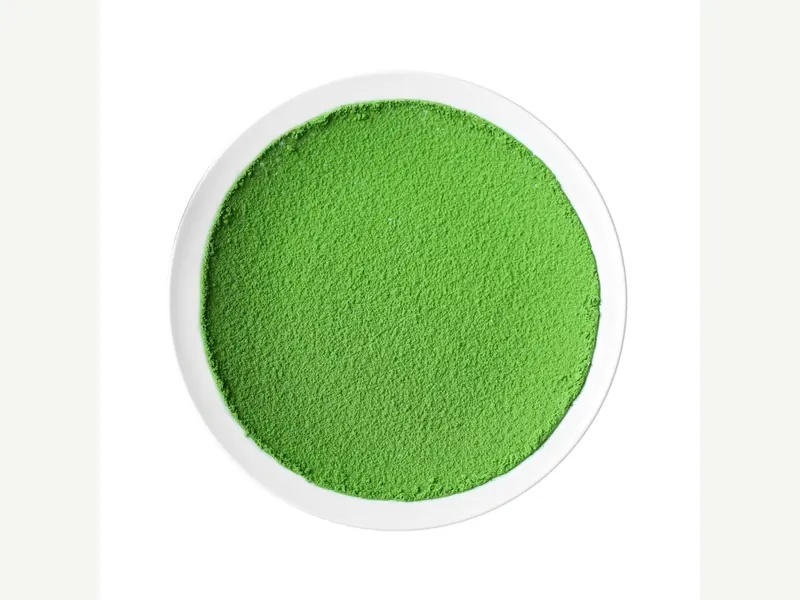
Moisture, aeration, particle distribution, and handling change how matcha particles arrange and hold void space. Entrained air can lower an initial reading. Vibration and transport may consolidate the bed. Moisture exposure can create cohesive contacts or agglomerates, while particle-size distribution affects how smaller material fills spaces between larger particles.
Particle data must also be method-bound. The ISO 13320 description of laser diffraction explains why dispersion and optical assumptions matter when describing a distribution. That distribution can help investigate a density change, but it does not generate a universal bulk-density threshold for matcha.
AdoroHu Matcha operates 20 stone mills, 56 ball mills, 8 continuous ball mills, and ultrasonic screening capability. These are relevant processing options because milling and screening can alter a powder distribution. They do not establish one density or prove the result for any lot; buyers should rely on the current sample and method.
Key Takeaway: Treat density drift as a possible handling or powder-structure change, then test the likely driver separately.
How many measurements are needed to assess matcha density repeatability?
Enough repeat measurements are needed to separate normal method variation from a meaningful product shift. There is no universal replicate count for every matcha density decision. The appropriate number depends on method precision, lot heterogeneity, decision risk, and how close the result sits to a working tolerance.
Start method development with repeated independent fillings of the vessel, not repeated readings of one fill. Report each result, the mean, the range, and a relative variation measure when appropriate. If variation is wide, investigate the method before widening the product tolerance.
The practical rule is straightforward: increase replication when the decision is costly or the result is near a boundary. A quick packaging estimate can tolerate more uncertainty than the release of a lot that repeatedly causes weight variation. Supplier and buyer should agree the rule before reviewing data.
Key Takeaway: Base replication on demonstrated method precision and decision risk, not on an arbitrary universal count.
How should matcha density be converted into pack fill and headspace?
Matcha density should be converted into an estimated occupied volume by dividing target mass by the relevant density value. That estimate helps shortlist a pouch, tin, or sachet, but it is not the final package size. Filling aerates powder, seals need clearance, and distribution channels can settle the pack further.
| Calculation step | Input | Buyer implication |
|---|---|---|
| Estimate powder volume | Target mass ÷ poured density | Initial container shortlist |
| Add process allowance | Filler aeration and variability | Avoid powder in the seal area |
| Check settled state | Vibration or distribution simulation | Predict shelf appearance and headspace |
| Run actual fill trial | Product, machine, speed, pack | Confirm weight control and closure quality |
AdoroHu Matcha's approved retail formats include stand-up pouches from 30 g to 500 g, tins and aluminium boxes from 30 g to 100 g, and 1 g to 3 g sachets. These ranges show available packaging capability, not automatic compatibility with every powder, dose, or artwork format. A fill and seal trial remains the deciding evidence.
Key Takeaway: Use the density calculation to shortlist packaging, then validate clearance, settling, and closure on the actual pack.
How does matcha bulk density affect auger dosing and hopper behavior?
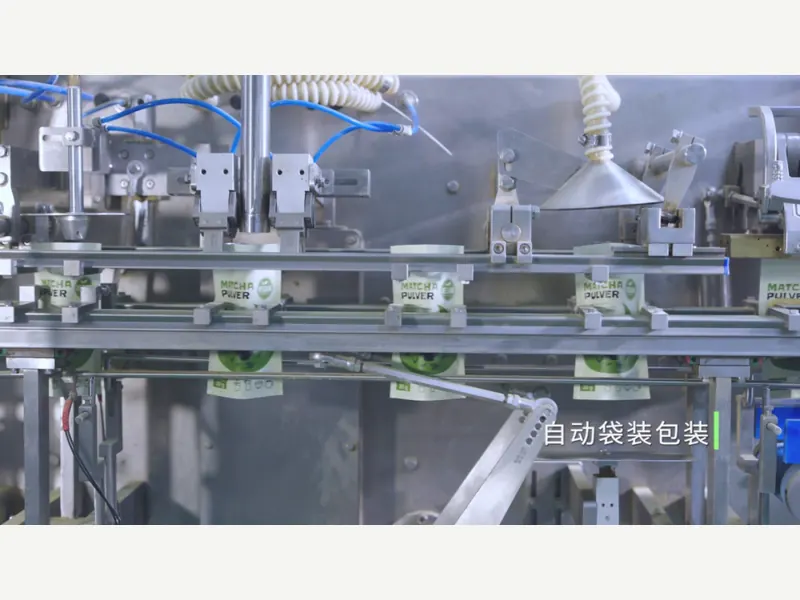
Matcha bulk density affects how much mass an auger delivers per revolution and how consistently powder feeds into the screw. Changes in aeration, compaction, refill level, bridging, or wall friction can shift dose weight even when the auger speed is unchanged. Hopper volume also does not equal usable mass capacity.
The equipment trial should capture startup, steady running, hopper refill, planned stops, and restart. Record target weight, individual pack weights, rejects, dust, bridging, and any change in powder level. That evidence reveals whether settings remain stable through the operating cycle.
Avoid choosing a matcha or a filler from a supplier density value alone. In practice, trial the intended powder on the actual auger and pack at realistic speed. This prevents a laboratory value from becoming an unsupported equipment-performance guarantee.
The production-process verification guide offers a broader framework for connecting documented capability to buyer checks.
Key Takeaway: Density informs auger setup, but only a complete operating-cycle trial can establish dosing performance.
How should a buyer set a realistic matcha bulk-density tolerance?
A buyer should set a realistic matcha bulk-density tolerance from aligned-method data, approved lots, packaging needs, and equipment capability. One copied industry range cannot account for the buyer's vessel, handling, pack geometry, or filler. The tolerance should be narrow enough to detect operational change and wide enough to absorb method repeatability.
Build the working range from multiple approved lots and include the method's measurement variation. Then challenge the range with the lowest and highest observed densities in package and dosing trials. If both ends run acceptably, the range has operational support. If not, tighten the process or add an application-based disposition rule.
Stępień, Liszka-Skoczylas, and Gwóźdź's comparative study, published online in 2024, measured physical properties of market matcha samples from different origins. Its PubMed record reports that one Brazilian sample had the lowest bulk density, while the authors concluded that optimal storage conditions did not depend directly on country of origin. For buyers, that result supports product- and method-specific historical ranges rather than an origin label or universal density table.
Key Takeaway: Derive tolerance from historical method data and demonstrated line capability, not a borrowed density number.
How can supplier and buyer matcha density methods be aligned?
Supplier and buyer methods can be aligned by exchanging procedures, testing split samples, and agreeing how to interpret systematic bias. Start with the same homogenized sample and record vessel, mass, pour, leveling, taps, environment, and calculation at both sites. Raw replicate data is more useful than comparing only two averages.
If a consistent difference remains, run a method-bridging exercise. Determine whether the bias comes from vessel geometry, transfer, tapping, sample conditioning, or unit conversion. The parties can then select one reference method or document a justified conversion only across the studied range.
Do not average conflicting laboratory results and call the issue solved. A stable bias can be managed; unstable disagreement points to poor repeatability, sampling, or uncontrolled conditioning. Aligning the method before contract approval reduces false claims and delayed lot release.
Key Takeaway: Use split samples and raw replicate data to distinguish a stable method bias from real product variation.
What investigation should follow matcha density drift or filling failure?
A density drift or filling failure should trigger a structured comparison of the lot, method, handling history, and line conditions. Hold the affected material when disposition is uncertain, confirm traceability, and compare the current sample with a retained approved reference. Then repeat the agreed density method from a fresh portion.
Review transport vibration, liner condition, moisture exposure, particle distribution, sample aeration, hopper level, auger wear, speed, and refill pattern. A passing repeat density does not close the case if the filling failure is reproducible. Likewise, an out-of-trend density may not justify rejection if the line trial remains capable and the deviation is understood.
Use the pre-shipment inspection guide to place density checks at the point where they can still prevent packing or receiving delays. Define who approves use, reconditioning, supplier investigation, or rejection.
Key Takeaway: Investigate the powder and the line together; either side can create the observed failure.
FAQ
- What units should a matcha bulk-density result use?
- Use a clearly stated mass-per-volume unit, such as grams per millilitre or kilograms per cubic metre, and always identify the loose, poured, settled, or tapped state.
- Is tapped density better than loose density for choosing a package?
- No single state is sufficient. Poured density helps estimate the volume during filling, while tapped or settled density helps assess later compaction and shelf appearance.
- Can matcha bulk density predict auger-filler accuracy?
- It can inform initial settings, but it cannot prove accuracy. Confirm dose variation through startup, steady running, hopper refill, stops, and restart on the intended machine.
- Does a higher matcha bulk density mean better quality?
- No. Density reflects powder structure and handling state; it does not by itself establish color, taste, grade, authenticity, or food-safety status.
- What should a buyer do when supplier and in-house density results differ?
- Compare methods with a split sample, align the vessel and handling steps, review raw replicates, and bridge any stable bias before changing a product tolerance.
Conclusion
Matcha bulk density becomes decision-useful when the powder state, method, units, repeatability, and line trial stay connected. To review a sample against your pack, hopper, and dosing requirements, contact AdoroHu Matcha with the target weight, package dimensions, and filling process.
Institutional Author: AdoroHu Matcha